
H.R. 2385 · 119th Congress · Science, Technology, Communications
CREATE AI Act of 2025
A bill that started in the House. To become law it must pass the House and the Senate in identical form and be signed by the President.
Where it stands
In committee in the House
- Introduced — doneMar 26, 2025
- Committee — not yet
- Passed the House — not yet
- Passed the Senate — not yet
- Sent to the President — not yet
- Became law — not yet
Latest action · Jun 25, 2026
Ordered to be Reported in the Nature of a Substitute (Amended) by the Yeas and Nays: 29 - 0.
What this bill means
In plain English
This bill establishes a national program to provide U.S. researchers, educators, and students with access to artificial intelligence (AI) data, computational resources, educational tools and services, and testbeds.
From the official summary by the Congressional Research Service (introduced in house version). The full summary is below.
If it passes
It becomes federal law, and what it describes takes effect on the dates written into the bill.
What still has to happen
- 1A House committee must take it up and approve it. Most bills never get past this step.
- 2Then the full House must pass it.
- 3Then the Senate must pass it in the same form.
- 4Then it goes to the President to sign or veto.
If it doesn't pass
- Nothing changes. The law stays exactly as it is today — a bill has no effect unless it is enacted.
- This bill expires when the 119th Congress ends on Jan 3, 2027. To try again, a member would have to introduce it as a new bill in the next Congress and start over.
Read the full official summaryCongressional Research Service · Introduced in House · Mar 26, 2025
This bill establishes a national program to provide U.S. researchers, educators, and students with access to artificial intelligence (AI) data, computational resources, educational tools and services, and testbeds.
The program, to be known as the National Artificial Intelligence Research Resource (NAIRR), must be established by the National Science Foundation (NSF) to improve U.S. AI research capacity and spur the strategic development of AI capabilities. NAIRR may accept and use donated resources from the private sector and federal agencies.
Those eligible to use NAIRR resources are (1) researchers, educators, and students based in the United States and affiliated with a U.S. institution of higher education, nonprofit, executive agency, or other specified entity; and (2) employees of U.S. executive agencies or federally funded research and development centers with a demonstrable mission need.
NSF must select a nongovernmental organization to operate NAIRR (i.e., an operating entity) through a competitive and transparent process. The operating entity must ensure that a significant percentage of the annual allotment of computational resources is provided to projects primarily focused on AI privacy, ethics, safety, security, risk mitigation, or trustworthiness. The operating entity must also establish minimum security requirements for all individuals interacting with NAIRR.
The operating entity may establish a fee schedule for access to NAIRR, which must include a free tier of access and must ensure that the primary purpose of NAIRR is to support research.
Who started it
Sponsor — the member who introduced it
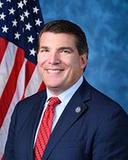
Introduced in the House on Mar 26, 2025.
See Jay Obernolte's votes and donorsCosponsors — members who signed on in support
36cosponsors
28 Democrats · 8 Republicans
Members of both parties have signed on.
- Donald S. BeyerD-VA-8
- Doris O. MatsuiD-CA-7
- Brian K. FitzpatrickR-PA-1
- Scott FranklinR-FL-18
- Andrea SalinasD-OR-6
- Sarah McBrideD-DE-0
- Earl L. "Buddy" CarterR-GA-1
- Sara JacobsD-CA-51
Show all 36 cosponsorsHide the full list
- Richard McCormickR-GA-7
- Haley M. StevensD-MI-11
- Suzan K. DelBeneD-WA-1
- Suzanne BonamiciD-OR-1
- Sam T. LiccardoD-CA-16
- Christopher R. DeluzioD-PA-17
- Josh GottheimerD-NJ-5
- Ted LieuD-CA-36
- Kevin MullinD-CA-15
- Eugene Simon VindmanD-VA-7
- Josh HarderD-CA-9
- Valerie P. FousheeD-NC-4
- Brittany PettersenD-CO-7
- Thomas H. KeanR-NJ-7
- Neal P. DunnR-FL-2
- Kristen McDonald RivetD-MI-8
- Mike LevinD-CA-49
- Gabe VasquezD-NM-2
- Laura GillenD-NY-4
- Susie LeeD-NV-3
- Salud O. CarbajalD-CA-24
- Dave MinD-CA-47
- Young KimR-CA-40
- James R. WalkinshawD-VA-11
- Jennifer A. KiggansR-VA-2
- Seth MoultonD-MA-6
- Troy A. CarterD-LA-2
- Hillary J. ScholtenD-MI-3
Committees handling it
A bill is sent to the committee that covers its subject. The committee decides whether it ever reaches a vote of the full chamber.
Science, Space, and Technology Committee
House
- Markup By · Jun 25, 2026
- Referred To · Mar 26, 2025
Full timeline
Every recorded action on H.R. 2385, from the day it was introduced to the most recent, exactly as the House, the Senate, and the Library of Congress logged it.
- IntroducedHouse
Introduced in House
- House
Referred to the House Committee on Science, Space, and Technology.
- House
Committee Consideration and Mark-up Session Held
- House
Ordered to be Reported in the Nature of a Substitute (Amended) by the Yeas and Nays: 29 - 0.
Have a view on H.R. 2385? Your leaders vote on it.
Tell your senators and your representative where you stand. We fill in who represents you and reference this bill in the letter.
Write your leaders about thisSource: Congress.gov record for H.R. 2385(opens in new tab)