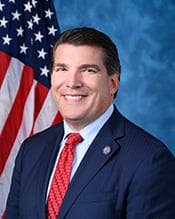
U.S. Representative
Jay Obernolte
California District 23
RepublicanConservative
Votes on Record
484
across 19 categories
Contact
U.S. Representative
California District 23
Votes on Record
484
across 19 categories
Contact
Voting Profile
Most Active Policy Areas
484
Votes Analyzed
Data sources: voteview, congress.gov
Political Position
Jay Obernolte's voting record places him in the conservative range of the political spectrum, with a NOMINATE ideology score of 0.315 on a scale from -1 (most liberal) to +1 (most conservative). However, he is notably more moderate than the average House Republican, whose score sits around 0.52. This means that while he generally aligns with conservative positions, he crosses party lines more frequently than many of his Republican colleagues.
More liberal than the average Republican (0.52)
Data source: VoteView NOMINATE scores (UCLA/UC San Diego)
Policy Positions
484
total votes analyzed
Overview
Jay Obernolte is a Republican U.S. Representative from California whose voting record reflects a center-right approach across most policy areas. He has cast 484 recorded votes, showing strong support for legislation related to technology, criminal justice, taxation, and energy policy, while frequently opposing bills in the areas of labor, healthcare expansion, and foreign policy interventions. On fiscal matters, Obernolte has consistently supported budget proposals and tax legislation favored by his party, voting in favor of the fiscal year 2027 budget resolution and continuing appropriations measures. He has also voted in favor of most housing and infrastructure bills that came to the floor. His record on defense and military matters is more mixed, with a 60% support rate that reflects some willingness to diverge from party positions on issues like military deployments abroad. Obernolte stands out for his strong support of technology-related legislation, voting in favor of 90% of technology bills — a pattern consistent with his background and his representation of a California district. He has also voted in favor of the vast majority of criminal justice and environmental or energy bills brought to the floor, though many of the energy votes reflect support for rolling back environmental regulations rather than expanding protections. His voting record on social issues is limited but telling: he cast a single recorded vote against a reproductive rights measure, and he opposed several Democratic-led healthcare proposals including motions related to Medicaid protections and lowering health insurance premiums. On labor issues, he voted against four out of five bills, suggesting opposition to expanded worker protections or union-related measures.
Key Positions
By Policy Area
Analysis updated: September 18, 2026
Campaign Finance
Includes all authorized campaign committees (principal committee, joint fundraising, and other authorized committees). Outside spending by Super PACs and independent groups is shown separately below.
Verify on FEC.gov →Career: $6.1M
Fundraising Over Time
Contribution Sources
37%
63%
Individual Breakdown
Itemized (>$200)
$497K
Small Dollar (<$200)
$1K
Donation Sizes
Share of individual contribution dollars by donation size, current election cycle.
Where the Money Comes From
Itemized individual contributions only (donations over $200 report the donor's state). Small-dollar donations are not included because the FEC does not itemize them.
Top Contributors
Top Contributing Industries
Top Donor Employers
Employer as self-reported by itemized donors. “Not Employed” and “Self-Employed” typically rank highest for small-dollar campaigns and include retirees.
Where the Money Goes
Spending by Purpose
Purpose categories are self-reported on FEC filings; large “Other” totals are common.
Top Payees
GRAND VALLEY CONSULTING LLC
CHAINBRIDGE BANK
NO ON PROP 50 STOP SACRAMENTO
NRCC
MINUTEMAN PRESS
RKS STRATEGIES
PROFESSIONAL DATA SERVICES
CAPITOL HILL CLUB
Detailed Breakdown
Expenditures
Operating Costs
$621K
Operating Offsets
$571.33
Net Operating
$621K
Refunds
Individual Refunds
$7K
Outside Spending (Super PACs)
Supporting
$418K
Opposing
$22K
Total Outside Spending
$440K
Top Outside Spenders
PEOPLE FOR BETTER GOVERNMENT COMMITTEE OF THE SAN MANUEL BAND OF MISSION INDIANS
FIX CONGRESS NOW!
EQUALITY CALIFORNIA VOTES
ALLIANCE FOR PHARMACY COMPOUNDING PAC (COMP PAC)
REFORM LEADERS PAC
PLANNED PARENTHOOD VOTES
Independent expenditures are made without coordination with the candidate. Source: FEC Schedule E filings.
Voting Record
484 votes across 19 categories