H.R. 1731 · 119th Congress · Science, Technology, Communications
Standard FEES Act
A bill that started in the House. To become law it must pass the House and the Senate in identical form and be signed by the President.
Where it stands
Cleared committee — waiting for a House vote
- Introduced — doneFeb 27, 2025
- Cleared committee — doneFeb 4, 2026
- Passed the House — not yet
- Passed the Senate — not yet
- Sent to the President — not yet
- Became law — not yet
Latest action · Feb 4, 2026
Reported by the Committee on Energy and Commerce. H. Rept. 119-488, Part I.
What this bill means
In plain English
This bill requires the General Services Administration (GSA) to establish, and federal agencies to adopt, a uniform schedule of fees for applications to place, modify, or maintain communications facilities in, over, or on federally owned buildings and property.
From the official summary by the Congressional Research Service (introduced in house version). The full summary is below.
If it passes
It becomes federal law, and what it describes takes effect on the dates written into the bill.
What still has to happen
- 1House leaders must schedule it for a vote, and the House must pass it.
- 2Then the Senate must pass it in the same form.
- 3Then it goes to the President to sign or veto.
If it doesn't pass
- Nothing changes. The law stays exactly as it is today — a bill has no effect unless it is enacted.
- This bill expires when the 119th Congress ends on Jan 3, 2027. To try again, a member would have to introduce it as a new bill in the next Congress and start over.
Read the full official summaryCongressional Research Service · Introduced in House · Feb 27, 2025
This bill requires the General Services Administration (GSA) to establish, and federal agencies to adopt, a uniform schedule of fees for applications to place, modify, or maintain communications facilities in, over, or on federally owned buildings and property.
The fees established by the GSA must be competitively neutral with respect to other application fees for similar uses of federal buildings and property and based on the direct and actual costs of processing such applications. The GSA may establish exceptions to the fee schedule to be granted by agencies on a case-by-case basis, provided the exceptions are competitively neutral with respect to the categories of individuals or entities granted exceptions and meet certain other requirements.
Agencies may only use fees collected to cover the costs of processing applications, and only to the extent that the funds are provided in advance in appropriations acts.
Who started it
Sponsor — the member who introduced it
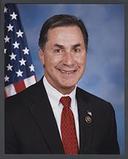
Introduced in the House on Feb 27, 2025.
See Gary J. Palmer's votes and donorsCosponsors — members who signed on in support
2cosponsors
2 Democrats · 0 Republicans
Every cosponsor so far is a Democrat.
- Patrick RyanD-NY-18
- Greg LandsmanD-OH-1
Committees handling it
A bill is sent to the committee that covers its subject. The committee decides whether it ever reaches a vote of the full chamber.
Energy and Commerce Committee
House
- Reported By · Feb 4, 2026
- Markup By · Dec 3, 2025
- Referred To · Feb 27, 2025
Subcommittee: Communications and Technology Subcommittee
Transportation and Infrastructure Committee
House
- Referred To · Feb 27, 2025
Subcommittee: Economic Development, Public Buildings, and Emergency Management Subcommittee
Full timeline
Every recorded action on H.R. 1731, from the day it was introduced to the most recent, exactly as the House, the Senate, and the Library of Congress logged it.
- IntroducedHouse
Introduced in House
- House
Referred to the Committee on Transportation and Infrastructure, and in addition to the Committee on Energy and Commerce, for a period to be subsequently determined by the Speaker, in each case for consideration of such provisions as fall within the jurisdiction of the committee concerned.
- House
Referred to the Subcommittee on Communications and Technology.
- House
Referred to the Subcommittee on Economic Development, Public Buildings, and Emergency Management.
- House
Subcommittee Consideration and Mark-up Session Held
- House
Forwarded by Subcommittee to Full Committee by Voice Vote.
- House
Committee Consideration and Mark-up Session Held
- House
Ordered to be Reported by the Yeas and Nays: 49 - 0.
- Cleared committeeHouse
Reported by the Committee on Energy and Commerce. H. Rept. 119-488, Part I.
Have a view on H.R. 1731? Your leaders vote on it.
Tell your senators and your representative where you stand. We fill in who represents you and reference this bill in the letter.
Write your leaders about thisSource: Congress.gov record for H.R. 1731(opens in new tab)