
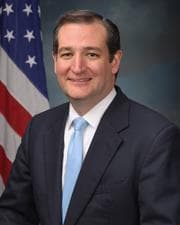
U.S. Senator
Ted Cruz
Texas
RepublicanVery Conservative
Votes on Record
693
across 19 categories
Contact
U.S. Senator
Texas
Votes on Record
693
across 19 categories
Contact
Voting Profile
Most Active Policy Areas
693
Votes Analyzed
Data sources: voteview, congress.gov
Political Position
The average Senate Republican scores about 0.520, which means Cruz's voting pattern is noticeably more conservative than that of a typical member of his own party.
More conservative than the average Republican (0.52)
Data source: VoteView NOMINATE scores (UCLA/UC San Diego)
Policy Positions
693
total votes analyzed
At a Glance
Ted Cruz is a Republican U.S. Senator from Texas with 693 recorded votes in this dataset. His NOMINATE score (0.781) is well above the Republican average (0.520), so his votes tend to line up with the more conservative members of the Senate. The largest share of his votes (232) falls in a general 'Other' category, which includes judicial confirmations and bills such as a proposal on name, image and likeness rights for college athletes. He voted Yea on 88.4% of those. Many of his high Yea percentages in this dataset come from votes to confirm presidential nominees, including federal judges, Treasury officials, the Director of National Intelligence and the Director of the Centers for Disease Control and Prevention.
On national security, he voted for the Fiscal Year 2027 defense authorization bill, which is the yearly bill that sets military policy and spending levels. He twice voted against resolutions that would have required the removal of U.S. armed forces from hostilities with Iran that Congress had not authorized. His defense votes overall are evenly split (34 Yea, 29 Nay), which suggests he supports some defense measures and opposes others rather than voting the same way every time. His foreign policy votes are 94.5% Yea, but most of the sample votes in that category are nominations.
On healthcare, his votes are split exactly in half (36 Yea, 29 Nay, with the rest not voting). Several recent healthcare and environment votes were 'congressional disapproval resolutions.' These let Congress cancel a recently issued federal agency rule. In the sampled cases, Cruz voted against cancelling the rules, including Medicare and Affordable Care Act marketplace rules and an Environmental Protection Agency rule on the timing of PFAS ('forever chemical') reporting. On environment and energy (69.1% Yea), he also voted against an amendment that would have removed tariffs on countries that buy Russian oil or natural gas.
He voted Yea at relatively high rates on immigration (84.6%), budget (74.5%) and taxation (70.8%) measures. Trade is the one category with five or more votes where he voted Nay more often than Yea (2 Yea, 4 Nay). Readers should note that the yea and nay counts do not always add up to the total in a category; the difference reflects votes he missed or did not cast. The data shows what bills were voted on and how he voted, but it does not include how other senators voted, so it cannot show how often he sided with or against his party on each vote.
Voted Nay twice in July 2026 (July 23 and July 30) on joint resolutions directing the removal of U.S. armed forces from hostilities with Iran that Congress had not authorized.
Voted Yea on the Fiscal Year 2027 National Defense Authorization Act (July 14, 2026), the annual bill that sets defense policy and authorizes military spending.
Voted Yea on many presidential nominations in this dataset, including Walter Clayton for Director of National Intelligence, Erica Schwartz for CDC Director, a group of Treasury Department nominees, and federal judge Matthew R. Byrne.
Voted Nay on congressional disapproval resolutions that would have cancelled Medicare and Affordable Care Act marketplace rules (January and July 2026), which left those rules in place.
Voted Nay on a resolution to cancel an EPA rule changing when PFAS chemical reporting begins (August 5, 2026), and Nay on a resolution to cancel a rule giving flexibility in the federal Child Care and Development Fund (July 30, 2026).
Voted Nay on an amendment to strike a provision imposing duties (tariffs) on countries that buy Russian oil or gas or help others evade sanctions (August 7, 2026), which kept the provision in the bill.
Voted Yea on a bill (September 15, 2026) to protect college athletes' rights to earn money from their name, image and likeness and to set rules for competition in college sports.
Voted Nay more often than Yea on trade measures (2 Yea, 4 Nay); trade is the only category with five or more votes where his Nay votes outnumber his Yea votes.
Yes/no split for each topic is on the Congressional Votes cards below.
Analysis updated: October 6, 2026
Voting Record
693 votes across 19 categories
Bars show how they voted on the key bills we analyzed in each topic. Tap a card to see every vote.