
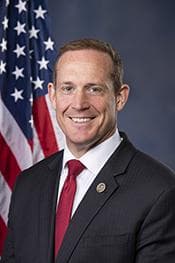
U.S. Senator
Ted Budd
North Carolina
RepublicanVery Conservative
Votes on Record
626
across 19 categories
Contact
U.S. Senator
North Carolina
Votes on Record
626
across 19 categories
Contact
Voting Profile
Most Active Policy Areas
626
Votes Analyzed
Data sources: voteview, congress.gov
Political Position
In plain terms, he usually votes with the more conservative members of the Senate Republican conference.
More conservative than the average Republican (0.52)
Data source: VoteView NOMINATE scores (UCLA/UC San Diego)
Policy Positions
626
total votes analyzed
At a Glance
Ted Budd is a Republican U.S. Senator from North Carolina with 626 recorded votes in this dataset. His NOMINATE score of +0.633 is above the Republican average of about +0.52, which means his overall voting pattern leans further right than most of his party. A large share of his votes are on presidential nominations, including federal judges, Treasury officials, the Director of National Intelligence and the Director of the Centers for Disease Control and Prevention. He voted yes on nearly all of the nominations shown in the sample.
On national security, he voted for the Fiscal Year 2027 National Defense Authorization Act, the yearly bill that sets defense policy and spending levels. He also voted twice, in July 2026, against joint resolutions that would have directed the removal of U.S. armed forces from hostilities against Iran that Congress had not authorized. His defense votes overall are close to an even split between yes and no (28 yea, 25 nay). That kind of split often reflects votes on amendments and procedural motions rather than opposition to defense measures as a whole.
On health care and regulation, the sample shows him voting to keep several executive-branch rules in place rather than overturn them. These include a Medicare rule adding prior authorization for selected services (the WISeR Model), an EPA rule changing when reporting begins for PFAS chemicals, and an HHS rule on the Child Care and Development Fund. In April 2026 he voted against a point of order that would have objected to reconciliation legislation for not addressing insurance companies delaying or denying care. Reconciliation is a fast-track budget process that cannot be blocked by a filibuster, and a point of order is a formal objection that a bill breaks Senate rules.
Two cautions apply to this data. First, a 'yea' or 'nay' depends on how a question was worded: a 'yea' on a motion to table, or a 'nay' on a resolution to overturn a rule, can mean support for the existing policy. Second, votes are sorted into categories by keyword matching, so some votes land in unexpected categories. For example, Treasury nominations appear under foreign policy and a child-care rule appears under environment and energy. The category totals show broad patterns, but the specific votes give a more reliable picture of his positions.
Voted for the Fiscal Year 2027 National Defense Authorization Act (July 14, 2026), the annual bill that authorizes military programs and spending.
Voted twice (July 23 and July 30, 2026) against joint resolutions directing the removal of U.S. armed forces from hostilities against Iran that had not been authorized by Congress.
Voted for the current administration's nominees in nearly every sampled case, including Walter Clayton for Director of National Intelligence, Erica Schwartz for CDC Director, several Treasury officials and federal district judge Matthew R. Byrne.
Voted against a resolution to overturn a Medicare rule adding prior authorization for selected services (the WISeR Model), which kept the rule in place (July 16, 2026).
Voted against a point of order objecting that reconciliation legislation did not address insurance companies delaying or denying patient care (April 22, 2026).
Voted against an amendment to remove a provision placing duties (import taxes) on countries that buy Russian-origin oil or gas or help evade sanctions, which supported keeping that provision (August 7, 2026).
Voted against resolutions to overturn an EPA rule changing the start of PFAS chemical reporting and an HHS rule on Child Care and Development Fund flexibility, which kept both rules in place.
Voted for a bill on name, image and likeness rights and protections for college athletes (September 15, 2026).
Yes/no split for each topic is on the Congressional Votes cards below.
Analysis updated: October 6, 2026
Voting Record
626 votes across 19 categories
Bars show how they voted on the key bills we analyzed in each topic. Tap a card to see every vote.