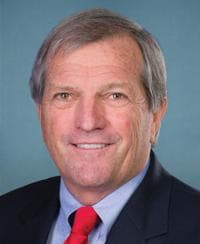
U.S. Representative
Mark DeSaulnier
California District 10
DemocratProgressive
Votes on Record
525
across 19 categories
Contact
U.S. Representative
California District 10
Votes on Record
525
across 19 categories
Contact
Voting Profile
Most Active Policy Areas
525
Votes Analyzed
Data sources: voteview, congress.gov
Political Position
Rep. Mark DeSaulnier holds a NOMINATE ideology score of -0.513, which places him to the left of the average House Democrat (approximately -0.38). In plain terms, this means he votes in a more progressive direction than most members of his own party. He consistently supports positions associated with the left side of the political spectrum across most policy areas.
More liberal than the average Democrat (-0.38)
Data source: VoteView NOMINATE scores (UCLA/UC San Diego)
Policy Positions
525
total votes analyzed
Overview
Mark DeSaulnier is a Democratic member of the U.S. House of Representatives from California with 525 recorded votes. His voting record reflects consistent alignment with progressive policy positions across a range of issues, positioning him to the left of the typical House Democrat. On domestic policy, DeSaulnier has voted in favor of most healthcare and education measures that came before him, supporting roughly two-thirds of bills in each area. He has opposed the majority of budget and spending bills (voting yes on only about 18%), which typically reflects disagreement with the spending priorities or cuts proposed in those measures. He has also opposed most bills categorized under banking and finance, criminal justice, and immigration. In foreign policy and defense, DeSaulnier supported the vast majority of foreign policy votes (approving about 91%) and backed most defense-related measures (71%), though he voted against the fiscal year 2027 National Defense Authorization Act. He supported legislation related to veterans' care and voted in favor of invoking the War Powers Resolution regarding U.S. forces in Lebanon, suggesting support for congressional oversight of military operations. On labor issues, DeSaulnier voted in favor of 80% of measures, and he supported most infrastructure and agriculture bills. His votes on environmental and energy matters show him opposing about two-thirds of the bills in that category, which in the current Congress often reflects opposition to measures that would roll back environmental regulations.
Key Positions
By Policy Area
Analysis updated: September 18, 2026
Campaign Finance
Includes all authorized campaign committees (principal committee, joint fundraising, and other authorized committees). Outside spending by Super PACs and independent groups is shown separately below.
Verify on FEC.gov →Career: $4.8M
Fundraising Over Time
Contribution Sources
46%
54%
Individual Breakdown
Itemized (>$200)
$221K
Small Dollar (<$200)
$40K
Donation Sizes
Share of individual contribution dollars by donation size, current election cycle.
Where the Money Comes From
Itemized individual contributions only (donations over $200 report the donor's state). Small-dollar donations are not included because the FEC does not itemize them.
Top Contributors
Top Contributing Industries
Top Donor Employers
Employer as self-reported by itemized donors. “Not Employed” and “Self-Employed” typically rank highest for small-dollar campaigns and include retirees.
Where the Money Goes
Spending by Purpose
Purpose categories are self-reported on FEC filings; large “Other” totals are common.
Top Payees
THE FROST GROUP
SHALLMAN COMMUNICATIONS
DCCC
GUSTO
CAPITOL COMPLIANCE ASSOCIATES
NGP VAN
AMERICAN EXPRESS
CONTRA COSTA COUNTY REGISTRAR
Detailed Breakdown
Expenditures
Operating Costs
$508K
Operating Offsets
$2K
Net Operating
$506K
Refunds
Individual Refunds
$800
Voting Record
525 votes across 19 categories