
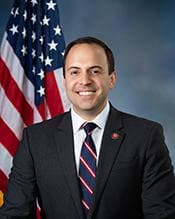
U.S. Representative
Lance Gooden
Texas District 5
RepublicanVery Conservative
Votes on Record
495
across 19 categories
Contact
U.S. Representative
Texas District 5
Votes on Record
495
across 19 categories
Contact
Voting Profile
Most Active Policy Areas
495
Votes Analyzed
Data sources: voteview, congress.gov
Political Position
He sits toward the conservative end of the House Republican caucus.
More conservative than the average Republican (0.52)
Data source: VoteView NOMINATE scores (UCLA/UC San Diego)
Policy Positions
495
total votes analyzed
At a Glance
Lance Gooden represents Texas in the U.S. House of Representatives. This profile is based on 495 recorded votes. More than half of them (274) fall into a general 'other' category, and some issue areas have only a handful of votes. That makes his pattern in the smaller categories less certain. In general, he votes for legislation that reaches the House floor. That pattern is common for members of the majority party, because the majority party decides which bills come up for a vote.
On energy and the environment, he voted yes on 31 of 34 measures (91.2%). These include a resolution to overturn an Environmental Protection Agency (EPA) decision approving California's pollution standards for commercial harbor boats, the Ratepayer Protection Act, and the Water Resources Development Act. He also voted yes on every criminal justice measure (13 of 13) and every housing measure (8 of 8) in the data, and on 10 of 11 tax measures. On budget matters, he supported the fiscal year 2027 budget resolution (a plan that sets overall federal spending and revenue targets) and a continuing resolution (a short-term bill that keeps the government funded while Congress works on full-year spending bills).
His record is more mixed or mostly 'no' in several other areas. On healthcare, he voted yes on 7 of 29 measures (24.1%). The most recent examples are 'no' votes on motions to recommit, which are procedural motions usually offered by the minority party as a last chance to change or delay a bill. Those motions were on the Do No Harm in Medicaid Act and the Lower Health Care Premiums for All Americans Act. Because these are procedural votes, the healthcare yes rate partly reflects how he voted on how bills were handled, not only on healthcare policy itself. He also voted yes on 1 of 5 labor measures and 4 of 11 foreign policy measures.
On defense, he voted for the National Defense Authorization Act for Fiscal Year 2027, the yearly bill that sets defense policy and spending levels. He voted against the Take Care of America's Veterans Act. He also voted against a War Powers Resolution measure that would have directed the President to remove U.S. armed forces from hostilities in Lebanon. Overall, he voted yes on 19 of 28 defense measures (67.9%).
Supports rolling back certain federal environmental approvals: he voted yes on a resolution to overturn the EPA's approval of California's pollution standards for commercial harbor boats, and he voted yes on 91.2% of energy and environment measures overall.
Voted for the National Defense Authorization Act for Fiscal Year 2027, the yearly bill that sets defense policy and spending.
Voted against a War Powers Resolution measure that would have directed the President to remove U.S. armed forces from hostilities in Lebanon.
Voted for the fiscal year 2027 congressional budget resolution and for a continuing resolution to keep the government funded into fiscal year 2027.
Voted no on Democratic-offered motions to recommit on the Do No Harm in Medicaid Act and the Lower Health Care Premiums for All Americans Act, and voted yes on the rule that set up debate on those bills.
Voted yes on every criminal justice measure in the record (13 of 13), including the September 2026 National Fraud Enforcement Division Act listed among recent votes.
Voted against the Take Care of America's Veterans Act in July 2026.
Yes/no split for each topic is on the Congressional Votes cards below.
Analysis updated: October 6, 2026
Campaign Finance
Includes all authorized campaign committees (principal committee, joint fundraising, and other authorized committees). Outside spending by Super PACs and independent groups is shown separately below.
Verify on FEC.gov →Career: $6.2M
Fundraising Over Time
Contribution Sources
64%
36%
Individual Breakdown
Itemized (>$200)
$651K
Small Dollar (≤$200)
$15K
Donation Sizes
Share of individual contribution dollars by donation size, current election cycle.
Where the Money Comes From
Itemized individual contributions only (donations over $200 report the donor's state). Small-dollar donations are not included because the FEC does not itemize them.
Top Contributors
Top Contributing Industries
Top Donor Employers
Employer as self-reported by itemized donors. “Not Employed” and “Self-Employed” typically rank highest for small-dollar campaigns and include retirees.
Where the Money Goes
Spending by Purpose
Purpose categories are self-reported on FEC filings; large “Other” totals are common.
Top Payees
CHASE BANK
ROSE STRATEGIES
VISIBLE DIALOGUE
SHARMA, MOKSH
WINSLEY COMMUNICATIONS
MCINTOSH COMPANIES
WILLIS, JACKSON
IRS
Detailed Breakdown
Expenditures
Operating Costs
$885K
Net Operating
$885K
Outside Spending (Super PACs)
Supporting
$317K
Opposing
$555K
Total Outside Spending
$873K
Top Outside Spenders
CLUB FOR GROWTH ACTION
OUR CONSERVATIVE TEXAS FUTURE
NATIONAL ASSOCIATION OF REALTORS CONGRESSIONAL FUND
TEXAS RIGHT TO LIFE COMMITTEE INC
NATIONAL RIFLE ASSOCIATION OF AMERICA POLITICAL VICTORY FUND
HUMANE SOCIETY LEGISLATIVE FUND
COMMITTEE FOR DEFENDING AMERICAN VALUES
TOGETHER WE THRIVE
Independent expenditures are made without coordination with the candidate. Source: FEC Schedule E filings.
Voting Record
495 votes across 19 categories
Bars show how they voted on the key bills we analyzed in each topic. Tap a card to see every vote.