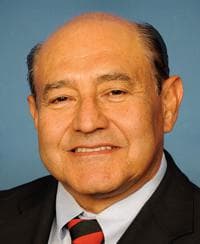
U.S. Representative
J. Luis Correa
California District 46
DemocratModerate Liberal
Votes on Record
510
across 19 categories
Contact
U.S. Representative
California District 46
Votes on Record
510
across 19 categories
Contact
Voting Profile
Most Active Policy Areas
510
Votes Analyzed
Data sources: voteview, congress.gov
Political Position
Rep. J. Luis Correa's NOMINATE score of -0.285 places him in the moderate-liberal range of the political spectrum. He is notably more centrist than the average House Democrat, whose score sits around -0.380. This means he tends to vote with his party on most issues but occasionally breaks from the Democratic caucus, particularly on fiscal and regulatory matters.
Near the average for Democrats (-0.38)
Data source: VoteView NOMINATE scores (UCLA/UC San Diego)
Policy Positions
510
total votes analyzed
Overview
J. Luis Correa is a Democratic member of the U.S. House of Representatives from California with 510 recorded votes. His voting record reflects a moderate-liberal approach: he consistently supports Democratic priorities on healthcare, labor, infrastructure, and foreign policy, while showing more independent tendencies on budget, housing, immigration, and banking issues. On healthcare and taxation, Correa has voted in favor of his party's positions roughly 72-73% of the time, supporting measures like the Do No Harm in Medicaid Act and the Lower Health Care Premiums for All Americans Act. He has voted yes on all recorded infrastructure and labor bills, signaling consistent support for investment in public works and worker protections. His foreign policy record is also unanimously in the affirmative across 11 votes. Correa's more independent streak appears in budget and fiscal policy, where he voted yea only about 18% of the time — frequently opposing spending packages and continuing resolutions. He also voted nay on a majority of housing, immigration, and banking-related measures, suggesting a more cautious approach to government spending and regulation in those areas. On environment and energy, he voted yea about 35% of the time, supporting some measures like the Ratepayer Protection Act and Water Resources Development Act while opposing others. With 510 votes on record, Correa has a substantial legislative history that shows a legislator who generally aligns with his party but exercises independent judgment on fiscal and regulatory questions more often than the typical House Democrat.
Key Positions
By Policy Area
Analysis updated: September 18, 2026
Campaign Finance
Includes all authorized campaign committees (principal committee, joint fundraising, and other authorized committees). Outside spending by Super PACs and independent groups is shown separately below.
Verify on FEC.gov →Career: $7.2M
Fundraising Over Time
Contribution Sources
39%
61%
Individual Breakdown
Itemized (>$200)
$413K
Small Dollar (<$200)
$4K
Donation Sizes
Share of individual contribution dollars by donation size, current election cycle.
Where the Money Comes From
Itemized individual contributions only (donations over $200 report the donor's state). Small-dollar donations are not included because the FEC does not itemize them.
Top Contributors
Top Contributing Industries
Top Donor Employers
Employer as self-reported by itemized donors. “Not Employed” and “Self-Employed” typically rank highest for small-dollar campaigns and include retirees.
Where the Money Goes
Spending by Purpose
Purpose categories are self-reported on FEC filings; large “Other” totals are common.
Top Payees
THINK INC
CITI CARDS
HM CONSULTING
MARTINEZ & ASSOCIATES, INC.
CHASE CARDMEMBER SERVICE
INTERNAL REVENUE SERVICE
INTEGRATED SOLUTIONS: POLITICAL
PROGRESSIVE STRATEGIES & CONSULTING LLC
Detailed Breakdown
Expenditures
Operating Costs
$612K
Operating Offsets
$16K
Net Operating
$596K
Refunds
Individual Refunds
$2K
Outside Spending (Super PACs)
Supporting
$772K
Opposing
$16K
Total Outside Spending
$788K
Top Outside Spenders
NATIONAL ASSOCIATION OF REALTORS CONGRESSIONAL FUND
LATINO VICTORY FUND
AMERICAN BANKERS ASSOCIATION
COOPERATIVE OF AMERICAN PHYSICIANS IE COMMITTEE
CONSUMERS FOR RESPONSIBLE GOVERNMENT
PIVOT ELECTION
COURAGE CALIFORNIA SUPER PAC
TOGETHER WE THRIVE
Independent expenditures are made without coordination with the candidate. Source: FEC Schedule E filings.
Voting Record
510 votes across 19 categories