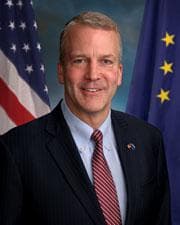
U.S. Senator
Dan Sullivan
Alaska
RepublicanConservative
Votes on Record
675
across 20 categories
Contact
U.S. Senator
Alaska
Votes on Record
675
across 20 categories
Contact
Voting Profile
Most Active Policy Areas
675
Votes Analyzed
Data sources: voteview, congress.gov
Political Position
Senator Dan Sullivan's voting record places him in the conservative range of the political spectrum, with an ideology score of 0.477 on a scale from -1 (most liberal) to +1 (most conservative). However, he sits slightly to the left of the average Republican senator (0.520), suggesting he occasionally parts from his party's majority position. This makes him a fairly typical conservative who is modestly more moderate than many of his Republican colleagues.
Near the average for Republicans (0.52)
Data source: VoteView NOMINATE scores (UCLA/UC San Diego)
Policy Positions
675
total votes analyzed
Overview
Dan Sullivan is a Republican U.S. Senator from Alaska with a substantial voting record of 675 recorded votes. His strongest area of consensus is foreign policy, where he has voted in favor of measures 94.5% of the time, reflecting consistent support for U.S. engagement abroad, including confirmation of national security and diplomatic nominees. He has also shown strong support for housing-related measures (100% approval rate across 12 votes), immigration legislation (88.5%), and agriculture bills (88.9%). On defense, Sullivan's record is more divided than might be expected. While he supported the annual defense authorization bill, he consistently voted against resolutions that would have directed the removal of U.S. Armed Forces from hostilities involving Iran without congressional authorization — indicating he favors maintaining executive flexibility in military operations. His overall defense approval rate of 56.1% reflects a mix of support for military funding and opposition to measures that would constrain military deployments. Sullivan's most notable area of opposition is trade, where he voted against measures in four of six recorded votes (33.3% approval). This pattern suggests skepticism toward certain trade agreements or trade-related policies. On healthcare, his 66.1% approval rate shows a mixed record — he supported some nominees and opposed regulatory actions related to Medicare and the Affordable Care Act. In environment and energy policy, he supported most measures (79%) but opposed some environmental regulatory actions, consistent with Alaska's resource-dependent economy. Across the board, Sullivan's voting patterns reflect a senator who generally aligns with Republican priorities but does not vote in lockstep with his party on every issue, particularly on trade and certain defense matters.
Key Positions
By Policy Area
Analysis updated: September 18, 2026
Campaign Finance
Includes all authorized campaign committees (principal committee, joint fundraising, and other authorized committees). Outside spending by Super PACs and independent groups is shown separately below.
Verify on FEC.gov →Career: $30.3M
Fundraising Over Time
Contribution Sources
67%
32%
1%
Individual Breakdown
Itemized (>$200)
$4.8M
Small Dollar (<$200)
$698K
Donation Sizes
Share of individual contribution dollars by donation size, current election cycle.
Where the Money Comes From
Itemized individual contributions only (donations over $200 report the donor's state). Small-dollar donations are not included because the FEC does not itemize them.
Top Contributors
Top Contributing Industries
Top Donor Employers
Employer as self-reported by itemized donors. “Not Employed” and “Self-Employed” typically rank highest for small-dollar campaigns and include retirees.
Where the Money Goes
Spending by Purpose
Purpose categories are self-reported on FEC filings; large “Other” totals are common.
Top Payees
MAYBELL GROUP, LLC
NORTHRIM CARDMEMBER SERVICES
PEAK INSIGHTS
RIZZO DUKES GROUP LLC
BLACK ROCK GROUP LLC
UNISOURCE DIRECT, LLC
ARENA ONLINE
PRAGMATIC DATA SOLUTIONS
Detailed Breakdown
Expenditures
Operating Costs
$5.1M
Operating Offsets
$9K
Net Operating
$5.1M
Refunds
Individual Refunds
$14K
Committee Refunds
$11K
Outside Spending (Super PACs)
Supporting
$3.1M
Opposing
$44.4M
Total Outside Spending
$47.5M
Top Outside Spenders
PUT ALASKA FIRST
NORTH STAR
DEMOCRATIC SENATORIAL CAMPAIGN COMMITTEE
314 ACTION FUND
THE LINCOLN PROJECT
VOTEVETS
LCV VICTORY FUND
NEA ADVOCACY FUND
Independent expenditures are made without coordination with the candidate. Source: FEC Schedule E filings.
Voting Record
675 votes across 20 categories