
H.R. 9332 · 119th Congress · Energy
Load Forecasting Enhancement Act
A bill that started in the House. To become law it must pass the House and the Senate in identical form and be signed by the President.
Where it stands
Passed the House — now in the Senate
- Introduced — doneJun 18, 2026
- Cleared committee — doneSep 14, 2026
- Passed the House — doneSep 15, 2026
- Passed the Senate — not yet
- Sent to the President — not yet
- Became law — not yet
Latest action · Sep 16, 2026
Received in the Senate and Read twice and referred to the Committee on Energy and Natural Resources.
What this bill means
In plain English
This bill requires the Federal Energy Regulatory Commission (FERC) to establish regional boards to study and recommend best practices for electric load forecasting, which is the process of predicting the demand for electricity at a particular time. It also requires states to consider adopting the recommendations.
From the official summary by the Congressional Research Service (introduced in house version). The full summary is below.
If it passes
It becomes federal law, and what it describes takes effect on the dates written into the bill.
What still has to happen
- 1The Senate must pass it in the same form.
- 2Then it goes to the President to sign or veto.
If it doesn't pass
- Nothing changes. The law stays exactly as it is today — a bill has no effect unless it is enacted.
- This bill expires when the 119th Congress ends on Jan 3, 2027. To try again, a member would have to introduce it as a new bill in the next Congress and start over.
Read the full official summaryCongressional Research Service · Introduced in House · Jun 18, 2026
This bill requires the Federal Energy Regulatory Commission (FERC) to establish regional boards to study and recommend best practices for electric load forecasting, which is the process of predicting the demand for electricity at a particular time. It also requires states to consider adopting the recommendations.
Specifically, the bill directs FERC to establish regional boards to study electric load forecasting, chair the boards, and run them jointly with each state public utility commission in the regions. The boards must (1) study issues relevant to identifying best practices for electric load forecasting that enhance the reliability and affordability of electric service to customers, and (2) identify such best practices. FERC must make recommendations to Congress for the consistent use across states of such best practices by electric utilities.
The bill also modifies provisions under the Public Utility Regulatory Policies Act to require state public utility commissions to consider adopting those recommendations.
It also modifies the Energy Policy and Conservation Act to make federal assistance for state energy conservation plans contingent upon the plan including procedures and programs to improve the accuracy, oversight, and transparency to stakeholders of the forecasting of electric loads by electric utilities.
Who started it
Sponsor — the member who introduced it
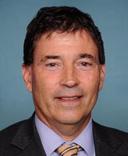
Introduced in the House on Jun 18, 2026.
See Troy Balderson's votes and donorsCosponsors — members who signed on in support
6cosponsors
3 Democrats · 3 Republicans
Members of both parties have signed on.
- Robert MenendezD-NJ-8
- John JoyceR-PA-13
- Eugene Simon VindmanD-VA-7
- Thomas H. KeanR-NJ-7
- H. Morgan GriffithR-VA-9
- Jennifer L. McClellanD-VA-4
Committees handling it
A bill is sent to the committee that covers its subject. The committee decides whether it ever reaches a vote of the full chamber.
Energy and Natural Resources Committee
Senate
- Referred To · Sep 16, 2026
Energy and Commerce Committee
House
- Reported By · Sep 14, 2026
- Markup By · Jul 21, 2026
- Markup By · Jul 20, 2026
- Referred To · Jun 18, 2026
Subcommittee: Energy Subcommittee
Full timeline
Every recorded action on H.R. 9332, from the day it was introduced to the most recent, exactly as the House, the Senate, and the Library of Congress logged it.
- IntroducedHouse
Introduced in House
- House
Referred to the House Committee on Energy and Commerce.
- House
Referred to the Subcommittee on Energy.
- House
Subcommittee Consideration and Mark-up Session Held
- House
Forwarded by Subcommittee to Full Committee by Voice Vote.
- House
Committee Consideration and Mark-up Session Held
- House
Committee Consideration and Mark-up Session Held
- House
Ordered to be Reported by the Yeas and Nays: 47 - 0.
- Cleared committeeHouse
Reported by the Committee on Energy and Commerce. H. Rept. 119-823.
- House
Placed on the Union Calendar, Calendar No. 722.
- House
Mr. Guthrie moved to suspend the rules and pass the bill.
- House
Considered under suspension of the rules. (consideration: CR H5663-5665)
- House
DEBATE - The House proceeded with forty minutes of debate on H.R. 9332.
- Passed the HouseHouse
On motion to suspend the rules and pass the bill Agreed to by voice vote. (text: CR H5663-5664)
- House
Motion to reconsider laid on the table Agreed to without objection.
- Senate
Received in the Senate and Read twice and referred to the Committee on Energy and Natural Resources.
What it would cost
The Congressional Budget Office is Congress's nonpartisan scorekeeper. These are its estimates of what this measure would cost or save.
Have a view on H.R. 9332? Your leaders vote on it.
Tell your senators and your representative where you stand. We fill in who represents you and reference this bill in the letter.
Write your leaders about thisSource: Congress.gov record for H.R. 9332(opens in new tab)