
H.R. 4624 · 119th Congress · Sports and Recreation
Muhammad Ali American Boxing Revival Act of 2026
A bill that started in the House. To become law it must pass the House and the Senate in identical form and be signed by the President.
Where it stands
Passed both chambers
- Introduced — doneJul 23, 2025
- Cleared committee — doneFeb 25, 2026
- Passed the House — doneMar 24, 2026
- Passed the Senate — doneNov 19, 2026
- Sent to the President — not yet
- Became law — not yet
Latest action · Nov 19, 2026
Passed Senate with an amendment by Unanimous Consent.
What this bill means
In plain English
This bill authorizes the establishment of private-sector Unified Boxing Organizations (UBOs) and otherwise expands the regulatory framework for professional boxing. (See CRS Report IF12982 for an overview of the federal regulation of professional boxing in the United States.)
From the official summary by the Congressional Research Service (reported to house version). The full summary is below.
If it passes
It becomes federal law, and what it describes takes effect on the dates written into the bill.
What still has to happen
- 1If the House and Senate passed different versions, they must settle on one identical text.
- 2Then it goes to the President to sign or veto.
If it doesn't pass
- Nothing changes. The law stays exactly as it is today — a bill has no effect unless it is enacted.
- This bill expires when the 119th Congress ends on Jan 3, 2027. To try again, a member would have to introduce it as a new bill in the next Congress and start over.
Read the full official summaryCongressional Research Service · Reported to House · Feb 25, 2026
This bill authorizes the establishment of private-sector Unified Boxing Organizations (UBOs) and otherwise expands the regulatory framework for professional boxing. (See CRS Report IF12982 for an overview of the federal regulation of professional boxing in the United States.)
Under the bill, UBOs may organize matches involving boxers contracted with the UBO and must comply with other regulations with respect to such matches (e.g., conduct matches under the authority of a state boxing commission). UBOs also operate alongside existing professional boxing organizations (e.g., World Boxing Council (WBC)).
UBOs must meet certain additional requirements, for example
the UBO must implement an anti-doping program that includes drug testing in advance of matches,
boxers age 40 or older must receive supplemental physical examinations,
each match must have at least two ambulances on site, and
boxers must have access to equipment and facilities that are operated by the UBO for training and rehabilitation.
The bill also expands the required health insurance coverage and minimum pay for all professional boxers.
Further, the bill requires state boxing commissions to establish procedures to ensure that drug tests are administered for title matches and at random for all other matches.
Who started it
Sponsor — the member who introduced it
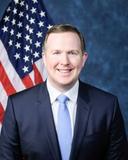
Introduced in the House on Jul 23, 2025.
See Brian Jack's votes and donorsCosponsors — members who signed on in support
13cosponsors
8 Democrats · 5 Republicans
Members of both parties have signed on.
- Sharice DavidsD-KS-3
- Addison P. McDowellR-NC-6
- Christopher H. SmithR-NJ-4
- Derek SchmidtR-KS-2
- Jefferson Van DrewR-NJ-2
- Steven HorsfordD-NV-4
- Haley M. StevensD-MI-11
- Shomari FiguresD-AL-2
Show all 13 cosponsorsHide the full list
- LaMonica McIverD-NJ-10
- Mark E. AmodeiR-NV-2
- Morgan McGarveyD-KY-3
- Jonathan L. JacksonD-IL-1
- Dina TitusD-NV-1
Committees handling it
A bill is sent to the committee that covers its subject. The committee decides whether it ever reaches a vote of the full chamber.
Commerce, Science, and Transportation Committee
Senate
- Discharged From · Nov 19, 2026
- Referred To · Mar 25, 2026
Energy and Commerce Committee
House
- Discharged From · Feb 25, 2026
- Referred To · Jul 23, 2025
Education and Workforce Committee
House
- Reported By · Feb 25, 2026
- Markup By · Jan 21, 2026
- Referred To · Jul 23, 2025
Full timeline
Every recorded action on H.R. 4624, from the day it was introduced to the most recent, exactly as the House, the Senate, and the Library of Congress logged it.
- IntroducedHouse
Introduced in House
- House
Referred to the Committee on Education and Workforce, and in addition to the Committee on Energy and Commerce, for a period to be subsequently determined by the Speaker, in each case for consideration of such provisions as fall within the jurisdiction of the committee concerned.
- House
Committee Consideration and Mark-up Session Held
- House
Ordered to be Reported (Amended) by the Yeas and Nays: 30 - 4.
- Cleared committeeHouse
Reported (Amended) by the Committee on Education and Workforce. H. Rept. 119-524, Part I.
- House
Committee on Energy and Commerce discharged.
- House
Placed on the Union Calendar, Calendar No. 449.
- House
Mr. Walberg moved to suspend the rules and pass the bill, as amended.
- House
Considered under suspension of the rules. (consideration: CR H2641-2647)
- House
DEBATE - The House proceeded with forty minutes of debate on H.R. 4624.
- Passed the HouseHouse
On motion to suspend the rules and pass the bill, as amended Agreed to by voice vote. (text: CR H2641-2643)
- House
Motion to reconsider laid on the table Agreed to without objection.
- Senate
Received in the Senate and Read twice and referred to the Committee on Commerce, Science, and Transportation.
- Senate
Senate Committee on Commerce, Science, and Transportation discharged by Unanimous Consent.
- Senate
Measure laid before Senate by unanimous consent.
- Passed the SenateSenate
Passed Senate with an amendment by Unanimous Consent.
What it would cost
The Congressional Budget Office is Congress's nonpartisan scorekeeper. These are its estimates of what this measure would cost or save.
Have a view on H.R. 4624? Your leaders vote on it.
Tell your senators and your representative where you stand. We fill in who represents you and reference this bill in the letter.
Write your leaders about thisSource: Congress.gov record for H.R. 4624(opens in new tab)