
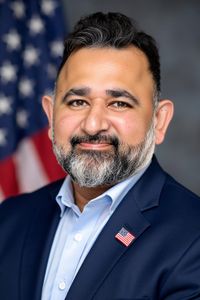
Background
Zeeshan Hafeez (Democratic Party) ran for election to the U.S. House to represent Texas' 33rd Congressional District. He lost in the Democratic primary on March 3, 2026.
- Law:
- Georgetown University Law Center, 2008
- Graduate:
- University of Virginia, Darden School of Business, 2015
- Bachelor's:
- New College of Florida, 2005
- High school:
- King High School
Campaign money
- Raised
- $410K
- From individuals
- $326K
- From PACs & party
- $0
- Own money
- —
FEC filings through February 11, 2026.
View on FEC.gov(opens in new tab)In their own words
Who are you? Tell us about yourself.
Zeeshan Hafeez’s story is one shared by countless families in Texas’s 33rd District — the son of immigrants, raised on sacrifice, service, and the belief that hard work should lead to opportunity. A proud Texan, devoted husband, and father of three, Zeeshan has built his life around family, faith, and service to the community.
Armed with a law degree from Georgetown University and an MBA from the University of Virginia, Zeeshan could have chosen the easy path. Instead, he built a career solving real problems — expanding telehealth access for working families, mentoring youth, supporting small businesses, and helping nonprofits thrive.
His leadership spans from the local to the global stage. He has advised Congress on labor and workers’ rights at the Harrison Institute of Public Policy, worked at the World Trade Organization in Geneva to help resolve international disputes, and served on community boards addressing racial equity, education, and infrastructure.
Now, Zeeshan is bringing that experience to Washington — to reject special interest politics and fight for policies that reflect the values of everyday Texans: affordable healthcare, excellent public schools, clean air and water, and an economy that works for everyone. For Zeeshan, this campaign isn’t about power — it’s about people, service, and building a future where every family has a fair shot at the American Dream.
Please list below 3 key messages of your campaign. What are the main points you want voters to remember about your goals for your time in office?
People Over Politics
Washington has been hijacked by corporate PACs and special interests, and families in Texas’s 33rd District are paying the price. Zeeshan Hafeez is building a grassroots movement powered by the people — not big donors. He’ll fight to ban corporate PAC money, close tax loopholes for billionaires, and make government transparent and accountable. In Congress, he’ll push for universal healthcare, lower prescription drug costs, and housing policies that keep families in their homes. He’ll defend civil liberties, end mass surveillance, and stop government overreach that targets Muslim, Black, and immigrant communities. Zeeshan’s campaign is about restoring trust — putting people first, always.Opportunity for Every Texan
Every family deserves a fair shot at the American Dream — not just those with wealth or connections. Zeeshan will fight to fully fund public schools, increase teacher pay, and make community college and trade programs tuition-free. He’ll work to expand affordable healthcare, protect reproductive rights, and invest in mental health services. Zeeshan will champion small businesses and strengthen unions, ensuring workers get fair wages and safe workplaces. He supports clean energy jobs, broadband for every home, and modern infrastructure to create opportunity in every corner of the district. His vision is an economy that lifts everyone, no matter their background or zip code.A Voice for Justice and Change
Zeeshan has spent his life advocating for equity and opportunity — from advising Congress on workers’ rights to mentoring youth in Dallas-Fort Worth. In Congress, he’ll fight for environmental justice, ensuring clean air, clean water, and accountability for polluters. He’ll push for bold criminal justice reform, reproductive freedom, and an immigration system rooted in dignity and fairness. Zeeshan will also work to expand voting rights, protect Social Security and Medicare, and make sure seniors can retire with dignity. His vision is a future where policy serves the people, not the powerful — because true leadership starts with listening and acting for the community.
What areas of public policy are you personally passionate about?
I believe in an America First, Texas First approach, where taxpayer dollars are invested in healthcare, schools, jobs, and infrastructure here at home, not in endless wars or funding genocide abroad. In Congress, I’ll fight to end AIPAC and foreign lobby control in Washington, formally recognize the state of Palestine, and push for lasting peace and dignity for all oppressed peoples. I will work to end foreign wars and reckless interventions that cost lives and drain our communities, while championing a foreign policy rooted in human rights, justice, and the will of the American people, not the profits of billionaires or the agendas of political insiders. It’s time to put our people first and lead with integrity, accountability, and courage
Who do you look up to? Whose example would you like to follow, and why?
I’ve been inspired by many people over the years, but the person I look up to most is my father, a physician who came to this country with little more than a dream for a better life. He taught me the values of hard work, humility, and service. Even after long, exhausting days caring for patients, he always found time to support our family and give back to the community. From him, I learned that true leadership starts with service, integrity, and compassion.
Beyond my family, I draw strength from leaders who challenge the status quo. People like Barbara Jordan, who brought moral clarity to Congress; Paul Wellstone, who never forgot that politics is about improving people’s lives; and Bernie Sanders, whose relentless fight for working families has redefined what it means to serve the people with honesty and courage.
I also look up to modern bridge-builders like Rashida Tlaib and Ilhan Omar, who face intense pressure and personal attacks yet continue to speak truth to power and fight for justice. Their courage reminds me that leadership isn’t about being popular; it’s about standing up for those who are too often unheard.
And as a lifelong basketball fan, I’ve always admired Hakeem Olajuwon — not just for his excellence on the court, but for the humility, discipline, and faith he carried with him throughout his career. He showed me that you can strive for greatness while staying grounded in your values.
The example I want to follow is one of integrity, courage, and service — being a leader who listens first, puts people above politics, and never loses sight of the community I represent. My goal is to carry those values forward, building a legacy of trust, empathy, and real change for Texas’s 33rd District.
What characteristics or principles are most important for an elected official?
The most important quality in an elected official is unwavering integrity — the courage to stand up for what is right, even when it’s not politically convenient. People deserve leaders who are accountable to their communities, not to corporate PACs, foreign lobbies, or political insiders. That means making decisions based on the needs and voices of the people you represent — not the demands of billionaires or special interests.
I believe a representative should lead with humility and service, always remembering that public office is a trust, not a career. Listening is just as important as leading. Whether it’s a single parent struggling to find affordable childcare, a small business owner navigating rising costs, or a student worried about debt and opportunity, those voices must shape every decision made in Washington.
Courage is another essential principle. An elected official must be willing to take bold stances — whether it’s challenging endless wars, standing up to powerful lobbies like AIPAC, or fighting to make healthcare a human right. True leadership means prioritizing what’s just, not just what’s easy.
Compassion is equally vital. Policies are not numbers on a page — they are lifelines for real people. From advocating for clean air and water in our neighborhoods, to ensuring every family has access to affordable housing and healthcare, compassion must guide every vote.
Finally, an elected official must be transparent and accountable. Our communities deserve to know how decisions are made and where money is going. I will always operate with openness, keeping my constituents informed and involved, because a healthy democracy depends on trust.
At the core, leadership is about service, courage, and a relentless commitment to justice and equity. That’s the kind of representative I will be — one who listens, one who fights, and one who never forgets who I work for: the people of Texas’s 33rd District.
What do you believe are the core responsibilities for someone elected to this office?
The core responsibility of anyone elected to Congress is to serve the people — not corporations, not special interests, and not foreign lobbies. That starts with listening: truly understanding the challenges families in Texas’s 33rd District face every day, from rising housing costs and inaccessible healthcare to underfunded schools and stagnant wages, and making their voices the foundation of every decision.
A representative must be a champion for the community’s needs, fighting for policies that deliver tangible results — good-paying jobs, affordable housing, clean air and water, safe neighborhoods, and quality education for every child. It’s about building an economy that lifts everyone, not just the wealthy few.
Another core duty is protecting the rights and dignity of every person. That means safeguarding civil liberties, defending reproductive rights, ensuring equal opportunity regardless of race, faith, or background, and standing up against discrimination and injustice wherever it appears.
Fiscal responsibility and accountability are also essential. Taxpayer dollars should be invested wisely — improving infrastructure, healthcare, and education here at home, not wasted on endless wars or unchecked spending that serves special interests. In Congress, I will fight to end corporate welfare and foreign aid that props up oppression abroad, and redirect those resources to strengthen our communities.
Finally, an elected official must uphold integrity and transparency. The people deserve to know how their representative votes, where campaign funding comes from, and why decisions are made. True representation means being accessible, honest, and accountable — holding regular town halls, providing clear updates, and keeping an open door to the people of this district.
At its core, this office is about service, advocacy, and stewardship. My commitment is to fight for policies that put people first, deliver results that improve daily lives, and give them a voice.
What legacy would you like to leave?
The legacy I want to leave is one of service, integrity, and courage — a legacy that proves leadership is about putting people first, not power or politics. I want to be remembered as someone who stood up for working families, fought for justice even when it was hard, and never forgot where he came from or who he worked for.
I want my children, and every child in Texas’s 33rd District, to grow up in a community where opportunity is real — where good schools, safe neighborhoods, affordable healthcare, and good jobs are not dreams but guarantees. If my time in office helps create a foundation where families can build better futures without fear or struggle, that will be my greatest success.
I also hope to be remembered for restoring trust in public service. For too long, people have felt like their voices don’t matter, that government belongs to corporations, special interests, and foreign lobbies instead of the people. I want to change that — to show that honest, transparent leadership can deliver results that make life better for everyone, not just the well-connected.
Beyond policy, my legacy will be about building bridges — breaking down barriers of division, ignorance, and fear, and fostering a culture of understanding and mutual respect. Whether it’s fighting for workers, advocating for justice abroad, or standing alongside marginalized communities here at home, I want my work to reflect a belief that every person deserves dignity and respect.
At the end of the day, I want my legacy to be simple: that I used every platform I had to lift others up, to fight for what’s right, and to leave the district, and the country, better than I found it. Not because it was easy, but because it was the right thing to do. That’s the kind of representative — and the kind of man — I strive to be every single day.
What is the first historical event that happened in your lifetime that you remember? How old were you at the time?
The first historical event I remember vividly was September 11, 2001. I was in my first year at New College of Florida, a small liberal arts school. As the only visibly Muslim student on campus, my world changed overnight. In the hours and days that followed, I went from being just another first-year student to being viewed by some as “the other.” A few students I thought were friends stopped speaking to me, and others openly called me a terrorist.
It was one of the most painful experiences of my life — but it also became a turning point. I realized I had two choices: shrink back in silence or lean in with courage and empathy. I chose the latter. I started educating people about my faith, answering hard questions, and sharing my story. I helped organize interfaith activities and open dialogues, creating spaces where people could ask, learn, and better understand each other.
Through those efforts, I built real relationships rooted in mutual respect and understanding. Over time, the same campus where I once felt isolated became a place where bridges were built and stereotypes were broken.
That period shaped the person I am today. It taught me the power of education, empathy, and dialogue in healing divisions and reminded me that fear and ignorance can only be overcome by human connection. Those lessons guide me even now, in my work as a community leader and candidate.
9/11 taught me that moments of tragedy and division can also become opportunities to grow stronger together. It’s why I believe so deeply in building communities — and a government — that values understanding, respect, and inclusion over fear and division.
What was your very first job? How long did you have it?
My very first job was as a busboy at a local steakhouse when I was just 14 years old. It was hard, physical work — clearing tables, washing dishes, running food, and helping wherever I was needed. I worked that job for more than a year, and it taught me lessons that have stuck with me to this day.
That job gave me my first look at what it really means to be part of the working class — the people who keep everything moving but are often the least recognized or appreciated. I saw firsthand how hard the kitchen staff, servers, and other busboys worked to make ends meet. Many of them were juggling multiple jobs, some supporting families, yet they showed up every day and gave it their all.
Those experiences taught me respect for every kind of work and every worker. It also opened my eyes to the need for policies that ensure every job is a good job — with fair wages, safe conditions, and dignity for the people doing the work.
That first paycheck felt incredible — not because it was much, but because it represented independence, discipline, and opportunity. But it also reminded me how unfair it is that so many people working just as hard never get ahead.
That early experience is one of the reasons I fight today for living wages, stronger worker protections, affordable healthcare, and opportunities for everyone. No one should work full-time — or even multiple jobs — and still live in poverty.
Being a busboy at 14 taught me the value of hard work, but it also taught me the responsibility leaders have to take care of the people who make our communities run. That lesson has guided me in every role since — and it’s a perspective I’ll carry with me to Congress.
What is your favorite book? Why?
One of my favorite books is “The Autobiography of Malcolm X.” I first read it in college, during a time when I was searching for my own voice and sense of purpose. What struck me most was Malcolm’s journey — his transformation from pain and anger to discipline, knowledge, and a profound sense of mission.
The book taught me that growth is a process and that strength comes from being willing to evolve. Malcolm’s willingness to challenge his own beliefs, to seek truth even when it was uncomfortable, and to stand up unapologetically for justice resonated deeply with me. It showed me that real leadership isn’t about perfection; it’s about honesty, courage, and a commitment to the people you serve.
Reading that book also helped me find pride and strength in my own identity. As a Muslim in America — particularly in the years after 9/11, when there was so much fear and misunderstanding — Malcolm’s story reminded me that faith, integrity, and service could be powerful tools for building bridges and inspiring change.
What I love most about the book is its message of transformation and hope. It’s a reminder that no matter where you start, you can grow, lead, and leave a legacy that uplifts others. It’s a book I revisit often, and each time, I find new lessons in its pages — about discipline, humility, and the courage to speak truth to power.
Malcolm X’s life taught me that you can be fierce in your convictions while also being open to growth; that you can fight for your community while building bridges with others; and that the most powerful leaders are those who serve with humility and vision.
That message continues to shape how I lead, how I parent, and how I approach public service: with a sense of purpose, empathy, and an unshakable belief that change — real, meaningful change — is always possible.
If you could be any fictional character, who would you want to be?
If I could be any fictional character, I’d choose Jefferson Smith from Mr. Smith Goes to Washington. That story has always resonated with me because it’s about an ordinary person stepping into an extraordinary role — and refusing to let cynicism or corruption change who he is.
Jefferson Smith walked into Washington naive but full of hope, believing that government could and should work for the people. What inspires me most is that even when he was mocked, isolated, and pressured by powerful interests, he never stopped fighting for what was right. That quiet courage and stubborn integrity are exactly what we need in leadership today.
What I admire most is his refusal to compromise his values for political gain. He understood that public service is about honor, accountability, and trust — and that those qualities matter more than titles, popularity, or power. That lesson has stuck with me: leadership means being willing to take the hits if it means protecting the people you serve.
In many ways, Jefferson Smith represents the kind of representative I want to be. Someone who listens, who fights for everyday families rather than special interests, and who believes that a single voice, backed by conviction, can still make a difference — even in a system designed to silence it.
What also strikes me about his story is his faith in people. Despite the corruption around him, he never gave up on the belief that ordinary Americans — when informed and united — could demand better from their leaders. That faith is something I carry into this campaign and into my vision for public service: that real, lasting change starts with integrity, courage, and an unshakable commitment to the people you represent.
If I could embody even part of Jefferson Smith’s grit and idealism, I’d consider that a life well lived — one that never stopped fighting to make government truly work for everyone.
What is something that has been a struggle in your life?
One of the biggest struggles in my life was navigating life in America as the child of immigrants and, later, as a young Muslim man, especially in the years following 9/11.
When the attacks happened, I was in my first year at New College of Florida. Overnight, the world around me changed. I went from being just another college student to being viewed by some as “the other.” Some friends pulled away, and others openly called me a terrorist. It was painful and isolating — but it also forced me to find strength in my identity and purpose.
Rather than shutting down, I chose to lean in. I started educating people about my faith, creating spaces for dialogue, and building bridges through interfaith events and conversations. Over time, those efforts turned moments of hostility into opportunities for understanding.
That struggle taught me resilience and the power of empathy. It showed me that the way to fight ignorance and fear is through connection, conversation, and courage. Those lessons have guided my leadership ever since — whether advocating for workers’ rights, mentoring youth, or standing up against policies that marginalize entire communities.
Another personal struggle has been balancing the demands of leadership, family, and personal well-being. Like so many working parents in our district, I’ve learned how difficult it can be to meet every responsibility while trying to build a better future. That experience keeps me grounded and reminds me why policies that support working families — like affordable childcare, paid family leave, and living wages — matter so much.
These struggles have shaped me into someone who leads with humility and purpose. They’ve taught me that adversity isn’t just something to survive — it’s something that can transform you into a stronger advocate for others. And that’s the perspective I’ll bring to Congress: one of resilience, empathy, and an unshakable belief in the power of community.
What qualities does the U.S. House of Representatives possess that makes it unique as an institution?
The U.S. House of Representatives is the people’s chamber — the part of our federal government meant to be closest to the communities it serves. What makes it unique is that every two years, representatives must return to their constituents, listen to their needs, and earn their trust again. That constant accountability creates a direct link between the people and their government, unlike any other branch.
The House also reflects the diversity and dynamism of our country. With 435 districts across the nation, the House represents communities of every size, background, and need — from rural towns to major cities like Dallas and Fort Worth. That diversity makes the House a critical space for bringing together different perspectives to craft policies that touch every corner of American life.
Another unique quality is its power over the purse. The House originates all spending bills, giving it the ability — and responsibility — to ensure taxpayer dollars are invested wisely. That means funding public schools, infrastructure, and healthcare here at home rather than wasting resources on endless wars or giveaways to special interests.
The House also has a historic role in checking power and demanding accountability — from investigating corruption to protecting the rights and liberties of the people. When it works as intended, it can be the most responsive and representative arm of our democracy.
But that potential is only realized when representatives remember who they work for: the people, not corporations or foreign lobbies. By rejecting corporate PAC money and listening directly to constituents, we can make the House live up to its promise as the people’s voice in Washington.
The House is unique because it was designed to be a mirror of America — a place where everyday people have a direct voice in shaping the policies that affect their lives. Restoring that vision is how we rebuild trust and create a government that truly works for everyone.
Do you believe that it's beneficial for representatives to have previous experience in government or politics?
I don’t believe previous experience in government or politics should be a requirement to serve — in fact, what often hurts our democracy is the rise of a permanent political class that’s out of touch with everyday Americans. What matters most isn’t whether someone has worked in government before, but whether they have integrity, real-world experience, and a commitment to serving their community.
Too often, career politicians lose sight of the people they represent and become beholden to corporate PACs, foreign lobbies like AIPAC, and the demands of political insiders. That’s why I’m proud to bring a different perspective: a background in law, business, and community leadership — not a career in politics. My work expanding telehealth, advocating for workers’ rights, and mentoring youth has prepared me to solve problems that actually matter to families in Texas’s 33rd District.
That said, there’s value in understanding how the system works — not to become part of the establishment, but to navigate it effectively on behalf of the people. My experience advising Congress on labor policy and working with global organizations has given me insight into how policy is made and how to make it work for everyday people.
What we need are representatives who combine fresh energy with the courage to challenge the status quo, and who bring skills from outside politics — whether that’s small business owners, educators, healthcare workers, or community organizers. Government should reflect the people it serves, and that means opening the door to leaders who know firsthand the struggles of working families.
Experience can be helpful, but it’s no substitute for integrity, vision, and a willingness to fight for the people over the powerful. That’s the kind of leadership I bring — grounded in service, guided by principle, and focused on delivering real results for our community.
What do you perceive to be the United States' greatest challenges as a nation over the next decade?
The United States faces profound challenges in the next decade — challenges that, if left unaddressed, will define the kind of country we become.
First, economic inequality continues to erode the American Dream. Wages have stagnated while the cost of living soars, and too many families in districts like ours are one emergency away from financial ruin. We need policies that raise wages, lower costs, support small businesses, and create clean energy and tech jobs that keep opportunity here at home.
Second, healthcare and education remain out of reach for too many. We must make healthcare a human right, lower prescription costs, invest in mental health services, and fully fund public schools so every child, regardless of ZIP code, can succeed.
Third, climate change and environmental justice are no longer distant threats — they are realities impacting our communities right now. From dangerous heat waves to polluted air and water, the cost of inaction is being paid by working families. Transitioning to clean energy, holding polluters accountable, and investing in resilient infrastructure must be priorities.
We also face a crisis in democracy and trust. Corporate PACs, foreign lobbies like AIPAC, and unchecked dark money have drowned out the voices of ordinary Americans. Ending that influence, protecting voting rights, and restoring transparency are critical to repairing our democracy.
Globally, we must confront a foreign policy establishment addicted to endless wars and interventions that cost lives and drain resources. America must lead with diplomacy, accountability, and a commitment to human rights — ending support for oppression and genocide abroad, recognizing Palestine, and investing in peace rather than conflict.
If we meet these challenges with courage and integrity, the next decade can be one of renewal — where we build an economy that works for all, protect our planet, and restore a government that truly serves the people.
Do you believe that two years is the right term length for representatives?
I believe the two-year term for members of the U.S. House of Representatives is both a strength and a challenge — but ultimately, it’s the right length to keep the House accountable to the people it serves. The founders designed the House to be the “people’s chamber,” and the two-year cycle forces representatives to stay connected to their districts, listen to their constituents, and earn their trust every election. That direct accountability is a critical feature of a healthy democracy.
However, the reality today is that many members of Congress spend far too much of those two years fundraising for the next election instead of doing the people’s work. This dynamic often benefits corporate PACs, foreign lobbies like AIPAC, and wealthy donors who can write the biggest checks, while leaving ordinary voters feeling ignored.
The problem isn’t the term length — it’s the system. By ending corporate PAC money, banning dark money, and strengthening public financing of campaigns, we can free representatives to focus on governing instead of dialing for dollars. With those reforms, the two-year term would function exactly as intended: as a constant reminder that this seat belongs to the people, not to political insiders or special interests.
I also believe that term limits should work alongside the two-year cycle, ensuring that new voices and ideas are always entering the conversation while preventing Congress from becoming a club of career politicians disconnected from their communities.
In short, the two-year term is valuable because it keeps representatives accountable and close to the people. The solution to what’s broken isn’t to extend terms and reduce accountability — it’s to fix the system so that
On the 2026 ballot
Links
Compiled from the candidate’s published profile as of September 30, 2026 and FEC filings.
Source(opens in new tab)