
Background
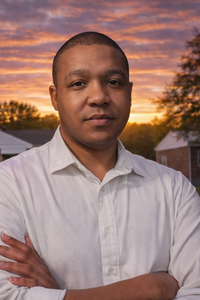
Xavier Phillips earned an associate degree from St. Louis Community College in 2019. Phillips' career experience includes working as a construction professional.[1]
- Associates:
- St. Louis Community College, 2019
Campaign money
- Raised
- $0
- From individuals
- $0
- From PACs & party
- $0
- Own money
- —
FEC filings.
View on FEC.gov(opens in new tab)In their own words
Who are you? Tell us about yourself.
Xavier Phillips is an independent candidate for the U.S. House of Representatives in Missouri's 1st Congressional District. A construction professional, small business owner, and community organizer, Phillips has built his campaign around the idea that elected officials should be builders—not just lawmakers.
He is the founder of District Repair, a community initiative focused on restoring neighborhoods through housing rehabilitation, workforce development, and civic engagement, and Operation Young Culture, a program that connects young people with leadership opportunities, skilled trades, the arts, and entrepreneurship.
Phillips' platform emphasizes affordable housing, economic opportunity, infrastructure investment, public safety through neighborhood revitalization, and expanding access to skilled trades. His campaign advocates for practical, hands-on leadership that brings people together to solve problems and strengthen communities.
A lifelong St. Louisan, Phillips believes that rebuilding homes, creating opportunity, and restoring trust in government are essential to building a stronger future for Missouri's 1st District.
Please list below 3 key messages of your campaign. What are the main points you want voters to remember about your goals for your time in office?
BUILD, DON'T JUST PROMISE
For too long, politics has rewarded people who are good at talking instead of doing. I believe leadership should be measured by what gets built, repaired, and improved in people's daily lives. We need representatives who will organize communities, secure resources, and deliver results—not excuses.PEOPLE ARE THE INFRASTRUCTURE
Strong communities aren't created by buildings alone. They are created by educated children, supported families, skilled workers, thriving small businesses, and neighborhoods where people know each other. Investing in people is the smartest investment government can make.GOVERNMENT SHOULD WORK LIKE A GOOD NEIGHBOR
Government should be accessible, responsive, and accountable. It should help people navigate resources, solve problems, and create opportunities instead of creating barriers. Public service should be rooted in integrity, transparency, and action.
What areas of public policy are you personally passionate about?
Housing & Neighborhoods: Rehab over demolition, preserve communities, expand affordable homeownership.
Workforce: Apprenticeships, skilled trades as first choice, pay people to rebuild their neighborhoods.
Youth & Education: Mentors, after-school programs, arts, trades, entrepreneurship—opportunity over hopelessness.
Small Business: Support local entrepreneurs, reduce barriers, keep investment circulating locally.
Infrastructure: Repair streets, utilities, sidewalks, and public spaces while creating jobs.
Public Safety: Prevention first—housing, jobs, youth investment, and mental health support alongside enforcement.
Healthcare: Affordable, community-based care with expanded mental health access.
Who do you look up to? Whose example would you like to follow, and why?
I look to leaders who combined moral clarity with political courage. Martin Luther King Jr. represents disciplined nonviolence and strategic organizing rooted in justice. Malcolm X represents unapologetic truth-telling and self-determination in the face of systemic neglect. I also draw from local organizers and everyday working people who don’t always get historical recognition but consistently hold communities together. The goal isn’t to imitate any one person, but to carry forward that blend of discipline, honesty, and action.
What characteristics or principles are most important for an elected official?
An elected official should be grounded in integrity, consistency, and accountability. They should be willing to tell the truth even when it is inconvenient, and make decisions based on long-term community impact rather than short-term political gain. Accessibility matters just as much—being reachable, listening consistently, and translating community voice into actual policy. Finally, a strong sense of responsibility to repair harm, not just manage systems, is essential.
What do you believe are the core responsibilities for someone elected to this office?
The core responsibility is to represent people who are often not in the room where decisions are made. That means protecting housing stability, improving public safety without over-reliance on punishment, expanding economic opportunity, and ensuring federal resources actually reach neighborhoods that have been historically left behind. It also means oversight—holding institutions accountable when they fail, waste funds, or ignore community needs.
What legacy would you like to leave?
A legacy of rebuilding—physically, economically, and socially. That neighborhoods in North St. Louis were not just preserved, but restored in a way that returned ownership, stability, and pride to the people who live there. A record of turning “government promises” into visible, block-by-block results, and proving that community-led development can outlast political cycles.
What was your very first job? How long did you have it?
My first job was as a backroom associate at Marshalls. I worked there long enough to understand the structure of real work—inventory, pressure, time discipline, and what it means to function inside a system that runs on constant demand and limited margin.
What is something that has been a struggle in your life?
One ongoing struggle has been carrying responsibility across multiple fronts at once—leadership, business, organizing, and personal life—often without sufficient support systems. There’s also the mental and emotional weight that comes with sustained pressure, including periods of burnout and depression, while still needing to show up consistently in public-facing roles.
What qualities does the U.S. House of Representatives possess that makes it unique as an institution?
The House is the most directly responsive federal institution. It’s based on population, so it reflects the people more closely than any other chamber. Members serve two-year terms, which keeps them closely accountable to voters. It also controls revenue bills, giving it real power over taxation and spending. Its size and structure make it fast-moving, politically sensitive, and constantly shaped by public pressure.
What do you perceive to be the United States' greatest challenges as a nation over the next decade?
The biggest challenges will be housing affordability and displacement, the restructuring of work under economic inequality, and rebuilding trust in institutions that many communities feel have not delivered. Climate resilience—especially for aging infrastructure and vulnerable urban neighborhoods—will also become unavoidable. Finally, the country will have to confront whether economic growth is actually translating into lived stability for working-class people, or continuing to widen the gap between promise and reality.
Do you believe that compromise is necessary or desirable for policymaking?
Compromise is necessary because the system is designed to require it—nothing moves without coalition-building. It can also be desirable when it produces stable, inclusive policy that reflects different communities. But it has limits: you can’t compromise on basic rights, justice, or equal protection. Those are the floor, not the bargaining table.
What was the first historical event that happened in your lifetime that you remember?
The September 11th attacks. It is the earliest national moment I can recall clearly, and it shaped an early awareness of vulnerability, fear, and how quickly national events can reshape everyday life.
On the 2026 ballot
Links
Compiled from the candidate’s published profile as of September 30, 2026 and FEC filings.
Source(opens in new tab)