
Background
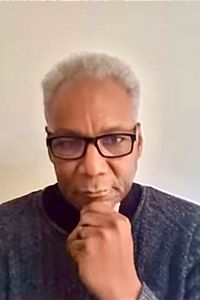
Winston Jordan was born in the borough of Brooklyn in New York, New York. He served in the U.S. Army from 1976 to 1978. He earned a military citation from Big Bend Community College in 1977. His career experience includes working as an IT professional and author.[1]
In their own words
Who are you? Tell us about yourself.
I'm a progressive candidate for New Jersey's 12th Congressional District. I'm a No Money No Donation candidate running as a Get Money Out Of Politics candidate. I support FDR2.0 Reverse Reaganomics policies, Eisenhower Tax Bracket revival;
•
The right to a useful and remunerative job
•
The right to earn enough to provide adequate food, clothing, and recreation
•
The right of every farmer to raise and sell his products at a return that gives him and his family a decent living
•
The right of every businessman, large and small, to trade in an atmosphere of freedom from unfair competition and domination by monopolies
•
The right of every family to a decent home
•
The right to adequate medical care and the opportunity to achieve and enjoy good health
•
The right to adequate protection from the economic fears of old age, sickness, accident, and unemployment
•
The right to a good education
Please list below 3 key messages of your campaign. What are the main points you want voters to remember about your goals for your time in office?
No Donations. No Donors. No Money — From Anyone.
I accept absolutely no campaign money of any kind —
not small-dollar, not large-dollar, not from individuals, not from corporations, PACs, unions, lobbies, or any entity whatsoever.
My campaign is 100% money-free and powered entirely by human participation, public engagement, and transparent issue advocacy — not fundraising.
My decisions come from public need alone, because there is no financial influence of any kind behind this campaign.
And when elected, the 30–70% of time that members of Congress normally spend raising money will be redirected entirely toward serving the people of New Jersey’s 12th District, because the no donations / no donors standard will remain in effect for my entireFully Fund the People of NJ-12 — Not Corporations.
I will work to redirect and reform federal support so it flows directly to the people and communities of New Jersey’s 12th District — not to corporate beneficiaries of policy.
This means:
Free education and lifelong learning so every resident can thrive in a changing economy.
Eliminating poverty through direct federal investment in families and communities.
Protecting human dignity and earnings as corporate “green” transitions, automation, AI, and robotics threaten jobs and wages.
Ensuring federal policy is measured by human outcomes, not corporate profits or donor preferences.
I’m running to ensure the full resources of the federal government are used to lift people, stabilize households,End Corporate Capture and Restore Public-Interest Governance.
Congress no longer serves the public — it serves donors, industries, and the corporations that shape legislation to protect their profits. My candidacy is about breaking that cycle and restoring a government that works for people, not for private power.
This includes:
Ending the revolving door between Congress, lobbyists, and corporate boards.
Stopping legislation written by industry for industry.
Prioritizing public needs, human dignity, and community well-being over corporate profits.
Ensuring federal action on housing, healthcare, climate, technology, and infrastructure is driven by public benefit, not corporate extraction.
I am running to return Congress to its core purpose:
What areas of public policy are you personally passionate about?
I am passionate about rebuilding a people-first economy through an FDR 2.0 framework that reverses Reaganomics and restores fair Eisenhower-era tax brackets on extreme wealth. My focus is eliminating poverty with universal income, fully funding public needs, and protecting workers from automation, AI, and corporate green displacement. I support housing, healthcare, and education as essential rights and believe federal policy must serve people, not donors or corporations.
Who do you look up to? Whose example would you like to follow, and why?
I look up to Franklin D. Roosevelt for his vision, leadership, and commitment to the public good. FDR’s New Deal programs demonstrated how government can actively work to eliminate poverty, create opportunity, and protect human dignity. I aim to follow his example by pursuing an FDR 2.0 approach that reverses decades of economic policies that favor wealth concentration, fully funds social programs, and ensures that federal action serves people rather than corporations or special interests.
What characteristics or principles are most important for an elected official?
Integrity, independence from donors, honesty with the public, and a commitment to measurable outcomes instead of slogans. An elected official must also be available and accessible through in person town halls, regular community meetings, and a commitment to build an NJ 12 Digital Town Hall mobile app that provides 24/7 access to congressional services, myself and staff. Public service requires real constituent outreach, clear communication, and measurable responsiveness to the needs of the district.
What do you believe are the core responsibilities for someone elected to this office?
Serve the public interest, legislate based on evidence, oversee federal agencies, protect people from economic harm, and ensure federal resources reach households rather than corporate intermediaries.
What legacy would you like to leave?
I want to leave a legacy of public-first governance, where elected officials serve people rather than donors or corporations. I aim to show that government can eliminate poverty, protect human dignity, and invest in communities through education, healthcare, and economic opportunity. I want NJ-12 to be a model district demonstrating measurable responsiveness, integrity, and accountability. Ultimately, I hope my service inspires future leaders to prioritize the public good over special interests and to rebuild trust in government.
What is the first historical event that happened in your lifetime that you remember? How old were you at the time?
The first historical event I clearly remember is the assassination of President John F. Kennedy in 1963. I was almost 6 years old at the time, but old enough to feel the shock and understand that something profoundly important had happened in the country. That moment left a lasting impression on me about the fragility of life and importance of politics.
What was your very first job? How long did you have it?
Bloomingdales Department Store New York City 2.5 years
What is your favorite book? Why?
My favorite book is my own, Jackson & Obama VS Central Banks, which chronicles how two American presidents challenged the entrenched power of central banks. It traces Andrew Jackson’s crusade against the Second Bank of the United States and Barack Obama’s efforts to redirect billions from wealthy bankers to public coffers after the 2008 financial crisis. I wrote it to highlight how determined individuals can confront powerful institutions, protect public resources, and uphold democratic accountability, lessons that guide my own approach to public service.
If you could be any fictional character, who would you want to be?
If I could be any fictional character, I would choose George Bailey from It’s a Wonderful Life. He shows selflessness, dedication to his community, and a belief that one person can make a real difference in the lives of others. His commitment to protecting his neighbors and ensuring their well-being, even at personal sacrifice, reflects the kind of public service I aim to provide for NJ‑12.
What is something that has been a struggle in your life?
A major struggle in my life has been witnessing, experiencing and confronting systemic and institutional racism that limits opportunity and fairness for many Americans. Experiencing or seeing these barriers firsthand reinforced my commitment to policies that eliminate poverty, ensure equal access to education and healthcare, protect workers, and hold institutions accountable. I am dedicated to creating a government and society where every person is treated with dignity and has a real chance to succeed, regardless of race or background.
What qualities does the U.S. House of Representatives possess that makes it unique as an institution?
The U.S. House of Representatives is the chamber closest to the people. It holds the power of the purse, conducts oversight, and serves as a co-equal branch of government, providing a check on executive and judicial power. As the representative of NJ-12, I am entrusted to carry out these responsibilities with full accountability to my constituents.
Do you believe that it's beneficial for representatives to have previous experience in government or politics?
The U.S. Constitution sets only three requirements for members of the House of Representatives: they must be at least 25 years old, have been a U.S. citizen for seven years, and be an inhabitant of the state they represent (Article I, Section 2). It does not require prior experience in government or politics. While experience can be helpful, independence, integrity, and a commitment to serving the people are far more important than political or bureaucratic background.
What do you perceive to be the United States' greatest challenges as a nation over the next decade?
The United States’ greatest challenges over the next decade include eliminating poverty, reducing inequality, addressing climate instability, ending corporate capture of government, restoring public trust, and managing economic displacement from automation and artificial intelligence. The nation must also catch up to China by investing in eliminating poverty and harnessing the potential of every citizen through free education and robust STEM curricula.
Do you believe that two years is the right term length for representatives?
Yes. The U.S. Constitution sets the term length for members of the House of Representatives at two years (Article I, Section 2). This short term is designed to ensure that representatives remain closely accountable to their constituents and responsive to the people’s needs. While it can create pressure to campaign frequently, the two-year term is intended to maintain a direct connection between voters and their elected officials.
What are your thoughts on term limits?
I support term limits in Congress because every member should have at least one opportunity to legislate alongside a progressive president and a progressive majority in both chambers. If a member is ineffective after that opportunity, the term limit should take effect. If a member delivers measurable results to the district, voters should be able to keep that member in office at their discretion.
Is there a particular representative, past or present, whom you want to model yourself after?
Barbara Jordan (TX, 1973–1979) for integrity, and public-first platform.
Patsy Mink (HI, 1965–1977, 1990–2002) for education, anti-poverty programs, and measurable social outcomes.
Both sitting representatives and candidates for office hear many personal stories from the residents of their district. Is there a story that you’ve heard that you found particularly touching, memorable, or impactful?
In NJ-12, I have heard many constituents describe a consistent pattern of non-responsiveness from the current representative. Families, workers, and seniors report difficulty getting their concerns addressed, feeling ignored by their office, and seeing little measurable action on pressing local needs. This is deeply impactful to me and reinforces my commitment to ensure that, if elected, I will be accessible, responsive, and accountable to every resident through in-person town halls, regular community engagement, and a 24/7 NJ-12 Digital Town Hall app.
Do you believe that compromise is necessary or desirable for policymaking?
Compromise is useful when it improves outcomes for the public. Compromise is harmful when it protects donor interests or weakens policy that people rely on.
The Constitution says that all bills for raising revenue must originate in the House. What role would this power play in your priorities if elected?
I will use the power of the purse to fund universal income, eliminate poverty, strengthen public education, and shift federal spending from corporate beneficiaries to households and communities - introduce Demand Side Economics to build the economy from the bottom up and the middle out in deed.
How should the U.S. House use its investigative powers?
The U.S. House must use its investigative powers to expose the 45-year Reaganomics wealth extraction scheme, reverse its harmful effects, and provide remedies to communities and businesses that have been exploited or left behind. Investigations should focus on accountability, public benefit, and ensuring that federal policy serves people rather than concentrated corporate interests.
Candidates hear many personal stories from voters. Is there a story that you’ve heard that you found particularly touching or memorable?
In NJ-12, I have heard many constituents describe a consistent pattern of non-responsiveness from the current representative. Families, workers, and seniors report difficulty getting their concerns addressed, feeling ignored by their office, and seeing little measurable action on pressing local needs. This is deeply impactful to me and reinforces my commitment to ensure that, if elected, I will be accessible, responsive, and accountable to every resident through in-person town halls, regular community engagement, and a 24/7 NJ-12 Digital Town Hall app.
What is an accomplishment that you are proud of?
One accomplishment I am particularly proud of is developing and launching PeekDiet, a health and wellness app that targets oxidative stress, the primary contributor to disease pathology in the aging population. The platform has measurable clinical impact on preventing disease and reversing several metabolic conditions by translating complex science into actionable guidance. This work reflects my commitment to practical solutions that serve the public good and empower individuals to live healthier, longer lives.
What role should the United States government have in the development or use of artificial intelligence?
The United States is in an arms race with China for AI dominance. The government must pursue strategic AI leadership that protects citizens and avoids wealth extraction schemes. Congress should stop allowing businesses to profit at the expense of workers and marginalized communities and require corporations to fund AI development responsibly. Government investment should come from appropriately taxing corporations, ensuring AI serves the public, promotes efficiency, balances long-term resources, and keeps pace with the goal of surpassing China’s gains.
What legislation would you enact related to election administration in the United States?
I would enact legislation to modernize and secure U.S. elections through digital and mobile voting backed by paper audits and blockchain security. Voting systems would be managed jointly by the U.S. Postal Service, the Department of Homeland Security, and state election authorities to ensure integrity and transparency. Universal mail-in voting and blockchain-based digital voting have already been tested successfully in multiple pilots and election cycles, demonstrating that secure, accessible, and verifiable voting is achievable nationwide.
On the 2026 ballot
Links
Compiled from the candidate’s published profile as of September 30, 2026.
Source(opens in new tab)