
Background
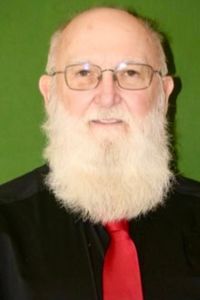
William Hunt graduated from Kansas City Christian High School and attended the University of Alaska Fairbanks. His career experience includes working in public service.[1]
- High school:
- Kansas City Christian High School
In their own words
State Senate
Who are you? Tell us about yourself.
My name is William Hunt, and I have proudly called Alaska home for more than four decades. I am a father, grandfather, and great-grandfather who believes public service should be about building a better future for the generations that follow us.
Over the years I have worked as an automotive mechanic, studied education at the University of Alaska Fairbanks, worked in the District Attorney’s Office until my retirement in 2018, and currently work as a DoorDash driver serving families throughout Interior Alaska. These experiences have allowed me to see Alaska through many different perspectives, from working families and retirees to small businesses and young people trying to build a future here.
I have also served my community as a PTA Vice President, a union steward and chapter president with ASEA Local 52, a board member for youth athletics, and through volunteer work helping families in need during the holidays.
I am running for the Alaska State Senate because I believe government should work for the people, not political parties or special interests. My campaign is centered around a 25-year plan for future generations, focused on improving education, lowering the cost of living, protecting the Permanent Fund Dividend, supporting working families, and ensuring that the children born in Alaska today inherit an Alaska that is stronger, safer, and more affordable than the one we have today.
Please list below 3 key messages of your campaign. What are the main points you want voters to remember about your goals for your time in office?
Education and future generations have been central themes in my public service and community involvement. My interest in education comes from studying education at the University of Alaska Fairbanks, teaching math labs for returning students, serving as a PTA Vice President, and working with youth programs in my community. These experiences gave me firsthand exposure to the opportunities and challenges facing Alaska’s students, parents, and educators. I have expressed interest in long-term planning and in evaluating how state policies may affect the children and families who will inherit Alaska in the decades aheadCost of living and economic opportunity are issues that have shaped much of my professional experience and public involvement. Throughout my career as an automotive mechanic, public employee, and currently as a delivery driver serving communities across Interior Alaska, I have observed the financial pressures facing working families, seniors, and small businesses. Rising costs for housing, energy, food, and transportation affect communities differently across Alaska, particularly in rural areas. My interest in public policy includes examining approaches that support economic stability, workforce development, local businesses, and long-term affordability for Alaska residentsGovernment accountability and public service have been important themes throughout my professional and community involvement. My experience working in public service, participating in labor organizations, volunteering in local programs, and interacting daily with residents across Interior Alaska has reinforced my interest in transparent and responsive government institutions. I believe public trust depends on open communication, ethical conduct, and a willingness by elected officials to remain accessible to the communities they serve. My interest in public policy includes examining ways to strengthen public confidence in government and improve civic engagement throughout Alaska.
What areas of public policy are you personally passionate about?
I am passionate about many areas of public policy because they are interconnected and affect the daily lives of Alaska families. If I had to identify the two issues that matter most to me personally, they would be education and family support systems.
I believe Alaska should strive to restore its public education system to one of the strongest in the nation by improving educational outcomes and supporting students, parents, and educators.
I am also passionate about examining how government agencies interact with families during difficult times. I believe public institutions should focus on supporting and strengthening families whenever possible while protecting vulnerable individuals and children.
Who do you look up to? Whose example would you like to follow, and why?
There are two influences I look up to most.
The first is America’s Founding Fathers. They had the foresight to think beyond their own generation and create a Constitution and Bill of Rights designed to protect the people and limit the power of government. Their long-term vision helped create a framework that has guided and protected our nation for more than 250 years.
The second is President Franklin D. Roosevelt. What I admire most about the New Deal, particularly Social Security, is that it reflected long-term thinking. It was not simply about solving the problems of that moment, but about creating a measure of security for future generations so that Americans reaching retirement age would have a foundation of support and stability.
What characteristics or principles are most important for an elected official?
I value integrity and honesty in public life, while recognizing that elected officials are human beings rather than perfect people. I believe it is important to listen to others, especially those with different experiences and viewpoints. Accountability and transparency are essential for maintaining public trust, and public officials should be willing to explain their decisions and accept responsibility for them. I also believe leaders should think beyond the next election cycle and consider how today’s decisions will affect future generations.
What legacy would you like to leave?
The legacy I would like to leave is that, 50 years from now, if someone decides to run for office and think beyond the next election cycle, they might look back at three examples of long-term thinking in American public life: the Founding Fathers, President Franklin D. Roosevelt, and Senator Hunt.
The Founding Fathers created a Constitution and Bill of Rights designed to endure for generations. President Roosevelt established programs such as Social Security with the goal of providing security not only for the people of his time, but for Americans who had not yet been born. If my service leaves any legacy, I hope it is that I encouraged Alaska and our nation to think in terms of generations rather than election cycles.
What was your very first job? How long did you have it?
My first job was as a dishwasher at what I believe was Wade’s Restaurant. I only worked there for a few days before realizing that washing dishes and restaurant work were not for me. While it was short-lived, the experience helped me learn an important lesson about myself and the kind of work I enjoyed. Not long afterward, I discovered my passion for working on vehicles and eventually built a career as an automotive mechanic, a profession I remained in for approximately 20 years.
What responsibilities of this office do you personally consider the most important?
The most important responsibility of this office is listening to your constituents and understanding the challenges they face. An elected official will not always be able to make everyone happy, but they should make decisions with the best interests of the community in mind. For me, that means always asking whether a decision will help create a better future for our children and future generations.
What was the first historical event that happened in your lifetime that you remember?
The first major historical event I remember was the assassination of President John F. Kennedy. I was in first grade at the time and only six years old, so I did not fully understand what had happened or why it mattered so much. What I do remember is that the adults around me were upset and that something felt very different that day. There was a sadness and seriousness that even a young child could sense. Looking back, I realize I was witnessing a moment that would become one of the defining events of a generation and one that many Americans still remember exactly where they were when they heard the news.
U.S. Senate
William Hunt did not complete [the profile publisher]'s 2026 Candidate Connection survey.
On the 2026 ballot
Links
Compiled from the candidate’s published profile as of September 30, 2026.
Source(opens in new tab)