
Background
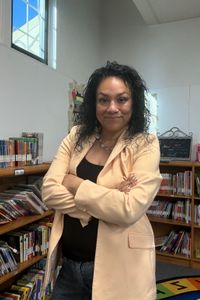
Wendy Castaneda Leal earned a bachelor's degree from Clayton State University in 2010 and a graduate degree from Capella University in 2012. Castaneda Leal's career experience includes working as an educator.[1]
- Graduate:
- Capella University, 2012
- Bachelor's:
- Clayton State University, 2010
In their own words
Who are you? Tell us about yourself.
I am dedicated to making sure all pupils, no matter their origin or mother tongue, get an elite education. We aid families in need and foster diversity to create a balanced tomorrow for every neighbor as we move adelante in our communal efforts for everyone today.
Please list below 3 key messages of your campaign. What are the main points you want voters to remember about your goals for your time in office?
Educational Equity
Wendy will fight to close the achievement gap by ensuring funding goes where it's needed most. Every student deserves the resources to succeed, regardless of their zip code.Multilingual Excellence
Expanding dual-language programs and strengthening ESL support. Wendy believes multilingualism is a superpower that prepares students for a global economy.Low-Income Advocacy
Supporting the whole child by ensuring basic needs like healthy nutrition and reliable technology access are met, removing barriers to focused learning.
What areas of public policy are you personally passionate about?
Wendy will fight to close the achievement gap by ensuring funding goes where it's needed most. Every student deserves the resources to succeed, regardless of their zip code.
Who do you look up to? Whose example would you like to follow, and why?
I tend to look up to leaders who combine moral clarity with a deep commitment to public service—people who stay grounded in the communities they serve and keep students at the center of their decisions.
One example is Malala Yousafzai, because she demonstrates extraordinary courage in advocating for education as a fundamental right, even in the face of real personal risk. Her voice reinforces that education is not just a system—it is a pathway to dignity and opportunity.
I am also fortunate to learn from mentors who have shaped my own leadership journey. Dr. Hector Rico, retired superintendent, has been a steady example of what it means to lead with integrity, humility, and a deep understanding of school communities. His approach reflects a long-standing commitment to students and educators alike.
Another mentor I deeply respect is Patrick Sanchez, current superintendent of Live Oak School District, who was recognized by Barack Obama as a Latino Educator Champion of Change. His leadership reflects both excellence and advocacy—especially in elevating opportunities for Latino students and ensuring equity remains at the center of decision-making.
In terms of leadership style, I am drawn to people who lead by listening first and acting with intention—those who don’t assume they have all the answers, but instead build solutions with the communities most impacted.
Ultimately, the example I try to follow is leadership that is steady, service-driven, and rooted in the belief that every student deserves to be seen, supported, and given a real chance to succeed.
What characteristics or principles are most important for an elected official?
For me, the most important characteristics and principles of an elected official are:
Integrity – Doing what is right even when it is difficult, and leading with honesty, transparency, and accountability.
Service Before Self – Remembering that leadership is about serving people, not power, politics, or personal gain.
Listening and Accessibility – Being willing to hear all voices, especially those that are often overlooked, and making yourself available to the communities you represent.
Compassion with Courage – Leading with heart while also making hard decisions that are in the best interest of children, families, and communities.
Equity and Opportunity – Ensuring every person, regardless of zip code or background, has access to quality opportunities and support.
Collaboration – Bringing people together across differences to solve problems rather than creating division.
Follow-Through – Keeping commitments, being transparent about challenges, and staying focused on real results.
An elected official should never forget that the position belongs to the people. Leadership is not about titles—it is about trust, responsibility, and making a meaningful difference in the lives of those you serve.
What do you believe are the core responsibilities for someone elected to this office?
The core responsibility of the State Superintendent of Public Instruction is to ensure that every student—regardless of zip code, background, or circumstance—has access to a high-quality, equitable education.
This role must be centered on advocacy, accountability, and support. A State Superintendent should work to strengthen public education by supporting students, families, educators, and school communities while ensuring schools have the resources they need to succeed.
What legacy would you like to leave?
The legacy I hope to leave is one where students—especially those who have historically been overlooked—are no longer waiting for opportunity, but are actively prepared, supported, and believed in from the very beginning.
I want to be remembered as someone who helped strengthen public education in a way that made it more equitable, humane, and responsive to the real lives of students and families. That means expanding access to the arts, career pathways, strong literacy foundations, mental health supports, and safe, welcoming school environments where every child can thrive.
I also hope to leave a legacy of trust in public education leadership—where families feel heard, educators feel supported instead of burdened, and communities see schools as true partners in shaping the future.
Most importantly, I want my legacy to reflect the belief that leadership is not about a title or a moment in office, but about the lives impacted long after decisions are made. If students feel more confident, more seen, and more prepared to pursue their dreams because of the work I’ve done, then that is the legacy I would be most proud to leave behind.
On the 2026 ballot
Links
Compiled from the candidate’s published profile as of September 30, 2026.
Source(opens in new tab)