
Background
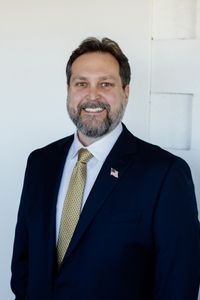
Wayne Stiles (Democratic Party) ran for election to the U.S. House to represent Michigan's 1st Congressional District. He lost in the Democratic primary on August 4, 2026.
- Bachelor's:
- University of Michigan
Campaign money
- Raised
- $54K
- From individuals
- $19K
- From PACs & party
- $0
- Own money
- —
FEC filings through July 17, 2026.
View on FEC.gov(opens in new tab)In their own words
Who are you? Tell us about yourself.
Wayne Stiles is a U.S. Congressional Candidate for Michigan's 1st Congressional District. An unapologetic Catholic, Industrial Designer, Entrepreneur and Small Business owner. Wayne was raised in West Michigan and earned a BFA degree from the University of Michigan. Wayne lives and works in Traverse City, MI.
Please list below 3 key messages of your campaign. What are the main points you want voters to remember about your goals for your time in office?
Defend Democracy
Our democracy is the foundation of our freedom, and it must be protected. I will fight to ensure fair and secure elections, protect voting rights, and keep big money and corporate influence out of politics. Defending democracy means making government accountable to the people—not special interests—and standing up against efforts to erode trust in our institutions.Fight for everyday hard working Americans
Too often, Washington forgets about the people who keep our communities running—teachers, farmers, small business owners, and working families. I will fight to lower costs, raise wages, and make sure hard work is rewarded with opportunity and dignity. My focus will always be on policies that strengthen the middle class, protect good jobs, and ensure that everyday Americans—not the wealthy and well-connected—are at the center of our government’s priorities.Restore the American Dream
Every generation should have the chance to build a better life than the one before—but too many families today feel that dream slipping away. I will work to restore the American Dream by expanding opportunities for good-paying jobs, making education and healthcare more affordable, and ensuring safe, thriving communities for our loved ones. Together, we can rebuild hope and opportunity so that every family has the chance to succeed.
What areas of public policy are you personally passionate about?
I am personally passionate about expanding the middle class and restoring stability and common sense to our political system. A strong middle class is the backbone of our economy and democracy, and we need policies that create good-paying jobs, lower costs, and open opportunities for working families. At the same time, I believe it is vital to bring a modicum of sanity back to our politics—reducing division, focusing on practical solutions, and putting people ahead of partisanship.
What characteristics or principles are most important for an elected official?
The most important characteristic for an elected official is integrity. Without it, trust between representatives and the people they serve cannot exist. Integrity means being honest, transparent, and consistent in both words and actions, even when it is difficult or unpopular. An official who leads with integrity puts the interests of their constituents above personal or political gain, ensuring decisions are made fairly and in the public’s best interest.
What do you believe are the core responsibilities for someone elected to this office?
To serve as a true representative of the people, ensuring that the voices and concerns of Northern Michigan and the Upper Peninsula are heard on the national stage. This means listening closely to constituents, advocating for their needs in Congress, and working to secure policies and resources that reflect the unique challenges and strengths of the region. Ultimately, the role is about faithfully carrying the priorities of the district to Washington while maintaining accountability and transparency to the people back home.
What qualities does the U.S. House of Representatives possess that makes it unique as an institution?
The U.S. House of Representatives is unique as the larger chamber of Congress, with 435 members apportioned by population, making it closely tied to the principle of “one person, one vote.” Its two-year terms keep representatives accountable to voters, and it holds exclusive powers to originate revenue bills and impeach federal officials. With centralized leadership and stricter rules than the Senate, the House can act quickly but often in a more partisan way, making it a distinct body closely linked to the people.
Do you believe that it's beneficial for representatives to have previous experience in government or politics?
I do not believe previous experience in government or politics is necessary to serve effectively as a representative. In fact, bringing in individuals from outside the political establishment can offer fresh perspectives, new ideas, and a closer connection to the everyday challenges citizens face. Too often, career politicians become disconnected from the people they represent, while newcomers can approach problems with practicality and common sense rather than partisan habits.
What do you perceive to be the United States' greatest challenges as a nation over the next decade?
One of the greatest challenges for the United States over the next decade will likely be strengthening and preserving its role as a global leader in democracy. Domestically, this involves addressing political polarization, protecting election integrity, and ensuring that democratic institutions remain trusted and effective. Internationally, it requires demonstrating that democratic governance can deliver stability, prosperity, and fairness in the face of rising authoritarian influence around the world. Meeting this challenge will depend on the nation’s ability to rebuild civic trust at home, uphold the rule of law, and engage in diplomacy that promotes democratic values abroad.
Do you believe that two years is the right term length for representatives?
I do not believe two years is the right term length for representatives. A two-year term is too short to accomplish much, as representatives are forced into a near-constant campaign cycle. Extending the term to three years would provide more time to focus on governing, building relationships, and advancing meaningful legislation, while still keeping members accountable to the voters.
What are your thoughts on term limits?
Term limits are necessary because elected office was never intended to be a lifelong career. Serving in Congress should be about representing the people, not building decades-long political power. I would advocate for a three-term limit for representatives, which would help prevent the rise of entrenched “career politicians.” By regularly bringing in new voices and perspectives, term limits could refresh the political system, encourage innovation, and keep leaders more connected to the concerns of everyday citizens.
Is there a particular representative, past or present, whom you want to model yourself after?
Yes. I look to leaders like Senator Carl Levin, Representative Bart Stupak, and Attorney General Dana Nessel as models. Each demonstrated a strong commitment to public service and to representing the people of Michigan with integrity, accountability, and dedication. Their work shows the importance of listening to constituents, standing firm on principles, and ensuring that government works for everyday people.
Both sitting representatives and candidates for office hear many personal stories from the residents of their district. Is there a story that you’ve heard that you found particularly touching, memorable, or impactful?
One memorable and impactful stories I’ve heard came from the teachers and principal at Grand Marais, Michigan. They described how their island school was struggling to stay open because it no longer fit within the state’s funding formula, and they were pleading, for opportunities to keep it alive. What struck me most was not only their passion for their school and community but also how the national partisan divide had filtered down into their small community, creating conflict over an issue that should unite them. It was a powerful reminder of how political divides can devastate small towns, and how much is at stake when it comes to supporting local schools and communities.
Do you believe that compromise is necessary or desirable for policymaking?
Yes—compromise is both necessary and desirable for policymaking because it helps bridge differences, prevents gridlock, and produces laws that are more widely accepted and lasting in a diverse democracy like the United States.
The Constitution says that all bills for raising revenue must originate in the House. What role would this power play in your priorities if elected?
Since the Constitution requires all revenue bills to originate in the House, this power would play a central role in my priorities by working toward a fair tax code. That means ensuring the tax system is balanced, transparent, and designed to support working families and small businesses rather than favoring only the wealthy or special interests. Using this constitutional authority responsibly is essential to creating an economy that works for everyone.
How should the U.S. House use its investigative powers?
The House should use its investigative authority to establish facts, protect the public interest, and hold officials and institutions accountable—not for spectacle or partisan scorekeeping. Because the Constitution gives the House the sole power to impeach, investigations that uncover credible evidence of “high crimes and misdemeanors” must be pursued carefully and thoroughly. Beyond impeachment, the House also has a responsibility to root out wrongdoing at its source and prevent it from eroding the foundation of our democracy.
What is an accomplishment that you are proud of?
I’m proud to be the first in my family to earn a college degree, the first to start my own business, and now the first to run for public office. My path has not always been easy—I’ve learned many lessons from the school of hard knocks—but those experiences have made me resilient and determined. I’ve also learned to accept help from those around me and to lean on experts in their fields. With those experiences, I am determined and steadfast in achieving the goals I set for myself. And with compassion and understanding, I believe I can be the best representative for our district.
What role should the United States government have in the development or use of artificial intelligence?
We need to embrace the future, and artificial intelligence is a big part of it. AI can free people from mundane tasks, spark creativity, and open new opportunities for exploration and innovation. The U.S. government should help prepare the workforce by investing in training and education, while also protecting human rights and integrity. At the same time, smart regulation will be needed to manage challenges like energy consumption and ensure AI is used responsibly. This is a watershed moment for humanity, and government has a responsibility to guide AI’s growth so it benefits society as a whole.
What legislation would you enact related to election administration in the United States?
I would support legislation that modernizes and strengthens our democracy. That includes building secure systems that allow citizens to vote conveniently, such as from their phones, while maintaining election integrity. I also believe we must overturn Citizens United and get corporate money out of politics by setting strict campaign spending limits and replacing big-money donations with public funding for campaigns under rigorous scrutiny. These reforms would make our elections more accessible, fair, and accountable to the people—not wealthy donors or special interests.
Campaign websiteStiles' campaign website stated the following:Affordable and Accessible HealthcareNo family should go bankrupt because of medical bills. Access to affordable healthcare is a fundamental right. I'll work to strengthen Medicaid and Medicare, ensure that rural healthcare facilities stay open, and fight for lower prescription drug prices. For families in the U.P. and across our district, I'll push for policies that make healthcare affordable and accessible, so that you can take care of your health without the fear of financial ruin.Raising Wages and Supporting Local JobsWe need to make sure that working families in our district are earning wages that reflect the cost of living. I support raising the federal minimum wage so that no one has to work full time and still struggle to provide for their family. In addition, I'll work to ensure that good-paying jobs in manufacturing, clean energy, and skilled trades are accessible to everyone, particularly in rural communities like ours. We have an abundance of resources, and it's time to put them to work for the people here.Affordable HousingHousing costs have skyrocketed, making it harder for families to afford a place to live. I'll work to expand access to affordable housing programs, invest in housing development that fits the needs of working families, and ensure that federal policies prioritize affordable and sustainable housing options in rural and underserved areas.Support for Small BusinessesSmall businesses are the backbone of our economy, and I'll make sure they have the resources they need to succeed. Whether it's providing access to low-interest loans, tax incentives, or reducing regulatory burdens, I'm committed to helping local entrepreneurs thrive. This includes ensuring that rural businesses get the support they need to stay competitive in an increasingly digital world.Affordable Childcare and Family LeaveWorking families are under immense pressure, especially when it comes to childcare costs. I'll push for policies that lower the cost of childcare and provide access to quality care for families across the district. Additionally, I will fight for paid family leave policies that allow parents to take care of their children and family members without sacrificing their income.Investing in Rural InfrastructureMany families in Michigan's 1st District face barriers to access because of poor infrastructure. I'll fight for increased investment in rural broadband to ensure that every home, school, and business can stay connected. Additionally, I'll work to improve roadways, public transportation, and water systems to ensure that communities have the infrastructure they need to thrive.Protecting Social Security and MedicareFor working families in our district, Social Security and Medicare are critical lifelines. I will fight to protect these programs from cuts and ensure they remain strong for future generations. Everyone who has worked hard and paid into the system deserves to know that their benefits will be there when they need them.Affordable Education and Workforce TrainingEducation is the key to breaking the cycle of poverty and achieving upward mobility. I'll advocate for increased funding for public schools, especially in rural areas, and push for lower college tuition through Pell Grants and student loan forgiveness. I will also focus on expanding workforce development programs that provide skills training for high-demand fields, such as clean energy, technology, and the skilled trades.— Wayne Stiles' campaign website (July 23, 2026)Note: This text is quoted verbatim from the original source. Any inconsistencies are attributable to the original source.
On the 2026 ballot
Links
Compiled from the candidate’s published profile as of September 30, 2026 and FEC filings.
Source(opens in new tab)