
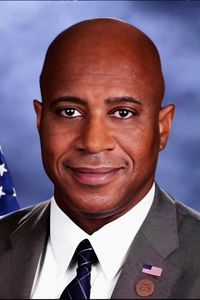
Background
Walter Blackman graduated from Lakewood University in 2023. He served in the United States Army from 1995 to 2016. He received the Bronze Star Medal and the Meritorious Service Medal. In 2016, Blackman founded W.B. Inclusion & Diversity Consulting and Victim Advocacy Inc. His professional experience includes working as a CEO.[1][2]
He has been affiliated with the following organizations:[2]
Blackhorse Association
1st Cavalry Division Association
Order of the Spur
National Armor & Cavalry Heritage Foundation:
The Armor Association
Campaign themes
Walter Blackman has not yet completed [the profile publisher]'s 2026 Candidate Connection survey.
Send a message to Walter Blackman asking him to fill out the survey.
If you are Walter Blackman, click here to fill out [the profile publisher]'s 2026 Candidate Connection survey.
Who fills out the candidate survey?
Any candidate running for elected office, at any level, can complete [the profile publisher]'s Candidate Survey. Completing the survey will update the candidate's [the profile publisher] profile, letting voters know who they are and what they stand for. More than 32,000 candidates have taken [the profile publisher]'s candidate survey since we launched it in 2015. Learn more about the survey here.
You can ask Walter Blackman to fill out this survey by using the buttons below or emailing waltb4azhouse@gmail.com.
State House
Who are you? Tell us about yourself.
Embark on an exhilarating journey through the extraordinary life of Walter "Walt" Blackman, a dynamic force of change and unwavering dedication!
Walt's odyssey began with 21 years of unparalleled service in the U.S. Army, where he fearlessly ventured into the heart of conflict in Iraq and Afghanistan, earning the prestigious Bronze Star. His military tenure laid the bedrock for his impassioned advocacy for veterans' rights and a commitment to serving others.
In a historic turn of events, Walt shattered barriers in 2018, becoming Arizona's trailblazing first African American Republican elected to state office. His tenure in the Arizona House of Representatives ignited a blaze of transformation across the state.
Re-elected in 2020, Walt's leadership as Chair of the Arizona Judiciary Committee from 2021 to 2023 heralded an era of unparalleled legislative success, boasting a monumental 90% success rate and catalyzing an astonishing $2.7 billion surge in revenue for Arizona's prosperity.
During his tenure, Walt orchestrated a symphony of achievements, generating $2.7 billion in new revenue, nurturing the birth of 480 new jobs, and spearheading critical initiatives such as the Arizona Drought Contingency Plan and the visionary Arizona Teachers Academy. Under his stewardship, Arizona experienced unprecedented economic growth, propelling the state to new heights of prosperity.
Please list below 3 key messages of your campaign. What are the main points you want voters to remember about your goals for your time in office?
Forge a Brighter Arizona: Walt Blackman's campaign is dedicated to leading Arizona into a new era of opportunity, unity, and prosperity. His vision encompasses creating a state where every citizen has a chance to thrive, ensuring that no voice is left unheard, and no individual is left behind.Innovate, Educate, Prosper: With a focus on innovation, education, and responsible environmental stewardship, Walt Blackman aims to position Arizona as a national leader. His plan involves fostering an inclusive and compassionate environment where unity and collaboration propel the state forward, overcoming obstacles and empowering its people to flourish.Empower Entrepreneurship and Economic Growth: Walt Blackman's campaign advocates for small businesses, limited government, and entrepreneurship. By fostering an environment conducive to investment and economic growth, he envisions a thriving economy that benefits all Arizonans. Inspired by Ronald Reagan's principles, he is committed to building a state where dreams soar and possibilities abound, guided by unwavering faith in Arizona's spirit.
What areas of public policy are you personally passionate about?
Veterans' Affairs: As a former member of the U.S. Army with a distinguished service record, I am committed to advocating for the rights and well-being of our veterans. Ensuring they have access to the resources and support they need, including healthcare, education, and employment opportunities, is a top priority for me.
Criminal Justice Reform: I am passionate about implementing reforms within our criminal justice system to promote fairness, equity, and rehabilitation. This includes initiatives to reduce recidivism, support reintegration into society for formerly incarcerated individuals, and address systemic issues such as racial disparities and over-incarceration.
Education: Education is the foundation of opportunity and prosperity.
Who do you look up to? Whose example would you like to follow, and why?
The first historical event I remember from my lifetime is the Vietnam War. I was around 7 years old at the time. Watching the war coverage on TV left a lasting impression on me, particularly when I saw how it affected my best friend after he was told that his father had been killed in Vietnam.
Witnessing the impact of the war on my friend's family and the broader community deeply affected me and ignited a sense of empathy and a desire to make a difference. It was a formative experience that shaped my perspective on the world and instilled in me a commitment to serving others and contributing to the greater good.
This early exposure to the realities of war and its human toll planted the seeds of my future involvement in public service. It motivated me to work towards building a better, more peaceful world where such tragedies could be prevented, and where every individual's rights and dignity are respected.
What characteristics or principles are most important for an elected official?
For Walt Blackman, the characteristics and principles most important for an elected official are deeply rooted in his upbringing and experiences. Growing up in a military family, he learned the values of integrity, hard work, honesty, personal responsibility, and love for country. These principles, instilled by his parents, emphasize doing what is right, even when no one is watching.
Throughout his military service and subsequent tenure as an Arizona lawmaker, Walt has demonstrated unwavering dedication to duty, honor, and service to others. His commitment to addressing critical state issues, such as pro-life matters, immigration, education funding, criminal justice reform, and economic growth, reflects his belief in serving the best interests of his constituents and the state as a whole.
Walt's vision for the future of Arizona is comprehensive and focused on prioritizing election security, border security, water management, infrastructure development, law and order, government accountability, support for veterans and law enforcement, pro-life advocacy, parental rights in education, rural development, and responsible government spending, among other priorities. His dedication to these principles and bold leadership aims to create a brighter and more prosperous future for all Arizonans.
What qualities do you possess that you believe would make you a successful officeholder?
Several qualities that I possess contribute to my belief that I would be a successful officeholder:
1. Integrity: I hold myself to the highest ethical standards and believe in acting with honesty, transparency, and accountability in all aspects of my work.
2. Empathy: I possess a strong sense of empathy and compassion, allowing me to understand and relate to the diverse needs and perspectives of the people I serve.
3. Leadership: I have demonstrated leadership abilities, both in my professional career and in my community involvement, by inspiring others, building consensus, and guiding teams toward common goals.
4. Communication: I excel in communication, both in listening to constituents' concerns and in effectively conveying complex ideas and policies in a clear and accessible manner.
5. Collaboration: I believe in the power of collaboration and teamwork and am adept at building coalitions, forging partnerships, and working across party lines to achieve common objectives.
6. Problem-solving: I am skilled at identifying challenges, analyzing issues, and developing innovative solutions to address complex problems facing our community and state.
7. Resilience: I am resilient and adaptable, able to navigate adversity and setbacks with determination and grace, and to persist in the face of obstacles to achieve positive outcomes.
8. Commitment to Service: Above all, I am deeply committed to serving others and improving the lives of the people in my community and state. My dedication to public service is unwavering, and I am motivated by a genuine desire to make a positive impact and create a better future for all.
What do you believe are the core responsibilities for someone elected to this office?
For someone elected to the office, the core responsibilities revolve around serving the needs and interests of the constituents and upholding the values and laws of the state. These responsibilities include:
1. **Representation**: Elected officials are tasked with representing the interests and concerns of their constituents. This involves listening to the needs of the community, advocating for their interests, and ensuring that their voices are heard in the legislative process.
2. **Legislation**: Crafting, proposing, and voting on legislation that addresses the pressing issues facing the state is a fundamental responsibility. This includes drafting bills, collaborating with colleagues, and evaluating proposed policies to determine their potential impact on the community.
3. **Oversight**: Elected officials are responsible for providing oversight of government agencies and programs to ensure accountability and transparency. This involves conducting hearings, reviewing budgets, and monitoring the implementation of laws and regulations.
4. **Constituent Services**: Providing assistance and support to constituents in navigating government services, accessing resources, and addressing their concerns is a crucial aspect of the role. This includes responding to inquiries, resolving issues, and advocating on behalf of individuals or groups within the community.
5. **Community Engagement**: Building relationships with community members, organizations, and stakeholders is essential for effective governance. Elected officials should engage in outreach efforts, attend community events, and foster dialogue to understand the needs of the community and build trust.
Overall, the core responsibilities of someone elected to office involve representing the interests of the constituents, legislating on their behalf, providing oversight of government functions, offering constituent services, and engaging with the community to promote collaboration and understanding.
What legacy would you like to leave?
The legacy I would like to leave is one of positive impact, integrity, and service to others. I aspire to be remembered as someone who made a difference in the lives of the people I served and, in the communities, I was a part of.
Specifically, I hope to leave a legacy of:
1. Empowerment: I want to empower individuals and communities to reach their full potential, providing them with the resources, support, and opportunities they need to thrive.
2. Inspiration: I aim to inspire others to lead with compassion, integrity, and a commitment to making a difference. I hope to serve as a role model for future generations of leaders, encouraging them to embrace their values and work towards positive change.
3. Unity: I seek to foster a legacy of unity and collaboration, bringing people together across divides to find common ground, build consensus, and achieve shared goals.
4. Justice and Equity: I am dedicated to advancing justice, equality, and opportunity for all, working to dismantle barriers and address systemic injustices that hold people back based on race, gender, socioeconomic status, or other factors.
5. Stewardship: I aim to leave a legacy of responsible stewardship, protecting and preserving our natural resources, environment, and cultural heritage for future generations to enjoy and cherish.
6. Service: Ultimately, I hope to be remembered as someone who dedicated their life to serving others, putting the needs of the community above personal gain and leaving the world a better place than I found it.
In all of my endeavors, I strive to leave a positive and lasting impact that reflects my values, principles, and commitment to making a difference in the world.
What was your very first job? How long did you have it?
My very first job was as a cashier at a local grocery store. I worked there part-time during my high school years, starting when I was 16 years old. I held the job for about two years, balancing it with my studies and extracurricular activities. It was a valuable experience that taught me important skills such as customer service, time management, and responsibility, and it provided me with my first taste of earning my own income and contributing to my community.
What is your favorite book? Why?
"Profiles in Courage" by John F. Kennedy is a timeless classic that profiles eight courageous senators who defied public opinion and party loyalty to do what they believed was right. This book highlights the importance of integrity, principle, and moral courage in public service, qualities that I deeply admire and strive to embody in my own life.
One aspect of "Profiles in Courage" that resonates with me is its exploration of the personal and political risks involved in standing up for one's convictions. Each profiled senator faced intense pressure and criticism for their decisions, yet they remained steadfast in their commitment to uphold their principles, even at great personal cost.
Reading about these acts of courage has given me strength and inspiration in my own journey, particularly when faced with difficult decisions or challenges. It serves as a reminder that true leadership requires courage, integrity, and a willingness to stand up for what is right, even in the face of adversity.
"Profiles in Courage" has also deepened my appreciation for the complexities of political leadership and the importance of ethical decision-making in public office. It reinforces the idea that leadership is not about popularity or self-interest, but about serving the greater good and making decisions guided by conscience and values.
Overall, "Profiles in Courage" is a book that has left a lasting impact on me, reminding me of the power of courage, integrity, and conviction in shaping history and inspiring positive change. It has strengthened my resolve to lead with integrity and to always strive to do what is right, no matter the challenges or obstacles I may face.
If you could be any fictional character, who would you want to be?
If I could be any fictional character, I would choose to be Atticus Finch from Harper Lee's "To Kill a Mockingbird." Atticus is a symbol of integrity, compassion, and moral courage. He stands up for what is right, even when it is difficult or unpopular, and serves as a role model for his children and his community.
Atticus embodies the qualities of empathy, fairness, and justice that I aspire to in my own life. He is a wise and principled character who remains steadfast in his beliefs, even in the face of adversity. As Atticus Finch, I would have the opportunity to make a positive impact on the lives of others, fight for equality and justice, and inspire others to do the same.
What was the last song that got stuck in your head?
The last song that got stuck in my head was "Don't Stop Believing'" by Journey. Its catchy melody and inspiring lyrics have a way of lingering in the mind long after you've heard it.
What is something that has been a struggle in your life?
One of the struggles I have faced in my life is overcoming self-doubt and building confidence in myself and my abilities. Like many people, I have experienced moments of insecurity and uncertainty, particularly when facing new challenges or pursuing ambitious goals.
Overcoming self-doubt has required a concerted effort to challenge negative thoughts, embrace my strengths, and cultivate a positive mindset. Through self-reflection, personal growth, and seeking support from mentors and loved ones, I have learned to believe in myself and trust in my capabilities.
While the journey to overcoming self-doubt has not always been easy, it has been incredibly rewarding. Each step forward has brought greater resilience, self-awareness, and confidence, enabling me to face obstacles with courage and determination.
Ultimately, my struggles with self-doubt have taught me valuable lessons about resilience, perseverance, and the importance of believing in oneself. They have strengthened my resolve to overcome challenges and pursue my passions with confidence, knowing that I am capable of achieving great things.
What do you believe is the ideal relationship between the governor and state legislature?
The ideal relationship between the governor and state legislature is one of collaboration, mutual respect, and shared commitment to the well-being of the state and its citizens. Here are the key aspects of this relationship:
1. Communication and Collaboration: Open and effective communication between the governor and state legislature is essential for addressing the pressing issues facing the state. Both branches of government should work together collaboratively to develop and implement policies that address the needs and priorities of the state. This involves regular meetings, consultations, and constructive dialogue to find common ground and reach consensus on important issues.
2. Checks and Balances: While collaboration is important, it is also essential for the governor and state legislature to maintain their respective roles and responsibilities as outlined in the state constitution. The legislature acts as a check on the executive branch, providing oversight and accountability, while the governor has the authority to veto legislation and implement executive actions. This system of checks and balances ensures that power is distributed evenly and prevents any branch of government from becoming too dominant.
3. Respect for Separation of Powers: Both the governor and state legislature must respect the separation of powers and the independence of each branch of government. This means refraining from overstepping their authority and respecting the constitutional role of the other branch. While disagreements may arise, it is important for both sides to approach them with respect and a willingness to compromise in the best interests of the state.
4. Commitment to the Public Interest: Ultimately, the governor and state legislature share a common goal: to serve the public interest and improve the lives of the citizens they represent.
What do you perceive to be your state's greatest challenges over the next decade?
Over the next decade, Arizona is likely to face several significant challenges that will require proactive and strategic approaches to address. Some of the key challenges include:
1. Water Scarcity and Drought: Arizona is already experiencing the effects of water scarcity, exacerbated by prolonged drought conditions and increasing demand from a growing population. Addressing water management and conservation will be critical to ensuring a sustainable water supply for both urban and rural communities, as well as for agriculture and industry.
2. Climate Change Impacts: Climate change is expected to amplify existing environmental challenges in Arizona, including heatwaves, wildfires, and diminishing water resources. Mitigating the impacts of climate change and implementing adaptation strategies will be essential to protect public health, infrastructure, and natural ecosystems.
3. Education Funding and Quality: Arizona faces persistent challenges in education, including underfunding, teacher shortages, and disparities in educational outcomes. Investing in education, improving teacher compensation and support, and ensuring access to quality education for all students will be essential for the state's long-term economic competitiveness and social well-being.
4. Border Security and Immigration: Arizona's proximity to the U.S.-Mexico border presents unique challenges related to border security, immigration enforcement, and humanitarian concerns. Balancing border security measures with respect for human rights and addressing the root causes of migration will be important for promoting safety and stability in border communities.
5. Economic Development and Job Creation: While Arizona has experienced economic growth in recent years, disparities in economic opportunity persist, particularly in rural and underserved communities. Promoting economic diversification, supporting small businesses, and investing in workforce development.
Do you believe that it’s beneficial for state legislators to have previous experience in government or politics?
Yes, I believe it's beneficial for state legislators to have previous experience in government or politics for several reasons:
1. Understanding of the Legislative Process: Experience in government or politics provides legislators with a deeper understanding of the legislative process, including how bills are drafted, debated, and enacted into law. This knowledge allows them to navigate the complexities of policymaking more effectively and to advocate for their constituents with greater insight.
2. Familiarity with Political Dynamics: Politics can be complex and often involves navigating relationships, alliances, and competing interests. Legislators with previous experience in government or politics are better equipped to understand these dynamics and to build consensus, negotiate compromises, and achieve meaningful results.
3. Knowledge of Policy Issues: Government experience often involves exposure to a wide range of policy issues and challenges facing the state. Legislators with prior experience may have a deeper understanding of these issues and be better prepared to develop informed policy proposals and address complex problems.
4. Relationship Building and Networking: Building relationships with other legislators, stakeholders, and government officials is essential for effective governance. Previous experience in government or politics provides legislators with valuable networks and contacts that can facilitate collaboration and cooperation on legislative priorities.
5. Leadership and Decision-Making Skills: Government experience can help develop leadership and decision-making skills necessary for effective governance. Legislators with previous experience may be better equipped to lead committees, manage legislative processes, and make difficult decisions in the best interests of the state and its residents.
Do you believe it’s beneficial to build relationships with other legislators? Please explain your answer.
Yes, building relationships with other legislators is highly beneficial for several reasons:
1. Collaboration and Coalition Building: Building relationships with other legislators fosters an environment of collaboration and cooperation. By working together, legislators can find common ground, negotiate compromises, and advance shared priorities more effectively than if they were working in isolation. Building coalitions across party lines can also help bridge divides and achieve bipartisan solutions to complex issues.
2. Information Sharing and Learning: Building relationships with other legislators allows for the exchange of information, ideas, and expertise. Legislators can learn from each other's experiences, perspectives, and areas of expertise, which can inform their decision-making and enhance the quality of legislation. This information sharing can lead to more informed and effective policymaking.
3. Legislative Effectiveness: Legislators who have strong relationships with their colleagues are often more effective in advancing their legislative agendas. Building trust and rapport with other legislators can increase one's influence and ability to rally support for important bills and initiatives. Additionally, legislators with strong relationships may be more likely to receive support for their own priorities from their colleagues.
4. Problem Solving and Conflict Resolution: Building relationships with other legislators can facilitate problem-solving and conflict resolution. When disagreements arise, legislators who have established positive relationships are more likely to engage in constructive dialogue, find common ground, and resolve conflicts amicably. Strong relationships can help prevent gridlock and promote the smooth functioning of the legislative process.
5. Building Trust and Respect: Building relationships with other legislators helps foster a sense of trust and mutual respect within the legislative body.
Is there a particular legislator, past or present, whom you want to model yourself after?
While I greatly admire the leadership and principles of President Ronald Reagan and Speaker of the House Tip O'Neill, I believe that each legislator brings their own unique qualities and experiences to the table. Rather than modeling myself after a specific individual, I strive to embody the values of integrity, empathy, collaboration, and dedication to public service in my role as a legislator.
I am inspired by leaders who prioritize the well-being of their constituents, work tirelessly to address the needs of their communities, and foster a spirit of cooperation and inclusivity in the legislative process. My goal is to learn from the examples set by past and present legislators, drawing on their successes and lessons learned to effectively represent the interests of the people I serve and make a positive impact in their lives.
Ultimately, I believe that the most effective legislators are those who are guided by their own principles, values, and commitment to serving the public good, rather than attempting to emulate any single individual. As such, I am dedicated to upholding the highest standards of integrity, accountability, and responsiveness in my work as a legislator, while drawing inspiration from the diverse array of leaders who have come before me.
Are you interested in running for a different political office (for example, the U.S. Congress or governor) in the future?
While my primary focus is on the office I currently seek, I remain open to the possibility of serving in different political capacities in the future. My commitment to serving My Heavenly Father, my family, and the people of Arizona remains steadfast, and I am dedicated to making a positive impact in whatever role I am called to fulfill.
I believe that effective leadership is not defined by the title or position one holds, but by the values, principles, and dedication to service that one brings to the table. Whether it be in the U.S. Congress, as governor, or in another capacity, my ultimate goal is to continue working tirelessly to advance the well-being and prosperity of Arizona and its residents.
As I continue on my journey of public service, I will prayerfully consider any opportunities to further contribute to the betterment of our state and nation, always guided by faith, family, and a deep love for Arizona.
Both sitting legislators and candidates for office hear many personal stories from the residents of their district. Is there a story that you’ve heard that you found particularly touching, memorable, or impactful?
As a legislator and candidate for office, I've had the privilege of hearing many personal stories from the residents of my district, and each one has left a lasting impression on me. However, there is one story in particular that stands out as particularly touching and impactful.
I had the opportunity to meet with a single mother who shared her struggles in navigating the healthcare system to access affordable medical care for her young daughter, who had a chronic illness. She spoke passionately about the challenges she faced in balancing work, caregiving responsibilities, and financial strain, all while advocating for her daughter's health and well-being.
Her story deeply resonated with me, as it highlighted the real-life struggles that many families in our community face when it comes to accessing healthcare and supporting loved ones with medical needs. It reinforced my commitment to advocating for policies that ensure access to quality, affordable healthcare for all Arizonans, regardless of income or circumstance.
This encounter served as a powerful reminder of the importance of listening to the voices of constituents and working tirelessly to address their needs and concerns. It strengthened my resolve to be a compassionate and effective advocate for the people of my district, and it continues to inspire me in my work as a legislator and candidate for office.
Tell us your favorite joke.
Why don't scientists trust atoms?
Because they make up everything!
Should the legislature oversee or grant the use of emergency powers?
The oversight and granting of emergency powers is a crucial responsibility of the legislature, ensuring that the use of such powers is transparent, accountable, and in line with democratic principles. While it is essential for the executive branch to have the authority to respond swiftly and effectively to emergencies, such as natural disasters or public health crises, it is equally important for the legislature to provide checks and balances to
On the 2026 ballot
Links
Compiled from the candidate’s published profile as of September 30, 2026.
Source(opens in new tab)