
Background
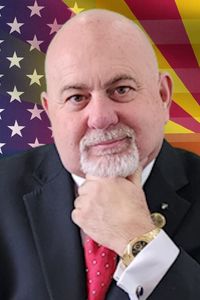
Vance Cast was born in Tucson, Arizona. Cast's professional experience includes working as a researcher. He served in the U.S. Army from 1982 to 1988. Cast earned a bachelor's degree from Brigham Young University in 1998, a graduate degree from the University of Phoenix in 2000, and a Ph.D. from Capella University in 2005.[1]
Cast has been affiliated with The American Legion.[1]
- Ph.D:
- Capella University, 2005
- Graduate:
- University of Phoenix, 2000
- Bachelor's:
- Brigham Young University, 1998
In their own words
Who are you? Tell us about yourself.
I’m Clifford Vance Cast. I believe in rising above, and putting people before parties. By acting as an ambassador for Arizona, I will facilitate constructive conversations, find common ground, and focus on what truly matters: the well-being of our great citizens of Southern Arizona, District 6.” Fighting most often has winners and losers, but finding common ground and compromise has strength in numbers.
I’m not a career politician. I am a Tucson native, from a blue collar family, who served this country and community. I’ve worked hard in life. I learned how to be strong, and do the right thing in the face of previous errors. It's called accountability.
I served my country in the US Army Medical Corps, where the "Adapt and Overcome" philosophy carried me through adversity to many great accomplishments in life. I am proof that with accountability and hard work, anyone can achieve great things in education and career, while still embracing my family's immigrant heritage.
With grown daughters and school-age grandchildren, it is of the great importance that we push for positive changes in our communities and schools, making better spaces for our kids, safe and free streets, and healthy futures. Our children are the next generation, let’s make sure we guard our American freedoms and liberties.
Please list below 3 key messages of your campaign. What are the main points you want voters to remember about your goals for your time in office?
As a US Congressman I will work to bring local issues back to Arizona, because only Arizonans understand and can solve Arizona issues. I will fight to support the 10th Amendment where appropriate. My motto is Bring Power back to the States to let local legislators and citizens solve state and local issues and manage state and local resources. As a US Congressman I will work to bring local issues back to Arizona, because only Arizonans understand and can solve Arizona issues. I will support the 10th Amendment where appropriate. My motto is Bring Power back to the States to let local legislators and citizens solve state and local issues and manage state and local resources.
I will act as a Congressional member to make sure all rules and regulations of any government agency or oversight are inline with the laws that were passed in both language and intent. I want to review the Congressional Review Act of 1996 to make sure it is implemented properly and creates a balance of power. Currently the Congressional review is easily overturned by the Presidential seat of powerPrison Reform/Rehabilitation through education and economic alternatives are critical. I stand for the betterment of people. Giving them a pathway to success and reducing the burden of the scarlet “F” on their forehead. I strongly believe in punishment and accountability, but there needs to be common sense when laws are applied. Currently laws are not consistent between Federal and State entities. One can break a Federal law and go to prison while the action is perfectly legal in their own state. Along with this is an update of privacy laws on the Internet. Other than public safety, free speech does not give the right to defame, slander, or spread evil truths about others.
What areas of public policy are you personally passionate about?
Reducing Federal reach by bringing legislative powers back to the states; stopping the illegal border entry, and providing clear smart pathways to residency and immigration; Addressing interstate laws concerning dangerous Internet activities such as bullying, extortion, fraud, defamation, and privacy violations. Internet defamation should be criminally punishable and the abusers should be held criminally and civilly responsible for damages. No other country in the world allows such reckless activity. Revising foreign policy.
Who do you look up to? Whose example would you like to follow, and why?
I look up to many people, mostly great thinkers, philosophers, scientists, and artsmen. There are simply too many people to mention, as I take nuggets of thought and creativity from them all. Even the evil ones in history had great lessons of thought and inspiration. Aristotle, Benjamin Bloom, and even Albert Einstein had a certain methodology of thinking that allowed them to solve complex problems through perspective and the ability to "think in crayon". I have always been impressed and use their methods of solving problems on a daily basis. In Congress I want to bring the problem solving solutions to bring new light and perception into view.
Is there a book, essay, film, or something else you would recommend to someone who wants to understand your political philosophy?
My experiences span 6 decades, so there are many books to help understand me and my political philosophies. However, none are fully agreeable and represent me 1000%. My political philosophies are life philosophies applied to society.
The Psychology Of The Child, Jean Paiget and Barbel Inhelder
The Gang of Three: Socrates, Plato, Aristotle (Ancient Wisdom), Neel Burton
Liberty Defined: 50 Essential Issues That Affect Our Freedom, Ron Paul
Rhetoric, Aristotle, Deaver Brown, et al.
Men who are Trapped in Childhood, Jordan Peterson
Anatomy of the State, by Murray Rothbard
What characteristics or principles are most important for an elected official?
Represent their district with honesty and integrity. Then representing accordingly. Measuring the results, and adjusting accordingly. This means listening and constantly communicating with your constituents Honest and clear communication within the office and with their constituency. The ability to recognize their position and role. Currently we have too many career politicians in Congress that don’t understand that a US Representative is a 2-year position to fully represent their district. It should not be treated and the safe pulpit to run a constant campaign.
What qualities do you possess that you believe would make you a successful officeholder?
I understand that perception and perspective both play crucial roles in understanding oneself and others. From my perspective, several qualities contribute to my perception of what would make me a successful officeholder:
Empathy: I believe in understanding the diverse perspectives and experiences of the people I represent. Empathy allows me to connect with constituents on a personal level and advocate effectively for their needs and concerns.
Integrity: Maintaining honesty, transparency, and ethical behavior is paramount in public service. I am committed to upholding the highest standards of integrity and earning the trust of the community through my actions.
Communication: Effective communication is key to building relationships, fostering collaboration, and conveying ideas. I possess strong communication skills that allow me to articulate complex issues clearly and engage with constituents in meaningful dialogue.
Leadership: Leadership involves inspiring others, making tough decisions, and guiding initiatives toward success. I demonstrate leadership by setting a positive example, empowering others, and working towards common goals.
Resilience: Politics can be challenging and demanding, requiring resilience in the face of obstacles and setbacks. I possess the determination and resilience to persevere through adversity and continue fighting for what is right.
Adaptability: Adaptability is essential for staying relevant and responsive to evolving circumstances. I am adaptable and open-minded, willing to embrace new ideas and approaches to address emerging challenges.
Vision: A clear vision for the future guides decision-making and inspires action. I have a vision for creating positive change and improving the lives of those I serve, driving my passion and dedication to public service.
These qualities shape my perception of what it takes to be a successful officeholder, and I am committed to embodying them in my role as a representative.
What do you believe are the core responsibilities for someone elected to this office?
Beyond representing their district with honesty and integrity, public officials have several core responsibilities.
First, they must legislate effectively by crafting and passing laws that address the needs and concerns of their constituents while upholding the principles of justice, equality, and the common good. This requires thorough research, collaboration with colleagues, and a commitment to finding bipartisan solutions.
Second, Public officials must exercise oversight over the executive branch to ensure accountability and prevent abuses of power. This includes conducting investigations, holding hearings, and demanding transparency from government agencies.
Third, they have a duty to allocate public resources responsibly, prioritizing programs and initiatives that benefit the community and promote economic prosperity, social equity, and environmental sustainability.
Public officials must serve as advocates for their constituents, voicing their concerns and fighting for their interests at the local, state, and national levels. This involves listening to their constituents, addressing their grievances, and working to improve their quality of life.
Furthermore, public officials must uphold the rule of law, respect constitutional principles, and protect the rights and freedoms of all individuals, regardless of race, religion, gender, or socioeconomic status.
Leading by example is demonstrating ethical behavior, transparency, and a commitment to serving the public interest above personal or partisan interests. They should foster a culture of integrity, accountability, and collaboration within government institutions and society at large.
In summary, the core responsibilities of someone holding public office include legislating effectively, exercising oversight, allocating resources responsibly, advocating for constituents, upholding the rule of law, and leading with integrity and transparency.
What legacy would you like to leave?
As a candidate for the US House of Representatives in Arizona District 6, my primary focus is on representing the interests and priorities of my constituents to the best of my ability, without the ego of leaving a personal legacy overshadowing my decisions. My goal is to be a voice for the people of Arizona District 6, advocating for policies that address their needs and concerns, promote their well-being, and improve their quality of life.
While returning powers to the states may be a part of my broader vision for effective governance and representation, it is not about leaving a legacy but rather about serving the best interests of my constituents. My approach to policymaking is guided by principles of integrity, transparency, and accountability, with a commitment to putting the needs of the community first.
Ultimately, my legacy, if any, will be defined by the positive impact I have on the lives of the people I represent and the contributions I make to creating a better future for Arizona District 6 and the nation as a whole. My focus is on being a dedicated and effective representative, rather than on leaving behind a personal legacy.
What is the first historical event that happened in your lifetime that you remember? How old were you at the time?
I remember the Vietnam War as a child under the age of 5 because I had family members who served and shaped my life. In fact I still have memorabilia framed on my wall sent to me from my uncle. Next, I remember watching moon landings on television.
What was your very first job? How long did you have it?
My first job was working for my grandfather as a mechanic's helper. I did that for several years as a child. However, my first major job was enlisting in the US Army Medical Corps' as a Combat Medical Specialist. I served for a total of 5 years, 3 months, both Active Duty and Army Reserve., according to my 1988 DD214.
What is your favorite book? Why?
Kane and Abel by Jeffrey Archer (1979)
If you could be any fictional character, who would you want to be?
I would aspire to be someone like Atticus Finch from "To Kill a Mockingbird." Atticus represents integrity, compassion, and a commitment to justice. He stands up for what is right, even in the face of adversity, and serves as a role model for moral courage and empathy. As a representative, embodying the principles of Atticus Finch would guide me in advocating for fairness, equality, and the well-being of all constituents, regardless of background or circumstance.
What was the last song that got stuck in your head?
Stranglehold, by Ted Nugent. Great guitar riffs, powerful vocals, and high energy expressing the metaphors of power and control.
What is something that has been a struggle in your life?
Certainly, curiosity and creativity have been significant forces in my life, driving me to explore new ideas and pursue my passions. However, they also led me down a path of impulsivity and recklessness, particularly in my younger years. This lack of balance and consideration for consequences resulted in challenges and struggles, including getting into trouble and experiencing setbacks.
During my time in the Army, I “thought” I learned that the “ends justified” the means, instilling in me a mindset focused on achieving goals at any cost that is moral and ethical. The problem was I used my own unique yardstick to measure morality and ethics. I soon realized that this approach didn't always align with the complexities of real-life situations. My enthusiasm and eagerness to dive headfirst into endeavors often blinded me to the potential ramifications of my actions.
It took me years of introspection and growth to learn the importance of balance and maturity in harnessing curiosity and creativity effectively. I came to understand that while innovation and risk-taking are valuable, they must be tempered with foresight, responsibility, and consideration for the broader implications of my choices.
Today, I approach life with a more nuanced perspective, embracing curiosity and creativity as powerful tools for personal and professional growth, but also recognizing the need for prudence and mindfulness in their application. I strive to channel my energy and enthusiasm into endeavors that not only fulfill my passions but also contribute positively to the world around me, guided by a deeper understanding of the totality of consequences. And I still use my own compass for morals and ethics; however, I temper my actual behavior to conform to the legalities of society.
What qualities does the U.S. House of Representatives possess that makes it unique as an institution?
The U.S. House of Representatives possesses several unique qualities that set it apart as an institution. Firstly, its composition of members directly elected by the people every two years reflects the principles of democratic representation and accountability. This close connection to constituents enables representatives to advocate for local interests and respond to the needs of their communities effectively.
Additionally, the House's large membership and proportional representation based on population ensure diverse perspectives are represented in the legislative process. This diversity enriches debates and fosters innovation, leading to more comprehensive and inclusive policymaking.
The House's role as the chamber closest to the people underscores its significance as a forum for public discourse and debate. Its rules and procedures, such as the allowance for unlimited debate and the power of the majority to set the legislative agenda, facilitate robust discussion and deliberation on important issues.
The House's authority to initiate revenue-raising legislation and its oversight responsibilities over federal agencies and programs demonstrate its central role in shaping the nation's fiscal and policy priorities.
Overall, the U.S. House of Representatives embodies the principles of democratic governance, diversity, and accountability, making it a vital institution in the American political system. As a candidate for this esteemed body, I am committed to upholding these qualities and serving the people of Arizona District 6 with integrity and dedication
Do you believe that it's beneficial for representatives to have previous experience in government or politics?
While previous experience in government or politics can provide valuable insight and understanding of the legislative process, it's not the only qualification for effective representation. Diversity of experience and perspective is essential in a representative democracy. Individuals from various backgrounds bring different insights and ideas to the table, enriching the policymaking process and ensuring that diverse interests are represented.
Moreover, representatives with non-political backgrounds often bring fresh perspectives and innovative solutions to longstanding problems. They may better understand the everyday challenges faced by their constituents and bring a pragmatic approach to policymaking.
That said, a balance is necessary. While newcomers can bring energy and new ideas, some level of experience or familiarity with government operations can be beneficial in navigating the complexities of legislative processes and building relationships with colleagues.
Ultimately, what matters most is a commitment to serving the best interests of the people, integrity, and a willingness to work collaboratively to address the needs of the community. As a candidate for the US House of Representatives in Arizona District 6, I believe in bringing a mix of perspectives and experiences to the table to effectively represent the diverse voices of my constituents.
What do you perceive to be the United States' greatest challenges as a nation over the next decade?
As a candidate for the US House of Representatives in Arizona District 6, I see several significant challenges facing our nation in the next decade. One pressing issue is ensuring economic prosperity for all Americans amidst rapid technological advancements and globalization. We must prioritize creating opportunities for workers in a changing economy, investing in education and job training programs, and promoting innovation and entrepreneurship.
Furthermore, we face ongoing threats to national security, both domestically and internationally. We must strengthen our defenses against cyberattacks, terrorism, and foreign adversaries while upholding civil liberties and democratic values. Diplomacy and strategic alliances will be essential in navigating complex geopolitical challenges and promoting peace and stability worldwide.
Additionally, we must confront systemic issues of inequality and injustice, including racial discrimination, economic disparities, and access to healthcare and education. Building a more inclusive and equitable society requires addressing root causes and implementing policies that promote social mobility and opportunity for all Americans.
Overall, the next decade will require bold leadership and innovative solutions to tackle these challenges and ensure a brighter future for our nation. As a representative, I am committed to working tirelessly to address these issues and advocate for the best interests of the people of Arizona District 6 and the United States as a whole.
Do you believe that two years is the right term length for representatives?
The two-year term length for representatives has its advantages and challenges. On one hand, it ensures frequent accountability to constituents, allowing for more responsive representation and the opportunity to address pressing issues through regular elections. This short term also promotes turnover, preventing entrenched interests and fostering fresh perspectives in government.
However, the brief tenure can pose challenges in terms of continuity and effectiveness. Representatives may spend a significant portion of their term campaigning for reelection, limiting their ability to focus on legislative priorities and build expertise in specific policy areas. Moreover, the constant turnover can disrupt institutional knowledge and hinder long-term planning and governance.
Ultimately, whether two years is the right term length for representatives depends on various factors, including the needs and preferences of the constituents, the nature of the district, and the effectiveness of the representative. As a candidate, I am open to exploring ways to balance the benefits and drawbacks of the current term length to ensure effective representation for the people of Arizona District 6.
What are your thoughts on term limits?
Term limits can be a double-edged sword, depending on the intent behind the office's creation. The framers of the Constitution designed the House of Representatives with frequent elections to ensure accountability and responsiveness to the people. However, the Senate, with its longer terms, was intended for stability and continuity in governance. Therefore, term limits should be approached with caution, considering the unique purpose of each office. While imposing limits on House terms could enhance turnover and fresh perspectives, applying the same principle to the Senate might undermine its role as a deliberative body. Ultimately, any discussion on term limits should balance the need for accountability with the necessity of experienced leadership in government.
Is there a particular representative, past or present, whom you want to model yourself after?
A quick answer would be Ross Perot, though he didn’t hold office, he was an innovative leader in business and was filled with integrity and vision. In fact, when I started Delta Trading Group in 2009 I modeled it after the business and ethics principles I learned from Ross Perot. I also like Ron Paul’s vision. This being said, while I have immense respect for many past and present representatives, I believe it's essential to forge my own path and be true to the values and priorities of the people of Arizona District 6. While I may draw inspiration from the leadership qualities and accomplishments of certain individuals, I am committed to being an authentic and effective representative who listens to constituents, works tirelessly on their behalf, and upholds principles of integrity, transparency, and accountability. My goal is to earn the trust and support of the residents of Arizona District 6 by serving them with dedication, honesty, and a steadfast commitment to advancing their interests in Congress.
Both sitting representatives and candidates for office hear many personal stories from the residents of their district. Is there a story that you’ve heard that you found particularly touching, memorable, or impactful?
Many touching stories I heard from residents of Arizona District 6 about families struggling to afford healthcare for their child with a chronic illness. In one story, they shared the emotional and financial toll it took on them, from navigating complex insurance systems to facing mounting medical bills while trying to provide the best care for their child.
Let me say that I am a recipient of Veteran Health care in Tucson, Arizona, and I consider it to be the best healthcare I have ever witnessed. My military experience affords me the education and medical experience to accurately judge it from both a healthcare provider and patient point of view. The VA system is a great evolving system to model national healthcare systems after. However, the VA is not consistent from facility to facility across America. They try, but the weak links are the people put in various positions of the bureaucracy. Privatization and the free economy should run the medical industry. However the desperation of patients lend to the abuse of price gouging. I am all for company profits, but there needs to be balance. It takes a lot of money to develop drugs and the companies providing these solutions should be rewarded. So instead of headhunting “big Pharma”, let work with them and ask them what fair considering the risk they take and their stakeholders, and incentivize them to do the right thing. Overall, a little bit of prevention and planning can go a long way in reducing overall government costs.
This story deeply resonated with me because it highlights the harsh realities that many families in our district face when it comes to accessing affordable healthcare. But the solutions need to be market driven to be sustainable, not politically driven as another welfare program.
Tell us your favorite joke.
A quick one-liner: I was at the park wondering why this frisbee kept getting bigger… and then it hit me.
Do you believe that compromise is necessary or desirable for policymaking?
Compromise is not just necessary but essential for effective policymaking. In our diverse society,, finding common ground is crucial to address complex issues and move forward as a nation. While individuals may have different perspectives and priorities, it's imperative that we come together, listen to each other, and find solutions that benefit the greater good. Compromise doesn't mean sacrificing principles but rather finding practical ways to advance shared goals while respecting diverse viewpoints. It's through compromise that we can bridge political divides, foster cooperation, and make progress on the pressing challenges facing our country. As a representative, I am committed to seeking common ground and working across party lines to deliver results for the people of Arizona District 6.
The Constitution says that all bills for raising revenue must originate in the House. What role would this power play in your priorities if elected?
The constitutional mandate that all bills for raising revenue must originate in the House of Representatives underscores the significant responsibility entrusted to this chamber in shaping our nation's fiscal policies. If elected, I would prioritize this power by advocating for legislation that promotes economic growth, fairness, and fiscal responsibility.
I would work to craft revenue-raising measures that ensure a fair distribution of the tax burden, with corporations and the wealthiest individuals paying their fair share while providing relief for working families and small businesses. Additionally, I would prioritize investments in infrastructure, education, and healthcare that create jobs and stimulate economic activity.
I will use this power to promote transparency and accountability in the budgeting process, ensuring that taxpayer dollars are allocated responsibly and efficiently. By leveraging this constitutional authority, I would work tirelessly to enact revenue policies that serve the best interests of the people of Arizona District 6 and the nation as a whole.
How should the U.S. House use its investigative powers?
The U.S. House of Representatives should use its investigative powers judiciously and responsibly to ensure transparency, accountability, and integrity in government. These powers are a critical tool for uncovering wrongdoing, identifying inefficiencies, and addressing issues of public concern.
Investigations should be conducted in a bipartisan and fair manner, free from partisan bias or political motivations. The focus should be on uncovering facts and seeking truth, not on scoring political points or advancing partisan agendas.
Additionally, investigations should prioritize issues that directly impact the well-being of the American people, such as government corruption, abuses of power, violations of civil rights, and threats to national security. By shining a light on these issues, the House can hold government officials accountable and restore public trust in our institutions.
The House should ensure that investigations are conducted transparently, with findings made available to the public whenever possible. This transparency fosters accountability and allows the American people to hold their elected representatives accountable for their actions.
The U.S. House of Representatives should use its investigative powers as a tool for promoting good governance, protecting the rule of law, and safeguarding the interests of the American people. As a candidate for office, I am committed to supporting responsible and ethical investigations that serve the best interests of Arizona District 6 and the nation as a whole.
What organizations or individuals have endorsed your campaign?
At this time I have not sought organizational endorsements. I must remain true to the position I seek. There are several reasons to not seek endorsements
Independence: Accepting endorsements from organizations can sometimes create the perception that a candidate is beholden to the interests of those organizations, rather than representing the diverse needs and priorities of their constituents. I need to maintain my independence and focus solely on serving the people they aim to represent.
Broad Appeal: Some organizations may have specific agendas or ideologies that may not align with the views of all constituents.
Accountability: Endorsements can come with expectations or obligations that may not always align with
What committees interest you?
As a candidate for the US House of Representatives in Arizona District 6, several committees interest me due to their relevance to the needs and priorities of my constituents. Firstly, I am interest
On the 2026 ballot
Links
Compiled from the candidate’s published profile as of September 30, 2026.
Source(opens in new tab)