
Background
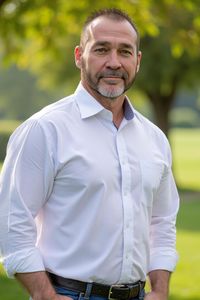
Troy Green was born in Dallas, Texas. He was raised in the Oklahoma foster system. Green's career experience includes working as a entrepreneur. He earned an associate degree from Murray State College in 2023 and a bachelor's degree from Oklahoma City University in 2025.[1][2]
Green has been affiliated with the following organizations:[1]
Safe Haven Oklahoma
VFW Riders & Patriot Guard Riders
Oklahoma Private Investigators Association & Advocating for Professional Standards & Industry Ethics
United States Muay Thai Association
Oklahoma Bondsman Association
National Association of Realty
The National Society of Leadership and Success
Sigma Tau Delta International English Honors Society
Phi Theta Kappa Honor Society
- Associates:
- Murray State College, 2023
- Bachelor's:
- Oklahoma City University, 2025
Campaign money
- Raised
- $33K
- From individuals
- $14K
- From PACs & party
- $0
- Own money
- —
FEC filings through June 30, 2026.
View on FEC.gov(opens in new tab)In their own words
Who are you? Tell us about yourself.
I’m Troy W. Green. I was raised in foster care and spent parts of my childhood on the streets. Nothing in my early life suggested I would one day be in a position to run for the United States Senate. I didn’t come from wealth, power, or family connections; what I had were my hands, my will, and my word. Those were enough to survive, and eventually, to build a life I’m proud of.
I have served my community in various capacities, including as a law enforcement officer and for over 30 years as a bail agent, investigator, martial arts instructor, and advocate for at-risk youth. I’ve worked in courtrooms, jails, neighborhoods, and living rooms, helping people navigate some of the most difficult moments of their lives. I’ve seen firsthand what happens when systems fail everyday people, and I’ve also seen what people can accomplish when someone simply stands beside them instead of above them.
I earned my bachelor’s degree in History with a minor in English, and am currently in graduate school in Criminal Justice. Education didn’t come easy or early in life; it came when I fought for it. And I bring that same effort to everything I do.
I’m a husband, a father, a coach, a mentor, and someone who believes that public service is a responsibility, not a career path.
I’m running because I know what it means to struggle, to rebuild, and to rise. I believe our government should reflect the lived experiences of real people, not just those of the wealthy and well-connected.
Please list below 3 key messages of your campaign. What are the main points you want voters to remember about your goals for your time in office?
I am not backed by billionaires or corporate lobbyists, I am powered by lived experiences. Oklahoma families deserve leaders who put people before politics. Too many of us live one emergency away from financial ruin, stuck with poor healthcare access, underfunded schools, and wages that don’t keep up with the cost of living. I will fight for affordable healthcare, strong public schools, fair wages, childcare, and real support for parents, especially those raising children with disabilities. I know firsthand what it’s like to struggle and be overlooked, and that’s why I won’t stop until every Oklahoma family has the resources, dignity, and opportunity they deserve.Teachers, nurses, and working families keep Oklahoma running, but too often they’re undervalued, underpaid, and burned out. I’ve seen it firsthand as a father, small business owner, and advocate. We need leaders who respect and invest in those who serve us daily. I will fight for better pay, safer workplaces, and policies that reduce burnout and lift up our communities. Supporting those on the front lines, educators shaping our children’s future, healthcare workers caring for our loved ones, and working families holding it all together, means building a healthier, stronger, and more prosperous Oklahoma.To focus on supporting a stable and sustainable economy by strengthening local businesses, expanding workforce development, and improving access to job training and education. My perspective comes from working directly with individuals and families facing financial challenges, as well as small business owners balancing daily operational demands. I emphasize practical approaches that help people secure and maintain employment, encourage entrepreneurship, and reduce barriers that limit economic mobility. My goal is to support an economy where individuals, families, and local communities have the tools they need to succeed.
What areas of public policy are you personally passionate about?
I am passionate about policies that put working families first. That means affordable healthcare, strong public schools, and wages that keep up with the cost of living, so no one working full-time is trapped in poverty. I care deeply about expanding childcare and supporting parents raising children with disabilities. I believe that teachers, nurses, and first responders deserve fair pay and safer working conditions. I am committed to public safety reforms that reduce recidivism, fight human trafficking, and provide real second chances. Above all, I want policies rooted in fairness, dignity, and opportunity that strengthen Oklahoma communities from the ground up.
Who do you look up to? Whose example would you like to follow, and why?
I’ll be honest: throughout my life, I haven’t met many people I could truly look up to. When you grow up in foster care and on the streets, you learn early that heroes are rare and that most people are just trying to survive. So, I never built my life around role models, I built it around resilience, self-reliance, and the determination to break the cycles I was born into.
But there is one public figure whose example I genuinely respect: The late Senator John McCain. What I admire most about McCain is not that he was perfect, but that he lived his values openly and consistently. He showed courage, in uniform, in captivity, and in public office. He demonstrated independence, even when it cost him politically. And he believed that service was about something greater than party, ambition, or personal gain.
McCain reminded the country that leadership requires both toughness and humility. He could fight fiercely for what he believed in yet still reach across the aisle when the country needed unity. He understood sacrifice in a way few do, and he carried that experience into every decision he made. His commitment to veterans, to democratic principles, and to putting country above ego is something I deeply respect.
That said, I’m not trying to be the next John McCain, I’m trying to be the first Troy W. Green. My life took a different path, shaped by hardship, hard work, and lived experience. But like McCain, I believe in integrity, accountability, and service that rises above partisanship. His example is a reminder that even in tough political times, courage and character still matter, and that is the standard I intend to uphold.
What characteristics or principles are most important for an elected official?
The most important characteristics for an elected official are integrity, accountability, empathy, and courage. Without integrity, nothing else matters. Leaders must tell the truth, the truth to Oklahomans even when it is difficult, and remain consistent in their words and actions. Accountability means remembering that public office is not about status or privilege. It is a responsibility. Elected officials answer to the people, not to lobbyists or wealthy donors, and transparency should be a basic expectation.
Empathy matters because effective leadership requires an understanding of the real lives of the people you represent. Too often, politicians become disconnected from the daily struggles of Oklahoma working families. I know what it means to go hungry, to grow up in foster care, and to feel overlooked. Those experiences taught me to listen before speaking and to understand before making a decision. Policy should be grounded in compassion and in the belief that every person deserves dignity and the opportunity to thrive.
Courage is also essential. Leaders must be willing to stand up for what is right, even when it is unpopular or comes at a personal or political cost. Real leadership means taking difficult positions, challenging systems that leave people behind, and refusing to look the other way.
Humility ties all these values together. No leader has all the answers. The strongest public servants are willing to learn, work with others, and adapt when new information demands it. Strength is not stubbornness; strength is the ability to listen, stay grounded, and continue moving forward. Public office is not a reward; it is a responsibility to serve.
What do you believe are the core responsibilities for someone elected to this office?
The core responsibilities of a United States Senator are to represent the people of their state with honesty, courage, and accountability, while upholding the Constitution and protecting the interests of future generations. A Senator must write, debate, and vote on legislation that affects not only Oklahoma's interest's, but the entire nation. They make sure laws are fair, effective, and grounded in justice, while keeping the needs of ordinary citizens above special interests.
A Senator also has a constitutional duty of oversight, holding government agencies, the executive branch, and even fellow legislators accountable. Too often, politicians allow power and influence to go unchecked. It is the responsibility of a Senator to shine a light on corruption, demand transparency, and ensure that taxpayer dollars are spent wisely and responsibly.
Equally important is service to constituents. A Senator must be accessible, responsive, and connected to the people they represent. That means listening to families, veterans, teachers, farmers, small business owners, and workers across Oklahoma, and ensuring their voices inform decisions in Washington. Representation is not about speeches and titles, it’s about being a bridge between the daily struggles of Oklahomans and the halls of power in the Capitol.
Another responsibility is to safeguard national security and protect the men and women who serve our country. For me, that includes ensuring our veterans receive the care, resources, and respect they deserve when they return home. Defense does not end on the battlefield; it extends to how we honor and care for those who have sacrificed for us.
Ultimately, the role of a Senator is service. It is not about personal gain or political ambition; it is about improving the lives of the people you represent. That means building policies rooted in fairness, standing up for working Oklahoma families, and making sure Washington works for Oklahoma, not the other way around.
What legacy would you like to leave?
I want to leave a legacy of service, integrity, and courage, one that proves you don’t have to come from wealth, privilege, or political power to make a real difference in this country. I grew up with very little, often overlooked and written off, but I refused to let that define me. Every chapter of my life, from surviving hardship, to raising a family, to serving my community, to fighting for vulnerable children and working families, has been about turning struggle into purpose. If I leave any legacy at all, I want it to be that I used every bit of what I survived to lift others up.
I want to be remembered as someone who cared enough to stand up when it mattered, who told the truth even when it wasn’t easy, and who fought for people who didn’t have anyone else fighting for them. I want future generations, especially kids who grew up like I did, to know that their past does not disqualify them from leadership. In fact, it can become the foundation of it.
I would like my legacy to be that I helped restore trust in public service by showing that compassion and accountability can coexist, and that government should work for everyday people, not the privileged few. I want to leave behind policies that strengthened public education, honored and protected our veterans, supported families, safeguarded children from exploitation, and gave working people a fair shot.
More than anything, I want to leave a legacy that says: He didn’t forget where he came from. He didn’t quit. And he made life better for the people he served.
What is the first historical event that happened in your lifetime that you remember? How old were you at the time?
The first major historical event I clearly remember from my lifetime is the Iran Hostage Crisis. I was around twelve years old when it began in 1979, and even at that age, I understood that something serious was happening in the world. I remember seeing images of Americans being held hostage and hearing adults talk about the tension overseas. It was the first time I realized how events far away could affect people here at home, and how fragile peace and stability can be.
The Hostage Crisis dominated the news for more than a year, and those nightly updates left a lasting impression on me. Even as a kid, I sensed the fear, frustration, and uncertainty that so many families were feeling. It also taught me something important about leadership and responsibility. Decisions made by governments and world leaders have real consequences for ordinary people, families, workers, and children watching from their living rooms trying to make sense of what’s happening.
That early memory helped shape how I think about public service today. It reminded me that our country’s actions matter on the world stage and that leaders must approach international conflict with seriousness, integrity, and a concern for human life. It also showed me how deeply national events impact the everyday lives of Americans, even those far removed from politics.
Remembering that moment from my childhood helps keep me grounded. It reminds me why strong, steady leadership is important, because somewhere out there, another twelve-year-old is watching the world unfold and learning what kind of country they live in.
What was your very first job? How long did you have it?
The very first time I made my own money was when I was ten years old, raking leaves for $.75 cents a bag around my neighborhood. I also had a paper route during that winter but spent all the money I collected on food instead of paying what I owed to the newspaper, so I didn't have it long.
In one of my foster homes at age thirteen I learned how to cut, rake, and bail hay, run a wheat combine, grind feed, and work cattle. Although I did not get paid, it was the first time in my life I learned to be proud of something, my labor and a job well done.
My first real paycheck was the week I worked on a highway crew tying steel at age 17 after leaving high school due to homelessness. As soon as I got my first check, I ate a huge meal and migrated to a bigger town to look for other work. Once I got where I was going, I would go by this mom-and-pop grocery store every Monday and beg the owner for work. He finally hired me to clean the meat market three nights a week for $5 a night. I was still sleeping under bridges and train trestles at the time. Eventually, he let me work on Saturdays bagging groceries. The guys in the meat market took a liking to me and started showing me how to cut and package meat. After one of the butchers quit, the other convinced the owner to move me to the meat market as an assistant butcher for $3.35 an hour. Even though I was doing the same work it was way less than the butcher made. Nevertheless, with a $110 take home every week, I finally gathered enough to rent my first efficiency apartment and get off the streets.
I worked there for 19 months before moving on to a job grinding welds and running a wire brush on rusty steel for $4 an hour. This place built horse trailers and I worked there for over 3 years. I made supervisor after working there a year at age 19 and was given my own crew. My two eldest children were born while I worked there.
What is your favorite book? Why?
My favorite text is The Trial and Execution of Socrates, especially Plato’s Apology and Crito. Socrates was condemned unjustly, yet he refused to see himself as a victim. When his friends begged him to escape or plead for mercy, he stood firm. He told them, “The difficulty, my friends, is not to avoid death, but to avoid unrighteousness; for that runs faster than death.”
That truth resonates with me. I spent my childhood in foster care and survived abuse, being shot, and other circumstances that should have broken me. Many people would call that a “bad deal,” but like Socrates, I never viewed hardship as punishment. I saw it as preparation. Every struggle forced me to become more honest with myself about who I was, what I stood for, and what kind of life I intended to build.
Socrates believed that the purpose of life was the pursuit of truth, even when that pursuit demanded sacrifice. For him, personal development wasn’t about comfort or praise, it was about fulfilling one’s destiny with integrity, even when the cost was everything. That understanding of truth, responsibility, and moral courage has shaped my own path.
I’m running for the U.S. Senate with that same conviction. I’m not here to play political games or make decisions based on what protects a career. I’m here to do what is right, even when it is difficult. Socrates taught that the greatest danger is not death or defeat, but abandoning your principles.
That is the example I hope to bring to Washington: leadership grounded in honesty, courage, and the refusal to compromise what is right, because unrighteousness runs faster than death, and integrity is the only real legacy any of us ever leave behind.
What is something that has been a struggle in your life?
My biggest struggle has been finding my own identity. For much of my life, I felt like I was living through other people, helping them navigate their struggles while losing sight of my own. I was always the person everyone leaned on, the steady one, the problem-solver. But inside, I often felt like a supporting character in my own story. Growing up surrounded by instability and negativity made it even harder to carve out my own path. I spent years trying to survive my circumstances, absorbing the pain and chaos around me, and trying to shield others from it.
Ironically, the first steps toward finding myself came from helping others survive theirs. In lifting people up, I began to see the parts of myself that were worth saving too. But it wasn’t until I stepped onto the martial arts mat as a teacher and coach that I truly started understanding who I was. In that studio, I couldn’t live through anyone else. I had to confront my own limitations, build my own discipline, and earn my own respect. Martial arts gave me a place where identity wasn’t something handed to me, it was something I had to build day after day.
Those experiences taught me that real leadership isn’t about disappearing into the struggles of others. It’s about knowing who you are, standing firm in the face of negativity, and carving a path that others can follow, not by losing yourself, but by finding yourself. That journey is still ongoing, but it’s made me a better father, a better mentor, and a stronger advocate for people who feel unseen, unheard, or forgotten.
What do you perceive to be the United States' greatest challenges as a nation over the next decade?
Over the next decade, the United States will face several significant challenges that will shape the country's future. First, we must address economic inequality. Too many working families live paycheck to paycheck while billionaires and corporations accumulate record wealth. If we do not raise wages, expand access to healthcare, and make education affordable, the gap between the powerful and the people will only grow wider.
Second, our democracy itself is under strain. Polarization, disinformation, and efforts to restrict voting threaten the foundations of our system. We must strengthen trust in our institutions, ensure fair elections, and remind Americans that our common values are stronger than partisan divides.
Third, healthcare remains one of our most urgent crises. Costs continue to rise while millions remain uninsured or underinsured. Without bold action, families will continue to face bankruptcy simply for getting sick.
Fourth, we must confront global challenges, from national security threats to climate change. The next decade will test our ability to protect our country, build strong alliances, and respond to environmental changes that already affect farmers, families, and communities across Oklahoma.
Another major challenge is ensuring that our veterans and service members receive the care and respect they deserve. Far too many come home to inadequate healthcare and support. Addressing this is not optional—it is a moral obligation.
Finally, accountability in government will be critical. People are tired of politicians putting party and special interests above the public good. Restoring trust in government will require honesty, transparency, and leaders who are willing to put people above politics.
If we meet these challenges with fairness, courage, and unity, the next decade can be one of renewal. But if we ignore them, we risk leaving the next generation with fewer opportunities and deeper divisions. The choice is ours.
What are your thoughts on term limits?
I support term limits because I believe public office is a role of service rather than a lifelong career. When elected officials remain in office for several decades, they can become removed from the daily experiences of the communities they represent and more connected to institutional political networks. Regular leadership change can help ensure that the government remains responsive to evolving public needs and perspectives.
At the same time, term limits alone do not address the advantages that come from access to significant financial resources in campaigns. Candidates with substantial funding support often start with major advantages in visibility and influence, which can make it difficult for newer or less-connected individuals to compete. Reducing the influence of large financial contributions in elections would help make political participation more accessible to a wider range of people.
Some point to elections as a natural check, but incumbency offers structural benefits such as name recognition and established donor networks. Term limits would help balance this by opening opportunities for new leadership and ideas. This applies to both the House and Senate, where extended tenure can lead to systems that are slow to change.
In my view, term limits and campaign finance reform should be complementary. Term limits encourage generational turnover and accountability, while reducing the role of large financial influence helps ensure that political participation is not limited to those with substantial resources. This combination supports a government where service is temporary and responsibility to the public remains central.
We cannot expect Washington to change if we keep sending the same people back to the Senate for decades. I am running to break that cycle. With your support, I will be a Senator who focuses on results, not reelection. The power belongs to the people, not the politicians.
What qualities does the U.S. Senate possess that makes it unique as an institution?
The U.S. Senate is unique because it was designed to be both a stabilizing force and a check on power. Unlike the House of Representatives, which reflects population and responds quickly to shifts in public opinion, the Senate provides longer terms and equal representation for every state, large or small. That balance ensures rural states like Oklahoma have the same voice as more populated states when shaping national policy.
The Senate also has unique constitutional powers. It confirms presidential appointments to the courts, military leadership, and federal agencies. It ratifies treaties with foreign nations and plays a central role in shaping U.S. foreign policy. In moments of national crisis or debate over war and peace, the Senate’s voice carries special weight.
Another quality that makes the Senate distinct is its tradition of extended debate and deliberation. The Senate was intended to slow down hasty legislation, encourage dialogue, promote compromise, and facilitate careful review. While this can sometimes lead to gridlock, it also reflects the belief that laws affecting millions of Americans should not be rushed through without thorough debate.
The Senate’s smaller size also fosters closer working relationships between members, and ideally, it should encourage bipartisanship and collaboration across party lines. While polarization has challenged this ideal, the Senate remains one of the few places where compromise is not only possible but necessary for progress.
Ultimately, what makes the Senate unique is its dual role as both a representative body for each state and a guardian of the long-term stability of the Republic. It has the power to check the executive branch, shape the federal judiciary, and ensure that all states, whether rural or urban, large or small, have an equal stake in the laws that govern our nation.
I am asking for your vote so I can take that 'equal stake' and turn it into real results. Make the Senate work for OK.
Do you believe that it’s beneficial for senators to have previous experience in government or politics?
Experience in government or politics can be helpful, but it is not the only path to being an effective Senator. What matters most is integrity, accountability, and a commitment to serving the people rather than special interests. Too often, career politicians become disconnected from the daily struggles of working families, and their experience becomes more about protecting the system than challenging it.
There is value in understanding how government works, how legislation moves, and how to navigate the process effectively. However, that knowledge is not unique to career politicians. Business owners, veterans, teachers, community leaders, and advocates bring a wealth of experience that can be just as valuable, sometimes even more so, because they understand firsthand the real-world impact of policies debated in Washington.
In fact, the Senate was designed to include diverse voices and perspectives, not just those who have spent their lives in politics. Our system works best when people from all walks of life, farmers, workers, parents, veterans, are able to bring their experiences into the lawmaking process. That diversity creates balance and ensures that the Senate truly reflects the nation it serves.
For me, the benefit of not being a career politician is that I bring lived experience. I know what it means to live in Oklahoma and struggle, to work multiple jobs, to raise a family, and to fight for fairness. That perspective is valuable in itself. At the end of the day, experience matters, but what matters more is character, courage, and a willingness to put people over politics.
I'm running for Senate to serve Oklahoma, not to build a career in Washington I believe in the model of 'citizen legislator', someone who goes to D.C. to solve problems and then returns home to live under the laws they passed. If you are ready for leadership that prioritizes service over status, I would be honored to have your vote.
What do you think of the filibuster?
The filibuster is one of the most debated features of the U.S. Senate. In theory, it was meant to protect minority voices and encourage compromise by requiring a supermajority to end debate. At its best, the filibuster can slow down rash, partisan legislation and push Senators to find common ground before passing laws that affect the entire nation.
However, in practice, the filibuster has been abused too often. It has been used not as a tool for compromise but as a weapon of obstruction, blocking urgent legislation on civil rights, healthcare, voting rights, and other issues vital to working Oklahomans. Instead of fostering cooperation, it has frequently produced gridlock, leaving critical challenges unresolved while Americans continue to struggle.
I believe every rule in the Senate should serve the people, not politicians. If the filibuster prevents progress on basic issues like protecting democracy, ensuring fair wages, or improving healthcare, then it is failing in its purpose. Rules should encourage debate, but they should not allow a small minority to permanently stall the will of the majority.
That said, eliminating the filibuster outright could also carry risks. The Senate was designed to be deliberative, and some mechanism for slowing down hasty legislation has value. If reforming the filibuster can preserve debate while preventing abuse, that may be the best balance. Options like requiring Senators to physically hold the floor and speak, rather than using silent filibusters, could restore accountability to the process.
Ultimately, I believe the filibuster should never be used as an excuse for inaction. The people of Oklahoma sent their Senators to Washington to solve problems, not hide behind procedure. Whether through reform or replacement, the Senate must ensure its rules empower progress and keep government working for the people.
Its time for common sense to prevail over outdated rules. I would be honored to have your support.
Is there a particular senator, past or present, whom you want to model yourself after?
No. I am my own man. I respect the history of the Senate and the leaders who have come before me, but I am not running to copy anyone else’s career or style. I am running because Oklahomans deserve a voice that reflects their struggles, their values, and their hopes for the future.
My life experiences, growing up in foster care and on the streets, working my way up through service, business, and community leadership, have shaped me into the person I am today. I know what it’s like to be hungry, to be overlooked, and to fight for a better life. Those experiences give me a perspective that no Senator, past or present, could provide for me.
That doesn’t mean I won’t learn from others. I will always be willing to listen, study history, and seek wisdom from colleagues, past leaders, and everyday people alike. But my decisions will be guided by my own principle
On the 2026 ballot
Links
Compiled from the candidate’s published profile as of September 30, 2026 and FEC filings.
Source(opens in new tab)