
Background
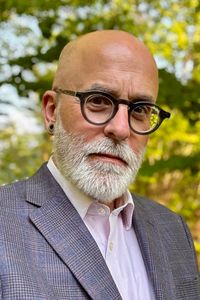
Troy Headrick was born in Manitowoc, Wisconsin, and lives in Burlington, Vermont. Headrick earned a B.S. in psychology/sociology from the University of Wisconsin-La Crosse and an M.S. in higher education administration from Colorado State University. His career experience includes working as an assistant director at the Center for Student Conduct at the University of Vermont. Previously, he worked for the City of Burlington and owned a landscape design/installation company.[1]
- Graduate:
- Colorado State University
- Bachelor's:
- University of Wisconsin, La Crosse
In their own words
Who are you? Tell us about yourself.
I have lived in Burlington’s Chittenden-15 district since 2001. My wife, Marianne, and I raised our two daughters here. Both attended Burlington public schools and later graduated from UVM.
I serve as Assistant Director of UVM’s Center for Student Conduct, where my work has centered on restorative practices, conflict resolution, accountability, and making difficult decisions fairly. My background also includes municipal human resources and co-owning a small landscaping business.
Since 2023, I have represented Chittenden-15 in the Vermont House. I currently serve as Ranking Member of the House Committee on Corrections and Institutions and Co-Chair of the Working Vermonters’ Caucus. My legislative work focuses on corrections reform, workers’ rights, public education, civil liberties, affordable housing, and holding government accountable.
I am seeking reelection as an Independent. I answer to my constituents, the evidence before me, and the principles I have made public.
Please list below 3 key messages of your campaign. What are the main points you want voters to remember about your goals for your time in office?
Worker power is affordability policy. Vermont will not become affordable through austerity, weakened public services, or asking working people to accept less. Affordability requires fair wages, strong benefits, collective bargaining rights, and a tax system that asks more from those who can afford it. As Co-Chair of the Working Vermonters’ Caucus, I have fought for public employees’ right to strike, strengthened protections for teachers, and opposed legislation that weakened workers’ bargaining power. Workers do not need elected officials simply to say we support them. They need power.I am an Independent because voters deserve a representative whose judgment is never outsourced to party leadership. I read the legislation, listen to the people who will live with the consequences, and explain my decisions publicly. I have opposed bills supported by political allies when they weakened tenant protections, collective bargaining, or due process. I have also worked across party lines to turn constituent concerns into law. My independence means accountability to the people of Chittenden-15, the evidence before me, and the principles I have made public.Public safety begins long before someone enters a courtroom or prison. Stable housing, accessible mental health and substance-use treatment, education, and fair wages prevent harm and strengthen communities. As Ranking Member of Corrections and Institutions, I sponsored the law ending DOC supervision fees and authored protections for transgender people in state custody. I oppose for-profit incarceration and policies that expand imprisonment without addressing its root causes. Vermont should invest earlier, when intervention is more effective, humane, and affordable.
What areas of public policy are you personally passionate about?
I am most passionate about policies that determine who has power and whose voice is heard. My strongest areas of focus are workers’ rights, equitable public education, corrections reform, civil liberties, affordable housing, and universal healthcare. I believe workers need meaningful collective-bargaining rights, schools need resources distributed according to student need, and public safety policy must invest in prevention, rehabilitation, dignity, and due process. I am also committed to holding Vermont accountable for its treatment of the Abenaki First Nations at Odanak and Wôlinak and ensuring that sovereign Indigenous nations are meaningfully consulted when state policy affects their people, history, and homeland.
Who do you look up to? Whose example would you like to follow, and why?
I look up to the mentors I have encountered who made room for me to serve as myself. They supported my voice, encouraged me to challenge them, and treated our differences as a source of collective strength. They were confident enough in their leadership to share space and credit, listen seriously, and help others develop without trying to produce copies of themselves. I want to follow that example. Public service is stronger when people can bring their full experience and judgment to the work, and when leadership creates room for disagreement, growth, and new voices.
What characteristics or principles are most important for an elected official?
Honesty, humility, independence, courage, and accountability. Elected officials should state their positions clearly, explain their votes, admit mistakes, and change course when the evidence requires it. They must listen closely to the people who will live with the consequences of their decisions, especially those who have the least access to policymakers. They should also be willing to disappoint party leaders, donors, and political allies when serving the public requires it. Trust depends on voters knowing where their representative stands and why.
What do you believe are the core responsibilities for someone elected to this office?
A state representative must listen to constituents, develop and evaluate legislation, responsibly allocate public resources, and hold state government accountable for carrying out the law. The work also requires consistent committee participation, careful review of testimony and evidence, and direct assistance when constituents encounter state systems that are failing them. Representatives should remain accessible between elections and explain their decisions in plain language. The office belongs to the public, and every part of the job should reflect that responsibility.
What legacy would you like to leave?
I want to leave Vermont’s public institutions more humane, accountable, and responsive than I found them. I want workers to have greater power, incarcerated people to be treated with dignity, schools to serve students equitably, and Indigenous sovereignty to be taken seriously. I also hope to create political space for people whose voices and experiences do not fit neatly within party structures. Ultimately, I want constituents to remember that I showed up, did the work, was clear about where I stood, and used the authority they entrusted to me to make room for others.
What was your very first job? How long did you have it?
My first job was washing dishes at a family restaurant. I later became a short-order cook and worked there throughout my final two years of high school.
What is something that has been a struggle in your life?
Alcoholism has had a cyclical impact on my family and my own life. I have had to be deliberate and active about breaking that cycle. The work requires honesty, accountability, support, and an understanding that patterns built over generations can return when they go unexamined. It has given me a deeper appreciation for how addiction affects entire families and for the courage required to choose a different path. Breaking that cycle remains an ongoing commitment.
What do you believe is the ideal relationship between the governor and state legislature?
The governor and Legislature are coequal branches with different responsibilities. Their relationship should be cooperative, candid, transparent, and appropriately independent. The governor should provide timely information, bring agency expertise to policy discussions, and faithfully execute enacted laws. The Legislature must represent Vermont’s communities, establish policy and budgets, and conduct meaningful oversight of the executive branch. Disagreements should be addressed publicly and negotiated in good faith. The Legislature must also remain willing to reject executive proposals or override vetoes when the public interest requires it. Separation of powers protects the public only when both branches respect it.
What do you perceive to be your state's greatest challenges over the next decade?
Vermont’s greatest challenge over the next decade will be securing a true and paramount commitment to public education while confronting the forces driving its cost. Healthcare, aging school buildings, special education services, workforce shortages, and an inequitable tax structure cannot be solved by repeatedly forcing local budgets lower. I will not balance public education on the backs of teachers, paraeducators, staff, or students. Austerity transfers costs to families, communities, and future budgets. Vermont must control healthcare costs, modernize school infrastructure, preserve student weights, move toward income-based education funding, and invest upstream in housing, mental healthcare, childcare, and food security. Preventing crises is far more affordable than managing their consequences.
Do you believe that compromise is necessary or desirable for policymaking?
Yes. Compromise is essential when people share a commitment to democracy and equal human dignity but disagree about policy, resources, or implementation. The tolerance paradox establishes a necessary boundary: unlimited tolerance of those seeking to deny others’ rights can eventually destroy the conditions that allow a tolerant society to exist. I will negotiate policy details in good faith. I will not bargain over whether another person’s identity deserves recognition or whether they merit equal protection under the law. Our institutions were built on foundations of white male supremacy, and those structures continue to influence who holds power and whose rights are treated as negotiable. Responsible compromise must move us toward fuller equality and protect that progress.
What organizations or individuals have endorsed your campaign?
My campaign has been endorsed by the Vermont AFL-CIO, Vermont-NEA, Planned Parenthood Vermont Action Fund, Vermont Conservation Voters, Let’s Grow Kids Action Network, and VPIRG Votes.
What was the first historical event that happened in your lifetime that you remember?
My earliest memory of history unfolding is the Vietnam War. I was very young, but I remember its presence in my family and my uncles returning home from the war. Watergate followed soon afterward and became my first clear memory of a national political scandal. Those events gave me an early understanding that government decisions reach directly into families’ lives and that those entrusted with power must be held accountable.
Troy Headrick did not complete [the profile publisher]'s 2024 Candidate Connection survey.
Who are you? Tell us about yourself.
I have lived in the Chittenden 15 district with my wife, Marianne, since 2001. Together, we raised two daughters within the Burlington public school district who both then graduated from the University of Vermont. We have so many strong connections to our neighbors within the district and are truly privileged to live in such an amazing community. Similarly, I feel nothing but fortunate to have been served by the outstanding representatives who we have elected to become our voice in Montpelier. Upon honest reflection, I found myself a bit surprised to be considering Selene Colburn’s request that I run to fill the seat she is vacating. As I thought more, I realized that I am perhaps in a great place to do just that. I was moved and energized by those who led our recent unionizing efforts with UVM Staff United and came to understand the obligations of service I have been taking for granted.
I have worked with the UVM Center for Student Conduct since 2008. In my current position, I’ve learned the tremendous value of bringing restorative practices into conflict resolution work. I understand the need for continuous critical reflection on how those of us who have always benefited from systems of power and privilege must repair the inherent harm within those systems. I look forward to serving you with these values in Montpelier.
Please list below 3 key messages of your campaign. What are the main points you want voters to remember about your goals for your time in office?
I believe our workforce, our community, and our local economy are strengthened when we pay all workers a livable wage.I believe in the value of teaching our children with an honest reckoning for the systemic racism and white supremacy upon which this nation was built.I am a proud member of the recently formed UVM Staff United and believe that union membership strengthens our collective pride in our institutions.
What areas of public policy are you personally passionate about?
Livable Wages, Affordable Housing, Protecting Public Education, Strong Unions, Healthcare for All, Indigenous Rights
On the 2026 ballot
Links
Compiled from the candidate’s published profile as of October 9, 2026.
Source(opens in new tab)