
Background
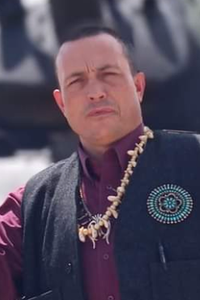
Travis Nelson earned a high school diploma from the John Mall High school. He earned a bachelor's degree from the Colorado State University Pueblo in 2002. His career experience includes working in agriculture.[1]
- Bachelor's:
- Colorado State University Pueblo, 2002
- High school:
- John Mall High school
In their own words
Who are you? Tell us about yourself.
I am running for Colorado Senate District 35 because I believe the people of rural Colorado deserve representation that is present, independent, and relentless.
I am unaffiliated because I do not believe a state senator should answer first to a political party. My responsibility is to the people of this district.
I was born and raised in rural Southern Colorado, come from a ranch family, and know what it means to live in communities where people work hard, help their neighbors, and too often get overlooked by Denver. I am a father, a small-business owner, and someone who believes deeply in accountability, second chances, and treating people with dignity.
My campaign is built around showing up. I travel the district, listen to people, visit our small businesses, schools, fire departments, farms, ranches, clinics, and community events, and I work directly on problems when people need help.
The issues are clear: water, agriculture, rural healthcare, public safety, education, infrastructure, affordability, housing, jobs, and protecting the future of our small towns.
I call it Relentless Representation.
I will work with Republicans, Democrats, and Independents when it helps the people of Senate District 35, and I will challenge any of them when it does not.
Kindness. Love. Respect.
Born Humble. Raised Rural.
One vote for ALL PEOPLE.
Travis For Colorado
www.travisforcolorado.com
Donate: https://politics.raisethemoney.com/en/tnelsonEVy2RpEI7dm6
Please list below 3 key messages of your campaign. What are the main points you want voters to remember about your goals for your time in office?
KEY MESSAGE #1: PEOPLE BEFORE PARTY
I am running unaffiliated because I believe representation should come before political party. I will work with Republicans, Democrats, and Independents when it serves the people of Senate District 35—and I will challenge any of them when it does not.
My loyalty is to the people. One vote for ALL PEOPLE.KEY MESSAGE #2: RELENTLESS REPRESENTATION
I believe representation means showing up. I will be present in the communities I represent, listen directly to people, help constituents navigate state government, and stay involved when someone is getting the runaround.
I want my office to be accessible, responsive, and accountable. Representation should not end when the election is over—it should begin there.KEY MESSAGE #3: RURAL COLORADO PRIORITIES
I come from rural Colorado, and my campaign focuses on the issues that determine whether our communities can survive and grow: water, agriculture, healthcare, public safety, education, infrastructure, affordable housing, small business, and good-paying jobs.
I want state government to understand that rural communities have different challenges than the Front Range—and those communities need a strong, consistent voice at the Capitol.
What areas of public policy are you personally passionate about?
Rural healthcare and senior care — restoring basic medical access in small communities, mobile care, OB-GYN access, dental care, pain management, transportation to care, and making sure aging rural residents can remain in their communities.
Water, agriculture, and protecting rural land — water storage, conservation, infrastructure, drought resilience, protecting agricultural water, and resisting the loss of rural water resources.
Farmers, ranchers, and rural economic survival — keeping agriculture viable and making sure state policy recognizes the realities of people producing Colorado’s food and managing working lands.
Constituent advocacy and accountable government — helping individual people fight through bureaucracy.
Who do you look up to? Whose example would you like to follow, and why?
I look up to the people who show up, do the work, and serve others without needing recognition for it.
I look first to my family, the elders who built our rural communities, working people, ranchers, teachers, nurses, firefighters, law-enforcement officers, veterans, and neighbors who have spent their lives taking care of others. They taught me that leadership is not about a title—it is about responsibility.
The example I want to follow is simple: be honest, stay humble, listen before speaking, keep my word, and never forget who I work for. I respect leaders who are willing to stand with working people, cross political lines when necessary, admit when they are wrong, and keep showing up even when there is no camera or political benefit.
I want people to be able to say that I was accessible, that I treated everyone with dignity, and that when someone needed help, I did everything in my power to help them.
That is the kind of public servant I want to be: Kindness. Love. Respect. Relentless Representation.
What characteristics or principles are most important for an elected official?
Integrity, accountability, accessibility, and independence are the principles I value most in an elected official.
An elected official should tell the truth, keep their word, and be willing to admit when they are wrong. They should answer to the people they represent—not political parties, donors, special interests, or their own ambition.
They should show up, listen, return calls, and do the work, especially for people who feel ignored or powerless. Public service should mean helping constituents navigate government and demanding answers when the system fails them.
I also value humility and respect. You can disagree strongly with someone without treating them like an enemy. Leadership requires listening to people from different backgrounds and political beliefs and looking for common ground where it exists.
Finally, an elected official needs courage—the willingness to take an unpopular position when they genuinely believe it is right for their constituents, and the willingness to stand up to their own side when necessary.
For me, it comes down to three words: Kindness. Love. Respect. And one obligation: represent the people relentlessly.
What do you believe are the core responsibilities for someone elected to this office?
I believe the core responsibilities of a state senator are to represent the people, write and evaluate laws carefully, oversee state government, protect taxpayer dollars, and make sure constituents can actually get help when government fails them.
Representation comes first. That means listening to people across the district, not just those who agree with me or have political influence. A senator should be accessible, present in the communities they serve, and willing to carry local concerns directly to the Capitol.
The job also requires doing the hard work of legislation—reading bills, understanding their consequences, asking tough questions, and making decisions based on how policies will affect real people, especially rural communities that are too often overlooked.
Oversight is just as important. State agencies should be accountable, transparent, and responsive. When constituents are getting the runaround, an elected official should step in, demand answers, and stay involved until the issue is addressed.
Finally, I believe a senator has a responsibility to protect the future of the district—our water, agriculture, schools, healthcare, public safety, infrastructure, small businesses, and economic opportunity.
For me, public office is not about status. It is about service, accountability, and relentless representation.
What legacy would you like to leave?
I would like my legacy to be that I showed up, served people well, and left rural Colorado stronger than I found it.
I want people to remember that I was accessible, that I listened, that I treated people with dignity, and that I worked just as hard for someone who disagreed with me as I did for someone who supported me.
I would like to leave behind stronger rural healthcare, protected water and agriculture, better opportunities for young people, safer communities, stronger schools, thriving small businesses, and a government that is more accountable to the people it serves.
I also want my life to demonstrate that people can change, grow, recover, and still make a meaningful contribution to their community. Second chances matter, but they should be followed by responsibility and service.
More than any title or piece of legislation, I want my daughter and my community to be able to say that I tried to live by Kindness, Love, and Respect, that I never forgot where I came from, and that I gave everything I had to representing the people.
Born Humble. Raised Rural. Relentless Representation.
What was your very first job? How long did you have it?
Working on our ranches as a child.
What is something that has been a struggle in your life?
One of the biggest struggles in my life has been learning how to keep moving forward when life does not go according to plan.
I have faced setbacks, made mistakes, and had periods where I had to take a hard look at myself and decide what kind of man, father, and community member I wanted to be. Growth did not happen overnight. It required accountability, humility, discipline, and a willingness to change.
That struggle shaped the way I see other people. I try not to define someone by the worst moment of their life. I believe people should be held accountable, but I also believe in redemption, second chances, and the possibility of becoming better.
Those experiences have made me more patient, more compassionate, and more determined to show up for people who feel like they have been written off.
I am still a work in progress, like everyone else. What matters to me is continuing to learn, continuing to serve, and trying every day to leave things a little better than I found them.
What do you believe is the ideal relationship between the governor and state legislature?
I believe the ideal relationship between the governor and the legislature is cooperative, respectful, and independent.
The governor should be willing to work with lawmakers from across the political spectrum, and legislators should be willing to work with the governor when there is common ground. But neither branch should simply rubber-stamp the other. Colorado’s Constitution separates legislative and executive powers, with the General Assembly responsible for making laws and the governor responsible for executing them.
A healthy relationship requires open communication, good-faith negotiation, transparency, and respect for those constitutional roles. The governor should bring ideas and leadership to the table, but the legislature has its own responsibility to scrutinize proposals, amend them when necessary, reject them when appropriate, and represent the people of their districts independently. The General Assembly holds Colorado’s legislative power subject to constitutional limits.
I would work with any governor—Republican, Democrat, or unaffiliated—when I believe a proposal benefits the people of Senate District 35. When I believe the administration is wrong, overreaching, or overlooking rural Colorado, I would say so and do my job as an independent legislator.
Cooperation when we agree. Respect when we disagree. Independence at all times.
What do you perceive to be your state's greatest challenges over the next decade?
I believe Colorado’s greatest challenges over the next decade will be affordability, water, an aging population, rural healthcare, infrastructure, and keeping economic opportunity available outside the Front Range.
Housing is already out of reach for too many working families. Colorado’s State Demography Office estimated a statewide housing shortfall of roughly 106,000 units, with about 34,100 additional homes needed annually over the coming decade just to prevent that shortage from growing.
Water may be our most important long-term challenge. Population growth, drought, agriculture, municipal demand, and aging infrastructure are all competing for a limited resource. Colorado’s Water Plan identifies billions of dollars in water-project needs through 2050, including an estimated $1.5 billion funding gap for identified projects.
We also have to prepare for a rapidly aging population. Colorado’s population age 60 and older is projected to grow from more than 1.3 million in 2023 to about 1.5 million by 2030, increasing demands on healthcare, housing, transportation, and the workforce. For rural communities, that makes access to doctors, nurses, emergency services, senior transportation, and long-term care especially important.
Our roads, bridges, broadband, utilities, and other basic infrastructure also have to keep pace. Colorado has adopted a new 10-year transportation plan focused on roads, safety, bridges, and transportation access, while acknowledging limited financial resources.
Finally, I believe Colorado has to confront the widening divide between communities that are growing and prospering and communities struggling to keep a school, clinic, grocery store, fire department, or small business open.
For me, the challenge of the next decade is not simply managing Colorado’s growth. It is making sure every part of Colorado has a future—that working families can afford to live here, farmers and ranchers have water, seniors can receive care close to home, young people have opportunities, and our rural communities are not left behind.
Do you believe that compromise is necessary or desirable for policymaking?
Yes. I believe compromise is often necessary for effective policymaking, especially when it helps move a good idea forward and produces a better result for the people we serve.
But compromise does not mean abandoning your principles. There are issues where you have to stand firm. The key is knowing the difference between compromising on the details of how to accomplish something and compromising away the values you were elected to protect.
I believe elected officials should be willing to sit down with people from any party, listen, negotiate in good faith, and find common ground whenever possible. Most people are tired of government being paralyzed by partisan fighting.
For me, the goal is not to give one side a political victory. The goal is to solve problems.
I will work with anyone when it helps the people of Senate District 35, and I will stand my ground when their interests are being sacrificed.
What organizations or individuals have endorsed your campaign?
Dan Corsentino — Four-term Sheriff of Pueblo County
James Casias — Four-term Sheriff of Las Animas County; 35 years of law-enforcement service
Dean Ormiston — Former Baca County Commissioner; Baca County resident
Tyler Gibson — Mayor of Springfield, Colorado
Vernon Thorn — Aguilar Town Council member
Kathy Henson — Adams County Commissioner
Sheila Lieder — Colorado State Representative
Karen Middleton — Former Colorado State Representative
Manny Rutinel — Colorado State Representative; candidate for U.S. Congress, CD-8
Antonio Martinez — Colorado House District 1 Democrat
Eric Nelson — Colorado House District 42 candidate
Ike McCorkle — Retired U.S. Marine; combat-wounded veteran; congressional candidate
Keith Stroup — NORML Founder
What was the first historical event that happened in your lifetime that you remember?
Challenger explosion.
Travis Nelson did not complete [the profile publisher]'s 2022 Candidate Connection survey.
On the 2026 ballot
Links
Compiled from the candidate’s published profile as of September 30, 2026.
Source(opens in new tab)