
Background
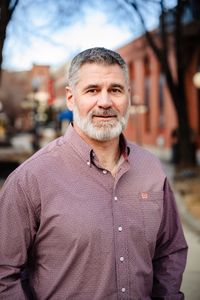
Tom Jandron served in the U.S. Army National Guard from 2009 to 2022. Jandron's career experience includes working as an aviation mechanic.[1]
Campaign money
- Raised
- $0
- From individuals
- $0
- From PACs & party
- $0
- Own money
- —
FEC filings.
View on FEC.gov(opens in new tab)In their own words
Who are you? Tell us about yourself.
I grew up in a middle-class family. My parents worked hard to make ends meet to raise my two sisters and I. My family has a history of military service; my father served in the Navy, and his father served in the Air Force. My mother’s father also served in the Navy. My middle sister and I both served. She is an officer in the Coast Guard and has about 23 years of service. I served in the Montana Army National Guard for 13 years and retired as a Sergeant First Class.
My wife and I met 26 years ago and have been married for 22 years. We have three children, two boys and a girl (20, 16 & 11). My wife and I have owned several businesses and currently operate two small businesses.
I began my aviation career in 2007 at Gallatin College-MSU, studying Aviation Science and flight training at Summit Aviation. I earned my private pilot rating in 2009. I continued my education at Utah Valley University, pursuing an Aviation Business Management Degree. While I was in the Army, I was a CH-47 mechanic, I deployed to Afghanistan in 2012. I was promoted into a Flight Engineer position, later promoted to Section Sergeant with the maintenance company. I earned my Airframe & Power Plant certificate in 2016. I currently work for an organization maintaining UH-1 Huey's and fixed-wing aircraft for wildfire protection.
My family and I enjoy the outdoors. We ski every chance we get, enjoy lake days and riding our dirt bikes, and in the fall, we love hunting.
Please list below 3 key messages of your campaign. What are the main points you want voters to remember about your goals for your time in office?
The Constitution grants Congress alone the power to declare war. The War Powers Act, meant to restrain presidents, instead became a permission slip for unilateral military action. Congress, too cowardly to vote on record, gladly surrenders this responsibility to the executive.
We must restore the original standard: no offensive military action without a formal declaration of war. Every conflict since WWII's declared war has been a disaster. The 2001 AUMF must be repealed, stretched far beyond its purpose to justify endless undeclared wars. Future AUMFs must be time-limited and target-specific.Congress can expand housing supply by reducing market distortions. The REINS Act would require congressional approval of major federal regulations that drive up construction costs. I also support targeted reforms like streamlined environmental review and repealing outdated building requirements.
But these are band-aids. The root problem is inflation driven by federal spending and monetary policy. Artificially low interest rates and excessive money creation distort markets, fuel malinvestment, and price out younger generations — benefiting existing homeowners at their expense.
Until we cut spending, balance the budget, and rein in the Federal Reserve, the affordability crisis will never be solved.I would sponsor Department of Government Efficiency (DOGE) Acts to codify spending cuts and require annual independent audits of federal agencies with the goal of identifying and recommending cuts to unconstitutional, redundant, or low-value programs. Congress would be required to vote on those cuts, and the bills would implement sunset provisions for all federal programs. They would promote decentralization by shifting local responsibilities like education and transportation to states, impose caps on federal spending tied to inflation and population growth, require a supermajority to exceed those limits, and codify a “one-in, three-out” regulatory rollback rule.
What areas of public policy are you personally passionate about?
I proudly support the National Constitutional Carry Act. No law-abiding American should need a government permission slip to exercise a right guaranteed by the Constitution. Your Second Amendment freedom does not end at a state line. Rep. Massie's H.R. 645 makes that clear: if federal law allows you to possess a firearm, no state may criminalize or penalize you for carrying it. The current patchwork of state permit schemes — with their fees, bureaucratic delays, and arbitrary boundaries — treats your rights as a revocable privilege. I will fight to pass national constitutional carry and invalidate every local restriction designed to dissuade law-abiding citizens from bearing arms.
Who do you look up to? Whose example would you like to follow, and why?
Ron Paul stands as one of the rare examples in modern American politics of someone who consistently embodied the ideals of integrity, accountability, and courage. Throughout his decades in Congress, he was well known for his unwavering commitment to the Constitution. This steadfastness earned him the nickname "Dr. No," a reference to his refusal to authorize any spending or expansion of government power that could not be justified by the founding document.
Paul's dedication extended beyond his voting record. He never used his position for personal gain, never yielded to party pressure, and never traded his principles for influence or access. In a further demonstration of his integrity, he famously refused to participate in the congressional pension system. While he may have lost more votes than almost any other member of Congress, he always did so with his integrity intact. In the long arc of history, this form of principled loss is a victory that matters more than any election win.
What characteristics or principles are most important for an elected official?
1.
Integrity - An elected official must be honest, transparent, and consistent. They must say what they mean and mean what they say. Act in the public interest rather than for personal gain.
2.
Accountability - Elected officials must answer to the people they serve not special interests. This means acknowledging mistakes, being open to scrutiny, and accepting the consequences of their decisions. Constitutional Republic can only function when officials treat their position as a responsibility, not a privilege.
3.
Courage - Means delivering hard truths; about debt, trade-offs, national security, or policy failures, even when it costs you politically. A courageous official votes their conscience and constituent interest over party line pressure. Acknowledging when the opposing
What do you believe are the core responsibilities for someone elected to this office?
Every elected official owes their allegiance to America and only to America. Decisions based on the long-term health and security of the country rather than party, donor, or personal ambition. They must remember that the only people they are truly accountable to are the citizens who sent them to office — not lobbyists, not special interests, not campaign contributors. And above all, they must treat public office as a trust and a calling, measuring success not by what they personally gained, but by what they left behind for the people they were chosen to serve.
What organizations or individuals have endorsed your campaign?
Montana Libertarian Party
Montanans for Limited Government
On the 2026 ballot
Links
Compiled from the candidate’s published profile as of September 30, 2026 and FEC filings.
Source(opens in new tab)