
Background
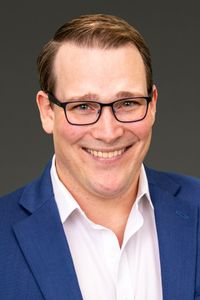
Timothy Peck earned a bachelor's degree from the College of the Holy Cross in 2003. He completed a residency in emergency medicine at Harvard in 2014. His career experience includes working as a physician and created three mission-based health technology companies.[1]
- Bachelor's:
- College of the Holy Cross, 2003
Campaign money
- Raised
- —
- From individuals
- $0
- From PACs & party
- $0
- Own money
- —
FEC filings.
View on FEC.gov(opens in new tab)Campaign themes
Timothy Peck did not complete [the profile publisher]'s 2026 Candidate Connection survey.
blockquote{border-left:none !important;padding-left:2em;position:relative;color:#444;font-family:"Libre Franklin",Helvetica,Arial,sans-serif;font-size:16px;color:#202122;font-style:normal;}blockquote::before{content:open-quote;font-size:3em;line-height:0.1em;position:absolute;left:-10px;top:40px;color:#ccc}blockquote::after{content:close-quote;font-size:3em;line-height:0.1em;position:absolute;right:0;bottom:0;color:#ccc}
Campaign websitePeck's campaign website stated the following:EconomySocial progress is possible with sound fiscal responsibility. We must eliminate fraud, waste, and abuse and use those savings to help balance the budget, stimulate the economy, and invest in social causes we care about. Tariffs are a tax on the American people that serve to hurt the American working people.HealthcareHealthcare is a human right. We must build a patient-centered system that reduces waste, increases access, and puts the needs of patients first.Affordable HousingFinances shouldn't stop someone from daring to dream. Safe and affordable housing must be available to all Hoosier families.Education & TeachersEducation is the foundation of a strong community. Every child deserves high-quality education, including Universal Pre-K, which allows parents an opportunity to work while providing instructional care, nutritious meals, and early identification of needed services to children and families.Freedom of ExpressionThe First Amendment is the foundation of our democracy. The freedom to be and express oneself through our freedom of speech, freedom of the press, and the right to peaceful protest must be protected — especially when those in power find them inconvenient.Social SecuritySocial Security isn't an entitlement — it's a contract. Hoosier seniors earned their benefits through a lifetime of work, and they deserve to retire with the dignity they were promised. I oppose any effort to cut benefits, raise the retirement age, or privatize the program. In Congress, I'll work to strengthen Social Security by ensuring the wealthiest Americans pay their fair share into the system — not by punishing the people who depend on it.MedicareCongress must act to preserve a sustainable Medicare system. It is simply inhumane to leave the most vulnerable among us without access to healthcare and other necessary services.MedicaidIt is incredibly expensive to be unhealthy in this country, and it is both fiscally irresponsible and inhumane to deprive people of healthcare in America.Reproductive RightsAbortion is healthcare. Women have the right to choose what they do with their bodies, including when, if, and how to start a family. The government does not belong in the exam room with the doctor and the patient.VeteransVeterans are owed our unending gratitude for their service. We must support the men and women who put their lives on the line by providing them with accessible, high quality healthcare, affordable housing, and education & job training.ImmigrationAlex Pretti's death shows us that what's happening in America is not working. A secure border makes a stronger and safer America. While we should certainly deport criminals and bad actors, we must do so only after they have received the due process granted to them under law.Climate ChangeClimate change is an emergency. We must act now so that our children and grandchildren have clean air to breathe and safe water to drink.Foreign PolicyWe must protect and preserve Democracy both at home and abroad. We should protect ourselves and our allies when attacked, while showing restraint, empathy, and precision if we must act offensively.— Timothy Peck's campaign website (April 21, 2026)Note: This text is quoted verbatim from the original source. Any inconsistencies are attributable to the original source.
Who are you? Tell us about yourself.
I’m an emergency room doctor, business owner, farm owner, husband, and proud new dad. Above all I’m a problem solver by nature. I’m running for Congress because I want to help solve problems for us.
I’m not a politician and, while I’m proud to be running as a centrist Democrat, I’m not a partisan person.
As a matter of fact, I’ve been an Independent my whole life - and just recently joined the Democratic party. While I’ve always cared deeply about our government I haven’t ever felt completely at home in either political party.
And while saying something like that may make me sound crazy to career politicians, I know there are a lot of people out there who understand exactly what I mean.
I know that because most of you, like me, haven’t placed a political party at the center of your life.
Instead, like me, you placed things at the center of your life that you thought held more value, that were just more important to you than politics. The big things like your family, your community, your work, your faith. For me, I’m a father, husband, doctor, caregiver, and Christian.
If you elect me to Congress - these are the things I will represent.
If you’ve ever done a hard day’s work, you know that rooted in that joy that comes from being useful, is community - a sense of working for and with each other.
I’m asking for your vote so I can represent this community, go to DC and show this do-nothing Congress what it means to be a Hoosier, what it means to be useful.
Please list below 3 key messages of your campaign. What are the main points you want voters to remember about your goals for your time in office?
I am running to represent all Hoosiers in Indiana-9 - no matter if you are a Democrat, Republican, Libertarian, or Independent.
I believe we are all closer in our beliefs than you might think and much closer than the national media makes us out to be.
We need to talk to one another, we need to unite; and that starts with the commitment to listen and learn from one another.
We all can see that our current 'do-nothing Congress' is at a stalemate.
I pledge to represent you and your needs. I'm running for Congress to represent you and work with other members of government to make progress—regardless of their political affiliation. We need to shake loose the deadlock, and I intend to shine a beacon on how that can be done.I believe that every dollar we spend should be scrutinized and optimized. Every year, for example, the federal government spends $1.6 trillion dollars on healthcare. Billions of those dollars are wasted or misallocated on care that costs more than it should and doesn’t deliver the benefits it should. High quality healthcare should be accessible to everyone at an affordable cost. I have deep knowledge of healthcare, not only as a physician, but as a advocate in DC who has worked on successful bipartisan telemedicine bills as well as testified before Congress on how to improve the system to bring more valuable care. We must do better, and I will be a force in Congress to create a better healthcare system that we can all be proud of.I do not believe the government should regulate a woman’s reproductive health choices. As a doctor who has treated women and girls who have been raped and abused, the thought of asking a patient to carry their rapists child is unimaginable. Additionally, I have treated patients whose health and lives were put at risk by a complication from a pregnancy and at no time did I believe that a consultation with an elected official was needed before administering life-saving care. Furthermore, In Vitro Fertilization is a medical miracle that has helped millions of people around the globe fulfill their dream of starting a family, and becoming parents and grandparents. I will make sure our government does not stop Hoosiers from starting a family.
What areas of public policy are you personally passionate about?
Healthcare is ~20% of our federal budget and should not be a partisan issue; it affects us all, regardless of political affiliation.
We need to address the shortage of healthcare workers, especially in areas like behavioral health.
We must protect the physician-patient relationship by removing government from our medical choices including women's reproductive health.
Rural health is a critical part of our system that deserves investment, including improving broadband access, which is essential for the implementation of telemedicine and improving access to care.
We also need to decrease fraud, waste, and abuse. A dollar misspent on healthcare is a dollar that didn’t go to infrastructure, defense, or caring for our children.
Is there a book, essay, film, or something else you would recommend to someone who wants to understand your political philosophy?
I highly recommend "Mindset" by Carol Dweck for understanding my political philosophy and belief in the importance of listening, learning, and adapting.
At its core, a growth mindset emphasizes the belief that abilities and intelligence can be developed through dedication and hard work. This mindset contrasts with a fixed mindset, which sees abilities as innate traits that cannot be significantly changed.
In the realm of politics, adopting a growth mindset is essential. It means embracing change, learning from failures, and constantly evolving policies to address new challenges. Instead of clinging to rigid ideologies or dogmas, leaders with a growth mindset are open to new ideas and approaches. They view setbacks not as permanent failures but as opportunities for learning and improvement.
In my political philosophy, the concept of growth mindset extends beyond individual leaders to the entire system of governance. A government that operates with a growth mindset is adaptable and responsive to the needs of its citizens. It seeks innovative solutions to complex problems, encourages collaboration across political divides, and prioritizes evidence-based policies over ideological agendas.
By fostering a culture of continuous improvement and learning, a government with a growth mindset can better serve its citizens and navigate the ever-changing political landscape.
What characteristics or principles are most important for an elected official?
After spending my life working to help patients, train doctors, and fix a broken health care system I get the sense that now, more than ever, the entire political system needs fixing.
I bet you do too.
I think there is a place for problem solvers in today’s government and, being honest with you, we need problem solvers now more than ever.
Because I look around and I don’t see enough of them.
It wasn’t that long ago people who held elected office were expected to carry the weight of that responsibility and act like an adults, using the brain that God gave them, to do what was right and get up every morning and get things done that helped people, that made people’s lives better, that made it easier to run and business, raise a family, and enjoy life.
We grew up and were taught that we were Americans and that being American was something to be proud of.
We were raised by people who believed part of being American was remembering that your neighbors didn’t have to agree with you and - frankly - that your neighbors had every right to not agree with you. But they were still your neighbors.
We were raised by people that worked hard and taught us to do the same.
I know my parents worked as hard as they could. Like a lot of your parents, they didn’t work hard to make it rich, they worked hard to make a happy family and to make their community better.
My dad served his country in Vietnam and when he came back he could have taken a million different paths -been a banker, gone to wall street and chased money, but he didn’t.
He opened a homeless shelter for Veterans because he knew, just like all veterans in Indiana know, that service to your nation and your community doesn't end when you take off the uniform.
And that is absolutely central to what my parents taught me was the reason that I am here on this Earth, for however long I have on this Earth, to provide service.
I am here to work and to be useful.
Our elected officials should be useful too.
What do you believe are the core responsibilities for someone elected to this office?
The core responsibilities of elected officials revolve around accountability, bipartisanship, fiscal responsibility, constituent care, and community advancement.
It’s crucial for elected officials to honor the citizen-government pact by upholding integrity and transparency, ensuring their actions align with the public interest.
As an emergency room doctor, I set broken bones all the time. I’ve set broken arms, legs, everything you could imagine.
Do you know what I’ve never set, never once in my entire life?
I’ve never set a Democratic broken bone, or a Republican broken bone.
I’ve never helped an Independent car crash victim.
I’ve never in my life taken a partisan bullet out of a child struck by a bullet.
I’ve never held a Democratic hand or a Republican hand of an elderly patient scared they won’t make it through the night.
I’ve never asked a patient who they voted for or who they donated to before working as hard as I could to make them better.
I’ve only treated people - neighbors, mothers, fathers, sons and daughters.
That’s just the say I see people - as my neighbor and as my fellow man and while that might not be the way to climb the political ladder I don’t plan on changing it and I couldn’t if I tried.
I know, from talking to so many people in so many communities in our corner of Indiana that most people think just like I do. And we all deserve politicians that see this type of thinking as a core responsibility.
Working across the aisle is crucial to combat fraud, waste, and corruption, enabling responsible allocation of resources to vital programs for economic growth and societal welfare. We must prioritize infrastructure and opportunities within the district to bolster community development. And we must be responsive to constituent needs to foster trust and ensure representation. Ultimately, an elected official's duty lies in delivering on these responsibilities to effectively serve and enhance the lives of those they represent.
What is something that has been a struggle in your life?
This is not something I have talked about much publicly but am happy to share. On April 15, 2013 at 2:00PM I started my first shift as Chief Resident in a Boston hospital, overseeing the residents of the Emergency Room. At 2:49 PM that day, terrorists detonated two bombs at the finish line of the Boston Marathon which killed 6 and injured countless. Within minutes I was thrust into a position of caring for dozens of victims with serious trauma - my neighbors missing limbs and clinging to life.
At that moment, brought on by the worst of humanity, I saw the best of humanity as hundreds of highly trained professionals worked tirelessly to save life. While some lost limbs and will live with scars and disabilities caused by that horrible attack, I did not lose one single patient that day. I saw, in one day, the worst that people could do but, more importantly, I saw the best that people could do.
Years later, I returned to Boston and ran the marathon. It was an emotional experience that helped me honor those who served that day. I held their memory every step of the 26.2 miles I ran.
What qualities does the U.S. House of Representatives possess that makes it unique as an institution?
Many legislators in Congress, Indianapolis, and legislative bodies across the nation often forget that they are Citizen Legislators. Our lawmaking bodies are intended to be made of the best of us - but not our betters. Serving in Congress is an honor, and I would be proud to represent my community but never forget that I am a part of that community, not superior to the community.
The U.S. House of Representatives possesses unique qualities rooted in the brilliance of the Constitution's framers and the legislative process. Its role in the system of checks and balances ensures representation and accountability.
Unfortunately, there are limitations in our primary process that tends to advance extremist candidates who are more interested in partisan politics than common-sense solutions. As a body, the House should be encouraging policies that allow voters to have a wider range of choices instead of continuing the cycle of electing extremists that don’t represent our interests.
I’ve had the good fortune of working with solution oriented representatives in Congress who were committed to advancing important legislation, and I’ve seen first-hand the power of the House to advance bipartisan policies that improve the lives of our citizens. I promise to continue using these strategies of working across the aisle, should I be elected as the next person to represent Indiana-9 Hoosiers.
Do you believe that it's beneficial for representatives to have previous experience in government or politics?
Public service, however that service takes place, is what moves our communities, Indiana and our nation moving forward.
You do not have to serve in Congress to be a public servant. Everyone who teaches a child, delivers mail, cares for a senior, nurses someone back to health, or just does their best to be a good citizen is a good public servant. Let’s stop thinking of public service as a high-and-mighty position and understand that everyone, from every position, can be a leader if we just listen to their voice and their story.
I’m not a politician and neither are you.
You and I know how to work hard, we know how to work with our hands.
You don’t teach Democratic students.
You don’t patrol Republican streets.
You don’t frame houses or install ductwork by political party.
You don’t farm based on what an opinion poll tells you.
Instead you work with your neighbors, try your best, to get your job done and above all to be useful.
I want to be your voice in Congress because I want to be useful to you.
I will not forget what it is to be useful - to try to do my best.
I will not forget what a hard day’s work feels like and what it means to love my neighbor as I love myself.
That’s the way I was built, that’s the way I work, that’s the way I live and that’s the way I will serve you if I’m lucky enough to be your voice in Congress.
What do you perceive to be the United States' greatest challenges as a nation over the next decade?
Americans will face many decisions over the next decade including how we address climate change, national security, education reform, and citizen rights like reproduction, voting, housing, and security.
If elected, I will work on all of these issues.
Specifically, I will establish myself as a leader that will work to do what's needed to keep our entitlement programs operating.
It's crucial to ensure that programs like Medicare and Social Security remain solvent to prevent hardship for those who rely on them. Insufficient funding could lead to cutbacks, negatively impacting individuals and families across the nation. We need to spend our money wisely and invite innovations and fresh ideas to continuously improve these vital programs. If not addressed, the strain on entitlement budgets could spill over into other areas of the budget, creating additional fiscal challenges.
Innovation is the engine of economic growth and competitiveness. Without continuous innovation, the nation risks falling behind in a rapidly evolving global economy. Investing in research and development, promoting entrepreneurship, and fostering a culture of innovation are imperative to drive progress and address emerging challenges effectively. This includes our entitlement programs.
Implementing value-based solutions which prioritize outcomes and effectiveness, ensure that resources are used efficiently and sustainably. By focusing on delivering results rather than adhering to partisan agendas, we can implement solutions that maximize benefits for society while minimizing costs and waste that can save these programs for our children.
To achieve meaningful progress, we must prioritize the national interest over partisan considerations. By focusing on common goals, such as improving the quality of life for all Americans and securing the nation's future prosperity, we can find common ground and work together to overcome ideological differences.
I will deliver on this for us.
Do you believe that two years is the right term length for representatives?
No. They should be longer.
Unfortunately, the need to fundraise – driven by the destructive effect of money in our politics – means that much of representatives' time in office is spent raising money for their next campaign. As such, a three or four year term would better position our legislators to legislate. Longer terms would also provide our legislators more time to get used to the job and ultimately create more experienced legislators.
What are your thoughts on term limits?
Although from a different party, I appreciate former Congressman Trey Hollingsworth only serving four terms after pledging the same. This has set a good precedent, and I pledge to do the same.
I also believe in order to help strengthen the ethics of our government, we should focus on stopping the revolving door of “Congress to high-paid lobbyists.”
A four year lobbying ban on former members of Congress would help halt the unchecked influence of special interest groups much more than term limits. Unfortunately, term limits have the down-side of punishing some of our most hard working public servants while rewarding those who would cash in on their government service. However, if a lobbying ban does not get implemented, I do believe term limits are a start to effectively stemming corruption and abuse of power.
Is there a particular representative, past or present, whom you want to model yourself after?
Lee Hamilton is someone who I would model my service in Congress. He was a statesman, an unrelenting advocate for our communities, and a Congressman who believed in government service. He exemplified what it is to work across the aisle, respect others statesmen, and do the work to make progress through bipartisan compromise.
Both sitting representatives and candidates for office hear many personal stories from the residents of their district. Is there a story that you’ve heard that you found particularly touching, memorable, or impactful?
I recently spoke with a farmer in my district who said he’s life-long Democrat but has been voting Republican because he felt disconnected from the Democratic party. While I am not a farmer myself, I live on a farm and married into a farming family which allows me to relate to the issues that he and other farmers face on a daily basis. The only reason he wasn’t voting for Democrats was because they hadn’t knocked on his door in years. After discussing his challenges and potential solutions to them, he said:
“You’re here, you listen, and I’ll vote for you.”
A lot of people in Indiana feel like their representatives have abandoned them. The most important part of my campaign is that the people of Indiana-9 know that I am listening.
Do you believe that compromise is necessary or desirable for policymaking?
Absolutely.
Compromise isn’t only necessary - it’s a center-point of our government system.
Compromise is essential for effective policymaking, as evidenced by historical examples of bipartisan cooperation yielding significant achievements. The aftermath of September 11th saw unprecedented national unity, showcasing the power of bipartisanship in times of crisis. Collaborative efforts between Clinton and Gingrich led to a balanced budget, demonstrating how shared goals can transcend party lines for the greater good. Similarly, the partnership between Reagan and O'Neill, as well as Johnson's bipartisan efforts to enact Medicare, Medicaid, and Social Security, underscore the importance of reaching across the aisle to address critical societal needs.
My personal experiences further highlight the value of compromise and collaboration. Living in a nursing home and innovating telemedicine underscored the importance of bridging ideological divides to enact meaningful change. By engaging with lawmakers from both parties and emphasizing the shared benefits of innovative solutions, we were able to advance reimbursement mechanisms that were crucial for vulnerable patients when the pandemic hit.
Moreover, the responsibility of elected officials extends beyond partisan agendas. Stubborn refusal to compromise is not only irresponsible but undermines the democratic process and fails to serve the interests of the people. Congress must prioritize cooperation and pragmatism over political posturing to fulfill its duty to the electorate.
In today's polarized political climate, a centrist approach that values cooperation and fiscal responsibility is crucial. By cutting fraud, waste, and abuse in our government spending we can achieve a stronger economy and a more equitable society. Ultimately, bipartisan compromise is not just a political strategy but a moral imperative, essential for advancing the common good and ensuring the well-being of all citizens.
The Constitution says that all bills for raising revenue must originate in the House. What role would this power play in your priorities if elected?
My priorities align with ensuring fairness in taxation while protecting working and middle-class Americans. This means advocating for the ultra-wealthy to pay their fair share of taxes, thereby relieving the burden on those who can least afford it.
Utilizing the House's power over revenue bills, I would focus on introducing innovative measures to streamline processes, enhance transparency, and combat fraud, waste, abuse, and corruption in healthcare and other sectors. By negotiating drug pricing and implementing reforms, we can generate substantial savings without resorting to tax increases.
By prioritizing these efforts, we can alleviate the need for any new taxes from the working and middle class. Instead, we can redirect resources towards initiatives that benefit all Americans, such as infrastructure development, education, and social programs.
Leveraging the House's authority over revenue bills aligns with my commitment to fairness, efficiency, and fiscal responsibility. By enacting reforms and fostering transparency, we can achieve meaningful progress without imposing additional financial burdens on hard working Americans.
How should the U.S. House use its investigative powers?
The U.S. House should wield its investigative powers judiciously and effectively to fulfill its oversight duties. Firstly, it must conduct rigorous oversight on spending by all executive branches to ensure fiscal stewardship and accountability. This involves scrutinizing budgets, expenditures, and financial practices to prevent waste, fraud, and abuse of taxpayer funds.
Additionally, the House must play a crucial role in identifying and rooting out corruption within government agencies. This includes investigating allegations of misconduct, conflicts of interest, and unethical behavior among public officials.
Moreover, ensuring non-partisanship among government agencies is essential for their effective functioning and the preservation of democratic norms. The House should investigate any instances of political interference, bias, or manipulation within agencies to safeguard their independence and impartiality.
I also believe that any campaign funds that are accepted by Congressional candidates from criminals convicted of tax fraud should be returned to the tax payor. The investigative power of the U.S. House could be used to enforce this.
What organizations or individuals have endorsed your campaign?
Indiana-9 Democratic Party Committee
Former Indiana-9 Representative Baron Hill
Charlestown Mayor Treva Hodges
What committees interest you?
Energy & Commerce and Ways & Means oversee the Centers for Medicare and Medicaid Services (CMS) in the House, and I have extensive experience advancing policies that increase access to care while reducing unnecessary costs.
Additionally, my background in education and entrepreneurship drive an interest in the Committee on Education and the Workforce so we can ensure we’re properly supporting the future of our country.
Along those lines, I own a farm in our district and talk extensively with our farming community, so I’m interested in the Committee on Agriculture, and my father’s experience as a Vietnam vet who’s had multiple healthcare challenges drive an interest in the House Committee on Veterans' Affairs.
What are your views on financial transparency and government accountability?
Financial transparency and accountability are crucial to ensuring trust in our government. I firmly believe that the government should operate with full transparency, providing clear and accessible information about its financial activities and decision-making processes.
To achieve this, comprehensive financial disclosure for officials and agencies is necessary, preventing corruption and ensuring officials act in the public's interest.
Specifically, donors should be required to disclose the elected and political appointments that they hold or have ever held on the FEC website.
For example, you can't not transparently search to see what politicians and political appointees have given money to Congressional campaigns the Houchin campaign. For example, Jamey Noel - the Chair of the Indiana-9 Republican party who is facing multiple felony
On the 2026 ballot
Links
Compiled from the candidate’s published profile as of September 30, 2026 and FEC filings.
Source(opens in new tab)