
Background
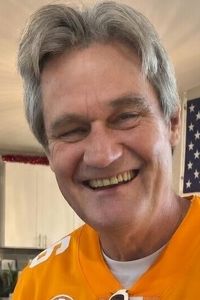
Tim Cyr served in the U.S. Army National Guard from 1970 to 1974. He earned a high school diploma from Neoga Senior High School and a bachelor's degree from Southern Illinois University, Carbondale, in 1977.
Cyr's career experience includes working as a farmer and small business owner.[1]
- Bachelor's:
- Southern Illinois University, Carbondale, 1977
- High school:
- Neoga Senior High School
In their own words
Who are you? Tell us about yourself.
I'm a U.S. Army veteran, National Guardsman, and small farmer with a degree in plant and soil science. Whether I'm working as a small-engine repairman or managing my land, I'm a fixer who believes in common-sense solutions. As a hunter and conservationist, I know that protecting Tennessee’s beauty is a sacred duty. As a stroke survivor, I understand what it means to be "down and out" and have the grit to get back up. I am an old-school Tennessee Democrat guided by my Christian faith, and a regular guy who starts every morning in the Word with my wife. I ask “What Would Jesus Do?” and believe the answer is simple: help the poor, uplift every family, and lead with love instead of judgment. I promise to serve only ONE term as Governor. I will NOT seek reelection in 2030. These days I'm an avid cyclist, but I still love watching football, baseball and basketball.
Also you pronounce Cyr like you're searing a steak!
Please list below 3 key messages of your campaign. What are the main points you want voters to remember about your goals for your time in office?
Guaranteeing Healthcare for All and Saving Our Hospitals
Every single Tennessean deserves access to quality, affordable healthcare. Our rural hospitals are shutting down, and working families are being forced into bankruptcy just to pay for life-saving medical care. I am fully committed to expanding healthcare access across our state, protecting our local clinics, and moving toward a healthcare system that covers everyone. No person should ever have to choose between buying groceries and going to the doctor. By securing healthcare for all, we can lift a massive financial burden off the shoulders of working-class families and build healthier, stronger communities across all 95 counties.Real Environmental Conservation and Standing Up to Tech Giants
As a farmer and a conservationist, I believe we have a sacred duty to protect Tennessee's natural beauty and resources for future generations. Right now, massive tech companies are building huge data centers across our state. These facilities consume staggering amounts of our water supply and clean energy while placing a heavy strain on local power grids. I will put strict environmental guardrails on these massive tech projects to ensure they do not destroy our land or drive up utility costs for regular families. True conservation means standing up to big corporations and putting our water, air, and soil first.Making Housing Affordable for Working Tennesseans
Working families are being priced out of the towns they grew up in because of predatory out-of-state corporate investors buying up whole neighborhoods. We must tackle this housing crisis head-on. I support common-sense rent regulation to protect tenants from unfair price gouging, along with targeted incentives to help first-time homebuyers secure entry-level homes. We also need to cut state-level regulatory red tape that slows down construction and drives up development costs. Our housing policy must focus on keeping Tennessee affordable for regular families, not boosting corporate balance sheets.
What areas of public policy are you personally passionate about?
Healthcare Expansion: I am deeply passionate about expanding Medicaid and moving toward healthcare for all. Our rural hospitals are closing and working families are struggling to afford life-saving care. No one should have to choose between buying groceries and paying for a doctor visit.
Housing Affordability: Working folks are being priced out of their own neighborhoods by predatory out-of-state corporate investors. I am passionate about implementing common-sense rent regulation, boosting entry-level homeownership incentives, and building affordable rental units.
Environmental Protection: As a farmer and conservationist, protecting our land is personal to me.
Public Education and Rural Infrastructure: I'm runnin out of space!
Who do you look up to? Whose example would you like to follow, and why?
I look up to Abraham Lincoln. He came from a humble, working-class background and faced some of the greatest challenges in our nation's history. I admire him because he stood firm on his principles during our darkest hours, preserved the Union, and always kept his dedication to the common person. He did not let the corruption of politics change who he was. His leadership shows that you can hold the highest office in the land while remaining deeply connected to regular, everyday Americans.
What characteristics or principles are most important for an elected official?
The most important characteristics are honesty, humility, and a clear sense of accountability. An elected official needs to remember exactly who they work for, which is the everyday people, not corporate donors or special interests. You have to be willing to look voters in the eye, tell them the truth even when it is hard, and follow through on your promises. True leadership means staying grounded, listening more than you speak, and never forgetting where you came from.
What do you believe are the core responsibilities for someone elected to this office?
The core responsibility of the Governor is to be a responsible steward of the state's resources and a defender of its people. This means managing the state budget to ensure taxpayer dollars are invested directly back into public schools, healthcare, and infrastructure. It means protecting our natural resources from exploitation and ensuring state agencies run efficiently to serve the public. Ultimately, the Governor's job is to create an environment where working families can thrive, stay safe, and afford to live in their own communities.
What legacy would you like to leave?
I want to leave a legacy showing that a regular guy, a small farmer and repairman who works with his hands, can walk into the Governor's office, deliver real results for working people, and go right back home to his community. I want my legacy to be fully funded public schools, restored rural infrastructure, and strong environmental protections that saved our water and land from corporate abuse. I want Tennesseans to remember an administration that put people ahead of politics.
What was your very first job? How long did you have it?
I worked on a farm as a young boy for a few years. That first job taught me everything I needed to know about the value of a hard day of work. It taught me the discipline of waking up early, working through the heat and the mud, and respecting the land. Those years on the farm built the foundation for my work ethic, and it is the same approach I take to my small business and my service in the military today.
What is something that has been a struggle in your life?
A consistent struggle has been balancing the demands of keeping a small family farm and a small engine repair business afloat in an economy that constantly favors massive corporations. I know firsthand what it is like to watch the costs of parts, tools, and daily essentials rise while trying to keep prices fair for my neighbors. It is a daily grind, but that struggle keeps me connected to the real financial pressures that working families across Tennessee face every single day.
Governors have many responsibilities, which vary from state to state. Which of those do you personally consider the most important in your state?
The most important responsibility is ensuring our state government actively supports and protects our communities instead of neglecting them. In Tennessee, that means using the power of the office to protect our public schools from being dismantled by voucher programs, ensuring our rural hospitals stay open, and shielding our natural resources from industrial exploitation. A Governor must be a shield for working families against corporate overreach.
In most states, governors have the power to make line-item vetoes. If that is true in your state, what would be your philosophy for how and when to use this power?
Tennessee governors have the power to reduce or disapprove specific spending items in budget bills. My philosophy for the line-item veto is simple: I will use it as a tool to cut out corporate welfare, wasteful pork projects, and special interest favors that do not benefit everyday families. If the legislature tries to sneak handouts for wealthy donors into the state budget, I will strike them out and fight to redirect those taxpayer dollars to public schools, roads, and clean water infrastructure.
Under what circumstances should the governor of your state be able to use emergency powers?
Emergency powers should only be used during true, immediate crises that pose a direct threat to public safety, such as severe weather disasters, major floods, or critical infrastructure failures. They must never be used as a tool for political games or executive overreach. When an emergency happens, the Governor should use these powers to cut through red tape, deploy the National Guard for relief, and deliver immediate aid to local communities while coordinating closely with local leaders on the ground.
What organizations or individuals have endorsed your campaign?
Jacob Anders
What was the first historical event that happened in your lifetime that you remember?
The first major historical event I vividly remember is the assassination of President John F. Kennedy in 1963. I was twelve years old, and I remember the announcement coming over the school loudspeakers and the total shock that hit the entire classroom. Watching the news coverage on a small television with my family over the days that followed left a lasting impression on me. It was the very first time I realized how fragile our country could be, and it sparked my earliest understanding of what it means to lead a nation through a crisis.
On the 2026 ballot
Links
Compiled from the candidate’s published profile as of September 30, 2026.
Source(opens in new tab)