
Background
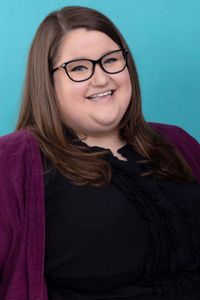
Tessa Lynn Hodge (Democratic Party) is running for election to the U.S. House to represent California's 23rd Congressional District. She is on the ballot in the general election on November 3, 2026. She advanced from the primary on June 2, 2026.
Campaign money
- Raised
- —
- From individuals
- $0
- From PACs & party
- $0
- Own money
- —
FEC filings.
View on FEC.gov(opens in new tab)In their own words
Who are you? Tell us about yourself.
My name is Tessa Lynn Hodge, and I am running to represent California’s 23rd Congressional District. As a born and raised lifelong resident of the district, I am deeply connected to its values and its people. My roots in the district run deep. My grandfather served in the United States Air Force for 22 years before retiring to the High Desert. He later ran a small print shop in the city of Victorville. My grandmother worked as a registered nurse for over 30 years, with a majority of that healthcare service at St. Mary’s Medical Center in Apple Valley. That legacy of service in my family shaped me in so many ways. I have also been shaped by the community itself and by the opportunities and challenges that this vast district offers. I am a Licensed Clinical Social Worker with almost a decade of experience working with vulnerable populations. From children in foster care, to students in need of mental health services in our school district. I’ve also worked in San Bernardino County incorporating state and federal legislation into county policy and guidelines for county workers. I’ve witnessed firsthand the impact of legislation and policies on real lives and I know that now is the time to advocate for meaningful change. After years of serving my community as a social worker, I’m running for office to be a voice for my community, to ensure that every person, regardless of their background, has the opportunity to thrive. For me, it is about people over party.
Please list below 3 key messages of your campaign. What are the main points you want voters to remember about your goals for your time in office?
Healthcare - No one should have to choose between their health and their paycheck. I will fight for Medicare for all while also working to expand healthcare services in our rural district. Healthcare is a right—not a privilege.Jobs - Our district deserves jobs that pay a living wage, offer benefits, and create real career pathways. I will work to attract investment, support small businesses, strengthen labor protections, and expand workforce training so people can build their futures right here at home.Housing Affordability - Teachers, nurses, first responders, and young families should be able to live in the communities they serve. I will push to expand affordable housing, protect renters, and cut red tape that drives up costs—so everyone has a safe, stable place to call home.
Healthy families. Strong jobs. Affordable homes.
That’s the future I’m fighting for.
What areas of public policy are you personally passionate about?
I’m most passionate about policies that directly improve people’s quality of life and strengthen our community. Healthcare access is at the top of that list. I’m deeply committed to making healthcare more accessible and affordable for everyone–but most urgently for working families, seniors, and veterans. Housing affordability is another major priority. Too many families are being priced out of the communities they love. At the heart of all of this is one guiding principle: the government should work for us. My passion is fighting for policies that make everyday life more affordable, secure, and full of opportunity.
Who do you look up to? Whose example would you like to follow, and why?
The individual that I have always looked up to is my grandfather, Bert Willis. He was incredibly kind and compassionate. I learned by his example how to be a good person and the importance of caring for your community.
What characteristics or principles are most important for an elected official?
The characteristics or principles most important for an elected official are empathy, integrity, and authenticity. An elected official needs to be empathetic and understanding to the needs of the constituents throughout the district. You also need to have integrity. It’s important to mean what you say, but also
follow through on those words. It is time to stop the endless cycle of lies and empty promises.
Authenticity is key! We need someone who tells it like it is, but who can also empower others to help make things better as a whole.
What qualities do you possess that you believe would make you a successful officeholder?
One of the qualities that I possess that I believe would make me a successful officeholder is that I am relatable and authentic. I am a lifelong resident of the district that I am running in and understand the struggles those constituents continue to face, because I have experienced them myself. I feel that you really
can’t serve the interests of the people you represent, unless you know what it is like to be one of those people. Another quality I possess is that I am a skilled communicator even in difficult situations and am able to build strong relationships with others. I know how to communicate impactfully while standing up for my
ideals and values.
What do you believe are the core responsibilities for someone elected to this office?
a. Listening to the members of the community and fighting for our district.
b. Balancing the wants and needs of various parts of the community that may not always align.
What legacy would you like to leave?
I want to leave a legacy of making life more affordable, more secure, and more hopeful for the people I serve. I want to be remembered as someone who fought to ensure every family—regardless of income or zip code—can see a doctor, afford their prescriptions, and get the mental health care they need without fear of financial ruin. Healthcare should be a right, not a privilege. I also want my legacy to reflect strong economic opportunity. That means bringing good-paying, stable jobs to our district—jobs with benefits, pathways for advancement, and dignity. Whether through infrastructure investment, clean energy, workforce training, or support for small businesses, I want to help build an economy that works for working families, not just the wealthy. I want to leave a mark on housing
affordability because safe, stable housing is the foundation for strong communities. If I succeed, my legacy will be simple: I helped people stay healthy, earn a good living, and afford a place to call home. That’s how you strengthen a community—and that’s the future I’m fighting for.
What qualities does the U.S. House of Representatives possess that makes it unique as an institution?
The House of Representatives is designed to be the people’s chamber- Direct, responsive, and closely tied to the everyday lives of Americans. It is a beautiful system of check and balances. Since the House seats are based on state populations, it brings together people from every background, profession, and region. This diversity fosters robust debate and a wide range of perspectives, making it a true microcosm of the nation. Most importantly, most legislation originates in the House, particularly budget-related bills. Its committee system allows for detailed policy development, expert testimony, and bipartisan
collaboration. I would love to be part of that institution that is so rudimentary to our Nation and its founding.
Do you believe that it's beneficial for representatives to have previous experience in government or politics?
I do believe it is beneficial for representatives to have experience working with policy or government in some form. As a Licensed Clinical Social Worker, I have worked first hand reviewing and implementing legislative policy, and I have experience examining state and federal policy to understand the economic impacts those policies have on our communities. We need someone who has experience working on state and federal policy, who works with the people of our district every day, and who can speak to our shared experiences.
What do you perceive to be the United States' greatest challenges as a nation over the next decade?
Over the next decade, I believe the United States will face several defining challenges that will test our democracy, our economy, and our national character. Rising housing costs, healthcare expenses, childcare, and student debt are
squeezing working families. The challenge ahead is building an economy that rewards work, supports small businesses, strengthens labor, and ensures everyone has a fair shot at the American Dream. We must enact legislation that closes tax loopholes for billionaires, gets big money out of politics, and balances our federal budget. Access and affordability to quality healthcare is another big challenge our nation continues to face, with deep flaws rooted in our current healthcare system. Ensuring affordable care, mental health support, and preparedness for future public health emergencies will remain a top national priority.
Do you believe that two years is the right term length for representatives?
Yes, I believe that two years is the right term length for members of the House of Representatives. Members of the House should be continuously working for the approval of their constituents.
What are your thoughts on term limits?
I firmly believe that there should be term limits for all elected positions. For far too long members of the House and Senate have made being a politician a lifelong career. Members of the House of Representatives should be limited to six, two-year terms, and members of the Senate should be limited to two, six-year terms. There should also be term limits for the Supreme Court as well, limiting all justices to a single 12-year term. All of these limits should include a mandatory retirement age of 68-years old.
Is there a particular representative, past or present, whom you want to model yourself after?
I would want to model myself after former Representative Patsy Mink. She was first elected to the House of Representatives in 1964 for the State of Hawaii and was the first Asian-American woman to serve in Congress. Rep. Mink fought for many noteworthy causes while in Congress, including affordable childcare, racial and gender equality, and was a supporter, author, and sponsor of the Title IX law. Title IX states that, “No person in the United States shall, on the basis of sex, be
excluded from participation in, be denied the benefits of, or be subjected to discrimination under any education program or activity receiving Federal financial assistance”.
Do you believe that compromise is necessary or desirable for policymaking?
I do believe that compromise is necessary for policy making. Different parts of communities are going to have different needs and sometimes those needs are going to come up against each other. I think that the mark of a good representative is someone who can balance and make compromises while being able to explain how those compromises will benefit not just their community, but the nation as a whole.
The Constitution says that all bills for raising revenue must originate in the House. What role would this power play in your priorities if elected?
The role of originating the budget would be central to how I advance my priorities to serve the district. It gives the House a frontline role in shaping tax policy and federal spending. I would use that authority to push for a fair, responsible tax code that eases the burden on working families and small businesses, while also closing tax loopholes for corporations and billionaires. I would also directly connect local priorities to national policy. Whether it’s funding for infrastructure,
healthcare, education, or veterans’ services, originating revenue legislation gives us leverage to fight for resources our district actually needs. I would work to ensure those dollars are invested where they make the biggest impact at home. I see this constitutional role as a responsibility to listen to constituents and reflect their priorities in revenue policy. This power isn’t just procedural, it’s a tool to
deliver real results, protect taxpayers, and ensure federal dollars are used wisely and equitably.
How should the U.S. House use its investigative powers?
The House of Representatives should be able to use its investigative powers as an aid of its legislative function. I feel that this authority allows the House to not only gather information for considering or writing legislation, but also as oversight and public information regarding issues related to government conduct. We are in a time when the U.S. House has abdicated its responsibility of investigation and being a coequal branch of government. While we witness the current administration engaging in misconduct, abuse, and fraud, the U.S. House sits idly by and ignores its constitutionally given responsibility.
What organizations or individuals have endorsed your campaign?
Teamsters Local 1932
Assembly Member Dr. Corey Jackson
Southern California Armenian Democrats
Mayor of Big Bear Lake, Randall Putz
Mayor of Moreno Valley, Ulises Cabrera
Democrats of the Morongo Basin
Big Bear Democratic Club
Redlands Area Democratic Club
Alan Vargas, Immigrants Rights Organizer
Alexis Claiborne, Community Activist and former CA-23 Candidate
Joe Salas, DNC Member
Sarah Gardam Thomas, First Vice Chair for the San Bernardino County Democratic Central Committee
Tariq Azim, California Democratic Party Region 16 Director
Denise Latanzi, LA County Democratic Party AD 34 Chair
Multiple community member endorsements
What committees interest you?
There are several House committees that interest me including, Education Workforce, Ethics, Oversight and Government Reform; Science, Space, and Technology; Small Business, and the Joint Economic Committee.
What are your views on financial transparency and government accountability?
I believe that there needs to be a higher level of transparency both in the personal financial records of elected officials, as well as in how our government spends its money. There needs to be greater consequences for government officials who engage in insider trading as well as for government agencies who fail audits.
On the 2026 ballot
Links
Compiled from the candidate’s published profile as of September 30, 2026 and FEC filings.
Source(opens in new tab)