
Background
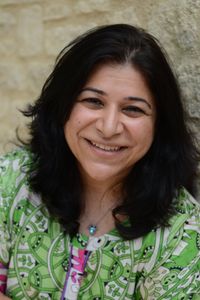
Sujata Gadkar-Wilcox was born in New York, New York. She earned a high school diploma from the Bronx High School of Science. She earned a bachelor's degree from Cornell University in 2001, a law degree from the University of Pennsylvania in 2005, and a graduate degree from The New School in 2021. Her professional experience includes working as an associate professor of constitutional and human rights law at Quinnipiac University and as the executive director of a human rights education program. She previously directed a juvenile delinquency prevention program. She has been involved with the Rotary Club of Trumbull, the Lakewood/Trumbull YMCA Board, the League of Women Voters, and the Oxford Consortium for Human Rights.[1][2]
- Law:
- University of Pennsylvania, 2005
- Graduate:
- The New School, 2021
- Bachelor's:
- Cornell University, 2001
- High school:
- Bronx High School of Science
Campaign themes
Sujata Gadkar-Wilcox has not yet completed [the profile publisher]'s 2026 Candidate Connection survey.
If you are Sujata Gadkar-Wilcox, click here to fill out [the profile publisher]'s 2026 Candidate Connection survey.
Who fills out the candidate survey?
Any candidate running for elected office, at any level, can complete [the profile publisher]'s Candidate Survey. Completing the survey will update the candidate's [the profile publisher] profile, letting voters know who they are and what they stand for. More than 32,000 candidates have taken [the profile publisher]'s candidate survey since we launched it in 2015. Learn more about the survey here.
Help improve [the profile publisher] - send us candidate contact info.
Who are you? Tell us about yourself.
I teach Constitutional and Human Rights Law at Quinnipiac University, where I'm Chair of the Department of Justice and Law. During my career, I've provided free legal services to immigrants, asylum seekers, and underserved communities, organized and led violence prevention seminars, and directed a juvenile delinquency prevention program that worked to keep kids out of jail through participatory programs educating them on their legal rights and responsibilities. I've also worked to protect democracy and voting rights with the League of Women Voters, enforced antidiscimination laws as a Commissioner with the Connecticut Commission on Human Rights and Opportunities, helped veterans and the homeless with the Rotary Club, and sit on the Trumbull Ethics Commission.
Please list below 3 key messages of your campaign. What are the main points you want voters to remember about your goals for your time in office?
Quality education: I want to make sure every student in the 22nd District has access to a good education from preschool, through K-12, to our public Colleges and State Universities. I will ensure that there is sufficient ECS funding for schools and that the funding is equitably distributed, and I will fight to make sure our public higher ed has sustainable funding to give access to college for all.Improved Infrastructure: I want to make sure that Bridgeport, Monroe, and Trumbull get their fair share of state and federal dollars to carry out flood repair projects and to fix roads.Ethics in government: I want to ensure that the residents of Bridgeport, Monroe, and Trumbull have a government that they know they can trust. For this reason, I support maintaining sufficient funding for the public financing of elections. I would also call for legislation to create an independent redistricting commission in Connecticut, and I would ensure that the Contracting Standards Board which has oversight over state contracts has a sufficient mandate and sufficient resources to do their job.
What areas of public policy are you personally passionate about?
As an educator and a constitutional scholar, my two passions are education and democracy. I want to ensure everyone has an excellent education and that the constitutional safeguards of our democracy are preserved. I also want to be accessible to my constituents and have them feel that I am a trusted friend who will fight to improve their quality of life.
Is there a book, essay, film, or something else you would recommend to someone who wants to understand your political philosophy?
I have always been inspired by To Kill A Mockingbird by Harper Lee. This book is a model of the impact that character and integrity can have, and also the importance of the ability to look at the world from the perspective of other people. We named our beloved late dog Attikus after Atticus Finch, and our current dog is (Georgia) Scout. One of my favorite English-language films is Twelve Angry Men (1957), which to me shows that conversation and reasoned discourse can produce a just result, and in that way models not just a jury trial but what democracy should be about.
What characteristics or principles are most important for an elected official?
An elected official can never forget that their job is to represent the views of voters, not to act for themselves. An elected official must be informed about the nature of government and the issues that their constituents face. An elected official must have empathy for the experiences of others and work for change to improve the lives of their constituents. More than anything an elected official must never forget that they are public servants who have been endowed by their constituents with a duty to serve them in the interest of the public good.
What do you believe are the core responsibilities for someone elected to this office?
Our job is to represent the people in our district, which for me involves representing Bridgeport, Monroe, and Trumbull fairly. To me, that involves constant conversation and communication. It involves being available to all members of your community, though neighborhood chats, coffee hours, or zoom conversations. It involves representing the entire community as a whole, including those who have different political views than you do.
What legacy would you like to leave?
I’m hoping for people to realize that politics and government are about building personal relationships, having compassion for others, and fighting for an equitable world for us all. Understanding these principles as the basis for politics will restore people’s faith in the political process.
What is the first historical event that happened in your lifetime that you remember? How old were you at the time?
I have vivid memories of the thrill of seeing the Berlin Wall come down. I was ten years old. The fact that ordinary people could through their collective will take down a symbol of oppression and the regime it represented stuck with me.
What was your very first job? How long did you have it?
fter I completed college, I worked as a paralegal for a trademark law firm in New York, in part to discover whether I liked the law and whether to pursue law school. Though trademark law was not for me, I did decide that law school was the right path, and the rest is history.
What is your favorite book? Why?
As I mentioned before, To Kill A Mockingbird by Harper Lee is my favorite book. This book is a model of the impact that character and integrity can have, and also the importance of the ability to look at the world from the perspective of other people.
What was the last song that got stuck in your head?
I am a huge Queen fan, and the last English language song I had stuck in my head was “Don’t Stop Me Now.” But the most recent song I had in my head was “Ghoonghaat Ki Ad Se Dilbar Ka” (Through the Screen of My Veil) from the 1993 Hindi-language film Hum Hain Rahi Pyar Ke (We Are Travelers on the Path of Love).
What is something that has been a struggle in your life?
I struggle to achieve balance between the three aspects of my life to which I am entirely and fully committed: my family, my work in teaching students, and my volunteerism and public service.
What do you believe is the ideal relationship between the governor and state legislature?
The legislature makes the laws; the governor executes the laws; and the judiciary interprets the laws. In general, the framers of our state government, like those of our federal government, envisioned a much stronger role for the legislature than the executive, which is why the legislature was the court of final jurisdiction in this state until well into the nineteenth century, and why historically Connecticut’s governors were limited to a two-year term, could not veto bills, and could not succeed themselves in election. Though the Constitution of 1965 gives the governor the power to veto, the power of governors is still limited (for example, he still does not have the power to pardon). The legislature is in a much better position to be closer to the people that they represent and to reflect the collective will. Given the strong constitutional history of limited executive power deference to the legislature in Connecticut, our Governor should view himself primarily as an executor of the will of the legislature and should use his limited powers with discretion.
What do you perceive to be your state's greatest challenges over the next decade?
How do we emerge as the economic leader in the Northeast? In many ways, Connecticut is actually in an advantageous position to do so. Housing values are increasing, particularly in Fairfield County; many of our critical industries, such as education, defense and health care, are in a relatively good, and strong finances and a good rainy day fund. However, due to overly restrictive fiscal guardrails, we face a crisis of underinvestment in education (from pre-K to our public colleges and state universities), our public sector has been shrinking, and out digital and physical infrastructure our not yet adequate to compete with neighboring states. Access to fiber optic lines to attract new businesses and offer incentives to ensure that the graduates of our excellent universities stay in the state to work in these industries after graduation.
Do you believe that it’s beneficial for state legislators to have previous experience in government or politics?
I think it is important for legislators to have related experience, but not necessarily experience in politics. There is always a danger that too much previous experience might leave legislators entrenched and beholden to monied interests. My work as a law professor and as the director of a non-profit legal education firm, as well as my work in numerous community organizations in Connecticut, leaves me well qualified to understand the budgetary and legal tasks of representatives. Ultimately, I believe the vision of the founders of this country and of this state was of a citizen legislature that represented the people—not of career politicians.
Do you believe it’s beneficial to build relationships with other legislators? Please explain your answer.
I became involved in politics because I am alarmed that those who hold different political views can no longer have productive conversations with one another. Building stronger relationships with constituents and other legislators, regardless of party, is one of my main priorities. That being said, legislators serve the people, not other legislators. It is important to make sure that the relationships we build in the capitol to not result in our being beholden to the interests of other legislators rather than those whom we serve.
Is there a particular legislator, past or present, whom you want to model yourself after?
In the American context, the first person I think of is the late John Lewis, who was able to combine collective action through protest and community organization (beginning in the civil rights movement, but continuing long after) with working within democratic institutions as an elected official. I also appreciate his ability to work across the aisle and have productive relationships and friendships with his political opponents without compromising his own beliefs. Though he was not a legislator, my approach to being a political candidate is deeply influenced by my reading of Democracy and Education (1916) by the American philosopher John Dewey, which stresses that democratic and educational processes are inextricable and that the entire community, including educators, must immerse themselves in the democratic process to be successful.
Are you interested in running for a different political office (for example, the U.S. Congress or governor) in the future?
I honestly do not know. My belief is that we need to reduce public corruption and change the way Americans view politics and politicians, and restore the idea that public service can be a noble profession in which legislators pursue the public good for everyone’s benefit. I believe that needs to start in our country from the bottom up—before we can restore everyone’s faith in national politics, we need to reassure them that politics and the local and state level can also work for them. We do that by embodying the principles of democracy that so many Americans fear we have lost. That is what I am focused on now.
Both sitting legislators and candidates for office hear many personal stories from the residents of their district. Is there a story that you’ve heard that you found particularly touching, memorable, or impactful?
I will always remember the woman who had never voted before, but greeted me at on election day with her daughters, not only to vote, but also to introduce them to the political process. I was inspired by the volunteer for my campaign knocked on more than 7000 doors despite having never before been involved in politics. I remember the man who had never voted and seemed uninterested in the participating, but who listened to me at the door and then came to my coffee hour the following week. I remember the grandmother who wasn’t interested in politics, but whose personal hardships helped me shape my own views on statewide issues. Communities matter, and I hope that I can bring an approach to Hartford that emphasizes community politics.
Should the legislature oversee or grant the use of emergency powers?
Yes, it should. Legislative oversight of emergency powers is a necessary element of preserving the balance of power between the legislative, executive, and judicial branches. Without legislative oversight over emergency powers and strict time limits to such power, executives can use emergency powers to undermine democratic institutions, as happened multiple times around the world in the twentieth century, with disastrous results.
What is the first bill you would introduce if elected?
Whether this comes through specific legislation or not, my highest priority is to ensure sufficient, sustainable, and equitably distributed funding for education from pre-k through college, and to adjust the state's fiscal guardrails if necessary to make that possible.
What committees interest you?
My experience makes me well qualified to serve on the Joint Committee on the Judiciary. As an educator, and someone who is passionate about education, I would like to be a part of the Higher Education and Employment Advancement Committee and the Education Committee.
What are your views on financial transparency and government accountability?
One of the hallmarks of my campaign is working to restore trust in our public institutions. That goal cannot be achieved without financial transparency and government accountability. In Connecticut, the keys to increasing public trust in government is ensuring clean and fair elections, ensuring stable and continued funding for the public financing of elections through the CEP, passing legislation to establish a fully independent redistricting commission, and expanding the power and funding of the state Contracting Standards Board to ensure that outsourcing and state contracting is done transparently and ethically.
Would a state ballot initiative process be good or bad for your state?
Connecticut does not currently have a citizen-provided ballot initiative process. In principle, adding such a process would increase participation in the democratic process. However, the scope of such initiatives need to be restricted to avoid what has happened in California, in which the initiative process is taken over by special interests and can essentially bypass the legislature entirely.
Sujata Gadkar-Wilcox did not complete [the profile publisher]'s 2022 Candidate Connection survey.
Video for [the profile publisher]
Video submitted to BallotpediaReleased October 2, 2020
Who are you? Tell us about yourself.
I am a professor of constitutional law and human rights law, a Fulbright Scholar, and a proud Trumbull resident along with my husband Wynn and our two daughters.
I am the child of immigrants: my father came to this country in 1969 with only a few dollars in his pocket and ended up designing parts for the space shuttle program. I grew up in Queens and attended New York City's public schools before earning a BA from Cornell University and a JD from the University of Pennsylvania. I then worked in large law firms and directed a non-profit legal education program for young people that worked to improve police-community relations.
I am also committed to giving back to the state and local communities: I am a member of the Connecticut Human Rights Partnership and am on the local YMCA Board, Rotary Club, PTA, and League of Women Voters.
I decided to get involved in politics because I believe that extreme partisanship is tearing apart our families and communities. I can have difficult conversations in my classroom with students who held opposing views. Having those conversations in our communities is the key to maintaining our democracy.
Please list below 3 key messages of your campaign. What are the main points you want voters to remember about your goals for your time in office?
I will fight for Trumbull's fair share of state education funding, which has declined at a more rapid rate than other comparable communities. As an educator, I will be your strongest education advocate in Hartford.I will work to secure emergency funding to help small businesses navigate through COVID, and attract new businesses by improving Connecticut's digital infrastructure and incentivizing our students to remain in the state to work in critical industries.I will restore public trust in government and politics by focusing on reforming the political system in general. That means fully funding the Office of State Ethics, protecting the Citizens Election Program, enforcing restrictions on lobbyists, reducing gerrymandering.
What areas of public policy are you personally passionate about?
Public corruption is the issue that consumes me. When I teach courses in constitutional law, I emphasize that our constitution envisions a balance of power, standing laws that are accessible to the public, a system of representation in which people have a voice in their government, and most importantly, government that works within the framework of the public good. Today, imbalanced districts, powerful lobbies, and the financial impact of special interest groups have eclipsed the collective voice of voters. As a consequence, our political climate is so tense and divided, that it is tearing apart not only friendships, but families. Beyond that, we have a political system that seems so far removed from its intended purpose of serving the public interest that people have lost all faith in government. I am passionate about restoring that faith through community politics, in which the point of government is to represent the collective voice of voters.
Who do you look up to? Whose example would you like to follow, and why?
I'm deeply inspired by Dr. B.R. Ambedkar, who as an dalit growing up in India was not even allowed in a classroom to study, but went on to earn many degrees and was the chief architect of India's constitution.
I am also inspired by the example of Ruth Bader Ginsburg, who demonstrated that a gradualist approach, working within the system, can actually create meaningful change. As her nephew Daniel Stiepleman said, "Ruth Bader Ginsburg changed the country. But she did it by convincing people to agree with her, not by destroying the people who disagreed with her."
Is there a book, essay, film, or something else you would recommend to someone who wants to understand your political philosophy?
I am deeply influenced by the twentieth century American educator and philosopher John Dewey, especially his book "Democracy and Education" (1916). For him, democracy was an experience of shared living that required engagement by all members of the community. It was about participatory practice. On the occasion of his eightieth birthday in 1939, he wrote: "the task of democracy is forever that of creation of a freer more human experience in which all share and to which all contribute." More than eighty years later, his insights are even more essential for us to successfully emerge from our current global pandemic.
I think voters could also learn a lot about my political views by watching the television show "Parks and Recreation." The characters in that show demonstrate that local and state government are messy and filled with folly and fun, but that a well-prepared person who loves their town and state can earn the confidence and trust in the people. Despite Ron Swanson's best efforts to prove otherwise (and he makes some decent points along the way), Leslie Knope's vision, that despite the sometimes corrupt and cynical world in which we live, good government is possible, and that good government, especially at the state and local level, can create and enhance a positive sense of community and actually help people, is one in which I firmly believe.
I recently have been watching the television show "Cobra Kai," which also inspired my husband and I go rewatch the original Karate Kid. The concept that in life, it is about balance, and that there is no "enemy," are very useful to me.
What characteristics or principles are most important for an elected official?
An elected official can never forget that their job is to represent the views of voters, not to act for themselves. An elected official must be informed about the nature of government and the issues that their constituents face. An elected official must have empathy for the experiences of others and work for change to improve the lives of their constituents. More than anything an elected official must never forget that they are public servants who have been endowed by their constituents with a duty to serve them in the interest of the public good.
What qualities do you possess that you believe would make you a successful officeholder?
I am someone who is knowledgeable about the state and federal constitutions and our systems of government. I hope to be empathetic and compassionate; I strive to listen carefully to people's needs and problems and to put all my effort into helping them.
What do you believe are the core responsibilities for someone elected to this office?
Our job is to represent the people in our town. To me, that involves constant conversation and communication. It involves being available to all members of your community, though neighborhood chats, coffee hours, or (in the midst of COVID-19) zoom conversations. It involves representing the entire community as a whole, including those who have different political views than you do.
What legacy would you like to leave?
I'm hoping for people to realize that politics and government are about building personal relationships, having compassion for others, and fighting for an equitable world for us all. Understanding these principles as the basis for politics will restore people's faith in the political process.
What is the first historical event that happened in your lifetime that you remember? How old were you at the time?
I have vivid memories of the thrill of seeing the Berlin Wall come down. I was ten years old. The fact that ordinary people could through their collective will take down a symbol of oppression and the regime it represented stuck with me.
What was your very first job? How long did you have it?
After I completed college, I worked as a paralegal for a trademark law firm in New York, in part to discover whether I liked the law and whether to pursue law school. Though trademark law was not for me, I did decide that law school was the right path, and the rest is history.
What is your favorite book? Why?
I have always been inspired by "To Kill A Mockingbird" by Harper Lee. This book is a model of the impact that character and integrity can have, and also the importance of the ability to look at the world from the perspective of other people. We named our beloved dog Attikus after Atticus Finch.
If you could be any fictional character, who would you want to be?
I'd like to be Leslie Knope-someone who loves her community and will stop at nothing to make it better.
What was the last song that got stuck in your head?
I am a huge Queen fan, and the last English language song I had stuck in my head was "Don't Stop Me Now." But the most recent song I had in my head was "Ghoonghaat Ki Ad Se Dilbar Ka" (Through the Screen of My Veil) from the 1993 Hindi-language film Hum Hain Rahi Pyar Ke (We Are Travelers on the Path of Love).
What is something that has been a struggle in your life?
I struggle to achieve balance between the three aspects of my life to which I am entirely and fully committed: my family, my work in teaching students, and my volunteerism and public service.
Every state besides Nebraska has two legislative chambers. What do you consider the most important differences between the legislative chambers in your state?
Connecticut's state representatives are designed to have a direct line to the voice of the people. With 151 representatives as opposed to only 36 senators, and with each representative with only around 22,600 residents to represent, state representatives can and should meet with or speak with the vast majority of the people they represent in person. They can cultivate personal relationships with their constituents, and truly bring the voice of the people to Hartford. That is what I will strive to do if elected.
Do you believe that it’s beneficial for state legislators to have previous experience in government or politics?
I think it is important for legislators to have related experience, but not necessarily experience in politics. My work as a law professor and as the director of a non-profit legal education firm, as well as my work in numerous community organizations in Connecticut, leaves me well qualified to understand the budgetary and legal tasks of representatives. Ultimately, I believe the vision of the founders of this country and of this state was of a citizen legislature that represented the people-not of career politicians.
What do you perceive to be your state’s greatest challenges over the next decade?
How do we emerge from COVID in a position to be an economic leader in the Northeast? In many ways, Connecticut is actually in an advantageous position to do so. Housing values are increasing, particularly in Fairfield County; many of our critical industries, such as education, defense and health care, are in a relatively good position to weather COVID; and we have a strong rainy day fund. However, we need to press these advantages by working to improve our digital and physical infrastructure and access to fiber optic lines to attract new businesses and offer incentives to ensure that the graduates of our excellent universities stay in the state to work in these industries after graduation.
What do you believe is the ideal relationship between the governor and the state legislature?
The legislature makes the laws; the governor executes the laws; and the judiciary interprets the laws. In general, the framers of our state government, like those of our federal government, envisioned a much stronger role for the legislature than the executive, which is why the legislature was the court of final jurisdiction in this state until well into the nineteenth century, and why historically Connecticut's governors were limited to a two-year term, could not veto bills, and could not succeed themselves in election. Though the Constitution of 1965 gives the governor the power to veto, the power of governors is still limited (for example, he still does not have the power to pardon). The legislature is in a much better position to be closer to the people that they represent and to reflect the collective will. Given the strong constitutional history of limited executive power deference to the legislature in Connecticut, our Governor should view himself primarily as an executor of the will of the legislature and should use his limited powers with discretion.
Do you believe it’s beneficial to build relationships with other legislators? Please explain your answer.
I became involved in politics because I am alarmed that those who hold different political views can no longer have productive conversations with one another. Building stronger relationships with constituents and other legislators, regardless of party, is one of my main priorities.
What process do you favor for redistricting?
Connecticut's current redistricting laws, in which a two-thirds vote is required to approve legislative redistricting, and a backup commission is appointed if the legislature fails to approve a plan, works reasonably well in comparison to other states. However, I firmly believe that politics works best when voters choose their legislators, rathe
On the 2026 ballot
Links
Compiled from the candidate’s published profile as of September 30, 2026.
Source(opens in new tab)