Background
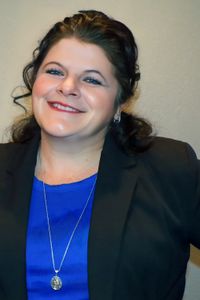
Stephanie Spears Tomana graduated from North Marion High School. She earned a bachelor's degree from West Virginia University. Her career experience includes working as a science teacher.[1]
- Bachelor's:
- West Virginia University
- High school:
- North Marion High School
Campaign money
- Raised
- —
- From individuals
- $0
- From PACs & party
- $0
- Own money
- —
FEC filings.
View on FEC.gov(opens in new tab)In their own words
Who are you? Tell us about yourself.
I'm a public-school teacher, civic leader, and lifelong advocate for working-class families in West Virginia.
Born and raised in Marion County, I learned early what it means to work hard, stretch a paycheck, and rely on your neighbors. Those lessons shaped who I am, and who I fight for.
I've spent more than twenty years teaching science in our schools, building a classroom rooted in curiosity, critical thinking, and hands-on learning, earning nominations for the Presidential Award for Excellence in Mathematics and Science Teaching and the J. Kevin Scanlon Award for the Promotion of Science.
Beyond the classroom, I've coached youth sports, served on community boards, led local improvement projects, worked with WFP on THRIVE Act Campaign, secured years of grant funding, and a congressional spending request for fire hydrants.
I am President of the S.N. Elliott Foundation Scholarship trust, and Vice Chair of the Marion County Democratic Executive Committee.
As a proud union member, I've stood alongside fellow educators to defend our public schools and fight for the future our children deserve.
My husband Chris and I proudly raised our two daughters here.
There’s no denying that there’s a lot of problems in Washington, but there’s a lot here at home too. After a lifetime of exploitation, we’re at the bottom of every important metric. I’m running for Congress because I know with all that I am this does not have to be our story.
We deserve better.
Please list below 3 key messages of your campaign. What are the main points you want voters to remember about your goals for your time in office?
While others tell our story, I’ve lived it. I grew up in a hollowed-out coal camp like everyone else, wearing hand-me-downs and waiting for the commodities truck. Counting pennies at the gas station and navigating job loss. West Virginians have always struggled with affordability and lack of opportunity—1 in 4 children live in poverty, 46% of families live below the ALICE threshold, we have one of the lowest median annual incomes in the country. West Virginians deserve immediate relief and sustainable solutions—closing tax loopholes for high earners, protecting SNAP, Medicaid, & Medicare, raising the minimum wage, expanding the refundable Earned Income and Child Tax Credits, investing in rural education and housing are key priorities.We cannot build a future on cracked earth and talking points. Potholes aren’t a stump speech—they’re a safety issue and symbolic of everything that isn’t working. 65,000 West Virginians don’t have access to clean water, 5,000 fire hydrants need replaced, our rural road fatality rate is nearly double the national average. I will prioritize our rural communities, increase federal grants for fire departments, emergency services, and treat broadband and childcare like the utilities that they are. Infrastructure and education are the drivers of an opportunity economy and the basic responsibility of governance, nearly half our state budget comes from federal dollars, we deserve accountability.Everything begins and ends with representation. Our history is one of exploitation by out-of-state special interests and political opportunists—timber, oil, coal, gas—and now our water and farmland. You can’t represent all of us if you never leave the main road or if you’re beholden to someone else. Congress must reclaim its constitutional authority and demand more from those we elect: require divestment from financial conflicts, ban stock trading, remove big money from politics, end partisan gerrymandering, and enforce real accountability for ethical violations. I believe in open communication, being present in our communities, and building relationships. To truly represent West Virginia, we must understand Littleton and Martinsburg,
What areas of public policy are you personally passionate about?
My passions in public policy are rooted in the desire to improve the daily lives of all West Virginians and protect our state's resources.
I am deeply committed to revitalizing our infrastructure, strengthening public education, and restoring funding to our federal healthcare systems. I believe that accessible, affordable healthcare is a fundamental right and will fight for Medicare expansion to all.
We must protect our water and farmland at all costs—end eminent domain abuses, hold polluters accountable, and fully fund water and sewage infrastructure. I am driven by the need for an economy and government that works for working families, restoring the trust and decorum of office, and being a truly accessible representative.
Campaign websiteSpears Tomana's campaign website stated the following:Clean water isn’t partisan,it’s a necessity.Most of our water, sewer, and road infrastructure was built between the 1930s and 1970s. It is long past its life expectancy. West Virginia needs an estimated $13.9–$18 billion just to repair crumbling water and sewer systems.“High impact” data centers like the one being proposed in Tucker County could draw millions of gallons of water each day to cool their servers, straining already fragile systems, concentrating pollutants, and stressing trout streams.We have a responsibility to shield our watershed from pollutants, data center grabs, and eminent domain abuse, especially after the legislature removed local home rule.For many West Virginians, water is an everyday crisis.An estimated 64,000 households have no access to public water.There were more than 3,200 boil water advisories last year alone.Over 4,000 miles of waterways are contaminated by mining runoff, sewage overflows, and industrial discharge.Thirty-six of West Virginia’s 55 counties rank in the worst third nationally for water pollution, according to NRDC analysis.Tourism in our river communities—rafting, fishing, camping—would suffer as warmer, depleted flows kill aquatic life and push visitors away.In rural Virginia, we’ve already seen the consequences of unchecked data center expansion: wells drawn down or dried up, farmers losing irrigation, and utility rates climbing as much as 200 percent.Clean water is essential, for our health, for our families, and for our tourism economy. It simply does not make sense that in a state already burdened with serious water challenges, our congressional delegation would cheer safety rollbacks and our legislature would remove guardrails for development and integration into our communities. We Deserve Clean WaterEnd eminent domain abuse. No private corporation should be able to seize family land for profit‑driven projects like data centers, solar fields, transmission lines, or fracking operations. If a project cannot prove a genuine public use, win local approval, and fully protect the rights of landowners, it should not have the power of eminent domain.Strengthen Environmental Review (NEPA).Require full Environmental Impact Statements for any data center seeking eminent domain authority. These reviews must include cumulative watershed impact assessments and air pollution analysis, including long-term consequences.Protect Superfund Dollars. Block Congresswoman Miller’s H.R. 640 and preserve $1.2 billion in Superfund revenue dedicated to cleaning up PFAS and contamination at sites like Fairmont Brine.Hold Polluters Accountable for PFAS. Sponsor legislation conditioning Appalachian Regional Commission grants and federal tax incentives on groundwater monitoring, safe blowdown treatment, and enforceable PFAS liability standards.Fully Fund West Virginia’s Water Infrastructure. Extend and expand funding through the Bipartisan Infrastructure Law, the Water Resources Development Act, and Community Project Funding. West Virginia faces a $14–18 billion water repair backlog. Priorities include:Replacing aging pipelines.Addressing PFAS “forever chemicals.”Eliminating lead contamination in communities like Weirton.Assisting the hardest-hit southern counties, including Wyoming and McDowell, which rank among the worst in the nation for water violations.Set National Water Efficiency Standards for Data Centers. Co-sponsor legislation requiring Water Usage Effectiveness (WUE) below 0.2 liters per kilowatt-hour for facilities over 50 megawatts, mandating zero-evaporative cooling and the use of recycled water.Too rich to be poor,and too poor to be rich.For too many families in West Virginia, work doesn’t pay enoughto cover the basics.Many fall into the ALICE (Asset Limited, Income Constrained, Employed) category—working above the poverty line but still struggling to afford food, childcare, medical bills, and car repairs.In the Eastern Panhandle, housing costs are skyrocketing, while our Northern and Central counties struggle as companies and good paying jobs leave—Mylan, Novelis, Allegheny Wood Products, Alderson-Broaddus University, and most recently Mettiki Coal. Stephanie has lived our struggles, and stood with our communities. She’ll stand against policies that treat people like cogs in a machine—like efforts to push children into the workforce before they’re ready or to raise the retirement age on those who've already given a lifetime of work.We deserve an economy that works for working families.We Deserve an Economy that Worksfor all West VirginiansExpand workforce training and apprenticeships. Connect schools, community colleges, and unions to in-demand careers in healthcare, energy, skilled trades, and STEM.Incentivize local investment. Push federal programs that reward companies for hiring West Virginians, offering union wages, and committing to long-term investment in our communities.Protect and grow unions. Repeal anti-union laws, expand collective bargaining, and restore union jobs in manufacturing, energy, construction, and public service.Protect gig and returning workers. Reclassify gig workers to guarantee benefits and create programs for people re-entering the workforce after caregiving, addiction treatment, or incarceration.Protect SNAP, Medicaid, & Medicare. Keep essential food and healthcare programs available, especially in rural and distressed areas, while linking benefits to workforce and family support programs.Raise the minimum wage. Ensure wages reflect the true cost of living, tie them to inflation, and protect gig, tipped, and part-time workers.Reinstate Trade Adjustment Assistance (TAA) and Trade Readjustment Allowances (TRA) so workers who lose their jobs or take a pay cut because of foreign trade, offshoring, outsourcing, automation, and artificial intelligence have a real path to get back on their feet. Strengthen Collective Bargaining. Fully restore the protections of the National Labor Relations Act and the National Industrial Recovery Act, ensuring workers have the ability to organize and negotiate for fair pay and benefits. Support working families with infrastructure and access. Expand affordable childcare, broadband, and transportation so all West Virginians can join or stay in the workforce.One in five of our students relieson special education services. Weakening federal oversight threatens IDEA (Individuals with Disabilities Education Act) protections and the funding that ensures students with disabilities receive the education they are guaranteed. Stephanie will not allow a return to a time when those students were pushed aside.Stephanie knows smaller class sizes aren’t a luxury, they’re essential to giving every student the attention and support they deserve. She believes expanding high-quality Pre-K is one of the most effective ways to close achievement gaps before they ever have a chance to widen. With more than 70 schools closed or consolidated in just the past five years due to declining enrollment and budget cuts, our public education system needs leadership that puts all of our students first. One in four of West Virginia's children lives in poverty. The hard truth is that hungry kids struggle in school-they're more likely to fail classes, more likely to receive discipline referrals, and more likely to be an absentee issue. Addressing child poverty isn’t just compassionate—it’s smart economic policy. When we invest in our children, we build a stronger workforce and a stronger West Virginia for the future.West Virginia has one of the highest percentages of first-generation college students in the country. For many families, Pell Grants are the only path to higher education. When college becomes unaffordable, opportunity shrinks and generational poverty deepens.Strong public schools. Protected special education. Affordable college. Respected professions. That’s how we build a West Virginia where our children don’t have to leave to succeed.Education CommitmentsDefend College Access & First-Generation Students. Protect and expand Pell Grants. Simplify FAFSA access and support responsible debt relief options so higher education remains within reach.Expand Free Lunch Initiatives. Maximize the Community Eligibility Provision (CEP), ensuring universal access to meals.Invest in Community Colleges & Workforce Pathways. Increase federal investment in community colleges and workforce-aligned degree and certification programs that meet the needs of our local economy.Partnership with Trade Unions. Support public–union partnerships that expand apprenticeships and create clear pathways to skilled, good-paying jobs. Protect SNAP, Medicaid, & Medicare. Keep essential food and healthcare programs available, especially in rural and distressed areas, while linking benefits to workforce and family support programs. Protect Students with Disabilities. Defend strong federal oversight that safeguards students with disabilities. Fully fund the Individuals with Disabilities Education Act (IDEA) so schools aren’t forced to divert general classroom resources to meet mandated services. Oppose efforts to dismantle federal education protections that protect our most vulnerable students.Stand Up for Essential Professions. Protect professional licensure standards and ensure federal recognition and funding for accredited programs. Strengthen—not weaken—the pipeline for teachers, nurses, social workers, and other essential professionals. Support the American Teacher Act. Attracting and keeping teachers in West Virginia’s border counties means more than just raising pay. Supporting the American Teacher Act to lift the starting salary to $60,000 nationwide, while pairing it with loan‑forgiveness programs, ‘grow‑your‑own’ pipelines, and relocation incentives that make our border‑county schools the best choice for educators—and for our children.Washington is Broken,and We All Know It.The dysfunction, the self-dealing, the partisan circus, it has eroded the trust that is fundamental to a working democracy.We send people to Congress and trust them with our lives, our livelihoods, and our future; its clear that too many of them have forgotten that.We. Deserve. Better.Every decision should be weighed against whether or not it improves the live of West Virginians and if our children will bear the cost. Stephanie doesn't answer to corporate bosses, she answers to our neighbors. Restoring the decorum and integrity of public office isn't a partisan issue, it's an expectation.Stephanie believes that every member of Congress should be held to the highest ethical standards, that transparency and accountability should be non-negotiable, and that the trust West Virginians place in their representative is sacred.She's not going to Washington to play games. She's going to do the job.Campaign Finance Reform & Ethics Hold Officials Accountable. Implement stricter penalties for ethical violations, including fines and removal from office for those who put personal gain above public service.Increase Transparency & Divest from Conflicts of Interest. All financial disclosures, votes, and lobbying interactions must be public and easily accessible, so voters know exactly how decisions are made. Require elected officials to divest personal financial holdings (stocks, bonds, cryptocurrency, or other assets) that could influence their votes or create a conflict of interest.Support Overturning Citizens United. The Supreme Court's 2010 decision opened the floodgates to unlimited corporate spending in our elections and has corrupted our political process ever since. Big money from corporations, dark money groups, and special interests has no place in our democracy.Support the American Anti-Corruption Act. Close loopholes that allow lobbyists and special interests to buy political influence and drown out the voices of everyday Americans. Congressional Authority & Oversight Defend Congress's Constitutional Role. The people's representatives must have a real seat at the table on matters of war, spending, and governanceReclaim the Power of the Purse, at Home and in Washington. Nearly half of our state budget comes from federal dollars. Stephanie will endure those funds reach the roads, schools, and communities they were allocated for; she won't let it be redirected, clawed back, or held hostage for political purposes.Stand for Due Process and the Rule of Law, Show Up, and Speak Out. One of the most powerful things a freshman member of Congress can do is refuse to be silent when constitutional norms and rights are being violated.Restore Congress's War Powers. The Constitution is clear, only Congress has the authority to declare war. She will fight to restore and enforce Congress's constitutional authority over military actionHealthcare should be accessible and affordable. For the 85% of West Virginians that live in primary care deserts, or the 49% of counties that are maternity care deserts, and the 80% of counties that are already are designated as Health Professional Shortage Areas (HPSAs) or Medically Underserved Areas (MUAs), access to healthcare—providers, clinics, hospitals—is a challenge.Under the One Big Beautiful Bill, our rural healthcare funding was slashed by roughly $1 billion per year, putting these communities and at least seven rural hospitals at even greater risk.Stephanie believes every woman deserves the right to make decisions about her own body. She knows that this is a deeply personal decision. The government should not dictate medical choices for women.The Supreme Court’s overturning of Roe v. Wade removed a fundamental right to privacy and put countless West Virginians in impossible situations.Miscarriages, complications, hysterectomies, birth control, and medical interventions are often lumped into polarized debates that don’t reflect the realities of women’s lives.West Virginia ranks in the top 10 for preterm births, low birth weight, and maternal mortality.Stephanie’s approach is compassionate, practical, and grounded in reality. It’s about protecting the health, privacy, and choices of every West Virginian.Healthcare Policy Priorities Ensure Transparency and Accountability.Track funding and outcomes to make sure taxpayer dollars reach the communities and programs they’re intended to help. No money wasted, no promises unfulfilled.Expand Access to Women’s Healthcare. Address maternity care deserts by increasing funding for OB-GYN services, birthing hospitals, and prenatal care programs—so no woman drives hours for essential care.Focus on Circumstances and Support. Recognize the factors—economic, medical, personal—that bring a woman to make healthcare decisions, and invest in comprehensive healthcare, education, and support services.Fully Restore Rural Healthcare Funding. Reinvest every dollar cut under One Big Beautiful Bill to ensure rural hospitals, clinics, and community health centers have the resources they need to stay open and serve every West Virginian.Protect Medicaid and Medicare. Fight any future cuts to ensure families, seniors, and individuals with disabilities can access the care they need without skyrocketing costs or long travel times.Respect Privacy. Uphold the principle that healthcare decisions belong to the individual, not politicians. Privacy and bodily autonomy are nonpartisan values that affect everyone.Support Rural Healthcare Providers. Invest in incentives to keep doctors, nurses, and specialists practicing in West Virginia. Encourage telehealth expansion so rural residents can access care without long drives.A healthy democracy depends on honest, transparent, and accountable journalism. For too long, partisan media has prioritized ratings over facts, turning public debate into chaos and deepening divisions in West Virginia and across the country. Stephanie believes information should empower, not divide. Citizens deserve news they can trust, and policies that reflect reality, not ratings.Media & AI Policy PrioritiesPromote Viewpoint Diversity in Broadcasting. Encourage policies and voluntary industry standards that support the presentation of diverse, good‑faith perspectives on major public issues, while fully respecting First Amendment protections and avoiding government control over editorial decisions.Clarify Opinion, Entertainment, and Straight Reporting. Require clear, consistent on‑screen and online labels that distinguish opinion, commentary, satire, and entertainment from straight reporting, so audiences understand the format and editorial stance of what they are viewing, without restricting lawful content.Invest in Independent Media Literacy Education. Support nonpartisan, evidence‑based media literacy programs in schools and communities that teach people how to evaluate sources, recognize persuasion techniques, and distinguish news, opinion, and advertising—without promoting any political viewpoint.Increase Transparency Around Political Influence in Media. Strengthen disclosure rules for political advertising, sponsorships, and paid content across TV, radio, and digital platforms, so the public and policymakers can clearly see who is funding messages that aim to shape policy, without singling out viewpoints for punishment.Improve Transparency and Accountability in Social Media Systems. Require large platforms to publish accessible explanations of how their recommendation and ranking systems work and to provide users with meaningful choices over how content is ranked and filtered. Update digital transparency laws so online political advertising follows clear disclosure and record‑keeping standards comparable to TV and radio. Strengthen oversight and coordination to combat unlawful foreign interference—such as covert, state‑sponsored bot networks—while avoiding any authority to censor lawful domestic speech based on viewpoint.Establish Clear AI Transparency Standards for Political Content. Require prominent labeling or watermarking of AI‑generated political images, video, and audio, especially when used in campaigns or public persuasion. Develop open, auditable technical standards in consultation with independent experts and civil society to minimize circumvention and prevent misuse of labels to discredit legitimate content. Ensure that enforcement focuses on deception (for example, undisclosed synthetic impersonations), not on the political viewpoint being expressed.Infrastructure in West Virginia isn't working—especially in rural communities. 1 in 4 public water systems in West Virginia had a recent health-based violation.75% of the state’s dams are classified ashigh-hazard potential.Only 45% of roads are rated in “good” condition.20% of bridges are structurally deficient.Our rural road fatality rate is nearly double the national average.More than 26,000 children in West Virginia lack access to childcare; 2/3 of our counties are considered childcare deserts. West Virginians work hard, pay our taxes, and show up for our communities. We're holdingup our end of the bargain while our politiciansignore their responsibilities and distract us with culture wars and talking points. Despite nearly half of our state's budget coming from federal dollars, West Virginia consistently ranks at or near the bottom nationally in infrastructure quality, with little or no accountability, we deserve better. True infrastructure encompasses more than roads and water lines, it includes human infrastructure and when it fails, working families pay the price. For Stephanie, sound infrastructure means investing in roads, clean water, bridges, sewer systems, volunteer fire departments, childcare, and broadband.Stephanie believes infrastructure funding mustbe transparent, accountable, adequate, and prioritized for the communities most in need.Infrastructure Policy PrioritiesSupport and Expand H.R. 5356, the National Infrastructure Bank Act prioritizing rural infrastructure projects like water, broadband, roads, and emergency services to deliver jobs and stronger communities. Bridge and Road Accountability. Establish stricter oversight and transparency for federal infrastructure funds to ensure projects are completed on time and fully funded.Fully Fund Rural Water and Sewer System Projects. Prioritize federal infrastructure dollars for small towns and unincorporated communities that have been overlooked.Protect Infrastructure Funding from Political Gamesmanship. Refuse to let federal funds be delayed or rejected for ideological reasons. West Virginians should not lose resources because of political posturing.Support Local Fire and Emergency Services. Increase federal grants for rural fire departments and emergency response systems to ensure no community is cut off from lifesaving services.Support Working Families. Ensure paid leave, invest in affordable childcare subsidies, expand the refundable childcare tax credit, and fully fund Head Start programs. Treat Broadband as a utility. Invest in last-mile expansion so rural communities have reliable, affordable internet. Require accountability from providers receiving federal funds.Two-thirds of West Virginians live in rural, unincorporated communities.Rich in potential but overlooked, failing infrastructure, scarce jobs, and little to no revenue for growth, our rural and unincorporated communities are forgotten by time and ignored by politicians.Stephanie is committed to ensuring no community is left behind; her plan delivers economic growth directly to rural areas.Rural West Virginia is the heart of the state. Through smart investment and community empowerment, we will build a future where every resident can thrive.Rural Opportunity Policy PrioritiesSecure Targeted Funding. Champion federal and state grants and investments for infrastructure and community projects—without placing financial burdens on local residents.Build Modern Infrastructure. Expand broadband, upgrade roads, and improve essential services to unlock access to remote work, education, and healthcare.Empower Local Voices. Establish community councils and participatory programs so residents can set priorities and guide development initiatives.Grow Local Businesses. Support small business grants, mentorship programs, and cooperatives in agriculture, crafts, and other homegrown industries.Deliver Measurable Results. Track progress through job creation, improved connectivity, thriving local enterprises, and stronger, self-sufficient communities.You Cannot Legislate to a Life You Haven’t LivedToo many elected officials go to Washington and become unreachable, trading the home agenda for a Beltway agenda. You can’t have both.How can you represent us when you don’t even know us?Stephanie knows. She’s felt the history in Charles Town, the steel of Weirton, and mourned the Littleton of yesterday. She’s from pine trees and mining camps and government cheese.She knows where she comes from—West Virginian by luck, Mountaineers forever by choice.Stephanie isn't going to Washington to become someone else. She’s going to represent the communities that made her—from Hundred and Martinsburg to St. Marys, Buckhannon, and Four States, and everywhere in between.And she’ll never stop showing up. She believes we all deserve to be heard.There’s a difference between someone who's trying to talk it, and someone who's lived it.You can't fake knowing what it means to stretch a paycheck, to watch your hometown hollow out, or to navigate job loss. West Virginia doesn’t need another politician who discovers us every couple of years. Stephanie isn’t running because she’s got a perfect plan. She’s running because she’s lived what too many of us are still going through.“I don’t have all the answers—no one does. But by damn, I can guarantee you this, when Congress is making deals and playing chess with our lives, someone who knows what happens to a community when places like Consol and Mettiki and Mylan close will be in that room. And she’ll be fighting for us.”We Deserve Real Representation'All Means All' to Stephanie. She's stood in front of the vulnerable before, and she'll stand up for our communities, regardless of zip code or political affiliation. She is a champion for working‑class and poor families, LGBTQIA+ West Virginians, women, minority, and immigrant communities. Every voice in West Virginia matters, and Stephanie is committed to making those voices heard.She Doesn't Shy Away From Courageous Conversations. Stephanie is committed to being right where she's always been, in our communities, She'll show up, and ta
On the 2026 ballot
Links
Compiled from the candidate’s published profile as of September 30, 2026 and FEC filings.
Source(opens in new tab)