
Background
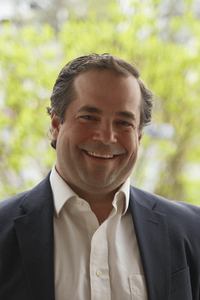
Ryan McLaren earned a high school diploma from Essex High School and a bachelor's degree from Wesleyan University in 2008. His career experience includes working in public service.[1]
- Bachelor's:
- Wesleyan University, 2008
- High school:
- Essex High School
In their own words
Who are you? Tell us about yourself.
I’m a lifelong Vermonter, a husband, a dad of two young girls, a first-generation college student, a longtime lacrosse coach, and have spent my career in public service at the local, state, and federal levels.
I grew up in Essex Junction, one of three kids in a 900-square-foot house. My parents did not have the chance to go to college, but they worked hard, sent us to great public schools, and gave us every opportunity they could. Vermont helped make that possible. Programs like Dr. Dynasaur and WIC supported my family when we needed it, and I grew up believing that the Vermont way meant working hard, taking care of your neighbors, and making sure the next generation had a real chance to build a life here.
In 2017, I was paralyzed in a skiing accident at Mad River Glen. My life changed in an instant. I had to learn how to move through the world differently and how to fight my way forward one step at a time.
I’m running for Lieutenant Governor because I believe Vermont is in a hard moment, but I have not lost faith in what this state can be. Housing costs too much. Health care costs too much. Too many families are wondering whether they can stay here, and too many young people are wondering whether Vermont has a future for them.
I know how to do hard things. I know how to do hard things. I know how to bring people together. And I believe we can make Vermont the best place in the world to raise a family, start a business, and build a life.
Please list below 3 key messages of your campaign. What are the main points you want voters to remember about your goals for your time in office?
Vermont needs more homes, faster, at more price points, in every part of the state.
For years, Vermonters have been telling us that it is too expensive to live here, we haven't taken that seriously enough. Families are stretched, young people are leaving, employers cannot hire, and schools need kids. Housing touches almost everything.
The answer starts with saying yes. Yes to building more housing where people want to live. Yes to clear, consistent, predictable rules. Yes to the infrastructure — water, roads, and permitting — that makes housing possible.
This is not about changing what we love about Vermont. It's about making sure the people who want to build a life here can still afford to stay. The cost of doing nothing is too high.Health care is a human right, and nobody should be one medical emergency away from financial collapse.
I know how broken this system is because I have lived it. After my accident, I had good insurance, and the bills still kept coming. Healing is hard enough. Vermonters should not have to navigate a maze of paperwork just to get the care they need.
Nationally, we need universal health care. But Vermont cannot wait around for Washington to fix everything. We can make real progress here by strengthening primary care, supporting rural health care, lowering costs, and focusing on keeping people well instead of only responding to crisis.Hope.
I am running because I have not lost faith in Vermont.
Vermont has been in short supply of hope lately. Too many people have stopped believing that government can move quickly enough, listen closely enough, or act boldly enough to make their lives better. I still believe we can. I have hope — but not the kind that waits around for things to change. I am ready to roll up my sleeves and do something with it.
To me, there is hope in the trying. Hope is showing up, telling the truth, taking care of our neighbors, and doing the work in front of us one step at a time. That is how we make Vermont the best place in the world to raise a family, start a business, and build a life.
What areas of public policy are you personally passionate about?
Disability advocacy is deeply personal to me. After my spinal cord injury, I learned that accessibility is not charity or a side issue; it is about dignity, independence, and whether people can fully participate in their communities. Disability policy touches housing, transportation, health care, education, voting, work, and public spaces. Disabled people know where systems fail because we navigate them every day. That perspective belongs at the center of policymaking.
Who do you look up to? Whose example would you like to follow, and why?
I look up to my parents first.
They worked hard, sacrificed for their kids, and taught me that you do not measure a life by how much attention you get, but by how you show up for the people who depend on you. They taught me the Vermont values I still believe in: work hard, take care of your neighbors, and leave things better than you found them.
I also look up to the teachers, coaches, nurses, first responders, road crews, public servants, and neighbors who keep Vermont running without asking for much recognition. Those are the people who shape communities. Those are the people whose example I try to follow.
In public life, I have been lucky to learn from leaders like Senator Peter Welch, who taught me the importance of listening, doing your homework, and staying focused on what will actually help people. That is the kind of public service I believe in: grounded, practical, respectful, and persistent.
What characteristics or principles are most important for an elected official?
The most important principle is that public service has to be about service, not status.
Elected officials should be honest, humble, prepared, and willing to listen. They should be willing to admit when something is not working, and they should care more about solving the problem than getting credit for the solution.
I also think elected officials need urgency. Too often, government treats problems like they can wait forever. But families who cannot find housing cannot wait forever. Patients who cannot afford care cannot wait forever. Parents who cannot find child care cannot wait forever. Communities recovering from climate disaster cannot wait forever.
The job is to listen carefully, tell the truth, bring people together, and then actually do the work.
What do you believe are the core responsibilities for someone elected to this office?
The Lieutenant Governor has formal responsibilities: being prepared to serve as governor if needed, presiding over the Senate, casting tie-breaking votes when required, and treating the legislative process with fairness and seriousness.
But I believe the office can and should be much more than that.
This office should be a statewide advocate for Vermonters. That means traveling the state, listening to people directly, bringing their concerns back into the State House, and using the platform of the office to push for action. It means convening people who do not always sit at the same table — workers, business owners, parents, teachers, providers, advocates, municipal leaders, and legislators — and helping move hard conversations toward real solutions.
This office does not come with unlimited power. It is what you make it. I want to make it useful.
What legacy would you like to leave?
I would like to help make Vermont a place where working families can still build a life.
That means a Vermont where young people can afford to stay, where families can find homes, where kids fill our schools, where health care is easier to access and afford, where rural communities are respected, and where people believe again that government can work for them.
I would also like to leave behind a different example of what the Lieutenant Governor’s office can be. Not a waiting room. Not a stepping stone. Not a title someone holds while looking for the next job. I want it to be an office that listens, convenes, advocates, and helps get things done.
If my legacy is that more Vermonters felt seen, more families were able to stay, and more people believed their government was willing to do the hard work in front of it, I would be proud of that.
What is something that has been a struggle in your life?
I am no stranger to facing adversity.
In 2017, I was two months away from my wedding day when I was paralyzed in a freak skiing accident on a bluebird day at Mad River Glen. The Mad River Glen Ski Patrol and the first responders who showed up that day helped save my life. After I was MedEvaced off the mountain, I was flown by emergency helicopter to UVM Medical Center in Burlington for emergency spine surgery.
I spent nearly two months recovering at Spaulding Rehabilitation Hospital outside Boston, working every day to regain whatever mobility I could and fighting to make it to my wedding. Through one of the hardest periods of my life, one of the first times I walked again — with the assistance of hand crutches — was down the aisle at my own wedding, almost exactly two months after my injury. There wasn’t a dry eye in the room.
But the adversity did not end there. For two years, I continued intensive physical therapy, traveling from Vermont to Boston every week in the hope of regaining more mobility. Even though I had health insurance and a great employer — then-Congressman Peter Welch — my family and I were still left with more than $50,000 in medical debt. We had to start a GoFundMe to help pay my medical bills. My story was covered widely in Vermont media at the time, including in Seven Days.
That experience changed the way I understand health care in this country. I saw firsthand how broken the system is — how even someone with insurance, a job, a supportive community, and every reason to believe the system should work can still be pushed into financial crisis by one medical emergency. It is a big part of why I support a national single-payer health care system and why I believe no one should be one accident, one diagnosis, or one emergency away from financial collapse.
Since my injury, I have also become a passionate advocate for adaptive sports. With support from nonprofits rooted here in Vermont, including the Kelly Brush Foundation, Vermont Adaptive, and the High Fives Foundation, I relearned how to ski using a mono-ski. Adaptive sports helped me reclaim a part of myself I thought I had lost, and I have been proud to advocate for greater access and opportunity for disabled athletes across the country. I was honored to be named the High Fives Foundation Adaptive Athlete of the Year for that work.
What responsibilities of this office do you personally consider the most important?
The most important responsibility is being ready to serve as Governor if called upon. That requires seriousness, preparation, judgment, and experience. I have worked in local, state, and federal government, and I understand how policy decisions affect people’s lives.
The second responsibility is using the office as a people’s advocate. The Lieutenant Governor has a statewide platform, and I believe that platform should be used every day to lift up the voices of Vermonters who are too often left out of decision-making.
That means listening in every county. It means speaking clearly on affordability, housing, health care, disability access, education, democracy, and fundamental rights. It means bringing people together and pushing government to move with the urgency this moment requires.
The office may not have the most formal power in state government, but it can have real purpose. That is what matters to me.
What organizations or individuals have endorsed your campaign?
Bill McKibben, Professional Firefighters of Vermont, Iron Workers Local #7, Vermont Buildings and Trades Council, SMART Local Union #63, Fmr. State Treasurer Beth Pearce, Fmr. Secretary of State Jim Condos, Fmr. Speakers of the House Mitzi Johnson and Shap Smith, Jane Stetson, Anne Lezak.
On the 2026 ballot
Links
Compiled from the candidate’s published profile as of September 30, 2026.
Source(opens in new tab)