
Background
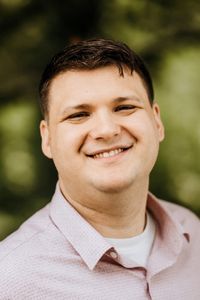
Ron Grethel earned a high school diploma from Loveland High School and a bachelor's degree from Xavier University in 2013. His career experience includes working as an IT professional. He served in the U.S. Army National Guard from 2013 to 2021.[1]
- Bachelor's:
- Xavier University, 2013
- High school:
- Loveland High School
In their own words
Who are you? Tell us about yourself.
Ron Grethel is a husband, father, Ohio Army National Guard veteran, and software developer based in Clermont County. He served eight years as an air defense artillery officer, including a deployment supporting counter-rocket, artillery, and mortar (C-RAM) operations in the Middle East. Professionally, he specializes in cloud infrastructure.
Ron is running for the Ohio House to restore trust in government through accountability, transparency, and practical reforms that put citizens back in control of their institutions.
Please list below 3 key messages of your campaign. What are the main points you want voters to remember about your goals for your time in office?
Ohio deserves practical, common-sense leadership. I’m running to give voters real choices and real control over their government. Right now, politicians pick their voters through gerrymandering and closed primaries. I support ranked-choice voting, term limits, and open primaries so every voter has a voice, no matter their party.Government should work for families, not political games. Families need stability. Whether it’s healthcare, education, or taxes. I bring a background in claims handling, programming, and military service, and I focus on making government simpler, more predictable, and easier to navigate so people can spend less time dealing with bureaucracy and more time with the people they love.I’m not a Democrat or a Republican, and I’m not funded by political insiders. I’m running to represent everyday people in our community, including families, workers, and small business owners who feel ignored by both parties.
What areas of public policy are you personally passionate about?
I am passionate about improving how our elections work so voters have more choice and a stronger voice. That includes supporting Ranked Choice Voting, open primaries, and ending gerrymandering so politicians can no longer pick their voters.
I also care deeply about the rising cost of living and the growing pressure on families. A generation ago, many families could get by on one income. Today, even with two incomes, many are struggling to maintain that same standard of living. Government should focus on policies that make life more affordable and predictable for working families.
Who do you look up to? Whose example would you like to follow, and why?
I look up to people who take responsibility seriously and do their jobs without needing recognition. That includes leaders I served with in the military who led by example and put their people first. I try to follow that model of quiet competence, accountability, and steady leadership rather than seeking attention or credit.
What characteristics or principles are most important for an elected official?
Honesty, accountability, and humility. An elected official should be willing to tell the truth even when it is uncomfortable, take responsibility for outcomes, and recognize that they are a steward of public trust, not the center of it.
I also believe it is important to be open to new information, willing to compromise when appropriate, and able to change your mind when the facts or the situation call for it. Good leadership is not about being rigid, but about making thoughtful, responsible decisions over time.
What do you believe are the core responsibilities for someone elected to this office?
The core responsibility is to represent the people of the district honestly and faithfully. That means listening, understanding how policy actually affects everyday life, and making decisions that are practical and sustainable. It also means maintaining oversight of government, ensuring transparency, and protecting the long-term stability of our institutions.
What legacy would you like to leave?
I would like to leave things more stable, more trustworthy, and more functional than I found them. As a father, I want my kids to grow up in a system they can understand and trust. If I can help restore even a small amount of that trust and make government easier for everyday people to engage with, that would be a meaningful legacy.
What was your very first job? How long did you have it?
I was a cart boy at a golf course for 6 years. I started before I could drive and I think I was almost 21 the last summer I filled in. Hard to say no to free golf!
What is something that has been a struggle in your life?
One of the biggest struggles in my life has been building our family. My wife and I faced infertility and the loss of a pregnancy at six months. That experience was difficult, but it also changed how we see the world and the people around us.
We ultimately chose to grow our family through adoption and embryo adoption. That journey has taught me a great deal about resilience, patience, and the importance of supporting families in all their forms.
What do you believe is the ideal relationship between the governor and state legislature?
The relationship should be cooperative but independent. Each branch has a role to play, and neither should dominate the other. The legislature should provide oversight and represent the people, while the governor executes the law. When both operate with mutual respect and clear boundaries, government functions more effectively.
What do you perceive to be your state's greatest challenges over the next decade?
Restoring trust in our institutions is one of the biggest challenges facing Ohio. Many people feel disconnected from how decisions are made, and that trust is further strained when the rules appear to shift after the fact. We have seen this in efforts to ban ranked-choice voting, in changes to marijuana policy following a voter-approved constitutional amendment, and in proposals to eliminate property taxes without a clear or sustainable replacement.
At the same time, rising costs are putting pressure on families, and systems like healthcare, education, and taxation are becoming harder to navigate. Addressing these challenges requires both structural reform and practical, steady governance that people can understand and rely on.
Do you believe that compromise is necessary or desirable for policymaking?
Compromise is necessary, and it should be principled. A good compromise is one where neither side walks away completely satisfied, but both sides are able to move forward. That is how durable solutions are built.
Our Constitution reflects this idea. The structure of a bicameral legislature requires negotiation and balance by design. Refusing to bend at all is not strength. It is often a form of rigidity that leads to ineffective government.
In any other setting, whether in business or in daily life, an unwillingness to work toward a solution would be seen as a failure to do the job. I believe the same standard should apply to elected officials. Compromise is not a weakness. It is part of the responsibility of governing.
What was the first historical event that happened in your lifetime that you remember?
I remember the impeachment of Bill Clinton and the sense of scandal it carried at the time. Looking back, it feels relatively small compared to what came after. I also remember the 2000 election and how strange it was not knowing who the president would be.
The most impactful event for me was September 11 attacks. I was in fifth grade, and I remember seeing it on a projector at school during lunch and thinking it was a movie at first. As our teachers explained what was happening, it became clear very quickly that it was real. That moment stayed with me and helped shape my sense of service.
On the 2026 ballot
Links
Compiled from the candidate’s published profile as of September 30, 2026.
Source(opens in new tab)