
Background
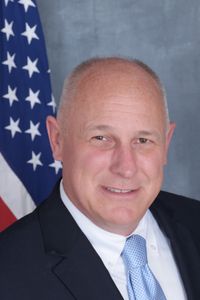
Robert "Bob" Marshall was born in and lives in Colorado. He served in the U.S. Marine Corps. Marshall earned a bachelor's degree from Georgetown University, a J.D. and LL.M. in international law from Cornell Law School, where he graduated magna cum laude, and an LL.M. in tax law from the University of San Diego Law School. His career experience includes working as an attorney for the U.S. Marine Corp, including at an Air Station in Iwakuni, Japan, and in Helmand Province, Afghanistan. Marshall also worked as a law clerk to Judge Eugene Siler, Jr., of the U.S. Court of Appeals for the Sixth Circuit, and as a commercial litigation and appellate specialist for a law firm in Colorado. Marshall also worked in the large business and international litigation division of the Internal Revenue Service (IRS).[1]
- Law:
- Cornell University Law School, 2000
- Graduate:
- University of San Diego School of Law
- Bachelor's:
- Georgetown University School of Foreign Service, 1991
- High school:
- Evergreen High School
In their own words
Who are you? Tell us about yourself.
Born and raised in Colorado, I joined the Marine Corps after graduating from Georgetown University. Six years later, the Corps sent me to Cornell Law School where I earned a J.D. & LL.M. in International Law (magna cum laude). I served as a Senior Defense Counsel and Station Judge Advocate (SJA) before leaving active duty to clerk for Judge Siler on the U.S. Court of Appeals. After clerking, I returned to Colorado to work at an international law firm as a litigation and appellate specialist while providing hundreds of hours of pro bono service as a guardian ad-litem and for several public interest cases. In 2005, I began mobilizing frequently for “The Global War on Terror” for such service as a Police Transition Team Leader in Iraq and Governance OIC in Helmand Province Afghanistan. The State Department requested I return to Afghanistan as a Rule of Law Advisor, but an injury led to assignment with Wounded Warrior Battalion as a Disability Advisor. While at WWBN, I earned a LL.M. in Tax Law and subsequently began work for the IRS in the Large Business & International Litigation division. When COVID began, I returned to Colorado and began successfully challenging unethical and illegal conduct in the local government. The Democratic Party then approached me to ask if I would run for office. In 2022, I won HD43 as the first Democrat elected to a partisan office in Douglas County in > 50 years. I have since become a good government & tax expert in the legislature.
Please list below 3 key messages of your campaign. What are the main points you want voters to remember about your goals for your time in office?
GOOD GOVERNANCE. I have fought consistently in the legislature to overcome institutional inertia that works against responsive good governance. I have fought to take politics out of law enforcement and have fought my own party on voter law reforms and transparency issues. As one of the most fiscally responsible legislators from either party, I often vote against special interest tax credits & exemptions no matter who may be the beneficiary. But I have fought hard to protect the most vulnerable, including those in the Intellectual & Developmentally Delayed (IDD) community, the mentally ill and disabled veterans.PUBLIC SAFETY. I am a strong proponent for public safety, which the Speaker cited as a reason for my removal from the Judiciary Committee "to help deliver the progressive outcomes our caucus is looking for". Colo Sun, Dec 13, 2023. One of my first bills was a law to reduce auto thefts by treating all auto theft as a felony rather than simply as a property crime. I was one of only 7 House Democrats who sponsored this law. But it has been cited as THE reason for a reduction in auto thefts statewide by 45% in just one year. Denver Gazette, May 6, 2024. I also fought hard to establish a new long-term state mental health facility, but was defeated by the alcohol interests whose TABOR compliant excise tax would have paid for it.ENVIRONMENT. I am a very pro-business Democrat. But growing up in Colorado's mountains, I am a congenital conservationist and remember the "Brown Cloud" in the 1970s where we had "chewy air". Even if we halved our emissions/person since that time, when we double the population, we are again approaching many of the same issues regarding an unhealthy pollution of the air we breathe and water we drink. Once you emit pollutants off private property that enter public air space or water, it is now public business. So I have been, and will continue to be, a strong conservationist in the state house even while trying to provide business relief from other onerous non-environmental regulations.
What areas of public policy are you personally passionate about?
GOOD GOVERNANCE (Public Safety, Public Education, Environment). I continue work I began in DougCo for transparent & ethical government, challenging decades of bipartisan violations of Colorado's Sunshine Laws that even had a former GOP Treasurer and Senate Minority Leader observing: "It took courage...to blow the whistle on this practice." Colorado Politics, July 14, 2023. Good governance is never popular with those in power. But I engaged in efforts to reform county electoral systems, vacancy committee processes, and put caps on property taxes in the service of better more responsive government for the people and against insider "good ole boy" government & special interests.
Who do you look up to? Whose example would you like to follow, and why?
Churchill, Truman, De Gaulle. All men who took unpopular stands at great personal and political cost, but showed great moral courage and judgment which was ultimately vindicated by history.
What characteristics or principles are most important for an elected official?
Integrity, transparency and strength of character. You will never be able to please everyone, but should always try and represent everyone by listening to ALL your constituents. And always be willing to explain your vote on an issue. I've had conservative and progressive constituents contact me quite upset about a vote I have made or position I have taken. But I am blessed with well educated, pragmatic reasonable constituents where in the vast majority of cases when I explain my vote or position, they are pleased that I have thought through the issue and can provide them a different perspective to the issue or bill that they had not considered before, even if they may still agree with the ultimate vote or conclusion. I also believe that if you have the upper hand you should never try and claim "all of the marbles" but try and provide concessions or "throw a bone" to the other side. That way hopefully everyone continues to feel invested and respected by the system even if they do not get their way in any particular instance. Particularly as the shoe may be on the other foot at some point and you may be the one needing a concession for your district or constituents.
What do you believe are the core responsibilities for someone elected to this office?
To be cognizant of what is in the bills we vote upon. I've had colleagues actually express to me that they wished I'd stop reading all the bills. I am one of the few legislators that does make an effort to understand what's in each bill that comes to me for a vote. It really is not possible to keep to this goal 100% given we have 500+ bills/session that are frequently amended, changed or die. And one needs to put the most focus on your own bills and those that come to committees upon which you sit. But I make an effort to at least understand what was in the bills I vote upon so that even if constituents disagreed with my vote, they could be assured I made an effort to digest what I was voting upon and not just following what a special interest wanted or the "party line."
What do you believe is the ideal relationship between the governor and state legislature?
The Governor really should focus most on running the state government as the executive/CEO and not be overly involved in legislation. Feedback to the legislature on what is needed to execute policy more effectively, and the veto to stop legislation the Governor believes would work against those goals, is of course needed and welcome. But the Governor's primary focus should be on executing, not legislating as if some "super-chamber" with a 2/3 vote on all legislation (i.e., the veto).
What do you perceive to be your state's greatest challenges over the next decade?
Budget, Budget, Budget. We have TABOR that limits state revenue growth to a formula based upon population growth and inflation. But medical care expenses, esp. Medicaid, have been growing FAR faster than the formula allows. So something must give. We also have to mindful of our business climate. Constant new regulations for business are more difficult for the business community to deal with than a set of stringent rules that do not change and they learn to live with and operate with them. But constantly having things changing puts an undue burden that we should avoid.
Do you believe that compromise is necessary or desirable for policymaking?
Absolutely. Even if you have 50% +1 in favor of a policy, being able to get 60% or more in favor of something provides it far broader support, which gives people more overall trust in the system.
What organizations or individuals have endorsed your campaign?
So far American Federation State County Municipal Employees (AFSCME). But it is very early in the cycle for general election endorsements. So since I do not have a primary and am responding to this survey in May 2026, I do not expect most endorsements for my general election to begin coming in until July/August.
Who are you? Tell us about yourself.
Born and raised in Colorado, I joined the Marine Corps after graduating from Georgetown University. Six years later, the USMC sent me to Cornell Law School where I earned a J.D. & LL.M. in International Law (magna cum laude). I then served as a Senior Defense Counsel and Station Judge Advocate (SJA) before leaving active duty to clerk for Judge Siler on the U.S. Court of Appeals. After clerking, I returned home to Colorado to work at an international law firm as a litigation and appellate specialist while also providing hundreds of hours of pro bono service as a guardian ad-litem and for several public interest cases. In 2005, I began mobilizing frequently for “The Global War on Terror” for such service as a Police Transition Team Leader in Iraq and the Governance OIC in Helmand Province Afghanistan. The State Department requested that I return to Afghanistan as a Senior Rule of Law Advisor, but an injury led to an assignment with Wounded Warrior Battalion as a Disability Evaluation System Advisor. While at WWBN, I earned a LL.M. in Tax Law and subsequently began work for the IRS in the Large Business & International Litigation division. When the COVID pandemic began, I returned to Colorado and began successfully challenging unethical and illegal conduct in the local county government. The Democratic Party then approached me to ask if I would run for office. And in 2022, I won HD43 as the first Democrat elected to a partisan office in Douglas County in > 50 years.
Please list below 3 key messages of your campaign. What are the main points you want voters to remember about your goals for your time in office?
PUBLIC SAFETY. I am a strong proponent for public safety & law enforcement, which the Speaker cited as a reason for my removal from the Judiciary Committee "to help deliver the progressive outcomes our caucus is looking for". Colo Sun, Dec 13, 2023. One of my top priorities and first bills I worked on when elected was a law to reduce auto thefts by treating all auto theft as a felony rather than simply as a property crime (i.e., based on monetary value). I was one of only 7 House Democrats who sponsored this law. But it has been cited as THE reason for a reduction in auto thefts statewide by 45% in just one year. Denver Gazette, May 6, 2024.FAIRNESS. As one of the most fiscally conservative members legislators from either party, I frequently vote against special interest tax credits and exemptions no matter who may be the beneficiary. (Republicans have no problem voting for special interest tax breaks for groups they favor, like in the business community). But if someone has been left out of a benefit where they should have been included, I fight hard to ensure that is rectified. So I brought a referred measure to ensure veterans with an individual unemployability (IU) designation from the VA would also receive the disabled veteran homestead exemption and that seniors who rent their homes would also receive tax relief for their housing cost, not just those who own their home.ENVIRONMENT. I am a very pro-business Democrat. But growing up in Colorado's mountains, I am a congenital conservationist and remember the "Brown Cloud" in the 1970s where we had "chewy air". Even if we halved our emissions/person since that time, when we double the population, we are again approaching many of the same issues regarding an unhealthy pollution of the air we breathe and water we drink. Once you emit pollutants off private property that enter public air space or water, it is now public business. So I have been, and will continue to be, a strong conservationist in the state house even while trying to provide business relief from other onerous non-environmental regulations.
What areas of public policy are you personally passionate about?
GOOD GOVERNANCE. I continue work I began in DougCo for ethical & transparent government. I challenged decades long bipartisan violations of Colorado's Sunshine Laws, which led to a lawsuit against the entire state house, including my own party and leadership, that had even a former GOP Treasurer and Senate Minority Leader remarking that: "It took courage...to blow the whistle on this practice." Colorado Politics, July 14, 2023. Good governance is never popular with those in power. But I engaged in efforts to reform county electoral systems, vacancy committee processes, and put caps on property taxes in the service of better more responsive government for the people and against the insiders and special interests.
Who do you look up to? Whose example would you like to follow, and why?
Washington, Churchill, De Gaulle, George C. Marshall are all men of extraordinary integrity and ability who persevered through incredibly difficult times for a greater good. I could never hope to measure up to their example, but it is always better to strive for something better than yourself than accept a lesser reality. I am also, however, very partial to Presidents Monroe and Truman as individuals who achieved extraordinary accomplishments with so little drama and strife that the accomplishments are not given the amount of praise or receive the amount of awe that they should. I think that type of quiet leadership is probably the best example to follow where great things are done, but done so quietly they seem ordinary.
Is there a book, essay, film, or something else you would recommend to someone who wants to understand your political philosophy?
"The Constitution of Liberty" by Friedrich Hayek mirrors much of what I think describes the economic and political world properly when people have a nuanced understanding of that work and philosophy. As the great philosopher Yogi Berra once observed: "In theory there is no difference between theory and practice. But in practice . . . there is." Pure ideologies or philosophies seldom survive contact with political, social and economic realities. But Hayek saw that truth as part of a broader pragmatism. The work warns against the dangers of statism and socialism in the traditional sense of those concepts in terms of the government directing what people may or may not do. It does not actually argue against, and in fact concedes the need for, public goods and public welfare programs.
What characteristics or principles are most important for an elected official?
Integrity, transparency and strength of character. You will never be able to please everyone, but should always try and represent everyone by listening to ALL your constituents. And always be willing to explain your vote on an issue. I've had conservative and progressive constituents contact me quite upset about a vote I have made or position I have taken. But I am blessed with well educated, pragmatic reasonable constituents where in the vast majority of cases when I explain my vote or position, they are pleased that I have thought through the issue and can provide them a possible different perspective to the issue or bill that they had not considered before, even if they may still agree with the ultimate vote or conclusion. It is also necessary to never hold a grudge and always be polite and willing to talk to everyone, both colleagues and constituents. 7 of my 8 bills in the last session passed out of committee in a bipartisan unanimous vote. And that only occurred because even when I have had strong disagreements with colleagues, I have tried to never be disagreeable and consider their perspectives. I also believe that if you have the upper hand you should never try and claim "all of the marbles" but try and provide concessions or "throw a bone" to the other side. That way hopefully everyone continues to feel invested and respected by the system even if they do not get their way in any particular instance. Particularly as the shoe may be on the other foot at some point and you may be the one needing a concession for your district or constituents.
What qualities do you possess that you believe would make you a successful officeholder?
Transparency, Integrity, Authenticity
What do you believe are the core responsibilities for someone elected to this office?
To be cognizant of what is in all the bills we vote upon. I've had colleagues actually express to me that they wished I'd stop reading all the bills. I am one of the few legislators that does make an effort to understand what's in each bill that comes to me for a vote. It really is not possible to keep to this goal 100% given we have 500+ bills/session that are frequently amended, changed or die. And one needs to put the most focus on your own bills and those that come to committees upon which you sit. But particularly during my first session, I made an effort to at least understand what was in the bills so that even if constituents disagreed with my vote, they could be assured I made an effort to digest what I was voting upon and not just following what a special interest wanted or the "party line."
What was your very first job? How long did you have it?
First real legitimate W2 job (as opposed to yard work, roofing, or other contract work) was as a busser in high school at "The Wolf House". Worked there my Junior and Senior years in high school and the summer before college. I did a pretty good job as when I returned home for breaks during college, they would find out, call me at home and ask if I would come in to help out.
What do you believe is the ideal relationship between the governor and state legislature?
A strong partnership as the executive branch must administer programs set up the legislature. So it is essential that the executive agencies are intimately involved with legislation from the beginning to ensure that sustainable workable solutions to problems can be done. We do, however, have a severe gap in our state government of legislative oversight authority once legislation is passed. I hope to work on correcting that in the future.
What do you perceive to be your state's greatest challenges over the next decade?
Growth. Both in keeping it affordable to live here (which generally implies increased growth/supply) while protecting the environment from that growth.
Do you believe that it’s beneficial for state legislators to have previous experience in government or politics?
Yes. In the beginning. But after one session, any potential "leg up" is usually lost or no longer existent. But even those from other areas of state or local government will have that first year learning curve in the state legislature, including those who were previously aides or worked in the legislature in some capacity.
Do you believe it’s beneficial to build relationships with other legislators? Please explain your answer.
It's essential. And not in terms of a personal relationship where you do personal favors for each other, but in terms of always talking and keeping the lines of communication open. I had a couple bills I moved out of committee with the help of GOP legislators with whom I voted differently 90% of the time. Had I held a grudge or refused to keep talking and being friendly, when the time finally came where I had a bill they could vote for, I was able to approach them and ask as I had been talking with them before. The time to first talk to someone is not the first time you need their help.
Should the legislature oversee or grant the use of emergency powers?
The legislature should definitely have the power to grant the use of emergency powers, but it must be coupled with effective oversight.
What committees interest you?
Finance, Judiciary, Appropriations. I was assigned to the Judiciary and Finance Committees after being sworn in almost by default given my background. Only later did I discover they are the two busiest committees in the state house . . . by a margin. (Appropriations does more work by volume, but most of the bills are pre-determined and very little work and no testimony is involved on bills coming before that committee).
What are your views on financial transparency and government accountability?
Absolutely essential. And a key component of my political character since running for office and being elected.
Do you support or oppose changes to the current state ballot initiative process? If so, what kind of changes would you consider?
Oppose.
Who are you? Tell us about yourself.
Colorado Native; 28 years Marine Corps (Afghanistan/Iraq); VFW/DAV Life Member; Attorney (Cornell Law School, J.D./LL.M. magna cum laude); Clerk, Judge Siler, US Appeals Court 6th Circuit; USD Tax LLM
Please list below 3 key messages of your campaign. What are the main points you want voters to remember about your goals for your time in office?
Strong. Moral courage to do the right thing at the right time for the right reasons. Shown throughout Marine Corps career and in taking on corrupt processes and politicians in Colorado for the public interest.Smart. Very well educated, but mainly due to a wide ranging curiosity and willingness to listen more than speak in order to understand before making decisions.Dedicated. Service before self at all times. Love this country, this state, and the people in both and will work hard to have them proud to have me as their rep even if they disagree with some policy choices.
What areas of public policy are you personally passionate about?
Public Safety; Public Education; Environmental Protection. Public safety includes reforming the mental health system so that jail is not the default mental care system in the state as it does not help the police, the mentally ill, not the public. Fire mitigation and bond reform also are under safety. Should not have personal recognizance bonds for auto theft. Public Education and Environmental Protection are passions by birth as an American and Coloradoan.
On the 2026 ballot
Links
Compiled from the candidate’s published profile as of September 30, 2026.
Source(opens in new tab)