
Background
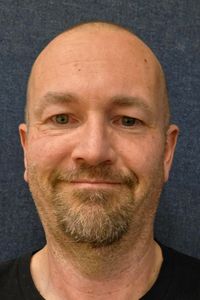
Richard Graf earned a high school diploma from Lamar High School, an education from Colorado Mountain College in 2003, and an associate degree from Pikes Peak Community College in 2013. Graf's career experience includes working as an author.[1]
- Associates:
- Pikes Peak Community College, 2013
- High school:
- Lamar High School
In their own words
Who are you? Tell us about yourself.
My name is Richard Glen Graf, and I am a husband, father, author, and lifelong student of history running for Colorado Senate District 35 because I believe Colorado needs leaders who still believe public service is a duty, not a career. My interest in government began with my studies in political science and history at Western State College of Colorado and has continued through years of reading, writing, and serious engagement with civic issues.
I wrote The Sentinel Republic because I believe our government has become too distant, too expensive, too partisan, and too disconnected from ordinary citizens. I am not running to grow government or to tell families how to live. I am running because I believe power should be returned to the people, to local communities, and to the state level whenever possible.
My campaign is grounded in constitutional principles, civic responsibility, fiscal honesty, educational accountability, election integrity, and respect for the working families who carry this state. I believe voters are tired of political theater, empty promises, and officials who listen more to party leadership, donors, and lobbyists than to the people they represent.
I will bring common sense, humility, and independent judgment to the Capitol. My goal is simple: protect liberty, respect taxpayers, strengthen families and communities, and help restore trust in government by making it more accountable, transparent, and responsive to the citizens it serves.
Please list below 3 key messages of your campaign. What are the main points you want voters to remember about your goals for your time in office?
Government should be accountable, limited, and close to the people. I believe Colorado works best when families, local communities, school boards, counties, and the state—not distant bureaucracies or party insiders—have the power to solve problems. I will support transparency, fiscal discipline, constitutional limits, and reforms that make elected officials answer to citizens instead of lobbyists, donors, and political machines.Colorado families are being squeezed by rising costs, taxes, regulation, and a government that too often spends without clear results. I will fight for taxpayers, responsible budgeting, protection for small businesses and working families, and policies that reward work instead of punishing it. Every dollar government takes should be treated as money earned by citizens, not as an entitlement of the state.A republic depends on informed, responsible citizens. I will support strong civic education, local control of schools, election integrity, public safety, and respect for constitutional rights. My campaign is about restoring trust: honest debate, clear laws, secure elections, and representatives who listen before they lecture. Public service should be a duty, not a career.
What areas of public policy are you personally passionate about?
Public policy areas I am most passionate about are constitutional accountability, education, fiscal responsibility, election integrity, healthcare transparency, public safety, water, agriculture, and protecting rural Colorado. I believe government should be limited, honest, and close to the people. Students need strong reading, math, history, civics, financial literacy, and practical life skills. Taxpayers deserve responsible budgeting and clear results. Patients deserve transparent prices and less bureaucracy. Farmers, ranchers, small businesses, families, and retirees deserve policies that protect liberty, property rights, water, and local control while making government answer to citizens again.
Who do you look up to? Whose example would you like to follow, and why?
I look up to George Washington because he understood that power must be restrained and that public service should never become personal rule. His willingness to step away from power set an example every elected official should remember. I also respect James Madison for his understanding of checks and balances, Thomas Jefferson for his belief in an informed citizenry, and ordinary citizens who work hard, raise families, serve their communities, and ask for little recognition. I would like to follow the example of leaders who put duty, humility, courage, and liberty ahead of ambition.
What characteristics or principles are most important for an elected official?
Integrity, humility, courage, transparency, and respect for the Constitution are the most important qualities in an elected official. Public office should be treated as a duty, not a career or a path to personal power. A good representative should listen before speaking, tell voters the truth even when it is difficult, respect taxpayers, protect individual liberty, and remember that government exists to serve citizens. I also believe elected officials must be willing to admit mistakes, explain their votes, and place the long-term good of the people above party pressure, donors, lobbyists, or personal ambition.
What do you believe are the core responsibilities for someone elected to this office?
The core responsibility of a state senator is to faithfully represent the people of the district while protecting the constitutional rights of all Coloradans. That means listening to citizens, studying legislation carefully, voting with honesty, and being accountable for every decision. A senator must help pass clear and responsible laws, protect taxpayers, oversee state spending, support public safety, defend local control, and work on issues that matter directly to the district, including education, water, agriculture, healthcare, roads, jobs, and the cost of living. The office belongs to the people, not the politician.
What legacy would you like to leave?
The legacy I would like to leave is that I helped restore trust between citizens and their government. I would like voters to say that I listened, told the truth, respected taxpayers, defended liberty, and worked to return power closer to families, local communities, and the people of Colorado. I also hope to help renew civic education so future generations understand the republic they inherit and the responsibility required to keep it free. I do not need a legacy of titles or power. I would rather be remembered as someone who served with honesty, common sense, and a sincere love of country and community.
What was your very first job? How long did you have it?
My first job was helping out at my Grandma's Restaurant at the Patio Pancake Place in Salida, CO. I Did it in the summers over the year and to start I would get a Dime for each table I'd clean off. It taught me the value of showing up, working hard, being dependable, and treating people with respect. Early work gives a person lessons that stay with them: responsibility, humility, patience, and the importance of earning what you receive. Those lessons still shape how I view taxpayers, working families, small businesses, and the dignity of honest labor.
What is something that has been a struggle in your life?
One struggle in my life has been living with obsessive-compulsive disorder (OCD). It is often misunderstood as simply liking things neat, but for me it has meant learning to manage intrusive thoughts, anxiety, repetition, and the pressure of needing things to feel "just right." I do not mention it for sympathy. I mention it because it has taught me patience, discipline, humility, compassion, and perseverance. It has shown me that many people carry private battles while still working, raising families, serving others, and doing their best. That experience has made me more understanding of others and more committed to treating people with honesty, dignity, and respect.
What do you believe is the ideal relationship between the governor and state legislature?
The ideal relationship between the governor and the state legislature is one of respectful constitutional tension. The governor should lead the executive branch, enforce the law, and propose priorities, but not govern as a king or bypass the people through executive overreach. The legislature should write clear laws, control spending, represent local districts, and provide serious oversight, but it should not act as a rubber stamp or play partisan games. They should debate openly, negotiate honestly, respect separation of powers, and work together when Colorado faces real problems.
What do you perceive to be your state's greatest challenges over the next decade?
Colorado’s greatest challenges over the next decade will be affordability, water, education, healthcare, public safety, and managing growth without leaving rural communities behind. Families are being squeezed by housing, energy, taxes, insurance, and basic costs. Farmers, ranchers, and towns need secure water, property rights, good roads, and policies that respect local realities. Students need stronger academics, civics, and practical skills. The deeper challenge is restoring trust: voters need a government that spends honestly, protects liberty, listens to citizens, and solves problems without adding unnecessary bureaucracy.
Do you believe that compromise is necessary or desirable for policymaking?
Yes, compromise is necessary in policymaking, but it must be principled. In a free republic, people will not always agree, and no one party or person has all the answers. Good compromise means listening honestly, finding common ground, and solving real problems without abandoning constitutional rights, fiscal responsibility, or basic moral principles. Compromise should not mean trading favors behind closed doors or watering down truth. It should mean governing with humility, transparency, and respect for the people affected by the law.
What was the first historical event that happened in your lifetime that you remember?
The first historical event I clearly remember is the Chernobyl Nuclear Disaster. What stayed with me was realizing that history was not only something written in books; it was happening in real time around ordinary people and families. That memory helped shape my interest in history, government, and civic responsibility. Looking back, it reminded me that decisions made by leaders can affect generations, and that citizens have a duty to understand the world around them instead of simply watching events pass by.
On the 2026 ballot
Compiled from the candidate’s published profile as of September 30, 2026.
Source(opens in new tab)