
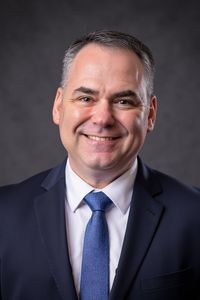
Background
Ricardo Villarreal was born in Laredo, Texas. Villarreal served in the U.S. Army from 2008 to 2016. He earned an M.D. from the Universidad Autónoma de Guadalajara in 2000, a graduate degree from Our Lady of the Lake University in 2007, and a graduate degree from the University of California, Berkeley Goldman School of Public Policy in 2021. Villarreal's career experience includes working as a health services administrator for the U.S. Army. Villarreal has been affiliated with the American College of Healthcare Executives.[1]
- M.D.:
- Universidad Autónoma de Guadalajara, 2000
- Graduate:
- University of California, Berkeley, 2021
Campaign money
- Raised
- $68K
- From individuals
- $5K
- From PACs & party
- $0
- Own money
- —
FEC filings through June 30, 2026.
View on FEC.gov(opens in new tab)In their own words
Please list below 3 key messages of your campaign. What are the main points you want voters to remember about your goals for your time in office?
Rising Prices
We are hard workers, but nearly one in five people in the district is living below the poverty level. Not enough has been done to increase wages and reduce the cost of living.
The random tariff strategy is not only alienating global allies but it is hurting us domestically. Small businesses are being impacted by the volatility of tariffs and we as consumers pay a higher tax on products.
That's why I believe in raising the federal minimum wage to a livable wage that is reflective of the economy and keeps up with inflation. I also believe that the use of the federal tipped minimum wage of $2.13 per hour exploits the work force and needs to be drastically adjusted.Access to Healthcare
I know what it’s like to not have health insurance, growing up we had to cross into Nuevo Laredo to see a doctor, a dentist and get medications.
According to the Census Bureau, there are 19.15% or 156,088 people in our Congressional District without health insurance, and 26,370 are children under 19 years of age.
The failure to expand Medicaid is why Texas has the highest uninsured rate. That's why I believe that expanding the Affordable Care Act (Obamacare) subsidies is the first step in allowing more people to afford health insurance.
Affordable Housing
Affordable housing has become a growing challenge—not only in big cities but across rural towns and small communities. Laredo, Texas, has the nation's highest mortgage delinquency rate, with almost 24% of mortgages delinquent as of the second quarter of 2025.
Laredo is not alone. The lack of affordable housing affects families throughout TX-28, where rising rents, limited supply, and aging infrastructure are putting pressure on working people. Short-term rentals, restrictive zoning, stagnant wages, and high construction costs all play a role, but identifying the causes isn’t enough—we need solutions.
I support public, private, and nonprofit efforts to expand affordable options in urban and rural parts of the district.
What areas of public policy are you personally passionate about?
Veteran Rights
As a veteran, I am committed to the well-being of our military service members and those who have served. We have a profound responsibility to ensure that every veteran receives the care, support, and opportunities they have earned. This means addressing their healthcare needs comprehensively, protecting their entitlements, and removing barriers that prevent their full integration into civilian life.
2nd Amendment and Reasonable Gun Safety
I own guns, and I take ownership seriously by keeping them locked up, unloaded, and completely out of the reach of children. I am firm in protecting the 2nd Amendment, but I also believe that protecting our communities means implementing reasonable, common-sense gun safety measures.
Who are you? Tell us about yourself.
I am Ricardo Villarreal, the proud son of a farmer and a Mexican immigrant. I have been a lifelong Texan, born and raised in Laredo, and I have called San Antonio home for the past 17 years. I am not a politician. I am a Doctor, an advocate for quality healthcare, an Army veteran, a husband, and a father.
Please list below 3 key messages of your campaign. What are the main points you want voters to remember about your goals for your time in office?
As an Army officer I took an oath and live with the Army values of Loyalty, Duty, Respect, Selfless Service, Honor, Integrity, and Personal Courage. I want to keep serving my country and represent my district with these values.Throughout my career I have had the privilege to work for a common purpose and goal with people from different disciplines, backgrounds, and beliefs. I want to continue to work with folks with different perspectives and ideologies because at the end of the day we all want to make things better. I stand for good education, good health care, and good jobs for all Americans. We can have different opinions, but we can have a common goal: we all do better when we all work together.The times of cronyism, grandstanding, and complaining rather than working towards solutions are over if I am elected.
What areas of public policy are you personally passionate about?
I am passionate about addressing health inequities. There are differences in health resulting from systemic, avoidable, and unjust social and economic policies and practices. Where we live or work should not dictate how long we live.
As a veteran, I am vested in the way we treat our military members and veterans. I am an ardent supporter of addressing their healthcare, entitlements, expanding their integration into society, and expanding the opportunities to succeed.
Being the son of a Mexican immigrant, immigration reform and justice is a personal issue that I care about. We need to re-assess our immigration policies for relevance, enforcement, and update through immigration reform. Grandstanding, having photo ops at the border and constantly complaining about immigrants is futile if we do not solve the root causes of the problems.
Border security is a complex issue, and a wall is a simple solution to a complicated problem that does not work. I know the border; I was born, raised in Laredo, and my father’s ranch was on the Nuevo Laredo side with access to the Rio Grande. We need to have the infrastructure, technology, and sufficient manpower in law enforcement to inspect what comes into the country and what leaves.
These policies are near and dear to my heart, but there are other public policies that I will place as priorities that align with our district because it is about working for all constituents of TX-21.
Who do you look up to? Whose example would you like to follow, and why?
John McCain, Liz Cheney, and Adam Kinzinger are people that I look up to. Though I can't entirely agree with them ideologically and in policies, they have shown dedicated service to their country. They put the country above their party and took the hard stance to do what was right by holding themselves and others accountable for their actions. They knew the consequences were not popular with their party, but they stood their ground. Integrity is about doing the right thing, even if no one is watching. Sadly, both accountability and integrity have been declining characteristics of politicians for their benefit. I intend to serve the country over party with integrity and accountability.
Is there a book, essay, film, or something else you would recommend to someone who wants to understand your political philosophy?
The System: Who Rigged It, How We Fix It by Robert Reich
The Common Good by Robert Reich
Exodus from Hunger: We Are Called to Change the Politics of Hunger by David Beckmann
Friday Morning Reflections at the World Bank: Essays on Values and Development by David Beckmann
What characteristics or principles are most important for an elected official?
I believe that an elected official needs to hold principles and values that make them influential leaders to improve the lives of his constituents. They should have conviction in their principles at all times and not waver or fluctuate to benefit themselves. After all, they are public servants and should be held accountable for their actions and behavior.
What qualities do you possess that you believe would make you a successful officeholder?
I strive and continue to live the Army leadership values of Loyalty, Duty, Respect, Selfless Service, Honor, Integrity, and Personal Courage.
I also open myself to different viewpoints, which allows me to empathize with people and work with them toward a shared purpose or goal.
What do you believe are the core responsibilities for someone elected to this office?
A core responsibility is to represent everyone, not just the people that voted for them or particular demographics. They need to work across the aisle and make things happen, not create chaos or obstruct for the sake of making a point. In this office, the people come first, not being on TV or social networks trying to get more air time.
What legacy would you like to leave?
I believe in continuous performance improvement and leaving things better than when we found them. To that end, I enjoy learning, growing, and evolving as a person. I hope my legacy is reflective of that philosophy.
What is the first historical event that happened in your lifetime that you remember? How old were you at the time?
At the age of 7, I vaguely remember the Challenger disaster and the sadness it brought with it.
However, the first historical event that I am consciously aware of is the fall of the Berlin Wall. I was ten years old and remembered a divided country of East and West with a wall standing between them, and they clamored for unification. Then I recall in November of 1989 the moments at the border checkpoints with crowds rushing into the West. The sledgehammers chipped away at their division then the wall started to come down. The joy of the German people was televised on every channel; it left a vivid and unforgettable impression.
What was your very first job? How long did you have it?
You wouldn’t know it when meeting me, but underneath the city slicker façade, I am someone that grew up on a farm. Though we lived in the city, I remember it as an extension of where I lived since I spent so much time there. My first memories are of the array of animals that were in the pens. There were goats, sheep, cows, and horses at any one time in those corrals.
At an age, kids learn to ride bicycles; I learned to ride horses instead. Though I was bucked off the horses several times, I always got back on. As I got older, I learned to take care of the livestock. I also vividly recall the knocking sounds and the smell of a diesel engine on the tractor. Just like the horse, I learned to drive a tractor at a young age. Depending on the year, there was corn, watermelon, cantaloupes, or sorghum in the fields. The work was hard, but I learned so many life lessons. I stopped working when I got into high school; my father wanted me to focus on school.
What is something that has been a struggle in your life?
A struggle in my work and life that I am used to is changing and evolving. People can become set in their ways because they have always done it a certain way and resist change. My job has been to work with people to understand processes and find ways to make these practices safer and more reliable to repeat the expected result. My work has been to make processes in healthcare produce safer outcomes and improve quality. I understand the hesitancy of taking a leap to change, but once we are on the same page that it is for the benefit of others, then we can make the necessary adjustments.
Do you believe that it's beneficial for representatives to have previous experience in government or politics?
I have experience working with Health and Human Services, Medicare and Medicaid, the Department of Defense, Veterans Affairs, and contractors that work with these government entities. In addition, I have worked with public policies and directives that dictate contracts and goals for different organizations. I believe that this experience in government and politics is helpful to understand how the government works. At the same time, I do not believe that this type of experience should be a qualification. A representative should be precisely that, reflect their constituents, act on their behalf and work to make their lives better.
If you are not a current representative, are there certain committees that you would want to be a part of?
I want to serve on a committee where I can act upon priorities for my district. Examples are House Committee on Veterans' Affairs and Armed Services, given that San Antonio and the district are the home to many active-duty military and veterans. Another committee I would welcome is being part of is Appropriations. For obvious reasons, it would allow me to work in funding the many subcommittees that impact people's lives in the district. But, just like the public policies that I am passionate about, these are my preferences but will work towards what the district holds as their needs.
Do you believe that compromise is necessary or desirable for policymaking?
I am going to sound like my professors from policy school in saying it depends. Yes, compromise is necessary to build a coalition and work toward a common purpose or goal. Compromise is needed to get to a consensus that helps the majority.
However, some areas are non-negotiable or non-starters for both sides. In my experience facilitating performance improvement projects, getting these out in the open is necessary to understand ground rules and rules of engagement. Once we know what is off the table, then we can navigate towards a standard compromised solution.
Negotiation is a skill that uses compromise to have everyone feel that they benefitted from the transaction or agreement.
Campaign website
Villarreal's campaign website stated the following:
Public Policies
COVID-19
I believe that getting vaccinated and wearing masks is the only way to end the COVID-19 pandemic. My family is vaccinated, and I'm proud to say it; I don't need to hide it.
Marked By COVID (MBC) is a nonprofit grassroots organization led by those most impacted by COVID. They convene families and victims to grieve, organize, train, and support action through policy and advocacy. https://markedbycovid.com/
Earlier this year, I had the privilege to work with MBC for my degree's capstone project while at Berkeley's Goldman School of Public Policy. I conducted a community needs assessment to prioritize MBC's 5Rs (Response, Recovery, Restitution, Resiliency, Recognition) policy platform. As a result, I learned about the level and extent of hardships experienced by those that lost someone to COVID. The group expressed financial, legal, physical, and emotional hardships, yet their primary goal and focus have been to stop the spread of the disease to prevent others from losing their loved ones to the virus. That is why I join them and support their cause.
Access to Health and Insurance
Healthcare access is not merely about having health insurance; it also includes improving access to medical facilities through transit options, reducing costs of prescription drugs and out-of-pocket expenses related to health care, as well as the cost of insurance overarchingly. Some of the drivers to obtaining health insurance are the lack of employer-sponsored plans and the high cost of insurance, which create barriers for working populations.
The failure to expand Medicaid is why Texas is the state with the highest uninsured. Through expansion, enrollment eligibility is extended to nearly all low-income individuals with incomes at or below 138 percent of poverty. If Texas expanded Medicaid, it would mean that approximately 1.2 million more uninsured people would become eligible for the program. Therefore, I support expansion to Medicaid in Texas as the first step to improving access to universal healthcare.
Reproductive Health
I believe Roe v. Wade protects a pregnant woman's liberty to choose to have an abortion without excessive government restriction. Texas SB8 is a deliberate attempt to circumvent that protection with unconventional restrictions. I support the right to a women's choice and funding planned parenthood because reproductive health is access to care.
Voting Rights
I believe the John Lewis Voting Rights Act needs to be passed to restore federal pre-clearance. The bill would expand oversight into election seats and jurisdiction boundary changes, redistricting, voter ID requirements, multi-lingual voting materials, voter roll maintenance, voting locations, and voting opportunities. We have already observed that states can manipulate these areas without oversight to maintain power and systematically decrease the participation of certain voters. We want to have more people participate in the voting process, not less. In addition, there should be pathways for automatic voter registration, like when obtaining a (REAL) ID, driver's license, passport, filing an income tax return, or submitting a FAFSA application.
Health Inequities
I am passionate about addressing health inequities. There are differences in health resulting from systemic, avoidable, and unjust social and economic policies and practices. The key drivers of health inequities are economic, physical environment, social, education, and healthcare system conditions. Each driver has independent aspects where gaps in the population exist, and there are ways to reduce and mitigate the disparities. Where we live or work should not dictate how long we live.
Affordable Housing
Affordable housing is a problem that has grown and not just for the urban cities but also that is affecting rural towns and communities.
When I worked in Fredericksburg at Hill Country Memorial Hospital seven years ago, I looked into moving my family out there. I searched homes and found that the cost of houses was substantially higher than in San Antonio. Commuting more than 60 miles one way from my home in San Antonio made it unsustainable to keep working there. I was not the only one commuting to work, people drove from Kerrville, Comfort, and all the way from Austin to work in Fredericksburg. I can't imagine how people working in the service industry, retail, teachers, police, fire fighters have to sacrifice to be able to work there.
Fredericksburg is not the only city with a lack of affordable housing, it is everywhere in TX21. We can point to different reasons like short-term rentals (STR), residential zoning restrictions, wage stagnation (minimum wage), and home building costs for this problem but that doesn't fix it.
The San Antonio Housing Authority (SAHA) provides assistance through its Public Housing, Housing Choice Voucher, and Mixed-Income housing programs. The Texas Housing Foundation is a nonprofit that provides houses and apartments that rent for based on the community's median income. The foundation has housing units in small towns across the state and they are looking to expand.
I support public, private, and non-profit solutions to address affordable housing in both rural and urban cities. I will work to expand affordable housing projects because we need to think about the long-term effects this housing disparity causes to our community.
Veterans
As a veteran, I am vested in how we treat our members of the military and veterans. I am an ardent supporter of addressing their healthcare, entitlements, expanding their integration into society, and expanding the opportunities to succeed. I am concerned about access to mental and behavioral care and services. I believe that no veteran should be homeless; we need to ensure that we can offer social work services and ensure that they have a stable home environment.
Diversity, Equity and Inclusion
What is and isn't Diversity, Equity, and Inclusion (DEI)?
DEI is not Critical Race Theory or making others feel bad about who they are. On the contrary, it treats others with respect and dignity that they deserve. A way to think of it is like the golden rule, Matthew (7:12): “In everything, do to others what you would have them do to you. . . .”
Diversity is the presence of differences that may include race, gender, religion, sexual orientation, ethnicity, nationality, socioeconomic status, language, (dis)ability, age, religious commitment, or political perspective.
Equity promotes justice, impartiality and fairness within the procedures, processes, and distribution of resources by institutions or systems. Tackling equity issues requires understanding the root causes of outcome disparities within our society.
Inclusion is an outcome to ensure those that are diverse feel and/or are welcomed. Inclusion outcomes are met when you, your institution, and your program are genuinely inviting to all. To the degree to which diverse individuals can participate fully in the decision-making processes and development opportunities within an organization or group.
I received training and was an Equal Opportunity Officer in the Army, where we operated with DEI in mind and addressed instances of -isms. I continue to support and fight for DEI to eliminate the propagation of -isms.
Immigration
Being the son of a Mexican immigrant, immigration reform and justice is a personal issue that I care about. People eligible for DACA need to have a pathway towards residency and citizenship. We need to re-assess our immigration policies for relevance, enforcement and update them through immigration reform. We can’t have an immigration process designed to discriminate and favor some. Grandstanding, having photo ops at the border and constantly complaining about immigrants is futile if we do not solve the root causes of the problems.
Border Security
A public policy that often gets lumped together with immigration is border security, even though they are distinct. I know the border; I was born, raised in Laredo, and my father’s ranch was on the Nuevo Laredo side with riverfront access to the Rio Grande. Border security is a complex issue, and a wall is a simple solution to a complicated problem that does not work. We have drug and human trafficking into the country while guns and money are leaving in the opposite direction. We need to have the infrastructure, technology, and sufficient manpower in law enforcement to inspect what comes into the country and what leaves.
2nd Amendment and Reasonable Gun Control
I grew up hunting, I own weapons, and I am responsible for keeping them locked up, unloaded, and out of the reach of children. I believe in the need to protect the 2nd amendment, but I also believe in reasonable gun control. So passing background checks that cover the sales of new and used guns to make sure known and suspected terrorists, domestic abusers, and those who can be a danger to themselves or others can’t get their hands on guns make sense. Just as holding gun owners responsible for the storage and safekeeping of their weapons so we can avoid their unauthorized use in committing atrocities. All I am saying is that it shouldn’t be easier to buy or get a gun than registering and voting in Texas.
Environment and Energy
My dad was the first green advocate I knew; he was adamant about keeping our ranch clean from littering, not wasting water and other resources on the land. He instilled in me as a child that we needed to leave the place better than we found it for future generations.
The country needs energy independence from OPEC, and the way to get there is by transitioning from fossil fuels into renewables. We are not going to shut off oil and gas without thinking about the people this affects. This transition needs to lead by creating higher-paying jobs in the renewable energy industry where oil and jobs are. We have to show ERCOT is accountable with the Texas grid, that it can ramp up to our energy needs and not fail ever again. I support energy independence and renewables in Texas to reduce carbon emissions and greenhouse gases.
Taxes
I believe in fair taxation; a teacher should never pay more taxes than a millionaire. Everyone should pay their fair share and not be allowed to shelter their fortune from taxes.
Public School
I am a product of public education, and my children attend public school. Over the past year, we have learned the difficulty of virtual learning. Some of us finally understand how hard teachers work to get our children ahead. Yet, despite their dedication, we keep short-changing teachers. Teachers need to have the correct class sizes and resources. Most important, teachers need the pay they deserve as they strive to provide a good education.[2]
—Ricardo Villarreal's campaign website (2022)[3]
On the 2026 ballot
Links
Compiled from the candidate’s published profile as of September 30, 2026 and FEC filings.
Source(opens in new tab)