
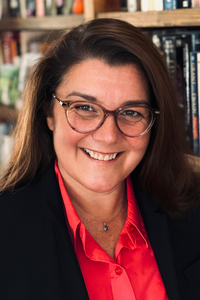
Background
Reilly Neill's career experience includes working as a publishing executive.[1]
Campaign money
- Raised
- —
- From individuals
- $0
- From PACs & party
- $0
- Own money
- —
FEC filings.
View on FEC.gov(opens in new tab)Campaign themes
Reilly Neill did not complete [the profile publisher]'s 2026 Candidate Connection survey.
Who are you? Tell us about yourself.
I'm running for U.S. Congress to give voters in Eastern Montana a choice and a voice on the ballot. I'm a former Montana State House Representative and longtime newspaper publisher, a mom and a tireless advocate for issues facing Montanans.
The candidate who won the Democrat primary for U.S. House in 2024 vowed not to file with the FEC, raise money, or elevate Democrat principles and values. Four years ago he was a Republican candidate for U.S. Senate and publicly against Reproductive Rights.
I've never wavered in my support for bodily autonomy and the right to equal healthcare for all in Montana. I facilitated multiple groups and events over years while administrating Montana March for Reproductive Rights and will be a champion for this issue in Congress.
In the 2024 race for Montana's Second District, there are two Republicans on the ballot. I am the choice for Democrats who deserve representation.
Without a strong top-of-the-ticket candidate, every race down the line is affected. My campaign lifts all races across this rural district. I show up in Miles City, in Havre, Malta and Lewistown and I help elevate candidates and committees and the ground.
The rallying cry is, "A rising tide lifts all boats!" and I work to canvas, host fund raisers, offer support and presence, raise awareness online and elevate every candidate on the ballot up and down the list.
This work over just a short time helps re-motivate the base in MT-02!
Please list below 3 key messages of your campaign. What are the main points you want voters to remember about your goals for your time in office?
This election cycle, Constitutional Amendment CI-128 is on the ballot. By voting yes on this initiative, Montanans will be guaranteed the express right to carry out decisions about one’s own pregnancy, including the right to abortion.
Challenges in rural healthcare disproportionately affect women in Montana but everyone in Montana deserves access to equal and adequate healthcare.
Investing in women's health programs and access to care in rural communities will insure the health of our children and families. Everyone in Montana deserves access to equal healthcare and has a right to privacy with their healthcare provider.Montana feeds the world. The concerns of the farmers and ranchers across Montana need to be represented in D.C.
Agricultural producers in the state face serious challenges in the coming years and Montana needs someone fighting strong for our agricultural economy. Farmers and ranchers need support and solutions.
The delay in implementing the St. Mary and Milk River Project on the Hi-Line will not only impact 18,000 Montana residents, it will affect the global food supply. Having someone dedicated and committed to our producers across the state is imperative in making sure we can continue to support rural infrastructure and our rural communities and continue to feed the world.From roads and bridges to public schools and services, Montanans should be able to depend on public infrastructure. Getting our fair share of public benefits from the taxes we pay must be a priority for Montana's congressional delegation.
Good public schools, safe roads and bridges and municipal services are priorities in our communities across the district and they should be priorities in Congress.
What areas of public policy are you personally passionate about?
Reproductive Rights, Women's Healthcare, Investing in Agricultural Economy, Climate Variability and Agriculture, Public Infrastructure, Maintaining Good Public Schools and Athletic Programs, Building Resiliency into Public Systems - Energy and Power, Irrigation and Municipal Water Issues, and Disaster Preparedness.
Is there a book, essay, film, or something else you would recommend to someone who wants to understand your political philosophy?
On the Floor: Tales from the Montana House by Reilly Neill
What characteristics or principles are most important for an elected official?
Transparency, accountability, and integrity all matter in a public representative. I have worked in the past and will work in the future to serve my constituents with the primary mission of speaking for their interests rather than my own.
We can get past divisions and get together for the common good. We have a choice, not to move to the right or to the left, but to move forward.
The great strength of our state lies in the hearts of decent, caring citizens, when a neighbor walks across the road and says, “Need a hand? Here it is.”
We pull each other out of the ditch and get ‘er done. We get past divisions and get together for the common good.
When Democrats run on decency, empathy, compassion, and sticking to our principles, we win. When we win, we get to work delivering and standing up for people.
What do you believe are the core responsibilities for someone elected to this office?
As a former State Representative, member of the Water Policy Interim Committee and longtime newspaper publisher, I have the experience to work effectively in Congress, from advocating for the St. Mary Canal and Milk River irrigation projects to pass the U.S. House to ensuring every citizen has access to rural healthcare and good public schools.
If elected, I will serve with a purpose to reflect the will of Montana and its voters.
Primary bills are considered to protect the agricultural economy in Montana and the U.S., invest in and maintain public infrastructure, address the housing crisis, listen to community concerns and set clear priorities for the national budget. I will also look at defending the Equal Rights Amendment.
My job will be to represent the people of Montana to the best of my ability. Even if I win as a Democrat, I will take off my hat when elected to serve all Montanans.
Elevating and building the Democrat base in the district will still continue to be a priority throughout my campaign and after the election. Building a community of Democrats will insure continued wins on the ticket and the base of the party in years to come.
What legacy would you like to leave?
In running for U.S. Congress in 2024, I'd like to help build community among Democrats all across Montana's Second Congressional District.
We pull each other out of the ditch and we walk across the road to our neighbor and say, "Need a hand? Here it is."
We are the party of FDR, JFK and MLK, Jr. and we can be proud to support conservation issues with our farmers and ranchers, human rights with our neighbors and good public schools and academic programs with our communities.
So many across Montana are fighting for our morals and principles as Democrats and building a community of these committed neighbors is my primary goal.
What qualities does the U.S. House of Representatives possess that makes it unique as an institution?
Having served in the Montana House of Representatives, I understand the function of the body and the importance of the work that is done at the Federal level of the U.S. House.
As a unique institution, the U.S. House of Representatives has endured as a beacon for democracy since 1787 when representatives of states of the Union first met at the Constitutional Convention.
Every state in the Union at the time sent delegates and the tradition continues today, now encompassing all of the United States and
since 1789 featuring delegates elected by their districts.
No term limits exist for this office so while generational wisdom is thick, so may be corruption and cronyism.
This chamber is the meat-and-potatoes of lawmaking in America and it's on the House floor, in committee and in final votes where is where democracy is minted every day of session, no matter how droll or contradictory the bill.
Do you believe that it's beneficial for representatives to have previous experience in government or politics?
We have a citizen legislature which encourages people from all career paths to enter politics. As in any career, experience can be an incredible boon to being effective on the job.
Obtaining experience in some kind of public service and serving in a public or elected office can be invaluable when later seeking high office or to enrich any career and become more engaged with the direction a community heads in the future.
What do you perceive to be the United States' greatest challenges as a nation over the next decade?
The threat to human rights continues to present issues across the nation as the right to reproductive healthcare and bodily autonomy are threatened by increasingly draconian State and Federal legislation.
Climate change in coming years will present the greatest threat to our food supply, energy grid, irrigation projects and daily life. Building resiliency into necessary public systems should be a top priority in Congress.
Do you believe that two years is the right term length for representatives?
Yes.
What are your thoughts on term limits?
As a State Representative, I can appreciate the legacy of knowledge elder officials bring to Congress and other positions of representation and governance. Still, lifetime appointments such as those on the Supreme Court undermine the democratic process. Term limits would insure accountability in such a case and discourage any abuse of office.
In the U.S. Senate and House, term limits allow for service in both houses as is the case in many states, and this allowance fosters generational wisdom. Even with the often-generous limits in State positions, new leadership must have opportunity to enter the process as well.
In general, I support term limits within reason to account for preserving institutional wisdom and support strict limits absolutely for the United States or individual state Supreme Courts.
Is there a particular representative, past or present, whom you want to model yourself after?
Representative Steve Cohen (D) from Memphis, Tennessee is a champion for all of his constituents. His straight-thinking and no-nonsense approach to issues facing his district and the nation is a model for me.
Both sitting representatives and candidates for office hear many personal stories from the residents of their district. Is there a story that you’ve heard that you found particularly touching, memorable, or impactful?
A constituent's daughter was at the end of her pregnancy and suddenly complications arose from an emergency birth. The daughter's husband and her mother were in the waiting room when the doctor asked them to choose the mother or the child's life. In Montana, this woman got to make that choice with her son-in-law. They chose the mother-to-be and the child made it through as well, with complications. This is a personal story that guts you when it's shared. In another state, there is no choice and this young mother would have died.
Do you believe that compromise is necessary or desirable for policymaking?
Absolutely. Working in the Republican-dominated Montana State Legislature, the minority was forced into a constant position of compromise. In non-partisan committees, compromise was the only way forward to get important work done.
Every perspective has a story and reasoning and when we are able to step outside our own perspective to see another, we can learn and adjust to find a way forward together.
In order to get work done in Congress, you must have the ability to compromise.
The Constitution says that all bills for raising revenue must originate in the House. What role would this power play in your priorities if elected?
I would make sure that Montana, even with its small population, got its fair share in legislation. We feed the world and power the nation and we need support for our infrastructure.
How should the U.S. House use its investigative powers?
The investigative tools of Congress should be used to either to gather information valuable in considering and producing legislation or to ensure existing laws are being properly administered.
What organizations or individuals have endorsed your campaign?
Wilmot Collins, Jesse Mullen, Ming Cabrera, Kevin Hamm, Steve Held
What committees interest you?
Agriculture, Education, House Homeland Security, Emergency Management, and Water, Wildlife and Fisheries
What are your views on financial transparency and government accountability?
All candidates and elected officials need to be transparent with their financial records so voters and citizens can be fully informed about their activities. While in service, each official should hold the code of ethics required for their position.
Campaign website
Neill’s campaign website stated the following:
Priorities for Montana
Montanans deserve someone willing to go to D.C. to fight for them, a Democrat who will work across the aisle to represent their concerns.
Get Out the Vote in Montana
Active participation and countering disenfranchisement inspires voters and candidates, especially in rural areas, to make their voices heard. Our candidates and communities across Montana need support in order to thrive in the future.
Defending Choice on the Ballot
Everyone in Montana deserves access to equal and adequate healthcare. Challenges in rural healthcare disproportionately affect women in Montana.
Investing in women's health programs and access to care in rural communities will insure the health of our children and families. Everyone in Montana deserves access to equal healthcare and has a right to privacy with their healthcare provider.
This election cycle, Constitutional Amendment CI-128 is on the ballot. By voting yes on this initiative, Montanans will be guaranteed the express right to carry out decisions about one’s own pregnancy, including the right to abortion.
Protecting Montana's Ag Economy
Montana feeds the world. The concerns of the farmers and ranchers across Montana need to be represented in D.C.
Agricultural producers in the state face serious challenges in the coming years and Montana needs someone fighting strong for our agricultural economy. Farmers and ranchers need support and solutions.
The delay in implementing the St. Mary and Milk River Project on the Hi-Line will not only impact 18,000 Montana residents, it will affect the global food supply.
Having someone dedicated and committed to our producers across the state is imperative in making sure we can continue to support our rural communities and feed the world.
Maintaining Public Infrastructure
From roads and bridges to public schools and services, Montanans should be able to depend on public infrastructure. Getting our fair share of public benefits from the taxes we pay must be a priority for Montana's congressional delegation.
Good public schools, safe roads and bridges and municipal services are priorities in our communities across the district and they should be priorities in Congress.[6]
—Reilly Neill’s campaign website (2024)[7]
.survey-result {padding:10px;}
p.survey-question {font-weight:bold;}
p.survey-response {margin-left:10px;}
p.survey-response {white-space: pre-line;}
div.survey-scrollbox { height:400px; overflow:scroll; margin:20px; padding:10px; border:1px solid gray; }
What would be your top three priorities, if elected?
Balancing the state budget and upholding our constitution will ultimately be my top priorities if I’m elected.
Staring us in the face is the need to tackle the tough issues of persistent drought, deluges, and wildfire across the state and continue work within our state agencies to identify, manage, adjust and prepare for projected impacts in order to fortify Montana’s economy and make it strong and sustainable in the face of climate change.
I believe in science. I believe science has helped our state become more robust economically. From stream flows to crop yields, science is an integral part of a modern economy. We need a Governor who will not undermine the labor of scientists across working every day on advances in medical, agricultural and business fields across the state. We need to use studies and data from biology, engineering, physics, and other sciences in order to make wise decisions for the state.
The land in Montana is a special place, with significance to us all, in some way or another, we are all part of this land where we live. Preserving our public lands and managing these lands so that future generations have rights to hunt, fish and recreate is a priority for me and many Montanans. Most citizens in the state don’t own large swaths of private land. We need to protect our access to these lands and waterways.
What areas of public policy are you personally passionate about?
Making sure people on both sides of the aisle are treated fairly is important to me. I believe equality is the foundation of our democratic system.
I want to work for a strong, sustainable economy in Montana, support public education across the state, and honor and respect treaties and compacts with tribal peoples.
What qualities do you possess that you believe would make you a successful officeholder?
My experience in publishing and editing newspapers for over 20 years gives me a unique perspective in public service. I’ve cultivated a real ability to gather data and be objective and fair to all sides before presenting or tackling an issue.
When I was elected by my community to serve in the Montana State House, I went to Helena and discovered a level of dysfunction in our state government that was disheartening but l relished the opportunity to interject leadership on key issues and spearheaded efforts on both sides of the aisle on a hot-button political issue: climate variability, as we agreed to call it, or man-made climate change, by focusing on the impacts of water use in the state. I recognized that even within the system of bi-partisan dysfunction, I had the ability to get Montana’s lawmakers to find commonality and work together to get important things accomplished by using skills of objectivity and fairness.
Having published newspapers for over 20 years, running newsrooms and organizing and fact-checking content, managing employees and working on a deadline, I possess the leadership ability to get things done.
What do you believe are the core responsibilities for someone elected to this office?
The Governor's primary responsibility is representing the citizens of the state by crafting a viable budget and upholding the constitution.
What legacy would you like to leave?
Governor Steve Bullock has led our state for eight years in a good direction to a place where our state lawmakers can work together and get things accomplished. I hope to carry on Gov. Bullock's legacy of straightforward integrity and hard work in Helena. I want to continue the good work Steve Bullock is doing in representing the people of Montana.
Governors have many responsibilities, which vary from state to state. Which of those do you personally consider the most important in your state?
Working with the Legislature to balance the state budget and uphold our constitution should be the primary objective of the Governor of Montana.
What do you love most about your state?
Montana is full of natural, sustainable treasures we can enjoy and revere but also promote and export. We have a strong agricultural economy producing top-notch meat and grain exports. The agricultural manufacturing sector is booming with a new brewery or distillery opening at the rate of nearly every month across the state. We have a thriving tourism industry. We have the capacity for vast production of renewable energy. Montana is a large state that's a small town. We’re a collection of individuals who more often choose to celebrate what we all have in common rather than dwell on differences.
What do you perceive to be your state's greatest challenges over the next decade?
I’m interested in engaging with both sides of the aisle going forward to make sure Montana is prepared for climate variability in our state agencies, from agriculture to health and human services, commerce, natural resources and fish, wildlife and parks, in almost every agency. We need to build resiliency into our state systems to prepare for the future.
On the 2026 ballot
Links
Compiled from the candidate’s published profile as of September 30, 2026 and FEC filings.
Source(opens in new tab)