
Background
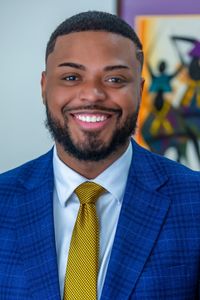
RaShon Young earned a bachelor's degree from Bethune-Cookman University in 2021. His career experience includes working as a chief of staff.[1]
Young has been affiliated with the following organizations:[1]
National Association for the Advancement of Colored People
National Action Network
26Health
Alpha Phi Alpha Fraternity, Inc.
Orange County Democratic Black Caucus
Orange County Young Democrats
Orange County Democratic Party
- Bachelor's:
- Bethune-Cookman University, 2021
Campaign themes
RaShon Young has not yet completed [the profile publisher]'s 2026 Candidate Connection survey.
Send a message to RaShon Young asking him to fill out the survey.
If you are RaShon Young, click here to fill out [the profile publisher]'s 2026 Candidate Connection survey.
Who fills out the candidate survey?
Any candidate running for elected office, at any level, can complete [the profile publisher]'s Candidate Survey. Completing the survey will update the candidate's [the profile publisher] profile, letting voters know who they are and what they stand for. More than 32,000 candidates have taken [the profile publisher]'s candidate survey since we launched it in 2015. Learn more about the survey here.
You can ask RaShon Young to fill out this survey by using the button below or emailing rashon.young17@gmail.com.
Who are you? Tell us about yourself.
RaShon Young is a passionate public servant, community advocate, and proven leader running to represent Florida House District 40. For the past three years, he has served as Chief of Staff to State Representative LaVon Bracy Davis, gaining critical experience in navigating the legislative process, crafting policy, and fighting for the needs of everyday Floridians. With Representative Bracy Davis not seeking re-election, RaShon is stepping forward to continue the work they’ve begun together—advancing justice, equity, and opportunity for all.
A proud product of Central Florida, RaShon has spent his career focused on the issues that matter most to working families—affordability, access to healthcare, quality public education, and protecting our civil and voting rights. As a next-generation leader, he brings both deep policy expertise and lived experience to the fight, and is uniquely positioned to be an effective voice in a Republican supermajority legislature while holding true to Democratic values.
RaShon is not running for a title—he’s running to be a tireless champion for the people of District 40. He’s walked the halls of the Capitol, built strong relationships across the aisle, and knows how to get things done. Now, he’s ready to bring that experience home and deliver real results. With the backing of Representative Bracy Davis, most of the Orange County legislative delegation, and others, RaShon is building a campaign rooted in people, purpose, and progress
Please list below 3 key messages of your campaign. What are the main points you want voters to remember about your goals for your time in office?
One of the pillars of our district is to protect and expand voting rights for those in the State of Florida. My first bill will be the Harry T. and Harriette V. Moore Florida Voting Rights Act—because access to the ballot is sacred. I’m running to make voting easier, not harder, and to protect our democracy from those who seek to silence it. We’ll fight voter suppression, restore rights, and ensure every voice in District 40 is heard loud and clear.I’m running to prioritize affordability and economic justice—because from rent spikes to rising grocery costs, families are being priced out of the lives they’ve worked hard to build. I will fight to cap predatory rent increases, expand affordable housing, advocate for paid family leave, and work to raise the minimum wage. No one should have to work two or three jobs just to survive, and I’m committed to building an economy that works for all of us.I’m committed to investing in our public schools and ensuring every child has access to a quality education. That means raising teacher pay, restoring respect for educators, and making sure our classrooms are equipped with the resources students need to succeed. Teachers deserve to be treated like professionals, and our children deserve schools that empower their potential—not limit it.
What areas of public policy are you personally passionate about?
- Voting Rights and Democracy Protection
- Affordable Housing and Rent Stabilization
- Healthcare Access and Equity
- Public Education Investment and Teacher Pay
- Youth Empowerment and Education Reform
- Criminal Justice Reform and Ending the School-to-Prison Pipeline
- Economic Justice and Working-Class Protections
- Food Security and Local Agriculture Support
- Gun Violence Prevention and Public Safety
- Reproductive Rights and Women’s Health
- LGBTQ+ Equality and Anti-Discrimination Protections
- Climate Justice and Resilient Communities
- Civic Engagement and Community Building
- Support for First-Generation Homebuyers
- Support for Artists and Cultural Investment
Who do you look up to? Whose example would you like to follow, and why?
I deeply admire leaders like Representative LaVon Bracy Davis, who exemplify what it means to serve with purpose, integrity, and a deep connection to community. Her work in the Florida House has been grounded in advocacy, cultural awareness, and a fierce commitment to justice. She’s not just a legislator, she’s a bridge-builder, someone who brings people together to fight for equity and opportunity. Her leadership reminds me that public service is about more than policy, it’s about people.
I also look up to leaders like Minority Leader Fentrice Driskell, who has broken barriers as the first Black woman to lead the Florida House Democratic Caucus. Her courage, clarity, and unwavering focus on the issues that matter most, like voting rights, education, and economic justice, are a model for principled leadership in challenging times.
These women, along with others like Representative Anna V. Eskamani, inspire me to lead with authenticity, to speak truth even when it’s uncomfortable, and to never lose sight of the people we’re called to serve. Their examples affirm that politics, like ministry, is a calling, one that demands heart, humility, and the courage to stand firm in your convictions.
Is there a book, essay, film, or something else you would recommend to someone who wants to understand your political philosophy?
If someone wanted to understand my political philosophy, I’d recommend The Certain Sound of the Trumpet by Samuel D. Proctor, which speaks to the moral courage and clarity required of leaders who serve the public. I’d also suggest Margin by Richard Swenson, which reminds me that sustainable leadership requires rest, boundaries, and intentional space to think and serve well. Additionally, Bryan Stevenson’s Just Mercy captures my deep belief in justice, redemption, and fighting for the voiceless, and the documentary 13th by Ava DuVernay offers a powerful analysis of systemic injustice—something I am deeply committed to dismantling through policy and advocacy.
What characteristics or principles are most important for an elected official?
Integrity is everything. An elected official must lead with truth, honesty, a strong moral compass, and high ethical standards—doing what’s right, even when it’s not easy. Above all, they must have a deep passion for the people they serve and an unshakable loyalty to their community, not personal gain.
What qualities do you possess that you believe would make you a successful officeholder?
I believe what makes me a strong and successful officeholder is a unique blend of compassion, strategic thinking, and deep commitment to public service. My empathy allows me to truly listen to the people I serve and understand the real-life impact of policy decisions. I lead with heart, but I also bring a sharp ability to navigate systems, work the legislative process, and move ideas from vision to reality.
I’m not just passionate about service, I’m intentional and strategic in how I approach challenges, build coalitions, and deliver results. Whether it’s crafting legislation, advocating for resources, or negotiating across lines of difference, I’m focused on getting things done with both purpose and precision. For me, this isn’t just about holding office, it’s about holding space for the people who put their trust in me.
What do you believe are the core responsibilities for someone elected to this office?
For someone elected to serve, I believe the core responsibilities begin with being a voice for the people, especially those too often overlooked or unheard. That means drafting and supporting legislation that uplifts working families, expands access to affordable healthcare, strengthens our public schools, protects voting rights, and addresses the affordability crisis with real solutions.
It also means showing up, consistently, with transparency and accountability, not just in Tallahassee, but in every corner of the district. Listening to constituents, responding to their needs, and making sure they see themselves in the work being done. Ultimately, it’s about delivering real change with both courage and compassion.
What legacy would you like to leave?
I want my legacy to be one that proves young people not only deserve a seat at the table, we know how to lead it. I want to leave behind a blueprint that shows how to lead with integrity, plan with purpose, and serve with boldness. Too often, we see political office treated as a personal stepping stone rather than a space for building generational progress. I believe in the power of succession planning, in preparing the next leader even as you lead, and in leaving the door open wider than you found it.
Through my work on affordability, education, voting rights, and healthcare access, I want my legacy to be about real impact and real people. I want folks to look back and say, “He didn’t just serve, he built something lasting.” A legacy of lifting others as I climb, and making sure the people, especially young people, always know that they belong in this process, too.
What is the first historical event that happened in your lifetime that you remember? How old were you at the time?
The first historical event I remember clearly was the election of President Barack Obama in 2008 and even at the age I was, I understood the weight of what it meant for this country, and for people who looked like me. It sparked something in me: the realization that leadership could be transformational, that public service could be rooted in hope and justice.
That sense of purpose led me to accept my call to ministry in 2018. I understood then, and still believe now, that serving people is sacred work, whether from the pulpit or in public office. Politics, like ministry, is a calling. It’s not about titles or attention, it’s about answering a deep moral responsibility to uplift, protect, and fight for those who often go unseen or unheard. I see both as expressions of service, and I’m committed to walking in that calling with integrity and purpose.
What is your favorite book? Why?
One of my favorite books is Jesus and the Disinherited by Howard Thurman. It’s a book that changed not just how I see faith, but how I see the world and my place in it. Thurman writes about a Jesus who stands with the poor, the outcast, and the oppressed, not in theory, but in practice. He speaks directly to the marginalized, offering a theology rooted in justice, dignity, and radical love.
This book helped shape my understanding of ministry as service and politics as a moral calling. It reminded me that faith isn’t passive, it’s active. That leadership isn’t about power, it’s about people. And that the work I’m doing, both in ministry and in public service, must always be grounded in the belief that those who have been pushed to the margins deserve to be at the center. That’s the kind of servant leadership I strive to embody every day.
What do you believe is the ideal relationship between the governor and state legislature?
The ideal relationship between the governor and the state legislature should be one of collaboration, respect, and balance—not control. Our system was built on checks and balances, not the elevation or strongarming of one branch over another. But in Florida, we’ve seen a disturbing pattern where the legislature has too often acted as a rubber stamp for the governor’s agenda, instead of an independent body representing the people. We need lawmakers who are willing to stand on principle, not fall in line and who remember that their loyalty is to their constituents, not to political pressure from the executive branch.
What do you perceive to be your state's greatest challenges over the next decade?
One of Florida’s greatest challenges over the next decade is the deepening affordability crisis. From skyrocketing rent and housing prices to rising insurance costs and stagnant wages, Floridians are being priced out of the very communities they’ve helped build. If we don't act, we’re heading toward a future where people simply can’t afford to be Floridians anymore.
This crisis is especially urgent for young people like Gen Z, who are eager to participate in shaping the future but are being locked out of it by economic barriers. When the cost of living pushes people out, it doesn't just hurt families, it weakens democracy. Addressing affordability, creating fair economic policies, and ensuring political access for all aren’t just challenges, they’re moral imperatives for the future of our state.
Do you believe that it’s beneficial for state legislators to have previous experience in government or politics?
Experience can be valuable, but what matters more is investment, real, consistent investment in the people and the place you’re asking to represent. I believe legislators should be deeply connected to their district, not just looking for the next open seat or political opportunity. Voters deserve leaders who know the challenges on the ground because they’ve been there, fighting, organizing, and serving long before filing day. Politics shouldn’t be about ambition; it should be about accountability to the community you call home.
Do you believe it’s beneficial to build relationships with other legislators? Please explain your answer.
Absolutely. I believe it's critically important to build relationships with other legislators—both within your own party and across the aisle. Progress doesn’t happen in a vacuum. Whether you're advancing bold legislation or defending core values, having strong, respectful relationships can make the difference between a good idea and a passed law. I’ve seen firsthand how building trust and finding common ground can move issues forward, even in tough political environments. At the end of the day, the people sent us to get things done, and that requires connection, collaboration, and a willingness to work with others, even when we don’t always agree.
Is there a particular legislator, past or present, whom you want to model yourself after?
Yes. Representative Alzo Reddick is someone I deeply admire and seek to model my service after. As a proud brother of Alpha Phi Alpha Fraternity, Inc., he not only represented our values with dignity, but he also set a powerful standard for leadership in Tallahassee. Representative Reddick carried himself with wisdom, integrity, and an unshakable commitment to the people he served. He understood the importance of policy, but he never lost sight of people, and that balance is something I strive to emulate every day. His legacy reminds me that leadership isn’t just about passing laws, it’s about leaving a lasting impact on the community and lifting others as you climb.
Are you interested in running for a different political office (for example, the U.S. Congress or governor) in the future?
Right now, my full focus is on representing and serving the people of Florida’s 40th House District. I’m not thinking about what’s next, I’m thinking about what’s needed now. My heart is in this community, and my priority is doing the work, showing up for my constituents, and delivering real results where they matter most.
Both sitting legislators and candidates for office hear many personal stories from the residents of their district. Is there a story that you’ve heard that you found particularly touching, memorable, or impactful?
One conversation that’s stayed with me wasn’t just one person’s story, it was a reflection of a larger truth. Someone once told me that African Americans have had a long-standing social contract with the Democratic Party, but too often, the promises made to our communities haven’t been fully delivered. That stuck with me, because I know it’s not just rhetoric, it’s reality for so many who still struggle with poverty, underfunded schools, unaffordable housing, and health disparities.
That moment reminded me why I’m running: to help fulfill the promises that have gone unkept. To ensure that our communities aren’t just patted on the back during election season, but truly prioritized and uplifted all year long. I want to deliver on the values we claim to stand for, justice, equity, opportunity, and fight for the people we represent, regardless of party affiliation, because progress shouldn’t be partisan, it should be personal.
Should the legislature oversee or grant the use of emergency powers?
Yes, the legislature should absolutely play an oversight role when it comes to the use of emergency powers. Emergency powers must never be a blank check. While swift action is sometimes necessary during crises, that authority must always be balanced with transparency, accountability, and legislative review.
We’ve seen what happens when too much power is concentrated in one branch of government, it threatens the balance our democracy depends on. The legislature exists to represent the people, and that includes ensuring that emergency decisions are being made in the best interest of the public, not for political gain or overreach. Checks and balances aren’t optional, they’re essential.
What is the first bill you would introduce if elected?
If elected, the first bill I would introduce is the Harry T. and Harriette V. Moore Florida Voting Rights Act. This legislation honors two of Florida’s most courageous civil rights pioneers, Harry and Harriette Moore, who were tragically assassinated in 1951 for their relentless efforts to register Black voters. Their legacy is a powerful reminder of the sacrifices made to secure voting rights for all.
The Act aims to restore and expand voting rights in Florida by implementing several key provisions:
- Preclearance Protections: Ensuring that any changes to voting procedures at the local level are thoroughly vetted to prevent discriminatory practices.
- Automatic Voter Registration: Allowing eligible Floridians to be automatically registered to vote when they interact with the Department of Highway Safety and Motor Vehicles, unless they choose to opt out.
- Centralized Database for Returning Citizens: Establishing a system to help returning citizens determine their voter eligibility status.
- Permanent Vote-by-Mail Requests: Providing voters the option to request permanent vote-by-mail status, reducing barriers to absentee voting.
- Expanded Language Access: Ensuring that voting materials and assistance are available in multiple languages to accommodate Florida's diverse population.
- Same-Day Voter Registration: Allowing eligible voters to register to vote at any time, including on Election Day, to increase participation.
Additionally, the Act seeks to repeal recent laws that have created barriers to voting, such as restrictions on secure drop boxes, limitations on vote-by-mail, and the establishment of the Office of Election Crimes and Security, which has been criticized for intimidating voters.
Introducing this bill would be a step toward fulfilling the unkept promises made to our communities and ensuring that every Floridian, regardless of background or party affiliation, has equal access to the ballot box.
What organizations or individuals have endorsed your campaign?
Representative LaVon Bracy Davis
Representative Anna V. Eskamani
Representative Jennifer “Rita” Harris
Representative Leonard Spencer
Representative Marie Woodson
Representative Lindsay Cross
Representative Michelle Rayner
Representative Jervonte Edmonds
Representative Daryl Campbell
Representative Ashley Gantt
The Honorable Alzo Reddick
The Honorable Tom Keen
Senator Kristen Arrington
Senator Shevrin Jones
Senator Rosalind Osgood
Senator Darryl Rouson
Senator Bobby Powell
Senator Victor Torres
Commissioner Michael “Mike” Scott
Commissioner George Oliver
The Honorable Anne Douglas
The Honorable Vicki Felder
The Honorable Stephanie Vanos
The Honorable Dr. Jim Moyer
What committees interest you?
Human Services Subcommittee
Criminal Justice Subcommittee
Government Operations Subcommittee
Healthcare Budget Subcommittee
Higher Education Budget Subcommittee
Judiciary Committee
Health & Human Services Committee
What are your views on financial transparency and government accountability?
I believe financial transparency and government accountability are non-negotiable in a healthy democracy. But the truth is, in many spaces, we're seeing less democracy and more oligarchy—where a small group of people with wealth and access make the rules and control who gets to lead. One clear example is how unreasonable it can be to run for office or serve in certain roles, especially with salaries that don’t reflect the cost of living. That’s not accidental—it’s part of a systemic structure that keeps working-class people, young people, and people of color from holding power. If we truly want a government by the people, we have to make sure it’s accessible to the people—not just the privileged few.
Do you support or oppose changes to the current state ballot initiative process? If so, what kind of changes would you consider?
I strongly oppose the changes enacted by HB 1205 to Florida's ballot initiative process. This law represents a direct assault on our democratic principles, making it significantly more difficult for citizens to propose and vote on constitutional amendments. By imposing stringent restrictions on petition gathering, including limiting who can collect signatures and requiring sensitive personal information from signers, the legislature is effectively silencing grassroots movements and diminishing public participation in the political process.
The passage and signing of HB 1205 signify a troubling shift towards oligarchy, where power is concentrated in the hands of a few, undermining the foundational checks and balances of our government. This legislation doesn't just hinder the ballot initiative process; it erodes the very fabric of our democracy by restricting citizens' ability to effect change through direct action.
We must hold accountable those who supported this undemocratic measure. It's imperative to advocate for the repeal of HB 1205 and to restore a fair and accessible process that empowers all Floridians to have a voice in shaping the laws that govern them. Democracy thrives on participation, not suppression.
On the 2026 ballot
Links
Compiled from the candidate’s published profile as of September 30, 2026.
Source(opens in new tab)