
Background
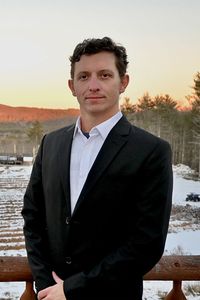
Phillip Rench was born in Portland, Maine. He earned a high school diploma from Massabesic High School and a bachelor's degree from Southern New Hampshire University in 2014. His career experience includes working as a software engineer.[1]
- Bachelor's:
- Southern New Hampshire University, 2014
- High school:
- Massabesic High School
Campaign money
- Raised
- —
- From individuals
- $0
- From PACs & party
- $0
- Own money
- —
FEC filings.
View on FEC.gov(opens in new tab)In their own words
Who are you? Tell us about yourself.
My name is Phillip Rench, I am a husband and father of two young children living in Waterboro, Maine where I grew up as a child. My passion has always been engineering and space, solving hard problems that advance humanity. After attending college for Electronics Engineering and Applied Mathematics, I landed my dream job as a Controls Engineer building launch pads and launching rockets. Throughout my time in the Space Industry, I have worn many hats, training me to solve complex problems under intense pressure that demanded precision and innovation. I now get the opportunity to share my experiences with children across the state with the goal of inspiring the next generation of engineers, scientists and teachers.
Please list below 3 key messages of your campaign. What are the main points you want voters to remember about your goals for your time in office?
As your senator, my top priority will be to reduce the cost of living for all Mainers and to keep more hard-earned money in their pocket to provide a better life for their household. To do this; we need to grow new, diverse industries in Maine to lift the economy to record heights. Many communities around the state never recovered from the decline of the paper industry and I want to bring those communities back to life.As your Senator, my second priority would be to get big money out of politics. Your representatives should represent you, not their lobbyists. I believe the root cause of why politics in this country is so divided and weaponized is big money in politics, from both sides of the aisle, driven primarily by Political Action Committees.As your Senator, my third priority would be to heal the nation and act as a bridge between the political divides. Like many families in Maine, I have relatives from both sides of the political spectrum, and I understand and agree with positions on both sides. I understand that true democracy is not about one side getting everything it wants; it’s about compromise and working together for the greater good.
What areas of public policy are you personally passionate about?
I want nothing more than to see a future where our children want to stay and build their lives here – without living paycheck to paycheck. I want a future where Maine is at the forefront of cutting-edge technology and where jobs and good pay are not scarce. I want to see communities that have abandoned papermills brought back to life with new innovative industries. Mainers are strong, hardworking, independent people – but we need to unite as a State to fix our structural issues. I pledge to you as your Senator I will work relentlessly to achieve these goals.
Is there a book, essay, film, or something else you would recommend to someone who wants to understand your political philosophy?
Margaret Chase Smith's Declaration of Conscience speech should be read by everyone.
What characteristics or principles are most important for an elected official?
Integrity - When I think of a typical Mainer, regardless of what you think of his or her political ideologies, I assume that person has integrity. We were raised by our fathers and grandfathers, who you could depend on and trust without a blink of an eye. In Maine, you seldom will find a locked door or a neighbor unwilling to lend a hand. That is the way life should be.
When I look at many folks in Washington these days, you do not see a whole lot of integrity anymore.
What do you believe are the core responsibilities for someone elected to this office?
First, I believe the representation of your constituents is the core responsibility of Senators to represent the interests of their state’s citizens in the federal government. They listen to their constituents' concerns, advocate on their behalf, and ensure that the state's needs are reflected in national policy discussions.
I believe sufficient oversight of the Government is equally as important. Oversight plays a crucial role in the system of checks and balances by ensuring that each branch of government—executive, legislative, and judicial—functions within its designated powers and does not overstep or abuse its authority.
What legacy would you like to leave?
I want nothing more than to see a future where our children want to stay and build their lives here – without living paycheck to paycheck. I want a future where Maine is at the forefront of cutting-edge technology and where jobs and good pay are not scarce.
What do you perceive to be the United States' greatest challenges as a nation over the next decade?
I believe the greatest challenge facing our nation in the next decade is unity. When we stand together, there is nothing we cannot accomplish. Unfortunately, we are far from that right now, which is why one of my top priorities is bringing people together across political divides.
What are your thoughts on term limits?
While this is a sensitive topic in Maine, I have no desire to serve more than two terms as Senator. My goal is to return to my farm full-time while I’m still young enough to truly enjoy it.
What qualities does the U.S. Senate possess that makes it unique as an institution?
What makes the U.S. Senate unique is its six-year terms and its smaller membership of just 100 senators, compared to the House of Representatives, which has 435 members and two-year terms. This structure allows senators more time to cultivate relationships with their colleagues and take on larger, long-term projects that can have a lasting impact on the country.
Do you believe that it’s beneficial for senators to have previous experience in government or politics?
I believe it’s valuable to have a blend of senators with prior experience in government and politics, alongside those who bring fresh perspectives from industries or other fields, like mine. For instance, it's unlikely that many politicians have launched a rocket or worked at 2 a.m. in a paper mill to repair machinery. However, when working to establish a new industry in rural Maine, hands-on experiences like these can be crucial to crafting legislation that truly benefits constituents.
What do you think of the filibuster?
The Founding Fathers intentionally designed the legislative process to be challenging, ensuring that laws are carefully debated and not passed impulsively. While the filibuster can be frustrating for both sides at times, it ultimately serves as a vital safeguard in our democracy, promoting deliberation and protecting minority voices.
Is there a particular senator, past or present, whom you want to model yourself after?
I have a high regard for Senator King and former Senator's Margaret Chase Smith and John McCain.
How would you evaluate a judicial nominee?
The key qualities I would look for in a judicial nominee are integrity, experience, and humility for the role; in addition, a track record of having the ability to withhold personal bias in deciding cases.
What kind of relationships would you build with other senators?
I know for a fact that much of what you see on TV is political theater. Most senators, regardless of their party or agenda, are ordinary people with genuine intentions to serve their constituents. As an independent, I want to connect with them on a personal level, finding common ground that might otherwise go unnoticed. At the end of the day, we all want what’s best for this nation—we just have different ideas about how to get there.
Do you believe that compromise is necessary or desirable for policymaking?
True democracy is not about one side getting everything it wants; it’s about compromise and working together for the greater good.
How should the U.S. Senate use its investigative powers?
Oversight plays a crucial role in the system of checks and balances by ensuring that each branch of government—executive, legislative, and judicial—functions within its designated powers and does not overstep or abuse its authority.
What criteria would you apply when deciding whether to confirm presidential appointees to their Cabinet?
The key qualities I would look for in a presidential appointee are integrity, experience, and humility for the role.
What committees interest you?
Agriculture, Nutrition, and Forestry; Commerce, Science, and Transportation; Appropriations; Energy and Natural Resources; Intelligence; and Taxation Committee
What are your views on financial transparency and government accountability?
I believe the root cause of why politics in this country is so divided and weaponized is big money in politics, from both sides of the aisle. There needs to be full transparency regarding the finances of the Government, including any financial transactions of politicians.
On the 2026 ballot
Links
Compiled from the candidate’s published profile as of September 30, 2026 and FEC filings.
Source(opens in new tab)