
Background
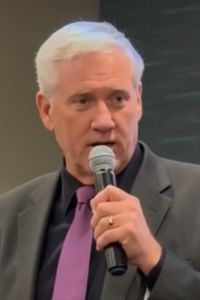
Phillip Parrish was born in Blue Earth, Minnesota. He served in the U.S. Navy from 1998 to 2019 retiring as a Lieutenant Commander with experience in intelligence-counterterrorism and foreign policy. He graduated from West Concord High School. He earned a bachelor's degree from Mankato State University in 1989, and graduate degrees from Minnesota State University in 2000 and 2002. His career experience includes working as an administrator. He has been affiliated with the NRA and the VFW.[1]
- Graduate:
- Minnesota State University, 2002
- Bachelor's:
- Mankato State University, 1989
- High school:
- West Concord High School
In their own words
Lieutenant Governor
Phillip Parrish did not complete [the profile publisher]'s 2026 Candidate Connection survey.
Governor
Who are you? Tell us about yourself.
Phillip C. Parrish is a retired Navy intelligence officer, father, farmer, teacher, administrator, and lifelong Minnesotan running for Governor in 2026 to restore integrity and prosperity.
Please list below 3 key messages of your campaign. What are the main points you want voters to remember about your goals for your time in office?
Restoring Prosperity, Freedom, and Safety
As your Governor, I’ll act immediately to deliver results for Minnesotans—cutting taxes, empowering parents, ensuring fairness, and strengthening safety. My 100-Day Plan tackles your priorities with decisive action.In a Parrish administration:
• People will be fired for negligence and criminal activities—not because they offended somebody.
• Boys are boys. Girls are girls.
• Your hard-earned income belongs to you—not to grifters and thieves.
These principles guide my fight to restore common sense, protect freedoms, and deliver real results. No more waste, no more division—just prosperity for all Minnesotans.I will appoint commissioners for agencies like Revenue, Management and Budget, Education, and Public Safety, who prioritize efficiency, transparency, fairness, and safety. Acting commissioners will begin work pending Senate confirmation, delivering monthly reports targeting $50 million in administrative savings by Day 100. This plan reflects my vision for a Minnesota that empowers its people, protects fairness, and prioritizes practical solutions. By ensuring fair sports and facilities, ending divisive DEI and sanctuary policies, cooperating to deport violent felons, replacing Due North with skills-focused education, advancing school choice, and cutting taxes—including the gas tax—we will build a stronger, safer, and more unified Minnesota
What areas of public policy are you personally passionate about?
Transparency & Accountability: Expose lies, cut waste, end fraud—protecting taxpayers from bureaucratic theft.
2. Servant Leadership: Reject divisive elitism; unite us through decency, respect, and common ground.
3. Local Empowerment: Devolve power to communities for back-to-basics education, affordable healthcare, reliable infrastructure.
4. Protecting the Vulnerable: Defend children, the poor, and hardworking families with integrity and moral strength.
These aren’t slogans—they’re my life’s mission from military service to now. Together, we’ll restore Minnesota’s heart. Visit parrish4mn.com/platform.
Who do you look up to? Whose example would you like to follow, and why?
Jesus Christ—the ultimate servant leader who exposed hypocrisy, defended the poor, and never compromised truth. Also Abraham Lincoln
What characteristics or principles are most important for an elected official?
For an elected official, integrity, servant leadership, and moral discernment are non-negotiable. Integrity means refusing to lie, cheat, or steal—even when no one is watching—and exposing fraud wherever it hides in government. Servant leadership demands putting Minnesotans first, not personal power or elite agendas; it’s listening to the hardworking majority, not silencing them with divisive labels. Moral discernment rejects the false left-right divide to focus on right vs. wrong, protecting the vulnerable from exploitation while empowering local solutions. These principles, forged in military service and lived through decades defending the innocent, will guide every decision I make as Governor.
What do you believe are the core responsibilities for someone elected to this office?
A Governor’s core duty is servant leadership: protect the vulnerable, expose fraud, and empower local communities over centralized control. I will safeguard Minnesotans from bureaucratic theft, streamline waste, and ensure every tax dollar serves the hardworking majority. My oath is to defend integrity—rejecting lies, elitism, and divisive agendas—while devolving power to families, schools, and neighborhoods. As top executive, I answer to the people, not D.C. or special interests.
What legacy would you like to leave?
A Minnesota where fraud is gone, families thrive, and government fears the people—not the reverse. A state rebuilt on transparency, decency, and local power.
What is the first historical event that happened in your lifetime that you remember? How old were you at the time?
Televised Moon landing, July 20, 1969. I was 4. Watched on a black-and-white TV with my family.
What was your very first job? How long did you have it?
Farmer. Life-long
What is your favorite book? Why?
The Bible—it’s the only unchanging truth in a world of spin. Guides my moral compass, exposes deception, and demands justice with mercy.
If you could be any fictional character, who would you want to be?
Atticus Finch—a man of unshakable integrity who defended the innocent against lies and mob rule, no matter the cost. That’s the leadership Minnesota needs.
What is something that has been a struggle in your life?
Watching good people crushed by corrupt systems—from military cover-ups to Minnesota’s $250M fraud scandal. The fight against lies and elitism never ends, but surrender isn’t an option.
Governors have many responsibilities, which vary from state to state. Which of those do you personally consider the most important in your state?
In Minnesota, the most vital responsibility is restoring trust through transparency and fiscal integrity. I will prioritize exposing fraud (like Feeding Our Future), slashing waste, and ensuring every dollar fuels local solutions—not elite agendas. Protecting the vulnerable, empowering communities in education and healthcare, and rejecting divisive policies come next. Leadership isn’t about control—it’s about serving the hardworking majority with moral clarity.
Different states require governors to have different degrees of responsibility for the state budgeting process. If it were your choice, what do you believe is the appropriate degree of gubernatorial involvement with this process in your state?
The Governor must lead with a scalpel, not a sledgehammer. I favor strong executive oversight to eliminate fraud and bloat, but final line-item authority should rest with the legislature—checked by transparent public audits. No more blank checks for cronies. I’ll propose lean, accountable budgets that empower local priorities, veto waste, and demand results. Centralized control breeds corruption; collaborative stewardship builds trust.
In most states, governors have the power to make line-item vetoes. If that is true in your state, what would be your philosophy for how and when to use this power?
I will use the line-item veto surgically and transparently—only to excise fraud, waste, or pork that harms Minnesotans. Every veto will be public, justified in writing, and tied to protecting the vulnerable or empowering local solutions. No vetoes for political score-settling; only to uphold integrity and fiscal responsibility.
What do you believe is the ideal relationship between the governor and state legislature?
Collaborative stewardship, not adversarial control. I’ll work with legislators as partners in service—vetting ideas through transparency, rejecting elitist agendas, and finding common ground on decency and results. When they stray into waste or division, I’ll veto with clarity. Unity through mutual accountability.
What do you love most about your state?
Minnesota’s hardworking, decent people—farmers, veterans, families—who embody resilience and community. Our lakes, seasons, and small-town spirit reflect God-given beauty and grit. I love the quiet strength of neighbors helping neighbors, not waiting for government. That’s the Minnesota worth fighting for.
What do you perceive to be your state's greatest challenges over the next decade?
1. Fraud & waste draining billions from schools and families.
2. Divisive elitism silencing the hardworking majority.
3. Centralized overreach crushing local innovation in education, healthcare, infrastructure.
4. Moral drift abandoning personal responsibility.
We beat them with transparency, unity, and servant leadership.
Under what circumstances should the governor of your state be able to use emergency powers?
Only for genuine, imminent threats—natural disasters, clear public safety crises—never to bypass the legislature or impose permanent control. Emergency powers expire fast, require legislative approval to extend, and demand full transparency. No using crises to push elite agendas or silence dissent. Trust, not fear, governs Minnesota.
What organizations or individuals have endorsed your campaign?
RAF redamericafirst.com
Would a state ballot initiative process be good or bad for your state?
Good—if tightly safeguarded. Minnesotans deserve a direct voice when leaders ignore fraud, waste, or the hardworking majority. I’d support a high-signature threshold, full transparency, and single-issue limits to prevent elite manipulation. Power to the people, not special interests.
A governor is the top executive authority in his or her state. What does that mean to you?
It means unwavering accountability to Minnesotans, not elite power structures. As chief executive, I wield authority to cut fraud, dismantle bloated bureaucracies, and restore transparency—never to impose top-down mandates. True leadership serves, listens, and protects the innocent while rejecting moral hypocrisy. My military-honed discipline demands I lead with integrity, putting decency and common sense above partisan games.
Candidates hear many personal stories from voters. Is there a story that you’ve heard that you found particularly touching or memorable?
A single mom in Duluth told me her taxes fund fraud while her kids’ school crumbles. She said, “I just want someone to fight for us, not the system.” Her quiet courage fuels my mission.
What is an accomplishment that you are proud of?
As one of the original whistleblowers of the Minnesota Daycare Fraud—a scandal insiders ignored. My whistleblowing is finally coming to the surface to help protect taxpayers and the truly hungry. Integrity in action.
What role should your state’s government have in the development or use of artificial intelligence?
Minimal. AI must never replace human judgment, privacy, or local control. State government should block surveillance overreach, protect jobs, and ban AI in elections or welfare fraud. Let private innovation thrive; government’s role is guarding integrity, not picking winners.
What legislation would you want to sign related to election administration in your state?
1. Voter ID with free state ID for all citizens.
2. Same-day registration banned—register 30 days prior.
3. No drop boxes; secure in-person or mail with signature verification.
4. Full audit trails and paper ballots.
5. Felons vote only after sentence served.
Clean, transparent elections restore trust.
Phillip Parrish did not complete [the profile publisher]'s 2022 Candidate Connection survey.
On the 2026 ballot
Links
Compiled from the candidate’s published profile as of September 30, 2026.
Source(opens in new tab)