
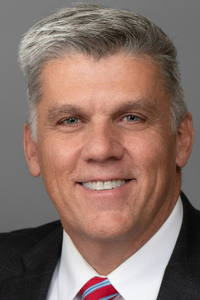
Background
Phil Lyman earned a B.S. in accounting from Brigham Young University in 1989 and an M.S. in accounting from the University of Utah in 1999. His career experience includes working as an accountant at his own company and as the chief financial officer at Sage Memorial Hospital. Lyman became a commissioner for San Juan County, Utah.[1]
- Graduate:
- University of Utah, 1999
- Bachelor's:
- Brigham Young University, 1989
Campaign money
- Raised
- $48K
- From individuals
- $28K
- From PACs & party
- $0
- Own money
- —
FEC filings through June 30, 2026.
View on FEC.gov(opens in new tab)Campaign themes
Phil Lyman did not complete [the profile publisher]'s 2026 Candidate Connection survey.
blockquote{border-left:none !important;padding-left:2em;position:relative;color:#444;font-family:"Libre Franklin",Helvetica,Arial,sans-serif;font-size:16px;color:#202122;font-style:normal;}blockquote::before{content:open-quote;font-size:3em;line-height:0.1em;position:absolute;left:-10px;top:40px;color:#ccc}blockquote::after{content:close-quote;font-size:3em;line-height:0.1em;position:absolute;right:0;bottom:0;color:#ccc}
Campaign websiteLyman's campaign website stated the following:Public Lands & Federal OverreachAsserting Utah's sovereignty over its own lands and pushing back against arbitrary federal closures that harm local communities.As demonstrated by his stand at Recapture Canyon, Phil believes Utahns are the best stewards of Utah land. He advocates for active management, responsible resource development, and resisting federal monument designations that lock up resources and harm rural economies across eastern and southern Utah.Energy Independence & DevelopmentUnleashing Utah's energy potential — oil, gas, and nuclear — to create jobs, lower costs, and secure American energy independence.The Uinta Basin and eastern Utah are energy powerhouses. Phil will fight to remove federal barriers to oil and gas development, support nuclear energy expansion, and oppose regulations that kill energy jobs in CD3 communities. Energy development means good-paying jobs for Utah families and lower costs for everyone.Water Rights & Water PolicyProtecting Utah's water rights and ensuring growing communities have reliable access to this critical resource.From the Colorado River to the Uinta Basin, water is the lifeblood of CD3. Phil will defend Utah's water rights against federal encroachment, support infrastructure investments to serve growing communities in Utah County and Washington County, and fight for common-sense water policy that protects agriculture and future growth.Recreation & Public AccessKeeping public lands open and accessible for hunting, fishing, OHV riding, camping, and all forms of outdoor recreation.Read Details & Policy RecordCD3 is home to some of the most spectacular outdoor recreation in America. Phil will fight federal land closures that restrict access, support multiple-use management, and ensure that hunters, anglers, and outdoor enthusiasts can continue to enjoy Utah's public lands without government overreach.Strengthening the Nuclear FamilySupporting policies that strengthen families as the foundation of thriving communities.Strong families build strong communities. Phil believes government should empower parents, not replace them. He supports policies that reduce the tax burden on families, protect parental rights in education and healthcare, and create an economy where a family can thrive on honest work.Education & Parental RightsEmpowering parents with real choices and returning education decisions to local communities.Phil supports school choice, charter schools, and homeschool freedom. He opposes federal mandates that override local school boards and parental authority. Education dollars should follow the student, and parents — not bureaucrats — should decide what's best for their children.Agriculture & RanchingDefending Utah's farming and ranching heritage against federal regulation and supporting the rural economy.Agriculture is the backbone of rural CD3. Phil will fight burdensome EPA and USDA regulations, protect grazing rights on public lands, support water access for irrigation, and ensure that farming and ranching families can continue to feed America without being strangled by Washington bureaucracy.Economy, Taxes & Fiscal ResponsibilityFostering a pro-growth, low-tax environment and reining in reckless federal spending.A CPA by trade, Phil understands the burden of taxation and the danger of runaway federal debt. He supports tax relief for families and small businesses, opposes omnibus spending bills, and will bring the same fiscal discipline to Congress that he brought to county government.— Phil Lyman's campaign website (May 13, 2026)Note: This text is quoted verbatim from the original source. Any inconsistencies are attributable to the original source.
Phil Lyman did not complete [the profile publisher]'s 2024 Candidate Connection survey.
Campaign website
Lyman’s campaign website stated the following:
Policy
Public Land
Policy Vision
Utah Public Land
The lands contained within the state of Utah have shaped who we are as a people, and as I drive across this state with diverse landscapes and abundant resources, I believe we could be so much more. As someone who has seen his best friends killed as a consequence of federal overreach and control of our public lands, it surprises me that our state hasn’t done more to control the resources and lands within our borders. When I see magazine covers boasting that we’re the #1 state in the nation, I have to wonder what they mean by “state.” At best, we’re the #1 federally managed colony in the nation. Between the directors of the Bureau of Land Management and the U.S. Forest Service, two unelected administrative offies in Washington D.C. have more control over what happens on Utah land than the governor of our state.
Education
Policy Vision
When it comes to K-12 public schools, Utah must…
Prioritize foundational academics first
Protect conscience & religious belief in schools
Restore schools to their limited and proper role
Respect the family’s unique & comprehensive role
Respect the Teachers who play a vital role in public education; Teachers are central to public education
Reject partnerships, programs, policies & practices that exploit children
Education
Policy Vision
When it comes to K-12 public schools, Utah must…
Prioritize foundational academics first
Utah spending on public education is at an all-time high of $7.3 billion, and yet our students’ proficiency scores keep declining.
We need to stop throwing money and resources at widely promoted but deeply flawed approaches, such as intrusive social emotional surveys & lessons, discriminatory social justice ideologies, sexualized content, labeling kids according to identity politics, and excessive use of tech to program & track student mindsets.
With a strong focus on time-tested, traditional methods & content to teach reading, writing, arithmetic, history, and science, our children will be prepared to think and act wisely based on objective & self-evident truths.
Protect conscience & religious belief in schools
Our schools are becoming battle grounds for society’s culture wars and our children are on the front lines.
Children need to know they can act on their sincerely held internal sense of right and wrong without fear of punishment.
By upholding strong laws like 53G-10-205, we send a clear message that a school must respect students’ and parents’ rights to not participate in any aspect of school that would violate their conscience or religious belief, which protects them from being complicit in their own indoctrination.
Restore schools to their limited and proper role
A wise approach is to prepare the child for the road, not the road for the child. Schools have a proper role; providing every imaginable need—medical, psychological, behavioral, emotional & physical—even providing for food, clothing & shelter is outside that role.
By transforming schools into social welfare service centers, we incentivize dependency mindsets & habits in our children & families, leading to expensive, unsustainable programs that place unwarranted burdens taxpayers.
Less is more! Schools must be schools, with a streamlined focus on scholastic achievement and merit—budget reforms will ensure schools don’t drain taxpayers, or encroach on family time, responsibilities, and privacy.
Respect the family’s unique & comprehensive role
Teachers play a vital role in public education; in fact, they are central to public education. The role of parents is inviolable and nontransferable. Systems that understand and respect these roles are positioned to make policy that is beneficial to teachers, students, parents, and society. Systems that fail to respect these roles are bound to a string of failed policies.
No school, regardless of how well meaning its programs & people, can take the place of a healthy family— families are the fundamental unit of all free and civilized societies. Utah should be the role model of family-centered schools.
Utah law upholds parents as the primary educators of their children. Schools should always defer to parents to address sensitive, controversial, or personal issues or questions involving their students. Students should be referred to a parent’s direct care when behavioral issues arise that create hostile learning environments.
Students or parents who create a dangerous environment for other students must be dealt with swiftly and decisively. No violence against teachers should be allowed, and teachers must be empowered to have students removed from schools when their behavior is a threat.
Reject partnerships, programs, policies & practices that exploit children
There are too many micromanaging middlemen who stand to profit financially, politically, and socially by manipulating children and dictating what happens in the classroom.
A child’s education should not be a means to somebody else’s ends—it should be the end, in and of itself.
To protect impressionable youth, the state must ensure that schools do not use children to promote global, national, or local agendas, fill workforce quotas, solve for real or manufactured societal problems, or lobby or agitate as activists for causes inside or outside of school.
Statement on Higher Education
Article X, Section 1 of the Utah constitution states: “The Legislature shall provide for the establishment… of a higher education system.”
State colleges and universities should be bastions for free expression. They should challenge students to expand their views and to broaden their comprehension of the world around them. Still, they are state establishments and, as such, should refuse to host drag shows, should ban the practice of requiring preferred pronouns on campus, and should require U.S history and government classes. They should root out insurgent foreign ideology such as Chinese influence, environmentalist and climate change dogma, and other unfounded and cultish creeds, including religious tenets, that require unnatural adherence.
Public Land
Policy Vision
Utah Public Land
The lands contained within the state of Utah have shaped who we are as a people, and as I drive across this state with diverse landscapes and abundant resources, I believe we could be so much more. As someone who has seen his best friends killed as a consequence of federal overreach and control of our public lands, it surprises me that our state hasn’t done more to control the resources and lands within our borders. Until we do, Utah will never reach its full potential. When I see magazine covers boasting that we’re the #1 state in the nation, I have to wonder what they mean by “state.” At best, we’re the #1 federally managed colony in the nation. Between the directors of the Bureau of Land Management and the U.S. Forest Service, two unelected administrators in Washington D.C. have more control over what happens on Utah land than the governor of our state. I’m running to be governor of this state, as Governor, I intend to govern all of it.
State Institutional Trust Lands
Wyoming’s trust lands include a 640-acre parcel in the middle of a national park that is currently valued at $62.4 million dollars. Under the leadership of the current governor, Utah’s State Institutional Trust Lands Administration is proposing to trade 162,000 acres of trust lands within the Bears Ears National Monument. If the Bears Ears SITLA trade performs as well financially as the Grand Staircase trade did, we can expect the trade to bring in $28 million a year to our school system. For reference, Iron County is currently considering a $75 million dollar bond proposal to fund a small portion of its education system. It makes no sense that Wyoming’s SITLA lands located in the midst of federally protected areas is worth $100,000 an acre, and Utah’s SITLA lands are essentially worthless. If our SITLA land was valued as richly as Wyoming’s, the bare minimum we should be seeking in a land exchange with the federal government $15.7 billion dollars.
Yet, our state leaders are satisfied with a few hundred million dollars for this exchange. If they trade off our SITLA lands for a song, there is no way we can go back and do this over again. This is a failure of leadership and an insult to Utah families who now must pay exorbitant property taxes to fund our education system because SITLA is failing to uphold its fiduciary responsibilities and fund our education system. If SITLA negotiated Wyoming land values for its Bears Ears holdings and wisely invested the billions of dollars this land is worth, we would be able to fund our entire education system from just the investment returns in 20 years and eliminate most property taxes.
Federal Natural Resources Policy Account
The state of Wyoming maintains a Federal Natural Resources Policy Account, which allocates up to $50 million dollars a year for the state to litigate federal land management decisions that hurt the state of Wyoming. On the same day that the Utah Governor’s Public Land Policy Coordinating Office announced a legal challenge to a terrible decision to close 317 miles of popular backcountry roads in Moab, the announcement also said Governor Cox is “urging collaboration.” Litigation is the step you take when a collaboration has failed. You can’t stand up for the state of Utah and “disagree better” with the radical bureaucrats that are running President Biden’s Bureau of Land Management.
None of the major policy decisions coming from Washington that impact Utah’s lands suggest the existence of a good faith negotiating partner who can collaborate to find consensus. To urge collaboration at the moment of announced litigation is a broadcast of weakness, and it’s no surprise federal land managers believe they can walk all over Utah. As governor I would assert our coordination rights as a state on every federal land policy change to ensure that every federal land management decision that hurts Utah is litigated to the full extent of the law. Like Wyoming, I would make sure we have a dedicated fund to ensure that every adverse federal decision is litigated. While I appreciate that the current governor has litigated some of the bad management decisions that have hurt Utah, I question the sincerity and commitment to these fights when litigation announcements are coupled with calls to “disagree better.”
Roads Will Stay Open
Our backcountry system of roads in this state are the lifeblood of our rural communities. The roads themselves are also a valuable historical and cultural resource. As governor I will fight against the radical environmental movement that is working to close our roads and turn our rural counties into inaccessible wilderness.
State Transfer of Public Lands
I support the legislation that would transfer federally controlled lands to state ownership. The State of Utah would be a better steward of these lands. Our governor and attorney general should make it a top priority to advance any legal challenge that would force the federal government to keep the promises it made in our state’s enabling legislation.[2]
—Phil Lyman’s campaign website (2024)[3]
Phil Lyman did not complete [the profile publisher]'s 2022 Candidate Connection survey.
Phil Lyman did not complete [the profile publisher]'s 2020 Candidate Connection survey.
On the 2026 ballot
Links
Compiled from the candidate’s published profile as of September 30, 2026 and FEC filings.
Source(opens in new tab)