
Background
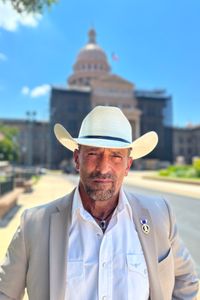
Pete Chambers served in the Texas Army National Guard and U.S. Army. He earned a medical degree from the University of New England. His career experience includes working as a surgeon, soldier, and nonprofit CEO.[1]
- Graduate:
- University of New England
In their own words
Please list below 3 key messages of your campaign. What are the main points you want voters to remember about your goals for your time in office?
I am running because I believe that Texas can and must do better. We must fully address the border crisis, secure our elections, and protect our children from harmful policies and curricula. We must stand up for religious freedom and the right to homeschool, support natural health and alternative medicine, and foster a strong, Godly economy that lifts up all Texans.
In contrast to Governor Abbott's more independent or neutral approach, I offer a clear, conservative vision for Texas – one that is grounded in Biblical principles, fiscal responsibility, and a commitment to limited government. I am not a career politician, and I am not afraid to challenge the status quo or stand up for what most conservative Texans believe in.Dr. Pete “Doc” Chambers is a retired U.S. Army Lieutenant Colonel, Special Forces Green Beret, and physician who has dedicated his life to defending freedom and serving others. From combat zones to the Texas border, Doc has always shown up where leadership is needed most.
With over 30 years of service, multiple combat tours, and a proven track record of standing for truth—even under pressure—Doc is stepping up once again. This time, to fight for Texas.Why Doc Chambers?
Proven in Crisis – Doc made life-and-death decisions under fire as a Green Beret and combat medic. He knows how to lead when it counts. He has experience as a statesman and a warrior diplomat.
No Nonsense. No Compromise. – He stood up to government overreach during COVID—even when it cost him his career.
Not a Politician – Doc’s loyalty is to the people, not party donors or political elites.
Texas First, Always – He’ll secure our border, defend medical and parental rights, and protect our way of life.
Texas doesn’t need another politician. It needs a warrior with integrity. That’s Doc.
What areas of public policy are you personally passionate about?
He is a champion of truth, transparency, and bold action to restore Texas as a stronghold of liberty. To quote Doc Pete, when asked his response to why he is running for the position of Senior Public Servant in Texas (Governor), his response; “It is the natural progression of a Godly man to see injustice and take a stand.”
Campaign websiteChambers' campaign website stated the following:Secure the Border & Stop Human TraffickingBorder Security: Repelling the Invasion
Allowing cartels, human traffickers, and foreign adversaries to exploit our borders is cowardly, unacceptable, and threatens the sovereignty our Founders fought to secure. Texans have been facing an invasion that burdens our communities, drains resources, and endangers lives—all while the federal government has failed its duty under Article IV, Section 4 of the U.S. Constitution to protect states from invasion. Doc Pete Chambers will SECURE Texas borders and repel this threat with a phased approach rooted in his military and foreign diplomatic experience, adapting proven doctrines to restore control.
Doc will secure the border in the same manner he treated wounded Soldiers on the battlefield: stop the bleeding, treat the wounds, and stabilize for long-term care:
Stop the Bleeding: Declare a hybrid threat emergency and deploy Texas State Guard and National Guard forces under Title 32 to immediately secure key terrain, deny access to cartels, and interdict smuggling routes. Partner with willing county sheriffs and federal agencies like USNORTHCOM for real-time ISR (intelligence, surveillance, and reconnaissance), biometric tools, and joint task forces to achieve 100% domain awareness and halt unlawful crossings within the first 100 days.
Treat the Wounds: Reform fragmented authorities by integrating Titles 10, 32, and 50 for seamless federal-state collaboration, including intelligence sharing and counterintelligence against cartel networks. Establish Special Missions Units (SMUs) modeled on elite forces to disrupt hybrid threats, while passing state legislation to shield local enforcers from litigation and mandate 287(g) participation for data access.
Stabilize for Long-Term Care: Build sustainable, whole-of-society defenses through Homeland Defense Compacts, community engagement to counter cartel influence, and contingency plans to "future-proof" Texas against federal inaction—leveraging Article 4, Section 7 of the Texas Constitution to call forth Texas forces and repel invasions if needed. Push for federal reforms like offshore asylum processing and sanctions on migration facilitators to eliminate pull factors. Address internal enablers by enforcing Texas laws against aiding cartels, launching education programs to deter participation, and using counterintelligence to deny them societal footholds, protecting vulnerable Texans from exploitation.
The Why
Cartels and transnational networks operate as hybrid insurgents, controlling territory, infiltrating economies, and weaponizing migration to destabilize Texas. This invasion has led to over 10 million unlawful entries nationwide since 2021, costing Texans billions in healthcare, education, and public safety while enabling fentanyl deaths and human trafficking. The bulk of our societal issues are downstream of unchecked migration, overburdening populations and systems that are not built to take on the numbers we’ve had forced upon us. Throughout our history, the federal government has abdicated its responsibility under Article IV, Section 4 to protect states from invasion, leaving Texas vulnerable. As Commander-in-Chief of Texas forces, the Governor must act to restore sovereignty and protect our people.
Through improper federal policies and lack of enforcement, adversaries exploit seams in our defenses, turning the border into a gray-zone battlefield. Doc's experience in Foreign Internal Defense (FID) abroad shows that adapting this to Domestic Internal Defense (DID) is essential to neutralize these threats without ceding ground.
The How
Adapting FID to DID is both lawful and effective. No longer will Texas rely on optics like made-for-TV barriers that fail to stop crossings; instead, we'll build unified command with total access across domains—land, air, cyber, and more. Doc will achieve immediate relief by declaring an emergency, pushing legislation through the 2027 legislative session, and calling a Special Legislative Session (if needed) to enact a State Homeland Defense Act, defining hybrid threats, creating SMUs, and authorizing compacts with USNORTHCOM for ISR and funding. This will integrate local sheriffs as operational commanders, ensure seamless communication, and impose consequences through rapid interdiction and prosecution.
Additional sessions will pass reforms for data fusion, counterintelligence, and sustainment infrastructure like forward bases. To future-proof against federal failures, Doc will execute contingency operations under Texas Constitution Article 4, Section 7, mobilizing Texas forces (National and State Guard) to execute laws and repel invasions while collaborating with favorable federal entities now. Exemptions for humanitarian cases will align with statutory protections, but asylum will be rechanneled offshore to collapse cartel incentives.
Doc will also advocate federally for withdrawing from exploitable treaties, imposing remittance fees on non-cooperative nations, and sanctioning TCOs (Transnational Criminal Organizations)—ensuring Texas leads a national restoration of border integrity. Doc Pete Chambers is committed to repelling the invasion and returning sovereignty to The People. In Texas, you shouldn't live in fear of unchecked threats; under Doc's leadership, you won't. We want your feedback on securing our borders! Join our discussions on social media so we can make Texas safe for all future generations.Abolish Property TaxesProperty Taxes: Eliminating the BurdenRenting personal property from the State until one loses the property or passes away is unacceptable and in no way is how our Founders intended for us to live. As it stands, Texans are being taxed out of their homes to fund out-of-control local spending; and it’s being propped up by the State. Doc Pete Chambers will ELIMINATE this practice in Texas with a phased approach to total elimination. Doc will eliminate property taxes in the same manner he treated wounded Soldiers on the battlefield; stop the bleeding, treat the wounds, and stabilize for long-term care:
Stop the Bleeding: Provide an immediate 26% relief on the bill you already owe while expanding the Homestead Exemption to 100%, eliminating property taxes for single-family owner-occupied homes & land and small-scale long-term rental homes. This will be put to a vote for The People of Texas in May of 2027, four months after Doc swears-in.
Treat the Wounds: The State has enabled local municipalities to arbitrarily assign property values through local CAD (Central Appraisal District) boards with vague rules that incentivize large year-over-year increases. Doc will include CAD rule reforms to stop this practice in the immediate Legislative Session and any Special Session he calls to address Property Taxes.
Stabilize for Long-Term Care: Doc will move local municipality funding to consumption-based systems and eliminate remaining property taxes through legislation agendas pushed through in his term.The Why
Local municipalities assess and collect property taxes for local municipality use to the tune of $87.2 billion each year. This is exclusively through local municipalities; the State does not collect property taxes to fund State budgets. Under the current system, Texans are being taxed out of their homes, and the ever-increasing property tax burden is acting as a barrier for potential new homeowners. Because the State has enabled this unsustainable abuse, it is the responsibility of the Governor and the State to address this problem. Through improper Texas laws and regulations governing CAD boards, the State has (*All figures based on official Texas Comptroller Reports that can be found at https://comptroller.texas.gov/taxes/property-tax/reports/index.php) disenfranchised 12% of Texans (3,676,617) who have no legal right to citizen representation on their local CADs. These CADs are exclusively chosen by the taxing entities (counties, cities, school districts, etc.). The taxing entities and CADs have no incentive to reduce how much they take from their neighbors each year. History has proven that no entity levying and using a tax has willingly decided to reduce their own budget without a forcing function. The remaining 88% of Texans receive meager representation on their CADs; only enough to give the illusion of representation, but not enough to ensure a majority vote on any issue.
The How
Moving local municipality funding to a consumption-based funding system is both sustainable and fair. No longer will one group of society shoulder the burden of providing funding for municipalities where all groups get or use municipality services. By implementing a final 3.82% VAT and a sales tax rate of 9.19%, we can fully eliminate property taxes for Texans while ensuring local municipalities still have funds to operate. Doc will achieve a 26% reduction of the tax bill you already owe from the 2026 tax year by declaring an emergency and passing legislation through the 2027 Legislative Session to exclusively deal with property taxes. In this session, bills will be pushed through to retroactively reduce the tax burden, fix the rules and guidelines on CADs, and extend the homestead exemption for single-family owner-occupied homes to 100% through a Constitutional amendment to be voted on by The People in May of 2027. Additional Special Legislative sessions will be called to pass replacement funding mechanisms, via a 50/50 split VAT & sales tax. Exempted categories through the tax law on sales tax will continue and be extended to be exempt from VAT so lower and average earning Texans will not be disproportionally burdened. Through these sessions Doc will also push the legislature to pass a bill providing a Constitutional amendment to fully exempt small businesses from property taxes with a proposed vote by The People in November 2027. This effectively eliminates property taxes for Texans within the first year of Doc’s term while still ensuring local municipalities can function.
Doc Pete Chambers is committed to returning true ownership of property to The People and getting government spending in check. In a truly free Texas, you shouldn’t be renting from the government for the rest of your life; under Doc Pete Chamber’s leadership, you won’t be. We want your feedback on fixing these issues in Texas! Join our discussion on social media so we can make Texas a prosperous place for all future generations.Energy and Water Security: Powering Texas Forward
Energy and Water Security: Powering Texas ForwardDepending on unreliable grids and dwindling water supplies until blackouts hit or droughts devastate is disastrous and a societally destructive way of governing. As it stands, Texans are facing power outages from extreme weather and water shortages that threaten farms, homes, and businesses; and it's being propped up by outdated systems. Doc Pete Chambers will SECURE these essential resources in Texas with a strategic rollout to achieve total energy and water independence and reliability.
Doc will secure energy and water in the same manner he treated wounded Soldiers on the battlefield: stop the bleeding, treat the wounds, and stabilize for long-term care:
Stop the Bleeding: Roll out portable natural gas (NG) units immediately to add 1-2 GW of backup power in vulnerable zones, averting outages like those in 2021's Winter Storm Uri.
Treat the Wounds: Initiate coastal desalination projects and grid hardening to supply 1 million acre-feet of fresh water and stable electricity within four years.
Stabilize for Long-Term Care: Scale micro-nuclear reactors and full desalination networks statewide, ensuring 7 million acre-feet of water and baseload power for decades through legislation pushed in his term.
The Why
Texas is on the brink of a dual crisis: Texas Water Development Board's 2022 State Water Plan projects water supplies falling 18% by 2070 while demand surges 9% amid population growth to 51.5 million, demanding $154 billion in investments to avoid $100-200 billion in yearly economic hits. Energy-wise, Electric Reliability Council of Texas reports demand climbing from 464 billion kWh in 2024 to 487 billion kWh in 2025 – a 5% jump – driven by data centers and expansion, with grid failures like Uri costing $90-130 billion in 2021 alone. Under the current setup, unreliable power disrupts lives and water shortages hammer agriculture practices, leading to loss of generational livelihoods and lives. Since the State oversees ERCOT, TWDB, and Public Utility Commission (PUC), it's the Governor's duty to tackle this growing threat.
Through outdated planning and underinvestment, the State has left most Texans exposed to blackouts and water deficits in critical basins. Massive increases in energy and water reliant tech industry ventures in the State put further drains on an already thinly stretched system.The How
Shifting to a resilient, integrated energy-water system is both sustainable and integral to the security of our State. No longer will rural areas shoulder droughts without relief or urban centers face blackouts; all benefit from reliable supplies of essential resources. By deploying portable NG, piloting and scaling desalination, and scaling micro-nuclear, we can add 1-2 GW power and 1-2 million acre-feet water initially, with full rollout preventing the projected 2050 catastrophic shortages.
Doc will deliver quick wins by declaring an energy-water emergency and advancing bills in the 2027 Legislative Session focused on grid and supply security. This will authorize portable NG fleets (50+ units at $1-5 billion total, with the State share at $0.5-2 billion) for fast deployment, generating 5,000-15,000 jobs in the process.
Any remaining necessary Special Sessions will fund 5-10 desalination pilot plants (50 MGD each, online in 2.5-4 years), handling brine through regulated offshore discharge or injection to minimize coastal impacts while powering sites with on-site NG (20-30 MW per plant). Brine as Economic Opportunity: Transform brine byproducts into revenue via co-located "brine mining" facilities recovering high-value salts, magnesium, lithium, and bromine (current facilities across the glove generate $5-20 million/year per facility). Data centers, as major water users (projected 399 billion gallons by 2030), will fund 30-50% through PPPs and incentives, creating 1,000+ jobs in mineral processing and offsetting state costs while boosting coastal economies. Water security through desalination will not come without a price. The projected State share in securing our water resources carries with it a $2 to 10 billion price tag (this figure includes the cost of piping and pumping the water to inland areas throughout the State). In order to prevent future administrations and potentially hostile legislatures and courts from overturning the investment in a micro-nuclear program and due to the strict Constitutional provisions on State spending, Doc will also push the legislature to pass a bill providing a Constitutional amendment for micro-nuclear incentives. This will total $2-10 billion, with the State share at $1-5 billion via Texas Energy Fund. The People of Texas will be able to vote on this Constitutional amendment within the first 12 months of Doc swearing in. This locks in foundational gains within Doc's first year, keeping systems operational and setting Texas on a path to long-term energy and water stability.
Grid enhancements will complement ongoing infrastructure upgrades. Fixing multiple previous decades of neglect on our power grid carries a significant cost, but it’s important to be upfront and honest about the price of fixing our problems. The low-end estimates sit at $20 billion and the high-end at 50 billion total, with the State share of those costs at $5-20 billion. Enhancing a thousand miles of transmission lines, weatherizing and hardening the grid, providing storage capacity for peak grid strain times, and enhancing the grid with sensors and limited national grid interoperability in the event of catastrophic emergencies will require multiple years of dedicated focus and hard work. Our electric grid is both a State and national security concern and as the Commander in Chief of Texas, it is the Governor’s responsibility to ensure this security is addressed.
The steep price tag associated with securing our energy and water needs far into the future carry with it a silver lining and a potentially significant return on investment. All projects will create 50,000-200,000 jobs (20,000-100,000+ in construction, 10,000-20,000+ long-term operation and maintenance, plus 1,000+ in brine industries). The return on The People’s initial investment will be 2.5 to 5 times the initial costs between avoided losses, already existing tax revenues, and savings on energy bills. These projects stand to boost GDP by 2-3% annually, primarily benefiting our agriculture, tech, and energy sectors.
Doc Pete Chambers is THE commander to drive energy and water security for our State. Our children, the future (i) generations of Texans, will not inherit a 3rd world hellscape with daily brown & blackouts and dried up farms. That’s not the Texas dream or the American dream and Under Doc Pete Chambers’ leadership, he will ensure that bleak future never happens. We want your feedback on fixing these issues in Texas! Join our discussion on social media so we can make Texas a prosperous place for all future generations.
These are PROPOSED SOLUTIONS subject to the will of The People and specific implementation will occur with future energy and water task force guidance.
Answers to FAQs:
This plan requires no new taxes to pay for any portion (would need long term legislation to prevent future administrations from adding unnecessary taxes related to it)
Utility bill impact: Likely $2 to $5 dollar increase per household in short term (1 to 4 years) but long term cut of 10 to 20% on utility bills in years 5+ when more systems come online.
Data centers would offset for the resources they are using (the data center issue is separate and a local municipality decision not at State level, but we are looking at ways to force transparency and local public consent since it impacts all locals in that municipality, and some municipalities are concealing deals to bring them in)
Data centers would fund a significant portion through public private partnerships (PPP) since they are utilizing resources at scale.
-Environmental impact through brine management is dealt with through existing environmental protection regulations. No one will be pumping highly concentrated brine directly back into the ocean to kill off fishing and tourism industries. We also utilize on-site brine byproduct conversion facilities to provide jobs and much needed raw resources for Texas industries (salt, magnesium, chlor-alkali feedstock, lithium, bromine, KCI fertilizers, rare earths, gypsum, etc.)
(i) All figures based on official Texas Water Development Board, Electric Reliability Council of Texas, and Public Utility Commission reports, accessible at:
https://www.twdb.texas.gov/waterplanning/swp/index.asp
https://www.ercot.com/gridinfo/load/forecast
https://www.puc.texas.gov/industry/electric/reports/Default.aspxDecentralizing and Reforming Texas Public EducationDecentralizing and Reforming Texas Public Education
Texas' K-12 public education system is struggling with persistent low student proficiency—only about 52% of students in grades 3-8 meeting grade level in reading and 45% in math on 2024 STAAR tests, with just 47% passing Algebra I—high teacher turnover at 21.4% in 2022-23, bloated administrative costs consuming 11% of the $65 billion annual budget, and fragmentation from charters and vouchers pulling resources from neighborhood schools. This inefficiency wastes taxpayer dollars through ever-increasing government bureaucracy, leaves teachers underpaid at an average of $60,000, and fails to prepare our 5 million students for success, demanding urgent reform to prioritize mastery, efficiency, and local strength.
Doc will reform the public education system that is failing our students, our teachers, and our taxpayers in the same manner he treated wounded Soldiers on the battlefield: stop the bleeding, treat the wounds, and stabilize for long-term care:
Stop the Bleeding:
In the first 100 days and Year 1, file bills to establish TSPSA and an education endowment, seed the endowment with $5B, announce +$10K teacher raises, freeze admin hiring, launch statewide platforms for HR and SIS, begin magnet conversions to Academies-Within, and pilot charter alignment while adopting phonics/math materials.
Treat the Wounds:
Over Years 2-5, deposit $1B annually to grow the endowment to $10.6B with initial payouts, implement the back-to-basics curriculum statewide, achieve ≤6% admin overhead through consolidations and shared services, end vouchers/ESAs, and track gains like +10 points in Grade-3 reading via public dashboards.
Stabilize for Long-Term Care:
From Year 6 onward, sustain $0.5B annual deposits to reach a $25B endowment yielding ~$1B non-tax revenue yearly by Year 20, maintain TRS reforms for ongoing savings, and ensure enduring student outcomes through mastery-based assessments and facilities upgrades via pooled lending.
The Why
Texas needs this reform because our current system is letting down students and families, with proficiency rates stuck below 50% in key subjects like math and Algebra I, despite spending $13,000 per pupil annually. High teacher turnover—nearly double the rate from a decade ago—stems from low pay and excessive bureaucracy, leading to classrooms staffed by uncertified educators at a rate of 12%, up sharply since the pandemic. Good teachers have to put up with increasingly frustrating administrative requirements, required testing and curriculum that fails the students while enriching select individuals, and behavioral nightmares with zero support from administration and parents. Fragmentation from charters and vouchers drains resources from local zoned schools, wasting billions that could go toward instruction under the guise of “school choice” that ultimately doesn’t achieve what was sold to taxpayers and opens the door for government to interfere and dictate what happens in private and home schooling.
Moreover, administrative overhead at 11% diverts funds from essentials like teacher support and facilities, while outdated curricula overloaded with tech and tests fail to build foundational skills in reading, writing, and math. Without change, Texas risks perpetuating cycles of underachievement, as seen in widening proficiency gaps. This reform shifts focus to mastery, efficiency, and sustainability, ensuring every child gets a strong start in neighborhood schools without the burden of high-stakes fragmentation.
The How
To accomplish these reforms, we start by replacing the Texas Education Agency with the Texas School Performance & Support Authority (TSPSA), a practitioner-led body with divisions for accountability, educator growth, innovation, and regional hubs. These 20 regional hubs—upgraded from existing Education Service Centers (ESCs)—decentralize control by providing tailored support like professional development, special education assistance, and technical guidance directly to local districts, enabling them to adapt statewide standards to community-specific needs without every decision being dictated from Austin. TSPSA ensures representation from these regions on its board, focusing on coordination rather than top-down mandates, while local boards gain educator-trustee seats, single-member districts, and community councils for enhanced transparency and input.
Next, we'll implement a back-to-basics curriculum: K-5 emphasizes 120 minutes daily on phonics-based reading and 60 on math mastery, with no state tests but teacher-scored unit checks triggering interventions. No more will parents be frustrated when they help their children with math and phonics homework that make no sense. The TSPSA will be key in keeping teacher-scored checks free from administrative pressure. Grades 6-8 limit to 6-8 courses with protected core time and practical electives like CTE surveys; high school requires a strong core plus choices, including work-release programs for juniors and seniors to gain credit-bearing job experience. Technology is minimized—no devices in K-5 classrooms—to focus on print materials and movement, like daily PE and recesses.
For student services, schools will contract community providers for counseling to keep focus on instruction, while a tiered discipline code includes progressive sanctions, restorative practices, and potential felony referrals for severe threats starting at age 13. Each region will have autonomy to determine appropriate school/community guidelines and correlating disciplinary measures. TSPSA will be there to support regions in implementation of their disciplinary measures. This aligns with decentralization of schools and returning the power to their local communities. Student criminal law enforcement history will be communicated to the statewide systems via DPS.
Facilities and operations get streamlined through a state-backed capital pool for low-interest lending to poor or growing districts, phased projects with independent audits, and statewide procurement for efficiencies like farm-to-school rebates. We'll consolidate small districts, convert standalone magnets to "Academies-Within" every secondary campus for preserved programs, and phase charters to align with standards for full funding, deferring full integration to later years based on data.
Financially, an Education Replacement Fund (ERF) will centralize costs, backed by general revenue, efficiencies, and non-tax sources like endowment payouts and curriculum licensing. Prospective TRS reforms cap pensionable pay and anti-spiking to save $65 million yearly, while the endowment—seeded at $5B and growing to $25B by Year 20—provides sustainable funding without new taxes, ensuring long-term stability and teacher raises, with a long-term intent of completely funding State public education.
Doc Pete Chambers is committed to decentralizing education away from inefficient systems that are letting our kids and our teachers down. We must rebuild a strong education system that empowers students, supports teachers, and serves The People. More government involvement is never associated with increased efficiency or effectiveness and when we’re dealing with something as important as our children’s future, we can’t sit on the sidelines and maintain the current status-quo.H1B/Foreign Labor Policy
Texans First: The Trillion Dollar Jobs Plan
Texas is facing a workforce crisis fueled by the overuse and abuse of H-1B visas and other foreign labor programs, which displace Texans from high-paying tech jobs and give public colleges cover
On the 2026 ballot
Links
- Campaign X(opens in new tab)
- Personal X(opens in new tab)
- Campaign website(opens in new tab)
- Personal youtube(opens in new tab)
- Campaign facebook(opens in new tab)
- Personal facebook(opens in new tab)
- Personal linkedin(opens in new tab)
- Campaign instagram(opens in new tab)
- Personal instagram(opens in new tab)
Compiled from the candidate’s published profile as of September 30, 2026.
Source(opens in new tab)