
Background
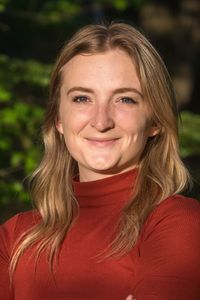
Niina Threlfall-Baum earned a bachelor's degree in business administration from Northland College in 2016 and a master's degree in information and communication technologies from the University of Wisconsin-Stout in 2024. Threlfall-Baum's career experience included working as a business owner and an adjunct professor.[1][2]
- Graduate:
- University of Wisconsin, Stout, 2024
- Bachelor's:
- Northland College, 2016
Campaign money
- Raised
- —
- From individuals
- $0
- From PACs & party
- $0
- Own money
- —
FEC filings.
View on FEC.gov(opens in new tab)In their own words
Who are you? Tell us about yourself.
Niina Baum is running for Congress in Wisconsin’s 7th District as a moderate Republican focused on practical solutions to the challenges most people are facing in rural communities. Raised on a northern Wisconsin dairy farm and now a small business owner, Baum emphasizes policies grounded in the needs of the district rather than political ideology. Her campaign prioritizes lowering cost-of-living pressures, improving access to healthcare, expanding workforce and housing opportunities, supporting small farms and strengthening domestic food stability, and ensuring responsible oversight of large-scale development projects (AI Data Centers) affecting communities.
Baum supports traditional Republican principles including fiscal responsibility, local control, and accountability in government, while advocating a problem-solving approach that avoids political extremes and focuses on results. She has pledged not to accept corporate PAC contributions funded by corporate treasury money, emphasizing transparency and constituent accountability. Baum's goal is to represent Wisconsin’s 7th District by listening to residents, weighing evidence and tradeoffs, and advancing policies that reflect the needs of the district rather than partisan ideology.
Please list below 3 key messages of your campaign. What are the main points you want voters to remember about your goals for your time in office?
Niina Baum is running for Congress as a moderate Republican focused on practical problem-solving rather than political extremes. She supports traditional Republican principles such as fiscal responsibility, local control, and government accountability, while emphasizing collaboration and results. Baum says effective representation begins with listening to constituents, weighing evidence and tradeoffs, and advancing policies that reflect the real needs of Wisconsin’s 7th District.Raised on a northern Wisconsin dairy farm and now a small business owner, Baum centers her campaign on challenges facing rural communities. Her priorities include addressing cost-of-living pressures, expanding access to healthcare, increasing workforce and housing availability, supporting small farms, and strengthening domestic food stability. She advocates policies designed to help rural communities remain economically sustainable and attractive for families and businesses.Baum has pledged not to accept corporate PAC contributions funded by corporate treasury money, emphasizing transparency and accountability to constituents. She says campaigns should answer to voters rather than special interests and that elected officials should focus on long-term solutions instead of partisan conflict. Her campaign promotes a people-first approach centered on integrity, open dialogue, and responsible governance.
What areas of public policy are you personally passionate about?
I am personally passionate about strengthening rural communities and ensuring they remain viable places to live, work, and raise families. Having grown up on a northern Wisconsin dairy farm and now operating a small business, I care deeply about affordable healthcare access, workforce and housing availability, and policies that support small farms and improve food stability. I am also focused on responsible economic development, including thoughtful oversight of large-scale AI Data Center projects that could impact rural areas. My goal is to advance practical solutions that reduce cost-of-living pressures while preserving local control and long-term community stability.
Campaign websiteThrelfall-Baum's campaign website stated the following:My PlatformThis page is not about political buzzwords. It is about what representation should look like for rural Wisconsin.I do not have all the answers. My role is to listen to the people of Wisconsin’s 7th District and work toward solutions that reflect the realities of living and working here.That means seeking out testimony from farmers, small business owners, healthcare workers, teachers, tradespeople, and families across this district. It means analyzing real data, researching verified information from credible sources, and pressure-testing ideas against the lived experience of the people I represent.Good policy does not come from party talking points or donor priorities. It comes from the people in the 7th Congressional District.AI Data Center Regulation Large-scale AI and data center development is increasingly targeting rural communities, often with promises of economic growth that do not always reflect the full long-term costs. When decisions are made without transparency or meaningful local input, rural communities are left to shoulder impacts to land use, water resources, energy infrastructure, and tax burdens.In Wisconsin, data centers were granted a sales tax exemption in the 2023-2025 state budget, resulting in over $1.5 billion in foregone state revenue during construction alone, plus an estimated $369 million annually once operational. According to Clean Wisconsin, just two proposed AI data center projects in Wisconsin are projected at full build-out to require enough power to serve 4.3 million homes. Wisconsin has only 2.8 million housing units. These are not small footnotes. They are the stakes.Responsible innovation matters, but rural Wisconsin should not be treated as a blank slate for development driven by outside interests. Addressing data center development means balancing economic opportunity with local control, transparency, and long-term community sustainability.As your representative I will:Require greater transparency and disclosure for large-scale AI data center projects, including clear information on water use, energy demand, tax incentives, and long-term infrastructure impacts before approvals are granted.Strengthen local decision-making authority, ensuring towns, counties, and residents have a real voice in whether and how these projects move forward, rather than decisions being made exclusively at the state or corporate level.Ensure responsible use of public resources, including energy, water, and tax incentives, so rural communities are not subsidizing projects that provide limited local benefit.Establish clear and consistent standards for siting and development, so communities can plan responsibly while still welcoming innovation that aligns with local priorities.Protect farmland, natural resources, and existing economic uses, recognizing that once land and infrastructure are committed to large-scale industrial projects, the impacts are long-term and often irreversible.Farms & Food StabilityI grew up on a northern Wisconsin dairy farm, and today almost all of the farms that once operated in my community no longer exist. According to the USDA 2022 Census of Agriculture, Wisconsin had over 24,000 dairy farms in 1997. Today there are fewer than 6,500.Strengthening food stability means supporting farmers as business owners, keeping land in production, and building resilient regional food systems that can withstand disruption. A resilient food system is a national security issue, an economic issue, and a rural issue. Supporting small farms helps keep land in production, dollars in local economies, and food on tables.On the Farm Bill: The Farm Bill expired in 2023 and has been extended four times without a permanent replacement. The current House bill, the Farm, Food, and National Security Act of 2026, includes meaningful improvements including specialty crop support, beginning farmer credit access, and investment in regional meat processing. A previous version of the bill contained provisions that would have stripped state and local authority over pesticide standards and large-scale livestock operations. Those provisions have since been removed, and with that change I support moving this bill forward. That said, the work is not finished. Crop insurance programs continue to disadvantage small and diversified farms through yield history requirements and acreage thresholds that were designed around large commodity operations. The next Farm Bill must do more for the farmers who are actually feeding our communities.As your representative I will:Reduce barriers for small and mid-sized farms, including simplifying regulations and compliance requirements that disproportionately impact family-scale producers without improving food safety or outcomes.Support local and regional processing infrastructure, such as meat processing, cold storage, and distribution, so farmers can bring products to market without relying on distant or consolidated facilities.Expand investments in federal meat inspectors and provide technical assistance and incentives to support small-scale local meat packing and agricultural cooperatives, so Wisconsin producers can compete on a level playing field with large corporations.Require country of origin labeling for the broadest possible list of farm and ranch products so American consumers know where their food comes from and can choose to support domestic producers.Pass federal right to repair legislation so that large corporations cannot squeeze producers for more money after they have already purchased the equipment they depend on to operate.End market manipulation by the largest meat and poultry packers by requiring price transparency through a publicly available database, so producers are not left negotiating blind against corporations that control the market.Encourage farm succession and next-generation entry, ensuring young farmers have viable pathways into agriculture through access to land, capital, and mentorship, not just large-scale consolidation.Promote diversified and resilient food production, reducing overreliance on single supply chains and helping communities better withstand disruptions caused by weather, market shocks, or national emergencies.Keep farmland in agricultural use, recognizing that once productive land is lost to development or speculation it is rarely recovered.Workforce I have spent my career working in and alongside rural communities, and I have put that commitment into action. I co-founded Northwoods Young Professionals specifically to address one of the most pressing challenges facing our region: many young people leave for opportunity and do not see a clear path to come back.The data backs up what I have seen firsthand. Wisconsin averages a shortfall of nearly 93,000 workers per month. Out of 72 Wisconsin counties, 40 are federally designated mental health shortage areas, 37 are primary care shortage areas, and the state could face a shortfall of more than 3,000 physicians by 2035. A third of tracked healthcare professions report double-digit vacancy rates. Rural schools are struggling to recruit and retain qualified teachers. The trades are facing the same gap.As your representative I will:Strengthen career pathways from education to employment, including technical colleges, apprenticeships, internships, and employer-led training programs that align directly with local workforce needs.Support recruitment and retention of essential professionals including doctors, nurses, teachers, and attorneys through targeted incentives, rural training placements, loan forgiveness tied to rural service commitments, and community-based programs that encourage long-term commitment, not short-term placement.Elevate skilled trades as viable and respected career options, expanding hands-on training and apprenticeship opportunities while removing outdated stigmas around non-four-year pathways. A welder, electrician, or plumber in rural Wisconsin is just as essential as any professional with a graduate degree.Align workforce development with housing, healthcare, and infrastructure, recognizing that people cannot take jobs in communities where they cannot find housing, childcare, or basic services. These challenges must be addressed together, not in isolation.Support entrepreneurship and small business growth, which remain among the most reliable drivers of job creation and community investment in rural Wisconsin.Housing People in northern Wisconsin want to build homes and put down roots. The problem is we have made it harder and more expensive than it needs to be.Wisconsin needs to build between 140,000 and 227,000 housing units by 2030 according to a report from Forward Analytics. We are nowhere near that pace. The League of Wisconsin Municipalities says the state has been under-building since the Great Recession and has fewer homes today than it has new households.The Wisconsin Realtors Association has been direct about why. “In most communities today, you can’t build the kind of housing that we all grew up in,” said WRA President and CEO Mike Theo. “Minimum lot sizes, setback requirements, zoning that only allows certain kinds of housing needs to be deregulated to the point that it makes it economic to build the kind of housing the marketplace needs.” Industry experts estimate that stacked zoning and subdivision regulations add as much as $90,000 in costs per new home built.As your representative I will:Support zoning reform that gives communities the flexibility to build workforce housing, starter homes, and accessory dwelling units without unnecessary barriers, while keeping land use decisions at the local level where they belong.Cut red tape in permitting and approval processes that drive up costs and timelines without improving safety or quality.Expand federal housing tools that work for rural communities, including community development grants that help small towns update aging housing stock and support appropriately scaled new development.Align housing development with workforce needs so that communities recruiting doctors, teachers, and tradespeople can actually offer them somewhere affordable to live.Health Care As a self-employed business owner I get my insurance through the marketplace, and I feel every premium increase personally.Wisconsin marketplace premiums increased an average of 17.4% for 2026 according to Wisconsin Watch, with rural counties like Sawyer and Ashland seeing some of the highest benchmark plan costs in the state. More than 300,000 Wisconsinites rely on the marketplace for coverage, more than double enrollment from a decade ago. Enhanced premium tax credits that made coverage affordable for most of those enrollees have now expired, and Congress has not acted to extend them.Wisconsin had 19 rural hospital mergers between 2005 and 2016, the third most of any state. Fewer competitors means higher prices and fewer choices, and rural communities feel that the most.As your representative I will:Strengthen access to care for seniors by expanding Medicare coverage for vision, dental, and hearing, care that directly affects quality of life and independence as people age.Increase competition and transparency in healthcare markets, including stronger antitrust scrutiny of hospital mergers that leave rural patients with fewer choices and higher costs.Require price transparency so patients and employers can see what services actually cost before they receive care, and so unjustified price increases can be identified and challenged.Lower prescription drug costs by improving transparency, encouraging fair negotiation, and preventing price increases that put necessary medications out of reach.Improve the health insurance marketplace by expanding plan options, simplifying enrollment, and addressing narrow networks that limit provider choice, especially in rural areas where care often requires traveling outside a single network.Extend enhanced premium tax credits for marketplace enrollees so that self-employed workers, farmers, and small business owners are not priced out of coverage simply because they do not have an employer-sponsored plan.Constitutional Rights The Constitution is not a political weapon. It is the foundation of this country. Our rights do not belong to a party or a politician, and they should not shift based on who holds power.I believe in the Constitution the way Lincoln did, not as a document of convenience but as a binding commitment. That means the separation of powers matters. Due process matters. The balance between federal, state, and local authority matters. No individual, elected or otherwise, is above it.We have watched Congress gradually hand its authority to the executive branch over decades, and both parties are responsible for that.I will not be a rubber stamp. When something violates the Constitution, regardless of who is asking me to go along with it, I will say so.A healthy democracy does not run on loyalty to personalities. It runs on accountability, restraint, and leaders who are willing to put the Constitution ahead of political pressure. That is the standard I hold myself to. It is also the standard I will hold Washington to.As your representative I will:Defend civil liberties and due process for every person in this district, regardless of political circumstance or who is in power.Support Congress reclaiming its constitutional authority over war powers, the budget, and federal oversight rather than deferring those responsibilities to the executive branch.Oppose efforts to use federal power to override legitimate state and local decision making on issues that belong to communities, not Washington.Apply constitutional principles consistently, not selectively, because rights that only apply when convenient are not rights at all.Prioritize transparency and accountability in government so that the people of this district always know where I stand and why.Immigration Wisconsin’s 300,000+ immigrants make up 7% of the state’s workforce and generate $23 billion in economic output according to the State of Working Wisconsin 2025 report from UW-Madison. Immigrants make up 16% of Wisconsin’s physicians, 11% of Main Street small business owners, and 9% of construction workers. According to UW-Madison estimates cited by WPR, more than 10,000 immigrants without legal status perform 70% of the labor on Wisconsin dairy farms. Without them, many farmers say their operations would collapse.As of February 2026 there are over 3.3 million pending cases with only around 600 immigration judges nationwide. The average wait for a hearing is multiple years. Approximately 100 immigration judges were fired in 2025, making the backlog worse. Over 70% of people in ICE detention as of April 2026 had no criminal conviction according to TRAC at Syracuse University.The legal immigration system is not built properly for Wisconsin farmers. The H-2A visa program was built for seasonal crop work and is widely described by dairy producers as poorly suited to the year-round demands of dairy production. Wisconsin currently employs about 2,800 H-2A workers, far short of what the industry needs.I support securing the border. I support enforcing immigration law. I do not support ignoring a broken legal system that leaves essential workers in limbo and Wisconsin farmers without a viable workforce solution.As your representative I will:Support immigration policy that secures the border, creates a functional legal pathway for workers, and clears the court backlog with the judges and resources needed to process cases.Prioritize enforcement resources on people who pose a genuine public safety threat.Push for a year-round agricultural visa category that fits the realities of dairy and livestock farming so Wisconsin farmers can hire legally and workers can work with legal protection.Defend due process for every person in this district regardless of status, because a country that abandons due process when it is inconvenient has abandoned the rule of law.— Niina Threlfall-Baum's campaign website (June 2, 2026)Note: This text is quoted verbatim from the original source. Any inconsistencies are attributable to the original source.
On the 2026 ballot
Links
Compiled from the candidate’s published profile as of September 30, 2026 and FEC filings.
Source(opens in new tab)