
Background
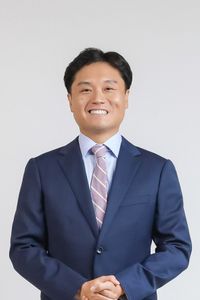
Nicholas Kiswanto earned a high school diploma from Diamond Bar High School. His career experience includes working as a civil servant.[1]
- High school:
- Diamond Bar High School
In their own words
Who are you? Tell us about yourself.
I am an immigrant to the United States from Indonesia. I am an elder millennial who lived through 9/11 and the erosion of our rights that we were so proud of thereafter. I watched helplessly as our elected officials and media manufactured consent to use public funds and American lives to wage the War in Iraq (2003) under false pretenses. I watched in disbelief at the Citizens United decision turned American politics into the divisive misinformation cesspool that it is today. I felt shame and anger as a fraction of Americans in swing states elected a convicted felon with foreign intelligence ties to the presidency, twice. I had been a dutiful member of society, working at the United States Patent and Trademark Office as a Patent Examiner, voting at most opportunities, and doing my best to live with political decisions I did not agree with that I had no control over. So when I saw that my representative voted for the voter suppression measure that is the SAVE Act and that Hawai'i 1st Congressional District had half the voter turnout for the primary than the general election, I felt a call to action. I initially set out to merely raise voter turnout for the primary, but after doing some work on that, I came to the conclusion that I needed to run myself in order to give the voters a reason to turn out. And that's how I ended up currently running for Congress.
Please list below 3 key messages of your campaign. What are the main points you want voters to remember about your goals for your time in office?
I believe money in politics works against the interests of everyday people. While there has always been money in politics, Citizens United allowed money to participate in politics to an extent never seen before. Therefore, the interests of everyday, working class people are subverted to a greater extent than ever before. I hope to "be the change" I want to see in the world by proving that a candidate doesn't have to spend vast sums of money to win an election. I want to believe that we have the ability to choose substance over style so that we get representatives who truly represent everyday people's interests instead of those of their biggest donors.Because I won't be beholden to corporate interests and because I am a student of history, I will be able to propose innovative policies that have not been given a chance to be voted in, let alone debated on. One of the central planks of my innovative policies platform is addressing the costs of the U.S. military in Hawai'i. For far too long, the only voice in the discussion of the military's impact in Hawai'i has been that of the military itself. However, a truly neutral accounting of the military's impact reveals substantial costs to Hawai'i's real estate market, environment, and economy. I hope to restore the damage done by the military using the federal levers afforded to Congress.My favorite president is George Washington, because he set so many precedents for the executive branch, and especially that of stepping down after two terms. That voluntary relinquishing of the presidency was held in such high regard that it was enshrined into law after Franklin Roosevelt was elected president four times. If term limits are acceptable for the presidency, I don't see why term limits shouldn't apply to Congresspeople as well. Optimistically, a new wave of candidates look poised to be elected this November. Hopefully with a new makeup of Congress, it can finally legislate itself so that Representatives do not stay entrenched in power and enrich themselves at the cost of their constituents' well-being.
What areas of public policy are you personally passionate about?
I am passionate about social and economic justice. I believe we are still living under the effects of racist policies of the past that were enabled by the wealth of those who profited from slave labor. Voter suppression has always been the realm of the pro-slavery faction of America, beginning with the 3/5 Compromise. We see attempts of voter suppression now with the Supreme Court's judgement against the Voting Rights Act and we see it in the SAVE Act. Voter suppression results in policies which benefit the politically connected, moneyed elite; those who do not need more advantages. Many examples in history show that societies thrive with a strong middle class, but our politicians have abandoned their duty in favor of personal gain.
On the 2026 ballot
Links
Compiled from the candidate’s published profile as of September 30, 2026.
Source(opens in new tab)