
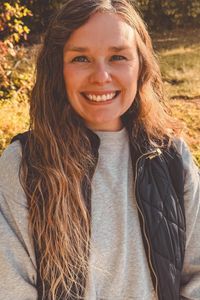
Background
Natasha Baker graduated from William Henry Harrison High School. She earned a bachelor's degree from Purdue University in 2013 and a graduate degree from the Purdue University Global in 2021. Her career experience includes working as a high school teacher.[1]
- Graduate:
- Purdue University Global, 2021
- Bachelor's:
- Purdue University, 2013
- High school:
- William Henry Harrison High School
In their own words
Who are you? Tell us about yourself.
My name is Natasha Baker and I was born and raised in District 22. My calling is to make it even better for my children. Before running for office, no one ever saw me standing in line for every election, reading every candidate self-help book, practicing perfect speeches in the mirror, or mapping out some ten-year political strategy. And you know why no one saw me doing those things? Because I didn’t. I’m not a career politician. I’m not perfectly polished. I didn’t spend years preparing for this moment. I’m just someone who saw problems in my community and decided to be the person I was waiting for. The only people that can make things better for us is us. It turns out you don’t have to be perfect to care. You just have to be willing to try. I am a Hoosier raising two Hoosiers of my own. I am a wife to my high school sweetheart and avid coffee drinker. I’m the daughter of teen parents and first generation college graduate. I grew up never quite agreeing with the “Republican Born, Republican Bred, and When I Die I’ll be Republican Dead” sign hanging by our front door. I’m a wife, a Carroll County public educator of 12 years, a seamstress, someone who loves to bake and read, lifelong resident of Tippecanoe county, and someone who cares deeply about the issues facing our communities. We don’t need polish, we need passion.
Please list below 3 key messages of your campaign. What are the main points you want voters to remember about your goals for your time in office?
My first priority is standing up for public education and childcare. It’s interesting how we all understand that roads and emergency services are essential. We don’t say, “Well, my house isn’t on fire, so why should I pay for the fire department?” We don’t say, “I don’t drive on that exact road, so don’t use my tax dollars to fix it.” We understand those things are part of a functioning society. They benefit all of us, directly or indirectly. But when it comes to children? Suddenly it’s, “Not my child, not my problem.” Childcare? “Not my child.” Food benefits? “Not my child.”Public schools? “Not my child.” Here’s the truth, schools and childcare are just as foundational to a strong society as roads and emergency services.I’m passionate about the separation of church and state because it protects both religious freedom and personal liberty. Government should never favor one faith over another. When policy is rooted in one set of beliefs, it risks excluding and harming people who don’t share them. I’ve seen how religion can be used to justify policies that limit healthcare, undermine public education, and strip rights from vulnerable communities. That’s not freedom, it’s control wrapped in pages of the Bible. True religious freedom means everyone can practice, or not practice, without government interference. Keeping church and state separate ensures our laws are fair and grounded in protecting all people equally.I’m passionate about rural healthcare because where you live should never determine whether you live. Too many rural communities are losing hospitals, OBGYN services, and mental health resources, forcing families to travel long distances for basic care. That delay can mean the difference between prevention and crisis. Rural providers are stretched thin, and patients are left with fewer options and higher costs. Strong rural healthcare means investing in local clinics, supporting healthcare workers, expanding telehealth, and protecting coverage like Medicaid. When we strengthen rural healthcare, we strengthen entire communities by keeping families healthy, local economies stable, and small towns places where people can truly thrive.
What areas of public policy are you personally passionate about?
I’m passionate about public policies that strengthen everyday life for Hoosiers, starting with fully funded public education, accessible and affordable healthcare, and real solutions to the childcare crisis so working families can thrive. I believe in supporting small businesses and family farms as the backbone of our local economy, while ensuring workers earn fair wages and have safe conditions. I’m committed to investing in mental health services, protecting our environment, and expanding access to rural healthcare. Good policy should reflect our shared values:,
strong communities, healthy families, and opportunities for everyone to thrive, not just get by.
What characteristics or principles are most important for an elected official?
Elected officials should be accessible, transparent, and work to represent all Hoosiers.
What do you believe are the core responsibilities for someone elected to this office?
This office is primarily responsible for advocating for the best interests of the people of District 22 and the state. They listen to constituents concerns, introduce bills that will help solve their problems, and votes on bills according to the needs of their district.
What legacy would you like to leave?
I’d like to leave behind a legacy that I truly stood up for families, mothers, teachers, children, and other marginalized groups.
What is something that has been a struggle in your life?
I am the daughter of teen parents and a first generation college graduate. This taught me to be compassionate towards the struggles of others and fight to make the system better.
What do you perceive to be your state's greatest challenges over the next decade?
Indiana’s greatest challenge will be keeping life affordable for Hoosiers. The cost of gas, groceries, and utilities are rising much faster than wages and this is a major concern.
Do you believe that compromise is necessary or desirable for policymaking?
I believe in compromise. I think that many Hoosiers want the same things, we just have different ideas on how to get there.
What was the first historical event that happened in your lifetime that you remember?
The first major historical event I remember is September 11th. I was in fourth grade and was the first time I truly began to open my eyes to our current leaders and world events.
On the 2026 ballot
Links
Compiled from the candidate’s published profile as of September 30, 2026.
Source(opens in new tab)