
Background
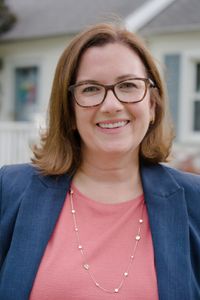
Natalie Price was born in Toledo, Ohio.[1] Price graduated from Notre Dame Academy in 2000.[2] She earned a B.A. in English and classics from Vassar College in 2004 and an M.A. in English studies from the University of Exeter in 2006. Price's career experience includes working as a part-time instructor with Berkley Parks and Recreation and an upper school English teacher with Maumee Valley Country Day School. She served on the city council of Berkley, Michigan, and has been affiliated with the Michigan Municipal League and Women Officials Network.[1][2]
- Graduate:
- University of Exeter, 2006
- Bachelor's:
- Vassar College, 2004
- High school:
- Notre Dame Academy, 2000
In their own words
Who are you? Tell us about yourself.
I grew up watching the women in my family fight for people who needed someone in their corner. My grandmother raised eight younger siblings and five children of her own. My mother went back to school after her divorce to become a social worker. Those women are why I became a teacher, and why, when I had to leave that career, I went looking for another way to serve.
My husband and I couldn't afford childcare during his medical residency. I left not because I wanted to but because the system made it impossible to stay. That experience is personal, but the barrier isn't. It's why I ran for Berkley City Council in 2019 and why I've spent two terms in the Michigan House fighting to make things easier for working families.
In Berkley, I helped ban conversion therapy and raised city employees' minimum wage to $15/hr. In Lansing, I've carried gun safety legislation that got signed into law, championed a $450M medical debt relief program that helped nearly 180,000 patients, fought to restore collective bargaining and prevailing wage rights, and stood firm against utilities pushing unfair costs onto ratepayers.
Values matter. But what matters more is what you do when someone powerful tells you to stop. I know what I do. I've been there. I'm running for the Senate because of what two terms in the House have taught me: relationships and trust take years to build. I have spent that time doing that work, and the Senate is where I can use it at full leverage for the people of District 1
Please list below 3 key messages of your campaign. What are the main points you want voters to remember about your goals for your time in office?
We deserve a healthcare system that works for patients, not one designed around the interests of insurance companies and corporate hospital networks. I'm proud to be a co-sponsor of MICare, a plan for single-payer healthcare in Michigan, and I'm committed to doing the work necessary to pass it. In the meantime, I'm fighting to protect our healthcare system from collapse, and I'll continue that work in the Senate. That means protecting the provider-patient relationship from political interference, combating the use of AI to wrongfully deny claims, incentivizing more Michiganders to enter the healthcare workforce, and preventing the mergers and acquisitions that have stripped rural and urban communities of the care they need close to home.Every child in Michigan deserves a school that is safe, well-resourced, and staffed by educators who are supported and fairly compensated. That means fully funding our schools, not just reaching the constitutional floor, and closing loopholes like the Dark Stores tax dodge that drain local school budgets. We need to repair crumbling facilities and invest in education from early childhood through trade schools, community colleges, and universities, so Michigan can grow a workforce that keeps our economy competitive. Our public schools are among our greatest community assets, and I’ll fight any attempt to defund them through vouchers and privatization schemes that siphon public dollars into private hands with no accountability to taxpayers.Michigan's clean energy future depends on utilities delivering reliable, affordable service and being held accountable when they don't. I championed the Clean Energy and Jobs Act, co-sponsored community solar legislation, and introduced a Ratepayer Bill of Rights to tie rate increases to real performance improvements and ban ratepayer money from funding utility election spending. I've pledged to take no money from regulated utilities, and I voted against 25-year tax exemptions for hyperscale data centers with no environmental protections, renewable energy requirements, or community benefits. In the Senate, I'll push to remove Michigan's cap on distributed generation and ensure energy infrastructure serves ratepayers, not just shareholders.
What areas of public policy are you personally passionate about?
For too long, Michigan tax policy has asked the most of those who have the least. As federal mismanagement strains our budget, Lansing faces pressure to cut essential services or shift costs onto working families. I'll keep pushing for a fairer tax structure that closes corporate loopholes and invests in what actually grows the middle class.
When I arrived in Lansing, I was surprised to find the state had weaker transparency standards than Berkley's city council. FOIA doesn't cover the governor's office or the legislature, a gap with no good justification. I co-sponsored legislation to close it, along with the BRITE Act and annual financial disclosure requirements, and I'll keep pushing until our standards reflect what the public is owed.
Who do you look up to? Whose example would you like to follow, and why?
I lived less than a mile away from my paternal grandparents and was very inspired by my Grandma Marie. She was a former teacher and a realtor, the oldest of nine and raised five boys of her own. Grandma Marie knew everyone in town, their skills/abilities and needs, and her landline was constantly ringing as she connected people with each other and helped solve their problems. She is my model of an effective community organizer – before social media and crowdfunding, Marie’s mental rolodex kept a community going, through good times and bad.
What characteristics or principles are most important for an elected official?
Determination, integrity, and accountability to constituents. We need leaders in Lansing who are well-poised to fight for the issues that matter most. As the only elected official in this race, I provide a clear voice of proven leadership. My voting record reflects our values of equity and inclusion, environmental protections, and putting patients over politics and private insurers.
As a former teacher, I will advocate for strong schools throughout our region, ensuring that all districts have the resources they need. And as a mom, I will fight to keep all of our kids safe by fighting for common-sense gun laws and intentionally inclusive communities.
What do you believe are the core responsibilities for someone elected to this office?
There are three essential components to the work of a state legislator:
1) Constituent service: Addressing constituent concerns as immediately and thoroughly as possible, connecting them with resources, while also showing up to listen and learn in each of the communities that make up my district.
2) Policy: Bringing conversations with constituents and relevant stakeholders into the drafting process and into committee meetings, as well as strategizing and building coalitions around major policy and budget items.
3) Appropriations: Determining how we best utilize limited state resources to address needs and fight inequities around the state. In my role as a member of the Appropriations committee and several subcommittees, as well as in the Tax Policy committee, I've pushed for both equitable tax policies and equitable investments, benefiting all Michiganders in the process.
What legacy would you like to leave?
I want to leave my kids, and their kids, and ALL kids, with clean air, safe drinking water, and a sustainable path forward. In order for this path to include everyone, we need more equitable ways of generating resources for local infrastructure, public schools, and universal health care. This is why I champion progressive tax policies (like a graduated income tax) and oppose regressive tax policies (like tax exemptions for data centers) in addition to fighting for environmental protections and clean energy.
What was your very first job? How long did you have it?
I started babysitting when I was 12. I took care of a set of toddler twins and learned so much about both the challenges and the rewards that come with caregiving. I continued babysitting until college, spent my college summers as a camp counselor, and then pursued a career in education. From 2015-2018 I returned to my roots and taught the Parent-Tot Class at the Berkley Community Center, prepping and facilitating engaging activities for toddlers while providing a space for their caregivers to connect and share resources.
What is something that has been a struggle in your life?
I have struggled with anxiety for most of my adult life. In 2002, while working at a rural YMCA camp, I was the first CPR-trained adult on the scene when an 8 year old collapsed on the basketball court. I wasn’t able to save him. In 2014, after a traumatic birth experience, I struggled with severe post-partum anxiety, which led me to finally seek help and learn how to manage PTSD and anxiety. I’m forever grateful for the medical professionals who provided immediate treatment and ongoing support to help me not only survive, but thrive.
What do you believe is the ideal relationship between the governor and state legislature?
The legislature writes the laws and controls the purse. The governor executes and can check legislative overreach with a veto. Those roles exist for good reasons, and the relationship works best when each branch takes its responsibilities seriously rather than deferring to the other out of convenience or party loyalty.
That means a legislature that does the hard work of building real policy, not just sending the governor political messaging bills. And it means a governor who engages honestly with legislators rather than working around them. When that breaks down, it is usually because one branch is trying to do the other's job or avoid accountability for its own.
I came to Lansing to legislate. I take that seriously.
What do you perceive to be your state's greatest challenges over the next decade?
Michigan faces a structural problem: we have chronically underfunded our schools and public health infrastructure while allowing corporate tax loopholes to erode the revenue base that pays for them. The Dark Stores loophole alone has stripped hundreds of millions from local school budgets. Meanwhile, federal dysfunction is accelerating the pressure; Medicaid cuts and public health funding clawbacks will force impossible choices on Lansing unless we build a more equitable tax structure that asks corporations to pay their fair share. The next decade will test whether Michigan closes that gap or continues managing decline. I believe we can do better, but it requires leadership willing to take on the interests that benefit from the status quo.
Do you believe that compromise is necessary or desirable for policymaking?
Compromise is how legislatures function, and I have no patience for the posture that refusing to negotiate is the same as standing on principle. But not all compromises are equal. The question is always what you're giving up and what you're getting.
When I broke with my caucus on the tipped wage deal, it wasn't because I oppose compromise. It was because that deal traded away workers' rights for too little in return. Knowing the difference requires understanding what's actually on the table and who bears the cost when a deal falls short.
The best legislation I've been part of came from genuine negotiation. The worst proposals I've seen were dressed up as compromise while shifting costs onto the people with the least power to absorb them.
What organizations or individuals have endorsed your campaign?
Orgs: Michigan Education Association, UAW Region 1, Michigan LCV, Sierra Club, Climate Cabinet, MI List, Fems for Dems, SMART Union TD, & more.
Individuals: State Sens. Paul Wojno, Rosemary Bayer, and Sue Shink; State Reps. Joey Andrews, Sam Steckloff, Denise Mentzer, Mai Xiong, Sharon MacDonell, Erin Byrnes; Oakland Co. Executive Dave Coulter, Treasurer Robert Wittenberg, and Chief Older Adult Services Jim Ellison; Royal Oak Mayor Fournier, the Royal Oak School Board; Berkley Mayor Bridget Dean; Oak Park Mayor Marian McClellan; Pleasant Ridge Mayor Bret Scott; Clawson Mayor Susan Moffitt; Madison Heights Councilmembers Emily Rohrbach & Sean Fleming; Hazel Park Councilmember Luke Londo; Ferndale Community Organizer Kris McClonis; & more.
What was the first historical event that happened in your lifetime that you remember?
I was in kindergarten when the Challenger space shuttle exploded. I remember sitting shoulder-to-shoulder around a small TV with my classmates, the only time it was wheeled out of the AV closet into our classroom. We were told that a teacher was on the shuttle and that it would take her into space to watch Halley’s Comet up close. Fewer than 2 minutes into the launch, we watched the shuttle explode. My teacher turned it off and tried to distract us with other activities, but I remember having many big questions and feeling afraid because the grown-ups clearly did not want me to ask them.
Who are you? Tell us about yourself.
I come from a long line of strong women who were decisive and bold when problems arose, and this “grit” is what our communities need to bounce back after a challenging few years. My mom went back to school full-time after her divorce to become a social worker; my Grandma Marie, the oldest of nine, began raising her siblings at age 14 after her mom died in childbirth, even driving her dad’s grocery delivery truck and regularly visiting her sister who was in the hospital with polio. Their examples have been a source of strength for me, from countless late nights working through a mountain of essays as a young teacher to fighting for our communities during my first term as a state legislator.
As I finish my first term, I’m reminded of when I moved to Berkley with my husband and two young children. I, like all of us, craved support and connection. I needed a “village,” but I didn’t realize my village would need me too. I signed up for the local parent-tot class only to learn that there was no teacher—and decided to step up and teach. I became the Administrative Vice President of the MOMS Club when they needed someone to lead service projects. I heard of plans to build a free play space for children under five—a project needing an organizer—and became a co-creator of the Backyard Playroom. I found the connection I was looking for. More importantly, I learned just how much we can accomplish in our communities when we value our diversity, combine our strengths, and work together.
Please list below 3 key messages of your campaign. What are the main points you want voters to remember about your goals for your time in office?
Strong communities begin with great schools. Michigan currently underfunds our public schools by $4.5 billion, resulting in fewer resources, larger class sizes, and lower wages. During the pandemic, teachers and other staff were asked to take on all kinds of challenges and responsibilities that they never anticipated, and this contributed to greater fatigue and burnout in an already-stressed system.
The state should increase per-pupil funding, establish an equitable funding system to better serve students with the greatest needs, hold charter schools to the same standards as public schools, and reimburse tuition for university students entering the teaching profession. All kids deserve a world-class, fully funded public education.We must respond to the climate crisis with all of the tools at our disposal, including bold policies and investments that prioritize our health, create jobs, and save taxpayer money. Addressing the climate crisis is not only a moral imperative but also an opportunity to reimagine our economy.
Michigan is in the process of rectifying decades of disinvestment in our infrastructure, and we must put efficiency and sustainability at the forefront. I support utility program expansion, energy efficiency retrofits, and preweatherization home improvements. We must also minimize carbon emissions, hold corporate polluters accountable, and ensure that clean energy sources like solar are meaningfully accessible and appealing to residents of our state.I believe in a fundamental right to safe, healthy communities. Right now, Michiganders face a complex array of issues that stand in the way of that right. Across our state, working families struggle to put food on the table, access affordable healthcare, and go about their daily lives free from the fear of gun violence.
I’m proud that my bill requiring telemedicine coverage by insurers was signed into law, and the common-sense gun safety legislation that we passed in 2023, including mandatory background checks, safe storage, and extreme risk protection orders, is meaningfully improving public safety. But there is much more to do. I will continue to fight for fair wages, affordable quality healthcare, and effective gun safety measures.
What areas of public policy are you personally passionate about?
So many critical issues facing our state, from our underfunded schools to our lack of public transit, are made worse by a lack of equity in how we generate revenue and make investments. As a member of both the Tax Policy and Appropriations committees, I advocate for equitable investments that do not shift the tax burden onto low-income and middle class individuals and their families.
I'm proud of my votes to repeal the retirement tax and increase the Earned Income Tax Credit. By closing corporate tax loopholes and ensuring that major corporations operating in our state meet their tax obligations, we can ensure that our revenue aligns with our spending priorities without shifting the responsibility on those most burdened by inflation.
What do you believe are the core responsibilities for someone elected to this office?
There are three essential components to the work of a state legislator:
1) Constituent service: Addressing constituent concerns as immediately and thoroughly as possible, connecting them with resources, while also showing up to listen and learn in each of the communities that make up my district.
2) Policy: Bringing conversations with constituents and relevant stakeholders into the drafting process and into committee meetings, as well as strategizing and building coalitions around major policy and budget items.
3) Appropriations: Determining how we best utilize limited state resources to address needs and fight inequities around the state. In my role as a member of the Appropriations committee (and several subcommittees) as well as the Tax Policy committee, I push for both equitable tax policies and equitable investments, benefiting all Michiganders in the process.
Do you believe that it’s beneficial for state legislators to have previous experience in government or politics?
Yes. As a former councilmember for the City of Berkley and current state representative, I have learned how to research an issue, make a case, build consensus, and move things forward for the benefit of our residents. I understand how to form coalitions between partners with complementary goals, how to get work done despite personal differences, and how to speak up with passion and respect on the issues that matter most. My experience in office has helped prepare me to best serve as the state representative for the new House District 6.
Tell us your favorite joke.
My 11yo told this joke to a large audience recently, and it was a hint:
"I was walking around the zoo the other day, admiring the lions, polar bears, flamingos, and penguins (who smell horrible, by the way, but they are great swimmers), when I noticed a nearly empty cage. It only held a few bagels, croissants, and baguettes. I asked the zookeeper, 'What's going on? Are you opening a new bakery here or something?' She replied, 'Don't worry. These are all bread in captivity.'"
What organizations or individuals have endorsed your campaign?
UAW Region 1; Equality Michigan; Planned Parenthood Advocates of Michigan; MI League of Conservation Voters; MI List; Michigan Education Association; AFSCME Council 925; Michigan Nurses Association; Michigan Professional Fire Fighters Union; Michigan Laborers District Council; Michigan State AFL-CIO; SEIU Michigan; Vote Mama; Run for Something; Mothering Justice; UFCW Local 876; United Steelworkers of America; Michigan Regional Council of Carpenters
What are your views on financial transparency and government accountability?
Last year, I proudly co-sponsored the legislation that currently requires the governor, lieutenant governor, secretary of state, attorney general, and each member of the state legislature to submit an annual financial disclosure report that specifies assets, liabilities, sources of earned and unearned income, and other personal information that may disclose conflicts of interest. These regulations are a significant step in the right direction.
In mid-March, I co-sponsored the BRITE Act (“Bringing Reforms for Integrity, Transparency and Ethics” Act). The BRITE Act requires that 527 and 501(c)4s affiliated with state officials and candidate committees to register their account(s) with the Secretary of State, enacts a one-year ban on state elected officials serving as lobbyists following their term, updates lobbyist gift rules for state legislators to mirror requirements placed on executive branch officials, and allows the Bureau of Elections to petition a circuit court for an injunction to stop real-time campaign finance violations. These are the next-steps needed to improve standards for government ethics, transparency, and accountability, curtail the influence of lobbying and financial interests, and increase enforcement of election/campaign finance law violations.
Who are you? Tell us about yourself.
I am a current city councilmember, a former teacher, and a mom. When I moved here with my husband and two young children, I, like all of us, craved support and connection. I needed a “village,” but I didn’t realize that my village would need me, too. I signed up for the local parent-tot class only to learn that there was no teacher—and decided to step up and teach. I became the Administrative Vice President of the MOMS Club when they needed someone to lead service projects. I heard of plans to build a free play space for children under five—a project that needed an organizer—and became a co-creator of the Backyard Playroom. I found the connection I was looking for. More importantly, I learned just how much we can accomplish in our communities when we value our diversity, combine our strengths, and work together.
Please list below 3 key messages of your campaign. What are the main points you want voters to remember about your goals for your time in office?
We must prioritize education. As a former high school English teacher, I’ve seen how subpar education policy has a direct impact on students’ lives and futures—and how improving funding and policy can benefit kids in every classroom across Michigan. I support increasing per-pupil funding and making our funding models more equitable to boost the most under-resourced schools and students with the greatest needs. I also believe we should implement several recommendations from the School Finance Research Collaborative, including reducing class sizes, holding charter schools to the same standards as public schools, and abolishing for-profit charter schools that divert our valuable tax dollars.We must protect our environment. My plan for preserving Michigan’s vast natural resources and green spaces includes: investing in renewable energy to promote sustainability and create new, high-quality jobs for Michigan workers; holding corporate polluters accountable for the contamination they cause, making them cover the cost of mitigation, and increasing reporting requirements; increasing staffing and funding for the Michigan Department of Environmental Quality.We must create intentionally inclusive communities. I will fight for fair wages and affordable health and mental health care for all, including protecting access to abortion care. I will advocate for our legislature to both acknowledge and address disparities in health care and employment among people in protected classes and underserved populations. I will also collaborate with the Department of Health and Human Services to draft bills that strengthen the safety net for children, seniors, families and those needing mental health treatment.
What areas of public policy are you personally passionate about?
In addition to education, environment, and equity (see above), I am passionate about improving our state’s support of local governments. Current conflicting tax laws (Prop A and Headlee) improperly restrict how local governments can collect the money they need. The state has also diverted $8.6 billion in revenue sharing away from our cities. We must fix this broken system in order to give all our cities the resources they need to provide essential services to our residents.
Who do you look up to? Whose example would you like to follow, and why?
I lived less than a mile away from my paternal grandparents and was very inspired by my Grandma Marie. She was a former teacher and a realtor, the oldest of nine and raised five boys of her own. Grandma Marie knew everyone in town, their skills/abilities and needs, and her landline was constantly ringing as she connected people with each other and helped solve their problems. She is my model of an effective community organizer – before social media and crowdfunding, Marie’s mental rolodex kept a community going, through good times and bad.
What qualities do you possess that you believe would make you a successful officeholder?
We need leaders in Lansing who are well-poised to fight for the issues that matter most. As the only elected official in this race, I provide a clear voice of proven leadership. My voting record reflects our values of equity and inclusion, environmental protections, and support for local businesses. As a former teacher, I will advocate for strong schools throughout our region, ensuring that all districts have the resources they need. And as a mom, I will fight to keep all of our kids safe by fighting for common-sense gun laws and intentionally inclusive communities.
I am grateful for the endorsements and support of Oakland County Treasurer Robert Wittenberg, Former State Senator and State Representative Gilda Jacobs, State Representative Lori Stone, Oakland County Commissioner Charlie Cavell, as well as mayors and fellow city councilmembers/commissioners from throughout our region. I will continue to build community as a trusted leader in Lansing.
What do you believe are the core responsibilities for someone elected to this office?
As State Rep, I will advocate on behalf of my constituents in Lansing. I will help craft, lobby, and vote for or against laws according to their impacts on the people and environment in Michigan. I also hope to serve on an appropriations committee because I know that budgets reflect our values, and I want to ensure that the state is allocating resources appropriately.
Do you believe that it’s beneficial for state legislators to have previous experience in government or politics?
Yes. As a councilmember for the City of Berkley, I have learned how to research an issue, make a case, build consensus, and move things forward for the benefit of our residents. I understand how to form coalitions between partners with complementary goals, how to get work done despite personal differences, and how to speak up with passion and respect on the issues that matter most. My experience on Berkley City Council has helped prepare me to serve as the state representative for the new House District 5.
Do you believe it’s beneficial to build relationships with other legislators? Please explain your answer.
Yes. Since moving to this region in 2015, I have worked hard to build relationships with other community leaders and legislators throughout the region and state. Relationships help us understand the strengths of one individual and connect them to the needs of another, and relationships with fellow leaders enable the same kind of connection on a larger scale. I already have relationships with many legislators in Lansing, and I will use and expand on those connections for the benefit of my constituents and all Michiganders.
Both sitting legislators and candidates for office hear many personal stories from the residents of
On the 2026 ballot
Links
Compiled from the candidate’s published profile as of September 30, 2026.
Source(opens in new tab)