
Background
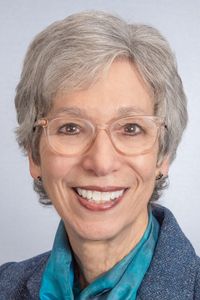
Nancy Nathanson was born in Dallas, Texas. Nathanson attended Northwestern University and earned her bachelor's degree in urban geography from the University of Oregon in 1975. Her professional experience includes working as a tap dance instructor, as the owner and operator of Photoscapes, as a supervisor of database maintenance for the University of Oregon Knight Library Catalog Department, and as the resource sharing program manager for Orbis Cascade Alliance.[1][2] Nathanson has served as the chair, vice-chair, treasurer and canvassing chair for the Lane County Democratic Party. In addition, she was the Oregon delegate for the Democratic Party Conference in 1982. From 1993 to 2004, Nathanson served as the president and a member of the Eugene City Council.
- Bachelor's:
- University of Oregon, 1975
Campaign themes
Nancy Nathanson has not yet completed [the profile publisher]'s 2026 Candidate Connection survey.
Send a message to Nancy Nathanson asking her to fill out the survey.
If you are Nancy Nathanson, click here to fill out [the profile publisher]'s 2026 Candidate Connection survey.
Who fills out the candidate survey?
Any candidate running for elected office, at any level, can complete [the profile publisher]'s Candidate Survey. Completing the survey will update the candidate's [the profile publisher] profile, letting voters know who they are and what they stand for. More than 32,000 candidates have taken [the profile publisher]'s candidate survey since we launched it in 2015. Learn more about the survey here.
You can ask Nancy Nathanson to fill out this survey by using the button below or emailing info@nancynathanson.org.
Who are you? Tell us about yourself.
I came to Oregon to finish school, graduated from University of Oregon, and devoted my professional career to work in libraries. I've served on local, regional, and national boards and commissions, a federal advisory committee (FCC), and taught tap dancing at a community center. Through degree courses and serving on boards I've seen and studied government programs, finance, and community action. In my volunteer and elected roles, I've met with hundreds of constituents and local businesses and nonprofit organizations. I listen and learn from their experience and concerns. That's where I get ideas for solving problems. I am deeply grateful for having a loving, supportive extended family. What I learned in Sunday School and about The Golden Rule have guided me and influenced my participation in the community. be better person, neighbor, and public servant. I think back to learning the Girl Scout motto, which taught me to leave the world a better place. There's much to appreciate about living in Oregon, and I wake up every day motivated to preserve what's great about this place and committed to improving the place we call home.
Please list below 3 key messages of your campaign. What are the main points you want voters to remember about your goals for your time in office?
Access to health care: In less than a year our community has experienced a hospital closure and the departure of doctors following corporate purchase of local clinics. I’m working to re-shape delivery of health care for better and more cost-effective immediate care. As we improve immediate health care we must tackle fundamental shortcomings of the current system that lead to crowding and long wait times for patients in the Emergency Department and for ambulances discharging patients to the ED, and patients coming for treatment of non-emergent medical or social care. We should develop new approaches to get care to people - or people to care - in a more timely, compassionate, professional, and appropriate way.I have a proven track record for common sense and success. Recent awards include telecommunications and expanding internet access and affordable housing. I bring attention and resources to local community organizations such as Relief Nurseries, YMCA, Looking Glass, Civic Park and KidSports, libraries and arts and culture projects, and funding for projects and programs that are important statewide including wildfire cameras for early fire detection and a cybersecurity center to protect Oregonians.I have successfully written and passed legislation on a wide range of issues fighting unfairness and inefficiency, from preventing infectious disease spread in nursing homes to eligibility for public assistance programs. I passed bills to protect seniors and consumers, and to shed light on "dark money" in campaigns. More examples: Stop outrageous fees on college student debit cards. Protect vulnerable persons from abuse by guardians and from unnecessary, dangerous psychotropic medications (adding a "second set of eyes") in long term care facilities. Tighten regulation of Pharmacy Benefit Managers (prescription drug middlemen). Expand School Based Health Centers. Increase public contract accountability.
What areas of public policy are you personally passionate about?
Access to health care: faster, compassionate, and appropriate care at the right place and the right time, getting care to people and people to care. Making government work smarter: reduce unnecessary and redundant bureaucracy, cut red tape, simplify, and focus on outcomes. Information technology: strengthen cybersecurity protections for public and private sector, fight cyber crime, protect personal data. Passenger rail: we need more choices, better on-time reliability, and faster speeds; improve safety and reduce congestion with separated grade (over/under) crossings at road intersections. Clean energy: R&D for ocean energy. Addressing climate change through individual actions and public policy.
What legacy would you like to leave?
The Girl Scout Law includes "make the world a better place." Since my youth I have followed that law. I would like to look back knowing that I have helped restore damaged lands and reverse environmental damage, enable people to enjoy visual and performing arts to enrich their lives in their own communities, make neighborhoods more livable with parks and safe streets, increase fairness in all aspects of public life, expand opportunity through public K-12 education and beyond, and provide places where each person can have a moment of peace, tranquility, or happiness and listen to a bird, sing a song, read a book, or look up at the stars.
Both sitting legislators and candidates for office hear many personal stories from the residents of their district. Is there a story that you’ve heard that you found particularly touching, memorable, or impactful?
The most impactful stories I am hearing right now concern the crisis in access to health care due to patients dismissed from their health care provider clinic. Patients are cutting back use of their prescribed medication to stretch it to last longer because they have no way to get it refilled. Critical child immunizations were missed when annual wellness visits were abruptly canceled. One patient has to wait until March 2025 (nearly a year away) for an appointment with the primary care provider. That's why I am working hard to address the short term crisis as well as draft a legislative proposal to stop noncompete clauses in doctors' contracts that prevent licensed doctors when they leave one medical practice from seeing patients at another clinic in the local community.
What organizations or individuals have endorsed your campaign?
April 2024: Oregon Nurses Association, Sierra Club, Oregon State Firefighters Council, Oregon League of Conservation Voters, Planned Parenthood PAC of Oregon, Oregon AFL-CIO, Western States Carpenters, Teamsters Joint Council No. 37, Basic Rights Oregon PAC, Oregon State Building and Construction Trades Council, Humane Voters Oregon
Nancy Nathanson did not complete [the profile publisher]'s 2022 Candidate Connection survey.
Who are you? Tell us about yourself.
I've lived in Oregon more than forty years, graduated from college here, and devoted my professional career to working in libraries. I've served on local, regional, and national boards and commissions, a federal advisory committee (FCC), and taught tap dancing at a community center. Through degree courses and serving on boards I've seen and studied government programs, finance, and community action. In my volunteer and elected roles, I've met, and met with, many hundreds of constituents and local businesses and nonprofit organizations. I listen and learn from their stories, ideas, and concerns. That's where I get ideas for solving problems. I sometimes reflect on how grateful I am for having a loving, supportive extended family. I think about what I learned in Sunday School, and The Golden Rule. I think about learning the Girl Scout motto, which taught me to leave the world a better place. There's much to appreciate about living in Oregon, and I wake up every day motivated to preserve what's great about this place and committed to improving the place we call home.
Please list below 3 key messages of your campaign. What are the main points you want voters to remember about your goals for your time in office?
Immediate needs are clear. To fight the COVID-19 pandemic I'm pressing hard to get unemployment insurance to Oregonians who've earned it, to get more and faster testing, and to help Oregon businesses provide more PPE and testing supplies to meet the state's needs.The results of decades of institutional racism need to be reversed. An overloaded criminal justice and court system can be helped by turning around approaches to, and increasing investment, in appropriate and adequate treatment for addictions and mental illness. To reduce homelessness we need to provide comprehensive wrap-around services to help people get well and back on their feet, not move around from place to place with temporary assistance that only partially helps.
What areas of public policy are you personally passionate about?
Some of my priorities are new, responding to urgent needs brought on by the COVID-19 pandemic: more and faster testing, PPE supplies, and getting people the unemployment benefits they deserve.
Other priorities have been themes throughout my legislative work, writing and passing bills to fix problems, close loopholes, and move Oregon forward. One key area: protecting consumers and vulnerable Oregonians, like my bills to put a second set of eyes on prescribing dangerous psychotropic meds to seniors in residential care, and to stop onerous fees on college student debit cards.
Another key area: steering Oregon toward the future - which is why I work on modernizing systems, investing in the future we want, and advocating in specific areas like passenger rail service, alternative energy sources, clean air and clean water, and re-shaping public safety. I watchdog systems to get the most out of taxpayer dollars.
I've passed bills on accountability for public contracts, and stopping "dark money" spent on political campaigns. I'm proud of local programs I've promoted that wind up benefiting the entire state, like funding for school health centers, an earthquake early warning system at UO, a youth shelter and assessment center, and preserving archaeological and anthropological collections at UO's Museum of Natural and Cultural History. I especially enjoy helping local organizations like Relief Nursery, CASA, YMCA, Civic Park, & Looking Glass.
What was your very first job? How long did you have it?
I was a young student entrepreneur, hosting a play group for a few young children in my backyard. My first "real" job working for an employer was a summer job with the City of Dallas Planning Department, collecting data.
Every state besides Nebraska has two legislative chambers. What do you consider the most important differences between the legislative chambers in your state?
The structural difference with the most procedural consequence is the number of members, and how that impacts ability to review and consider a vast array of bills in committees. Committee assignments, ability to hear testimony and work on bills, etc. About 2,800 bills are presented in an average annual long session and about half get a hearing in at least one Chamber. There are 60 members of the House and about 15 committees to hear the bills; for the Senate there are only 30 members to serve on committees to handle the work. (There are also more than a dozen joint committees. Comparing Oregon to other states, I believe the process of using joint committees has been effective for hammering out policy, saves time, and avoids an extra layer of political wrestling between chambers.)
Do you believe that it’s beneficial for state legislators to have previous experience in government or politics?
Yes, I believe it's helpful to have prior successful experience in collaborating with others in the same body as well as with other public bodies and private entities. Such experience is very helpful in reviewing and balancing budgets and coming up with solutions to problems.
What do you perceive to be your state’s greatest challenges over the next decade?
Clean air and water, and sufficient water to meet the needs of agriculture, commerce, and households. Preparation and Resiliency (fire and smoke incursion; flood, landslide, and earthquake; power outage). Transportation: moving around and through the Willamette Valley in a tight corridor clogged with truck and automobile traffic.
On the 2026 ballot
Links
Compiled from the candidate’s published profile as of September 30, 2026.
Source(opens in new tab)