
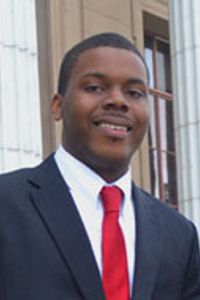
Background
Michael Tubbs earned a bachelor's degree from Stanford University and a graduate degree from Stanford University. He has been affiliated with Mayors for Guaranteed Income and End Poverty in California.[1]
- Graduate:
- Stanford University
- Bachelor's:
- Stanford University
- High school:
- Franklin High School
In their own words
Who are you? Tell us about yourself.
In 2016, I was elected Mayor of Stockton at the age of 26, becoming the youngest Mayor of any major city in American history. Under my leadership, Stockton saw a 40% drop in homicides in 2018 and 2019 and led the state of California in the decline of officer involved shootings in 2019. Because of initiatives, investments, and work I spearheaded, Stockton’s unemployment rate dropped from around 15% in 2012 to near a record low at around 5.7% in 2019. By the end of my term, Stockton was named the second most fiscally healthy city in California.
As Mayor, I raised over $20 million dollars to create the Stockton Scholars, a universal scholarship and mentorship program for Stockton students. Additionally, I piloted the first mayor-led guaranteed income pilot in the country.
Since leaving office, I have served as the Special Advisor for Economic Mobility to California Governor Gavin Newsom; the founder of Mayors for a Guaranteed Income; and the founder of End Poverty in California (EPIC).
Please list below 3 key messages of your campaign. What are the main points you want voters to remember about your goals for your time in office?
Supporting a Marshall Plan level approach to building housing in California including blocking unfettered private equity consolidation of residential real estate.Expanding economic opportunity through expansion of guaranteed income programs, vocational training at community colleges, and exploring ways to ensure wealth generated from AI is shared broadly to unlock economic opportunity in all communities.Expanding educational opportunity through building more student and workforce housing and lowering the cost of higher education
What areas of public policy are you personally passionate about?
I’ve championed guaranteed basic income pilots throughout the state to keep people in their homes because that is more humane and affordable than transitioning them out of homelessness. Our trial projects in Stockton and those of other cities demonstrate the powerful impact even a modest additional income can have on working families. Nothing is more impactful than helping struggling Californians access additional income and empower them to improve their lives.
What characteristics or principles are most important for an elected official?
A good elected official needs to understand first-hand the struggle facing many Californians. I was raised by three strong women – my mother, my grandmother, and my aunt. As my mother navigated life from teen pregnancy to affording a home at the age of 26, she inspired me to pursue public service.
California is the 4th largest economy in the world, but for who? Far too often, it’s not working for everyday people who need affordable housing and groceries. Sacramento is not producing results for the average Californian and that’s a huge reason why I decided to step into the race.
Today, as a father of three young children, I see California’s future through their eyes. I know firsthand how the statewide decisions we make in the next few years are going to shape California for decades to come.
I’m running for LG to build a California future that sets the example for how government can work for everyone. This state should lead the nation not by talking about problems, but solving them.
I’m running for LG to build a California future that sets the example for how government can work for everyone. This state should lead the nation not by talking about problems, but solving them.
What do you believe are the core responsibilities for someone elected to this office?
As Lieutenant Governor, I would prioritize my positions on the Board of Regents of the UCs, CSUs, and California Community Colleges. As the state’s higher education czar so to speak, we can focus on building affordable opportunities for students across the board. Right now, many students in our public universities experience food insecurity and housing insecurity. The stats are harrowing: 50% of California college students have experienced food insecurity and 28% of students actively skipped meals because of the inability to afford them. There are students graduating while living in their cars and unaware that they can benefit from systems like CalFresh.
After talking with current students in the UC system, I know there are ways we can fix this. Firstly, we can connect financial aid systems at public colleges and universities to CalFresh. We can alert folks from lower income backgrounds of their eligibility for CalFresh and make it easier for folks to enroll. Secondly, we must build more affordable housing on these campuses. These universities and colleges have a very unique right to build, which means we can––and should––greenlight affordable housing for students, faculty, and staff to tackle the housing crises hitting these campuses.
What is something that has been a struggle in your life?
In many ways, our society sets up people from backgrounds like mine for failure — namely prison or premature death.
My father is in prison. My cousin, Donnell, was shot and killed when I was in college. Their stories made me want to defy the odds and not succumb to the fate society said was in store for me. They also propelled me to look deeper and to commit my life to challenging and solving these inequities. In a more just system, overcoming poverty wouldn’t be a Herculean task. Talent is universal, we just have yet to ensure that opportunity and resources are universal as well.
But I confronted these obstacles and more in my journey from the south side of Stockton, California to Stanford University and, finally, to the Stockton Mayor’s office at age 26. These opportunities must be available to all kids growing up in this state, and that’s been my mission throughout my career in public service.
What is an accomplishment that you are proud of?
As Mayor, I raised over $20 million to create the Stockton Scholars, a universal scholarship and mentorship program for Stockton students. Under my leadership, Stockton saw a 40% drop in homicides in 2018 and 2019 and led the state of California in the decline of officer involved shootings in 2019. Because of initiatives, investments, and work I spearheaded, Stockton’s unemployment rate was near a record low at around 5.7% in 2019 – down from around 15% in 2012. It was even named the second most fiscally healthy city in California.
Michael Tubbs did not complete [the profile publisher]'s 2020 Candidate Connection survey.
Tubbs submitted the following candidate statement to the City of Stockton:
Note: You can navigate the documents by zooming in or out with the + and - buttons and using the horizontal and vertical scrollbars on the document.
Additional themes
Tubbs' campaign website listed the following themes for 2016:
SAFE STREETS, SECURE NEIGHBORHOODS
Continue building better police-community relations by expanding community engagement, further developing a community policing model, and diversify our police and fire departments
Further develop a Community Policing model that is based on building trust, identifying specific needs of neighborhoods, and using data to identify where to step in before crime happens
Increase the Capacity of the Office of Violence Prevention to partner with the community to provide job opportunities and other supports to those most at-risk for violence
Retain our current Police Officers and Firefighters by ensuring they receive competitive benefits that we can afford and the training and support to be successful ambassadors of our city
Partner with the Parks and Recreation, the Police Department, Non-Profits and the City to create a Summer Lights Program for youth and families, modeled after Los Angeles’ successful program that saw a reduction in violence over the past 8 years
Partner with County to fully implement the Marshall Plan Recommendations to increase the capacity and effectiveness of our criminal justice system
NEIGHBORHOOD REVITALIZATION
Expand the model of Reinvent South Stockton to the 4 other Hot Spot Areas identified in 2012 to begin to revitalize these areas that have not reached their potential due to high crime rates, few job opportunities, and failing schools
Make neighborhoods with the highest unemployment rates into “Job Creation Zones”
Target these neighborhoods with tax credits, fee abatement, repayable loans, and workforce investments
Work with federal, state, county and city agencies and departments to ensure new opportunities for the hardest hit neighborhoods of Stockton
Implement the South Stockton Promise Zone Strategy and rigorously monitor results
Advocate for neighborhood master plan development as part of our General Plan
Build public-private partnerships and philanthropic support through the creation of a Philanthropic Liason to strengthen the capacity of local non-profits to focus on undeserved neighborhoods, engage the community, secure grant funding and implement housing development, wellness programs, and youth-focused educational opportunities
Develop a Cradle-to-College continuum of supports for children focused on parent education, student growth, learning, and achievement starting at birth and expanding at each level of child development
EDUCATION
Identify, recruit and enroll low-income 4 year-old children eligible for but not currently enrolled in pre-Kindergarten
Work with Stockton businesses, the building trades, and current apprenticeship programs to create job-training pathways for Stockton high school graduates to help them gain practical skills
Work in conjunction with our school districts to create pathways to success for all students, with a particular focus of correcting disparities between groups
Bring back City programs such as the Youth Leadership Academy and the Youth and Education Action Team to provide positive outlets and learning opportunities for youth
Expand City youth job opportunities
Create matched savings accounts and/or college savings accounts for every child or our most vulnerable children by partnering with banks and other financial institutions to make an initial deposit into each account, then provide incentives for parents to contribute to the account over time
Currently the City of San Francisco contributes an initial $50 for each kindergartner
Create a Task Force to recruit companies and individuals to participate in this matching program
Champion a city-wide initiative to fund universal preschool for all 4 year-olds to close the achievement gap
ECONOMIC DEVELOPMENT THROUGH INNOVATION
Establish an Innovation Fund to create new investment in small businesses on the cusp of starting or expanding in Stockton, funded from investors that believe in Stockton’s potential for growth
Focus on creating a cluster of innovation around our strong, local assets: UOP, the Port, and Mercy to focus economic growth around transportation, health care, and education
Work with the county, the business community, and the philanthropic sector to expand workforce development and training opportunities
Support the creation of a small business network that brings entrepreneurs together to offer business training, workshops, and better collaboration between businesses on the local level
A HOUSING FIRST MODEL FOCUSED ON ENDING HOMELESSNESS
Create a staff position focused on homelessness to serve the community and coordinate County and Public Safety Efforts
Use Proposition 63 funds as bond collateral to create a Homeless Housing Trust Fund to develop a real housing first model in Stockton
San Diego, Salt Lake City, and Los Angeles County are already moving on the Housing First model to get residents off the street and into supportive, permanent housing
Change city zoning laws to allow for the creation of tiny houses and micro apartments
San Francisco, Portland, and Seattle have passed ordinance changes allowing for smaller square feet housing options
ENGAGING OUR COMMUNITY
Provide residents more information online and through social media to allow increased access, more transparency in decision making, and build trust
Develop a participatory budget process citywide, where community members define spending priorities through an application, discussion, and a voting model
Start a Community Roundtable that provides community organizations and non-profits a platform to discuss their goals, needs, and vision for Stockton regularly that culminates each year with the State of the City
Turn vacant lots into community gardens that provide opportunities for urban farming and establish public spaces where community members interact and build community
Hold quarterly city-wide Town Halls and regular mayoral office hours to update residents on the progress of the city
Bring back our best and brightest through the creation of a fellowship that will allow students and recent graduates who have left Stockton for college to come back and contribute to their community
Create a Millennial Taskforce tasked with identifying ways and implementing solutions to help the city address the brain drain[3]
—Michael Tubbs (2016)[4]
On the 2026 ballot
Links
Compiled from the candidate’s published profile as of September 30, 2026.
Source(opens in new tab)