
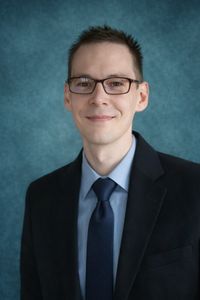
Background
Michael Aksten graduated from Nashua Senior High School and attended Daniel Webster College. Aksten earned an associate degree from Hesser College, an associate degree from Mount Washington College, and a bachelor's degree from Southern New Hampshire University. Aksten's career experience includes working as a nonprofit professional, in community health governance, public health advocacy, healthcare quality improvement, and HIV prevention and care.[1][2]
- Associates:
- Mount Washington College
- Bachelor's:
- Southern New Hampshire University
- High school:
- Nashua Senior High School
In their own words
Who are you? Tell us about yourself.
I believe public service begins with listening, building trust, and working together to strengthen our communities. As a lifelong resident of Nashua, I am committed to bringing thoughtful leadership, accountability, and practical solutions to the issues that matter most.
I currently serve as a Selectman for the City of Nashua, representing Ward 4, where I help oversee the administration of municipal, state, and federal elections while protecting the integrity of our democratic process.
I also serve on the Board of Directors for Harbor Care, one of Southern New Hampshire's largest nonprofit organizations, contributing to governance, strategic planning, and oversight of community health, behavioral health, housing, and other essential services.
As a member of the LGBTQIA+ community, I believe every person deserves dignity, respect, and equal opportunity.
Beyond my local service, I participate in state and national public health planning, quality improvement initiatives, and policy advisory groups focused on HIV prevention and care, LGBTQIA+ health, disability rights, and expanding equitable access to healthcare.
My goal is simple: build partnerships, strengthen our communities, and serve with integrity, compassion, and accountability.
Please list below 3 key messages of your campaign. What are the main points you want voters to remember about your goals for your time in office?
Public Service Before Politics:
I'm running because I believe public office is about serving people, not political parties or special interests. My career in nonprofit governance, public health, and community advocacy has taught me that the best solutions come from listening, building partnerships, and focusing on results. As your State Representative, I will bring that same collaborative approach to Concord, always putting the interests of Nashua families and our community first.Proven Leadership Through Service:
I don't see this campaign as the beginning of my public service, it's the continuation of it. I currently serve as a Nashua Selectman for Ward 4, a member of the Board of Directors for Harbor Care, and contribute to numerous state and national advisory groups focused on public health, governance, and community well-being. These experiences have prepared me to work across diverse viewpoints, solve complex problems, and represent our community with integrity and accountability.A Representative Who Listens:
Every community deserves a representative who is accessible, responsive, and willing to listen. I believe the best ideas don't come from one person, they come from conversations with neighbors, local businesses, nonprofits, healthcare professionals, educators, and community leaders.
No matter what hat I'm wearing, Selectman, Board Member, advocate, or State Representative, I'm still just Mike. I believe leadership begins with showing up, sitting down over a cup of coffee, listening, and working together to solve problems. My commitment is simple: to remain visible, approachable, and accountable, ensuring every resident has the opportunity to be heard and represented.
What areas of public policy are you personally passionate about?
I am passionate about building healthy, safe, and thriving communities where every person has the opportunity to succeed. My priorities include expanding access to affordable and stable housing, ensuring quality healthcare regardless of a person's ability to pay, strengthening public education, and supporting effective public health initiatives, including HIV/AIDS and STI prevention, rapid response, and compassionate, high-quality care.
I believe government should put people first, protect equal rights and opportunities for everyone, and ensure that no one is treated differently because of their race, ethnicity, religion, sex, sexual orientation, gender identity, disability, or background.
Who do you look up to? Whose example would you like to follow, and why?
Without question, the person I admire most is President Franklin Delano Roosevelt. At one of the most difficult moments in American history, he demonstrated that government could be a force for stability, opportunity, and hope. During the Great Depression, he signed the Social Security Act, established the FDIC and SEC, and created public works programs such as the Works Progress Administration, whose legacy can still be seen here in New Hampshire through projects like Holman Stadium in Nashua.
As someone who is totally and permanently disabled, I have an even deeper appreciation for Roosevelt's leadership. Despite living with the effects of polio, he refused to let his disability define him or limit his ability to serve. Instead, he focused on solving problems, bringing people together, and leading the nation through both the Great Depression and World War II.
That example has always stayed with me. I believe public service is measured not by the obstacles we face, but by our willingness to serve others despite them. Roosevelt's resilience, compassion, and commitment to improving the lives of everyday Americans continue to inspire the way I approach leadership today.
As President Roosevelt once said,
"The test of our progress is not whether we add more to the abundance of those who have much; it is whether we provide enough for those who have too little."
What characteristics or principles are most important for an elected official?
The most important qualities of an elected official are integrity, humility, accountability, and a willingness to listen. Public office is a position of trust, not privilege. An elected official should be accessible, transparent, and willing to engage with people from all walks of life, even when opinions differ.
Leadership is not about having all the answers. It is about asking the right questions, building partnerships, and making informed decisions that serve the public good. I believe representatives should lead by example, remain connected to the communities they serve, and never lose sight of the fact that they work for the people, not the other way around.
At the end of the day, I believe respect is earned, trust is built, and leadership is measured by service.
What do you believe are the core responsibilities for someone elected to this office?
The core responsibility of a State Representative is to faithfully represent the people of their district. That begins with listening to constituents, understanding their concerns, and ensuring their voices are heard throughout the legislative process.
A representative should carefully review legislation, make informed decisions based on facts and community input, exercise responsible oversight of government, and work collaboratively with colleagues to solve problems that improve the lives of New Hampshire residents.
Just as importantly, an elected official should remain accessible, transparent, and accountable. Public office is not about personal recognition or political ambition. It is about earning the trust of the people every day through honesty, integrity, and a genuine commitment to public service.
What legacy would you like to leave?
I have never been driven by the desire to be remembered. If history forgets my name but remembers the work that was accomplished, I would consider that a life well lived.
The legacy I hope to leave is one of service. I want the policies I support, the partnerships I build, and the decisions I help make to create opportunities for those who come after us. I have often said that my goal is simple: to leave the next generation at least 50% better off than my own.
If future generations have greater opportunities, stronger communities, better access to healthcare and education, and a government that truly works for the people, then I will know I helped make a meaningful difference. To me, that is what public service is all about. It is not about recognition. It is about leaving the world better than we found it.
What do you believe is the ideal relationship between the governor and state legislature?
I believe the Governor and the Legislature should have a relationship built on mutual respect, open communication, and a shared commitment to serving the people of New Hampshire. While each branch has its own constitutional responsibilities, both should work together whenever possible to solve problems and improve the lives of our residents.
Healthy disagreement is a natural and important part of democracy. The Legislature should provide thoughtful oversight, carefully evaluate proposals, and act independently when necessary. Likewise, the Governor should offer leadership while respecting the Legislature's role as a coequal branch of government.
Neither branch should seek to dominate the other. The strongest outcomes are achieved when both work collaboratively, respect the system of checks and balances, and remain focused on the needs of the people rather than partisan politics.
What do you perceive to be your state's greatest challenges over the next decade?
Over the next decade, I believe New Hampshire's greatest challenge will be ensuring that economic growth and opportunity keep pace with the needs of our communities. That means expanding access to affordable housing, strengthening our healthcare system, supporting quality public education, addressing workforce shortages, and investing in infrastructure that allows our cities and towns to thrive.
We must also prepare for an aging population, growing demands on mental and behavioral health services, and the need to recruit and retain healthcare professionals, educators, first responders, and skilled workers. These challenges cannot be solved in isolation. They require collaboration among state government, municipalities, nonprofit organizations, businesses, and community partners.
Most importantly, I believe we must remain committed to protecting the freedoms that define New Hampshire while ensuring every resident has the opportunity to live, work, and succeed here. If we focus on practical solutions, responsible governance, and long term planning, I believe our state can meet these challenges and emerge even stronger.
Do you believe that compromise is necessary or desirable for policymaking?
Compromise is an important part of effective government, but it is not an end in itself. I believe good policymaking begins with listening, asking questions, and working collaboratively to find common ground whenever possible. Most issues have room for thoughtful discussion, and I believe respectful dialogue often produces better solutions.
That said, there are principles I do not believe should be compromised. Every person deserves equal protection under the law, fundamental rights, and the opportunity to live with dignity and respect, regardless of who they are or where they come from. Those are values I believe government has a responsibility to protect.
To me, leadership means knowing when to seek compromise and when to stand firmly on principle. Wisdom comes from understanding the difference.
What organizations or individuals have endorsed your campaign?
Greater Nashua Rights & Democracy and the American Federation of Teachers-New Hampshire
What was the first historical event that happened in your lifetime that you remember?
Growing up during the 1980s and 1990s, I witnessed many defining moments that shaped my understanding of the world. One of my earliest memories was watching the Space Shuttle Challenger disaster unfold. Like many students across the country, I watched the launch live. As a New Hampshire native, knowing that Christa McAuliffe was one of our own made that tragedy especially meaningful.
Not long afterward, I watched the Fall of the Berlin Wall and the end of the Cold War, events that symbolized hope and the triumph of freedom over division. As I grew older, the murder of Matthew Shepard deeply affected me and reinforced the importance of standing against hatred and discrimination. The attacks of September 11 and the movement toward marriage equality further shaped my belief that leadership must be grounded in compassion, resilience, equality, and a commitment to protecting the rights and dignity of every person.
Those moments continue to influence how I approach public service and the values I hope to bring to public office.
On the 2026 ballot
Links
Compiled from the candidate’s published profile as of October 6, 2026.
Source(opens in new tab)