
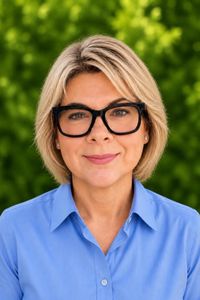
Background
Meegan Zickus earned a high school diploma from Wyoming Park High School, an associate degree from Grand Rapids Community College in 1992, a bachelor's degree from Grand Valley State University in 1995, and a law degree from the Michigan State University College of Law in 1999. Her career experience includes working as an attorney and professor.[1]
- Law:
- Michigan State University College of Law, 1999
- Associates:
- Grand Rapids Community College, 1992
- Bachelor's:
- Grand Valley State University, 1995
- High school:
- Wyoming Park High School
In their own words
Who are you? Tell us about yourself.
Who am I? I am a mother, wife, grandmother, attorney, bioethics professor, author, small-business owner, and longtime community servant. I have lived in Allendale for more than 25 years, raised three daughters, served two terms on a school board, and helped care for my grandmother-in-law in our home for 25 years. My life has taught me grit—from growing up in a family that needed assistance to living with a rare autoimmune disease. I bring legal, healthcare, educational, and local-government experience, but I am running because I understand the everyday concerns of families. I believe in listening, working across differences, and putting people before politics so government serves all of us.
Please list below 3 key messages of your campaign. What are the main points you want voters to remember about your goals for your time in office?
CARE: Every Michigander deserves access to affordable, dependable healthcare—including mental-health services, prescription drugs, and support for seniors and family caregivers. I understand these challenges personally. My family cared for my grandmother-in-law in our home for 25 years, including through hospice, and I have lived with a rare autoimmune disease since 2010. As a bioethics professor, attorney, and member of state healthcare-ethics committees, I will bring experience, compassion, and sound judgment to healthcare policy.COSTS: Working families should not have to choose between groceries, housing, utilities, childcare, insurance, and healthcare. As a mother, small-business owner, attorney, and longtime community member, I understand the pressures families face. I will support practical policies that lower everyday costs, strengthen local businesses, expand economic opportunity, and help people keep more of what they earn. Affordability is not a partisan issue—it is an everyday issue affecting all of us.CLASS: Strong public schools are the foundation of strong communities. As a former two-term school-board member, professor, mother, and education advocate, I will fight for well-supported teachers, safe classrooms, early literacy, mental-health resources, and opportunities that prepare students for college, skilled trades, or the workforce. Every child—regardless of ZIP code, income, disability, or background—deserves an excellent education and the opportunity to build a successful future.
What areas of public policy are you personally passionate about?
I am most passionate about healthcare access, strong public education, affordability, individual rights, and protecting the dignity of every person. Those priorities come from lived experience: growing up in a family that needed assistance, working in a Level One trauma center, practicing law, teaching bioethics, serving on a school board and state healthcare-ethics committees, caring for a loved one through hospice, and facing my own serious illness. I believe good policy begins with listening, respects both freedom and responsibility, and delivers practical solutions for all of us.
Who do you look up to? Whose example would you like to follow, and why?
I look up to President Jimmy Carter because he showed that leadership is not about recognition or personal power - it is about service, courage, compassion, and bringing people together. As president, he worked to advance peace, human rights, energy security, and responsible government. After leaving office, he continued serving through the Carter Center, election monitoring, disease-eradication efforts, and Habitat for Humanity, proving that public service should be a lifelong commitment.
His example connects deeply to the way I try to serve my own community. I have worked as a pro bono attorney for Heaven Can Wait cat rescue, a Girl Scout troop leader, a PTO volunteer, a Sisters in Support volunteer for young moms, and a Rotary volunteer. I have also supported expungement efforts to help people move forward with dignity and opportunity. I was honored with the GVSU Excellence in Education Award for founding Allendale Advocacy, a grassroots social media group focused on local education issues.
Like President Carter, I believe leadership means stepping up wherever there is a need, listening first, and doing practical work that improves people's lives.
What characteristics or principles are most important for an elected official?
Integrity, accountability, humility, grit, compassion, and a commitment to public service are essential qualities for an elected official. Growing up in rural northern Michigan and the Rio Grande Valley of Texas, I saw the contributions and struggles of migrant workers in both communities. My family relied on welfare when I was a child, and at 16, I moved out and began supporting myself. I later paid my way through college with scholarships and hard work.
Those experiences taught me that grit helps us overcome challenges, but compassion reminds us that no one succeeds entirely alone. An elected official must listen carefully, communicate honestly, make evidence-based decisions, and treat every constituent with dignity and respect. Effective leadership means working across differences, remaining grounded in your principles, and never forgetting the real people whose lives are affected by every decision.
What do you believe are the core responsibilities for someone elected to this office?
The core responsibilities of an elected official are to represent the entire community, manage public resources responsibly, and make government accessible and responsive. Doing that well requires both grit and compassion. We must listen to residents, explain decisions honestly, address immediate needs, and plan for the community's long-term future. We must also stand up for people who need help, even when they look different, act differently, or hold different beliefs. When we take away someone else's rights, we move one step closer to losing our own.
While serving on the school board, I received a call from a man who was upset that a Christmas program included a Jewish song. I explained that it was a holiday program designed to recognize many beliefs. I asked him whether, if his family moved to a predominantly Muslim community, he would still want his children to be able to practice their Christianity. He said yes. I pointed out that because he lived in a predominantly Christian community, his own faith was already widely represented - but every family deserves to have its beliefs respected, wherever they live. He paused and said he had never thought about it that way.
That conversation reflects what public service should be: listening respectfully, finding common ground, and helping people see an issue from another person's perspective. Public interest and equal rights must always come before personal or political gain.
What legacy would you like to leave?
I want to leave a legacy of having met people where they are at in every sense of the phrase- mentally, physically, socially, emotionally and culturally. I would like to leave behind a community that is stronger, more inclusive, and more confident in its government.
My experience as an attorney and as a healthcare provider in a Level One Trauma Center has taught me that effective service begins with listening, understanding each person's circumstances, and treating everyone with dignity and compassion. It has also taught me to remain calm under pressure, make responsible decisions, and help people navigate some of the most difficult moments of their lives.
I hope people will say that I listened, kept my word, made thoughtful decisions, and left this community better than I found it. Most importantly, I want to build lasting systems of support, trust, and opportunity so that our progress continues beyond any one election or individual.
What was your very first job? How long did you have it?
My first job was at Granny's Kitchen, where I earned $3.25 an hour dressing up as a grandmother. Wearing a wool costume, wig, and bonnet, I sat under a porch on 28th Street through shifts in the baking-hot sun the summer I was 15. I listened to a Walkman that burned through batteries every few hours, but the experience taught me perseverance, the value of hard-earned money, and the importance of showing up with a positive attitude - lessons that still shape how I approach work and responsibility today.
What is something that has been a struggle in your life?
One of the greatest struggles in my life has been facing repeated challenges that demanded both resilience and compassion. I experienced family dysfunction, moved out at 16, and supported myself through college. Later, I faced infertility, stood beside my husband through cancer, and cared for my grandmother-in-law in my home for 25 years.
Then, Necrotizing Autoimmune Myopathy changed my life. I went from being a constantly active mom to using a wheelchair. With specialized treatment at Mayo Clinic, advances in science, compassionate care, and a great deal of grit, I fought my way forward. Today, I am not only standing again - I am standing as a candidate.
These experiences have taught me that strength is not about avoiding hardship. It is about continuing through it, accepting help when needed, and extending that same compassion to others. I understand what it means to struggle, to care for someone you love, and to depend on systems that do not always meet people where they are. That understanding will shape how I serve: with grit, compassion, gratitude, and an unwavering belief in what people can overcome when they receive the support and opportunities they deserve.
What do you believe is the ideal relationship between the governor and state legislature?
constitutional responsibilities while working toward shared goals. Healthy disagreement and oversight are essential, but neither branch should treat governing as a contest in which the other side must lose. Leaders should communicate openly, negotiate in good faith, and focus on results rather than partisan victories.
The ideal relationship requires honesty, mutual respect, transparency, and the grit to continue working together when agreement is difficult. The governor should provide leadership and a clear statewide vision, while legislators bring the voices and needs of their individual communities to the table. Both should remain accountable to the people of Michigan and recognize that effective government depends on cooperation, checks and balances, and a shared commitment to public service.
What do you perceive to be your state's greatest challenges over the next decade?
Michigan’s greatest challenge will be ensuring that ordinary families can build secure, healthy lives here. That means addressing the rising cost of housing, food, childcare, utilities, insurance, and healthcare while strengthening our public schools and creating good-paying jobs. We must also repair aging infrastructure, protect clean water and the Great Lakes, prepare communities for a changing climate, and ensure that rural and underserved areas can access healthcare and mental health services.
Michigan has the talent and resources to meet these challenges, but doing so will require grit, long-term planning, and responsible investment. We must make Michigan a place where young people want to remain, families can afford to live, businesses can thrive, and older adults can retire with dignity.
Do you believe that compromise is necessary or desirable for policymaking?
Yes. Compromise is both necessary and desirable when it moves us toward meaningful solutions without sacrificing fundamental rights or core values. Good policymaking requires listening, respecting different perspectives, and finding common ground. Compromise should not mean abandoning principles; it means having the grit to stay at the table, work through disagreements, and deliver results. Michigan families are less concerned with who receives the credit than whether government is making healthcare, education, housing, and everyday life more affordable. I will work with Democrats, Republicans, and independents whenever doing so benefits the people of our district.
What organizations or individuals have endorsed your campaign?
Ottawa County Democrats
What was the first historical event that happened in your lifetime that you remember?
The first major historical event I remember was Ronald Reagan being elected president in 1980. I was in the library at Lakeland Elementary in Elk Rapids, Michigan, waiting with the other students for our parents to pick us up. Someone turned on a television so we could watch as his victory was announced. Some people were happy and others were disappointed, but we were still neighbors and friends.
Those same neighbors stepped forward to help my family when my father lost his job and we had to rely on food stamps. That experience taught me something I have carried throughout my life: elections matter, and everyone gets a vote, but our humanity must come before our politics. We should help wherever we can, as often as we can, and never let political differences keep us from caring for one another.
On the 2026 ballot
Links
Compiled from the candidate’s published profile as of September 30, 2026.
Source(opens in new tab)