
Background
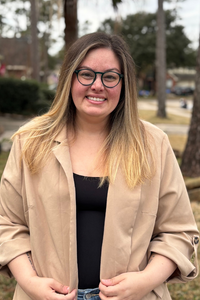
Meagan Tehseldar was born in Olympia, Washington. She earned a bachelor's degree from California State University, San Marcos, in 2012 and a graduate degree from Azusa Pacific University in 2015. Her career experience includes working as a teacher, curriculum developer, statewide trainer, and founder of a nonprofit advocacy organization supporting families of children with disabilities. She has been affiliated with Love Over Labels Advocacy.[1]
- Graduate:
- Azusa Pacific University, 2015
- Bachelor's:
- California State University, San Marcos, 2012
In their own words
Who are you? Tell us about yourself.
I’m Meagan Tehseldar — a Texas educator, disability rights advocate, and mom of an autistic child. I’ve spent over a decade inside the classroom and another outside it, fighting for kids and families who are constantly failed by the system. I founded Love Over Labels Advocacy, a nonprofit that helps families navigate special education, IEPs, and the legal red tape that keeps disabled kids from getting the services they deserve. I’m running for Governor because I’ve seen firsthand how public services in Texas are being gutted and sold off to the highest bidder — and I’m not okay with that. I’m not a career politician. I’m a working mom who knows what it’s like to make medical decisions based on what insurance will cover, and I’m here to fight for people like us — because nobody else will.
Please list below 3 key messages of your campaign. What are the main points you want voters to remember about your goals for your time in office?
I will fully fund public schools, protect students with disabilities, and end privatization schemes that strip away our rights. I’ll increase per-student funding, raise teacher and support staff salaries, eliminate STAAR-based punishments, and block school voucher scams. I will outlaw seclusion and forced restraint, enforce IDEA compliance, expand access to AAC and inclusive services, and create a statewide watchdog office to protect the rights of disabled students and families.I will defend reproductive freedom, LGBTQ+ rights, and every Texan’s right to exist with dignity.
Texas has declared war on bodily autonomy and queer existence. I will fight to codify reproductive freedom at the state level, restore access to comprehensive healthcare — including abortion and gender-affirming care — and pass anti-discrimination protections for LGBTQIA+ Texans in housing, education, and employment. Your body, your gender, your family — not the state’s business.I will build a care infrastructure that supports working families — not just billionaires. I’ll work to expand Medicaid, pay family caregivers, create state-supported childcare and respite programs, and push for flexible work protections. Texas should be a place where people can care for each other and still pay the bills — not a state where burnout is the price of survival.
What areas of public policy are you personally passionate about?
I’m passionate about fully funding public schools, raising pay for teachers and support staff, and stopping voucher scams that defund education. I’ll fight for Medicaid expansion, paid family caregivers, and a care infrastructure that supports working families. I believe identity politics isn’t a distraction — it’s how we protect real people. When we center those most impacted — disabled Texans, immigrants, LGBTQ+ folks, and working families — we build a stronger, more just Texas for everyone. As a mom, educator, and advocate, I’ve lived the gaps in these systems — and I’m running to fix them.
Is there a book, essay, film, or something else you would recommend to someone who wants to understand your political philosophy?
My first recommendation would be Fahrenheit 451 by Ray Bradbury. As a former English teacher, this novel has always stayed with me — not just because of its dystopian warning, but because of what it says about the dangers of apathy, censorship, and institutional control. It taught me early on that a free, thinking society is a threat to authoritarianism — and that books, knowledge, and questioning authority are revolutionary acts. That belief is the foundation of my political philosophy: protect public education, defend intellectual freedom, and never stop asking who benefits from silence.
I would also recommend The Book of Unknown Americans by Cristina Henríquez. On the surface, it's a story about immigration — but it’s also a powerful examination of how our systems fail families, especially when they don’t speak the dominant language, don't fit cultural expectations, or have children with disabilities. One of the central storylines follows a family who moves to the United States to seek better services for their daughter after a brain injury. What they find instead is a school system that doesn’t understand her, a society that defines her by what she lacks, and a bureaucracy that treats her parents as burdens.
This novel highlights the painful intersection of disability, culture, and access. It shows how deeply the system can misunderstand disabled children — especially when racism, ableism, and language barriers collide. I saw so much of my own journey in those pages: the paperwork, the waiting lists, the loneliness, the exhaustion of trying to convince people your child matters.
Both novels shaped my belief that policy must begin with people — especially those the system so often deems inconvenient. If we build a Texas that sees, supports, and protects the most vulnerable among us, we all rise.
What characteristics or principles are most important for an elected official?
Honesty, transparency, and accountability are non-negotiable. Elected officials should serve the people, not hide behind political jargon or backroom deals. Texans deserve leaders who tell the truth, own their mistakes, and make their work visible. Public office isn’t about power — it’s about responsibility.
What do you believe are the core responsibilities for someone elected to this office?
The Governor’s core responsibility is to serve all Texans — not just the wealthy, not just donors, not just a chosen few. That means protecting public schools, upholding civil rights, responding to crises with integrity, and using the power of the office to improve people’s lives. The Governor should lead with transparency, fight for working families, and never forget who they work for.
What is your favorite book? Why?
My favorite book is The Great Gatsby. On the surface, it’s about wealth and glamour, but underneath, it’s a story about disillusionment, false promises, and how the American Dream is often reserved for the few.
Governors have many responsibilities, which vary from state to state. Which of those do you personally consider the most important in your state?
In Texas, I believe the most important responsibility of the Governor is to protect and invest in the people, especially when state systems fail to do so. That includes setting the budget, appointing agency leaders, responding to emergencies, and either signing or vetoing legislation that impacts millions of lives.
For me, the most important part of the job is using that power to fully fund public schools, expand healthcare access, enforce disability rights, and protect the civil liberties of every Texan. The Governor sets the direction for the state. I intend to use that role to build a Texas that works for everyone — not just the wealthy or well-connected.
Different states require governors to have different degrees of responsibility for the state budgeting process. If it were your choice, what do you believe is the appropriate degree of gubernatorial involvement with this process in your state?
I believe the Governor of Texas should play a hands-on role in the budgeting process. The budget is not just a financial document, it is a reflection of our values. It decides who gets funded, who gets left behind, and what kind of future we are building.
The Governor should be actively involved in shaping priorities, ensuring transparency, and fighting for a budget that reflects the real needs of Texans. That means advocating for public schools, healthcare access, infrastructure, and social supports, not just tax breaks for corporations.
I don’t believe in rubber-stamping budgets written behind closed doors. I believe in open, accountable budgeting that puts people first.
In most states, governors have the power to make line-item vetoes. If that is true in your state, what would be your philosophy for how and when to use this power?
Yes, Texas allows the Governor to use a line-item veto on appropriations bills. If elected, I would use that power with clear purpose- to block wasteful spending that serves political donors, punishes marginalized communities, or guts public services.
I would not use it to score political points or harm programs that help working families, educators, or disabled Texans. My philosophy is simple: if a budget line doesn’t serve the people of Texas, it doesn’t belong in the budget. I would use this power as a tool for accountability, not as a weapon for control.
What do you believe is the ideal relationship between the governor and state legislature?
I believe the ideal relationship between the Governor and the state legislature is one of accountability and honest collaboration. The Governor should work with lawmakers to serve the people of Texas, not to push party agendas or protect political power.
That means listening to constituents, being transparent about priorities, and pushing back when the legislature tries to pass harmful or discriminatory laws. It also means being willing to work across differences when it leads to better outcomes for Texans.
The Governor should not be a rubber stamp or a dictator. They should be a check, a partner, and a constant reminder that the people, not political insiders, are the ones we all work for.
What do you love most about your state?
What I love most about Texas is the people. We are resilient, resourceful, and fiercely proud, not just of where we come from, but of how we show up for each other. Texas is filled with families fighting for something better, neighbors who look out for one another, and communities that keep pushing forward even when the odds are stacked against them.
It’s that grit and heart that keeps me fighting. I’m not running to change the soul of Texas. I’m running to make sure our policies finally reflect it.
What do you perceive to be your state's greatest challenges over the next decade?
Texas is facing a decade-defining crossroads. Our greatest challenges will be undoing the damage caused by years of underinvestment in public systems and fighting back against extremist policies that strip away rights and silence communities.
We are dealing with a public education crisis, a collapsing care infrastructure, a broken power grid, unaffordable housing, and an intentional dismantling of civil rights, especially for LGBTQIA+ Texans, disabled people, immigrants, and working families. These are not isolated problems. They are the result of political decisions made to serve the few at the expense of the many.
The challenge ahead is building a Texas that actually works for the people who live here, not just the ones who fund campaigns. And that starts with changing who holds power.
Under what circumstances should the governor of your state be able to use emergency powers?
Emergency powers should only be used in clear, time-bound situations where public safety, health, or infrastructure is at immediate risk, like natural disasters, public health emergencies, or power grid failures. They should never be used to bypass the democratic process, silence dissent, or push a political agenda.
If emergency powers are used, they should come with built-in transparency, legislative oversight, and a defined end date. Texans deserve strong leadership in a crisis, but they also deserve checks and balances. No one, including the Governor, should have unchecked power.
What organizations or individuals have endorsed your campaign?
Next Gen Politics
What are your views on financial transparency and government accountability?
I believe financial transparency and government accountability are the foundation of public trust. Texans have the right to know where their tax dollars are going, who their leaders are working for, and how decisions are being made.
I support clear, accessible budgets, public oversight of state contracts, and routine independent audits. Elected officials should be required to disclose financial ties and should face real consequences when they violate the public’s trust.
The people of Texas deserve honesty and visibility from their government. If we want people to engage, we have to start by showing them we have nothing to hide.
Would a state ballot initiative process be good or bad for your state?
I support introducing a citizen-led ballot initiative process in Texas—but only with strong safeguards:
- Reasonable signature thresholds to ensure broad support
- Clear, single-subject limits to prevent "stacked" or confusing amendments
- Transparency rules on funding and campaigns
- Pre-checks for legal consistency with existing constitution and statutes
This process would empower communities while protecting against manipulation. It could give Texans a real voice, especially when the legislature refuses to act, but only if structured carefully.
A governor is the top executive authority in his or her state. What does that mean to you?
Being the top executive authority means being accountable to the people, not using power to control, intimidate, or cut backroom deals. It means setting the tone for how government serves, protects, and shows up for every Texan.
To me, that role comes with a deep responsibility. The Governor should be a leader who listens, who fights for what’s right even when it’s hard, and who uses the full weight of the office to make life better for everyday people. That includes veto power, appointments, budget priorities, and emergency response. None of that should be used to serve special interests or political donors.
If I’m elected, I will use that authority to rebuild public trust, invest in people, and lead with transparency and purpose.
On the 2026 ballot
Links
Compiled from the candidate’s published profile as of September 30, 2026.
Source(opens in new tab)