
Background
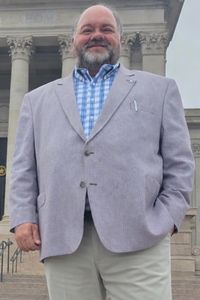
Max Burchett earned a graduate degree from Southwestern Oklahoma State University in 2013. His career experience includes working as a technology executive.[1]
- Graduate:
- Southwestern Oklahoma State University, 2013
- High school:
- Bartlesville High School
In their own words
Who are you? Tell us about yourself.
I am Dr. Max Burchett, a healthcare executive, pharmacist, technology leader, husband, and father running to bring practical, solutions-focused leadership to the Oklahoma House of Representatives. I currently serve as Chief Information Officer for the Oklahoma City Indian Clinic, where I have led major modernization, cybersecurity, and operational improvement initiatives in a complex healthcare environment. My professional background includes healthcare administration, clinical pharmacy, and information technology, giving me firsthand experience solving real-world problems that affect patients, families, businesses, and frontline workers. I am running because I believe government should focus less on political theater and more on delivering measurable results for Oklahoma communities.
Please list below 3 key messages of your campaign. What are the main points you want voters to remember about your goals for your time in office?
I am a problem-solver, not a career politician. My career has been built around improving systems people rely on every day — healthcare, technology, operations, and public service infrastructure. I believe Oklahoma families deserve leaders who focus on practical solutions, accountability, and long-term stability instead of partisan distractions.Healthcare access, affordability, and reliability are critical issues for Oklahoma. I understand healthcare from both the clinical and operational sides, and I will work to reduce unnecessary bureaucracy, strengthen rural and underserved healthcare access, support providers, and protect patients from delays caused by insurance and administrative barriers.District 33 deserves forward-looking leadership that supports economic growth, strong schools, responsible infrastructure investment, and modern technology policy. I believe Oklahoma can remain fiscally responsible while also investing in workforce development, cybersecurity, healthcare innovation, and opportunities that help communities grow and compete for the future
What areas of public policy are you personally passionate about?
I am particularly passionate about healthcare policy, rural healthcare access, education and workforce development, technology modernization, cybersecurity, infrastructure reliability, and government efficiency. I strongly believe public systems should operate effectively, transparently, and responsibly because failures in those systems directly impact people’s lives. I am also passionate about expanding opportunities for rural communities, strengthening economic competitiveness, improving access to mental and behavioral healthcare, and ensuring Oklahoma is prepared for the long-term challenges associated with healthcare delivery, emerging technology, and critical infrastructure resilience.
Who do you look up to? Whose example would you like to follow, and why?
I look up most to leaders who combine competence with humility and who prioritize service over attention. Professionally, I respect leaders who can manage complex organizations while remaining grounded and accessible to the people they serve. Personally, my grandfather had a significant influence on my life through his work ethic, steadiness, and commitment to family and community. Those qualities shaped my understanding of leadership and responsibility.
What characteristics or principles are most important for an elected official?
Integrity, accountability, competence, transparency, and humility are essential qualities for elected officials. Public office should be focused on service, not personal recognition or ideological performance. Leaders should be willing to listen, understand complex issues, communicate honestly with constituents, and make decisions based on evidence, long-term impact, and the public good — even when those decisions are politically difficult.
What do you believe are the core responsibilities for someone elected to this office?
The core responsibilities of a state representative are to represent constituents fairly, pass responsible legislation, oversee government spending, protect essential public services, and ensure state agencies operate effectively and transparently. Legislators should focus on solving problems that directly affect the lives of Oklahomans, including healthcare access, education, infrastructure, economic development, and public safety.
What legacy would you like to leave?
I would like to leave a legacy of practical improvement — strengthening systems that people depend on and making government more effective, stable, and responsive. I want to be remembered as someone who approached leadership seriously, treated people with respect, and focused on measurable outcomes rather than political theater. Most importantly, I want my children to see that public service can still be rooted in integrity and responsibility.
What was your very first job? How long did you have it?
My first job was working as a Little League umpire. I started when I was 14 years old and continued doing it until I was 19. That experience taught me responsibility, communication, fairness, and how to make decisions under pressure — often while managing strong emotions from players, coaches, and parents. It also gave me an early appreciation for community involvement and the importance of consistency and accountability in leadership roles.
What is something that has been a struggle in your life?
One ongoing challenge has been balancing professional responsibilities with family life. Healthcare leadership and technology operations often involve long hours, high-pressure decision-making, and constant availability. Learning how to maintain that balance while remaining present for my family has been important to me and continues to shape my priorities and perspective.
What do you believe is the ideal relationship between the governor and state legislature?
The governor and legislature should maintain a professional, collaborative relationship grounded in mutual respect and institutional balance. Healthy disagreement is part of representative government, but both branches should remain focused on governance rather than conflict for its own sake. The most effective governments are those where leaders can work across differences to solve problems and provide stability for the public.
What do you perceive to be your state's greatest challenges over the next decade?
Oklahoma’s greatest challenges will include healthcare access, workforce shortages, educational outcomes, infrastructure modernization, rural economic sustainability, and preparing for the long-term impacts of technology and cybersecurity threats. The state must also address population retention and economic competitiveness while ensuring public institutions remain functional, efficient, and financially sustainable.
Do you believe that compromise is necessary or desirable for policymaking?
One ongoing challenge has been balancing professional responsibilities with family life. Healthcare leadership and technology operations often involve long hours, high-pressure decision-making, and constant availability. Learning how to maintain that balance while remaining present for my family has been important to me and continues to shape my priorities and perspective.
What organizations or individuals have endorsed your campaign?
Current endorsements and support include healthcare professionals, educators, local residents, veterans, and community leaders who support practical, solutions-focused leadership for Oklahoma. I am honored to have received the endorsement of Oklahoma Democratic Veterans Caucus (OKDemVets). I have also received support from individuals working in healthcare administration, information technology, public service, and small business communities who value accountability, operational experience, and evidence-based decision-making.
What was the first historical event that happened in your lifetime that you remember?
One of the earliest major historical events I clearly remember was the Challenger space shuttle disaster. It was a moment that affected the entire country and highlighted both the risks of innovation and the emotional impact national events can have on everyday people.
On the 2026 ballot
Links
Compiled from the candidate’s published profile as of September 30, 2026.
Source(opens in new tab)