
Background
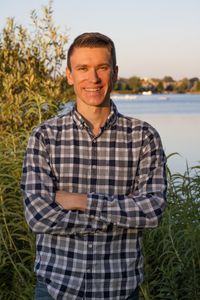
Matt Norris earned a bachelor's degree from the University of Minnesota Carlson School of Management in 2011 and a law degree from the University of Minnesota Law School in 2014. His career experience includes working as an attorney and policy director.[1][2]
Norris has been affiliated with the following organizations:[2]
Blaine Festival Committee
Children’s Law Center Volunteer Attorney
Minnesota Amateur Sports Commission
Church of St. Timothy’s Social Justice Committee
- Law:
- University of Minnesota Law School
- Bachelor's:
- University of Minnesota, Carlson School of Management
In their own words
Who are you? Tell us about yourself.
I was born and raised here in the North Metro and am a proud Blaine resident. Two decades ago, I launched my career by spearheading an effort that reduced violent crime in my hometown by 40%. After earning my business degree and law degree from the University of Minnesota-Twin Cities, I spent most of my career working in the nonprofit sector. I worked for the Step Up internship program where I created hundreds of paid, professional internships for low-income high school students every summer. And just before getting elected to the Minnesota House, I served as the Policy Director at a statewide nonprofit for youth where I worked productively with Democrats and Republicans to pass several bills in bipartisan fashion.
After being elected to the Minnesota House in 2022, I hit the ground running securing $102.75 million to fully fund the Highway 65 redesign, authoring $300 million in public safety aid for cities and counties, passing two property tax cuts, and authoring two leading anti-fraud bills that became law. I’m also proud that I was able to be a productive legislator while having about two-thirds of my bills supported by both Democrats and Republicans.
Please list below 3 key messages of your campaign. What are the main points you want voters to remember about your goals for your time in office?
Inflation has hit everybody’s wallets hard. While decisions at the federal level drive gas and grocery prices higher, I'm zeroing in on three big budget items for families where I can have an impact. I call them “The Three Cares”: health care, child care, and senior care. I'm committed to reducing the cost of these three big budget items for Minnesota families. At the same time, I'll make sure the workers in these industries can earn a living wage for the important work they do every day.It’s been 25 years since Minnesota last reformed its property tax system. Given the big property tax spikes we’ve seen, I think the system is showing its age. I want to lead the reform of property taxes in our state to help family budgets while investing in the parks, schools, public safety and infrastructure we depend on. I'm currently working with the Department of Revenue to bring together experts to generate ideas for how we can avoid double-digit increases year after year we've been seeing. And when I get re-elected, I'll work to get these reforms passed into law to make the property tax system work better for homeowners and small businesses.The fraud we have seen against Minnesota’s public programs is unacceptable. That’s why I've taken action by passing two major anti-fraud bills. But I'm not stopping there. I've got plans for how to increase accountability for your tax dollars. To restore the confidence of taxpayers, I support a top-to-bottom audit of state government when the new governor takes over in January. And I'm working on legislation that would require the legislature to outline measurable outcomes when new spending is approved. Money must also be set aside up front to measure the results against those outcomes to make sure your tax dollars are only being spent on programs that work.
What areas of public policy are you personally passionate about?
Much of my career has been focused on helping young people get off to a strong and healthy start while reducing youth crime in the process. Nearly two decades ago, I helped launch a youth engagement initiative in my hometown in response to concerns about rising youth crime. We added more after school programs and jobs for youth and used new policing strategies based on best practices. Violent crime dropped 40% over a five year period!
That commitment has continued in my first two terms at the Capitol. I authored the bill that increased funding for our schools. I was also proud to team with a dad and daughter from Blaine to require schools to provide space for students who need to do Zoom appointments with their therapists.
What characteristics or principles are most important for an elected official?
Two critical characteristics for elected officials are honesty and responsiveness to the voters. I’m proud of being available to have open and honest conversations with the residents of my district and really listen to their concerns. I love knocking doors. As many of you know, I do it relentlessly. I even knock doors in years I’m not up for election because I think it’s important to be available to voters. I also respond to emails and voicemails from voters regardless of party. Some of my most meaningful conversations with voters are when they say to me, “I disagree with you on almost everything, but I respect that you’re the only elected official to ever call me back.”
I’m also committed to living up to my campaign theme of “Building Bridges and Getting Results.” I believe voters want leaders who can bring together people from different backgrounds to get things done. Based on input from district residents, I've passed dozens of bills in my first two terms! But I'm even prouder that about two-thirds of my bills have support from both Democrats and Republicans. I’m committed to listening to you, the voters of Blaine and Lexington, to respond to the issues most important to you.
What do you believe are the core responsibilities for someone elected to this office?
Keeping Minnesotans safe is the most important responsibility of a Minnesota House member. That’s why I've made public safety a focus of my first two terms. I authored and passed $300 million in public safety aid for cities in counties. I led the bipartisan effort to renew the Anoka County Joint Law Enforcement Council. I also worked with police and community groups on a bill to reduce the number of young people committing repeated offenses in the metro area.
Keeping Minnesotans safe also meant fixing the most dangerous stretch of highway in the Twin Cities: Highway 65. That’s why I made it my mission to secure the $102.75 million we needed to fully fund the project and take out four stoplights to make the road much safer and more convenient.
This role is also about protecting our high quality of life in Minnesota. That’s why I increased funding for our schools. Now I’m working to make sure every school has strong and effective building leadership. I’m also focused on guaranteeing Minnesotans affordable access to child care, health care, and senior care. And I’m committed to preserving our state’s beautiful natural resources and protecting them from pollution.
What was your very first job? How long did you have it?
My first job was a classic one: I had a weekly paper route. Every week, I’d get a stack of papers, have to assemble all the sections together, and deliver them to a neighborhood. I started the job in middle school and continued it through high school.
What do you perceive to be your state's greatest challenges over the next decade?
Our state’s greatest challenge over the next decade will be our declining population growth combined with our aging population. These trends will limit the number of available workers. That, in turn, risks limiting our state’s economic growth. As a result, we should focus on factors that will draw young workers and families to our state: good schools and colleges, affordable childcare, quality health care, paid family and medical leave. We must also make sure all current Minnesotans are prepared to successfully get a job.
We will also need to adapt our communities to meet the needs of the growing senior population. Priorities should include making our cities and infrastructure more accessible, reducing costs and improving access to health care and senior care, and making sure seniors have affordable housing.
Do you believe that compromise is necessary or desirable for policymaking?
Yes, I believe this is absolutely critical. It's consistent with my campaign theme of "Building Bridges and Getting Results." I'm proud that approximately two-thirds of my bills had support from both parties. The only way you achieve a bipartisan track record like that is by being able to compromise without sacrificing your core values. In my first term, I even sat on the "other side of the aisle" on the House floor. That gave me a unique opportunity to build connections and friendships with both Democrats and Republicans that have helped with forging those compromises. In my second term, I had to navigate a tied House with equal numbers of Democrats and Republicans. Because of my ability to compromise, I was still able to pass landmark bills that will benefit Minnesotans.
What organizations or individuals have endorsed your campaign?
AFL-CIO
AFSCME
Boundary Waters Action Fund
Climate Cabinet
Conservation Minnesota
DFL Senior Caucus
Education Minnesota
Friends of the Boundary Waters Action Network
Humane World Action Fund
International Brotherhood of Electrical Workers
International Union of Operating Engineers – Local 49
LiUNA
MAPE
MEDPAC
Minnesota Farmers Union
Minnesota Nurses Association
Minnesota Pipe Trades Association
Minnesota Professional Fire Fighters
National Association of Social Workers – Minnesota
Northern Midwest Regional Council of Carpenters
OutFront Minnesota
Planned Parenthood
Save the Boundary Waters Action Network
Service Employees International Union (SEIU)
Sierra Club
Teamsters Joint Council 32 DRIVE
UFCW Local 1189
Who are you? Tell us about yourself.
I was born and raised here in the North Metro and am a proud Blaine resident. Almost two decades ago, I launched my career by spearheading an effort that reduced violent crime in my hometown by 40%. After earning my business degree and law degree from the University of Minnesota-Twin Cities, I spent most of my career working in the nonprofit sector. I worked for the Step Up internship program where I created hundreds of paid, professional internships for low-income high school students every summer. And just before getting elected to the Minnesota House, I served as the Policy Director at a statewide nonprofit for youth where I worked productively with Democrats and Republicans to pass several bills in bipartisan fashion.
I’m proud of the results I was able to deliver in my first term, including securing $102.75 million to fully fund the Highway 65 redesign, authoring $300 million in public safety aid for cities and counties, passing two property tax cuts, and boosting the funding for our public schools. I’m also proud that I was able to be a productive legislator while being in the Top 3 in the Minnesota House for bipartisan bills introduced.
Please list below 3 key messages of your campaign. What are the main points you want voters to remember about your goals for your time in office?
1. Making Life More Affordable
Let’s grow the middle class. One major way is by making child care, health care, and senior care more affordable and accessible. We must also make sure these workers can earn a living wage.2. Making Our Neighborhoods Safer
Let’s support police with the tools they need and fund strategies that have proven to prevent crime, especially for youth.3. Making Our Schools More Successful
Let’s promote student success by setting high standards and developing strong school leaders.
What areas of public policy are you personally passionate about?
Much of my career has been focused on helping young people get off to a strong and healthy start while reducing youth crime in the process. Nearly two decades ago, I helped launch a youth engagement initiative in my hometown in response to concerns about rising youth crime. We added more after school programs and jobs for youth and used new policing strategies based on best practices. Violent crime dropped 40% over a five year period!
That commitment has continued in my first term at the Capitol. I authored the bill that increased funding for our schools. I was also proud to team with a dad and daughter from Blaine to require schools to provide space for students who need to do Zoom appointments with their therapists.
What characteristics or principles are most important for an elected official?
Two critical characteristics for elected officials are honesty and responsiveness to the voters. I’m proud of being available to have open and honest conversations with the residents of my district and really listen to their concerns. I love knocking doors. As many of you know, I do it relentlessly. I even knock doors in years I’m not up for election because I think it’s important to be available to voters. I also respond to emails and voicemails from voters regardless of party. Some of my most meaningful conversations with voters are when they say to me, “I disagree with you on almost everything, but I respect that you’re the only elected official to ever call me back.”
I’m also committed to living up to my campaign theme of “Building Bridges and Getting Results.” I believe voters want leaders who can bring together people from different backgrounds to get things done. Based on input from district residents, I authored 84 bills in my first term and got 34 passed into law! But I'm even more proud that I was in the Top 3 for bipartisan bills introduced. I’m committed to listening to you, the voters of Blaine and Lexington, to respond to the issues most important to you.
What do you believe are the core responsibilities for someone elected to this office?
Keeping Minnesotans safe is the most important responsibility of a Minnesota House member. That’s why I made public safety a focus of my first term. I authored and passed $300 million in public safety aid for cities in counties. I led the bipartisan effort to renew the Anoka County Joint Law Enforcement Council. I also worked with police and community groups on a bill to reduce the number of young people committing repeated offenses in the metro area.
Keeping Minnesotans safe also meant fixing the most dangerous stretch of highway in the Twin Cities: Highway 65. That’s why I made it my mission to secure the $102.75 million we needed to fully fund the project and take out four stoplights to make the road much safer and more convenient.
This role is also about protecting our high quality of life in Minnesota. That’s why I increased funding for our schools. Now I’m working to make sure every school has strong and effective building leadership. I’m also focused on guaranteeing Minnesotans affordable access to child care, health care, and senior care. And I’m committed to preserving our state’s beautiful natural resources and protecting them from pollution.
What was your very first job? How long did you have it?
My first job was a classic one: I had a weekly paper route. Every week, I’d get a stack of papers, have to assemble all the sections together, and deliver them to a neighborhood. I started the job in middle school and continued it through high school.
What do you perceive to be your state's greatest challenges over the next decade?
Our state’s greatest challenge over the next decade will be our declining population growth combined with our aging population. These trends will limit the number of available workers. That, in turn, risks limiting our state’s economic growth. As a result, we should focus on factors that will draw young workers and families to our state: good schools and colleges, affordable childcare, quality health care, paid family and medical leave. We must also make sure all current Minnesotans are prepared to successfully get a job.
We will also need to adapt our communities to meet the needs of the growing senior population. Priorities should include making our cities and infrastructure more accessible, reducing costs and improving access to health care and senior care, and making sure seniors have affordable housing.
Do you believe it’s beneficial to build relationships with other legislators? Please explain your answer.
Yes, I believe this is absolutely critical. It's consistent with my campaign theme of "Building Bridges and Getting Results." I'm proud that approximately two-thirds of my bills had support from both parties. The only way you achieve a bipartisan track record like that is by forming relationships with other legislators. I even sit on the "other side of the aisle" on the House floor. This gives me a unique opportunity to build connections and friendships with both Democrats and Republicans.
These relationships are also how you get big bills passed for your district. Many doubted that I could secure the $103 million needed to fully fund Highway 65. But by building and relying on relationships with other legislators, I was able to knit together the funding to get it done.
Both sitting legislators and candidates for office hear many personal stories from the residents of their district. Is there a story that you’ve heard that you found particularly touching, memorable, or impactful?
I will never forget the story of Amara Strande. As a teenager, she was diagnosed with a rare cancer because the water in her neighborhood was contaminated with PFAS "forever chemicals." Even as she fought her courageous battle with cancer, she insisted on coming to the Capitol for press conferences and committee hearings. I was honored to partner with Amara and her family on my bill to eliminate PFAS from firefighting foam and study how to remove it from the gear firefighters wear.
Amara died just days short of her 21st birthday just as the Legislature was preparing to pass the PFAS bills she worked so hard on with us. When we finally did pass the strictest PFAS law in the country, we named it "Amara's Law."
What organizations or individuals have endorsed your campaign?
U.S. Senator Amy Klobuchar
U.S. Senator Tina Smith
AFL-CIO
AFSCME
Boundary Waters Action Fund
Care for Minnesota
Clean Water Action
Climate Cabinet
Conservation Minnesota
DFL Senior Caucus
Education Minnesota
International Brotherhood of Electrical Workers
International Union of Operating Engineers – Local 49
MAPE
MEDPAC
Minneapolis Building and Construction Trades Council
Minnesota Farmers Union
Minnesota Nurses Association
Minnesota Pipe Trades Association
Minnesota Professional Fire Fighters
Minnesota Retailers Impact
National Association of Social Workers – Minnesota
North Central States Regional Council of Carpenters
OutFront Minnesota
Service Employees International Union (SEIU)
Sierra Club
Teamsters Joint Council 32 DRIVE
What committees interest you?
I’m interested in serving on the Taxes Committee, the Housing Committee (especially to be a champion for our many neighbors in manufactured housing in Blaine and Lexington), the Health Committee, and the Veterans and Military Affairs Committee.
What are your views on financial transparency and government accountability?
I strongly support financial transparency and government accountability. We are stewards of taxpayer dollars. Residents of Minnesota should always be able to understand how their tax dollars are being spent. If we are going to maintain support for investments in public goods like schools, infrastructure, and public safety, Minnesotans need to be confident that tax dollars are being spent in an accountable fashion. There can be no tolerance for waste or fraud.
Video for [the profile publisher]
Video submitted to BallotpediaReleased September 21, 2022
Who are you? Tell us about yourself.
I'm a proud Blaine resident who was born and raised in the the northern suburbs. My campaign is about "building bridges and getting results" because I think voters are looking for someone who can bring together people from different backgrounds to get things done. That's what I've done throughout my entire career.
Early on, I led an effort that reduced violent crime by 40% over a five year period in one community right here in the north metro. I helped launch an initiative that has provided over $10 million in capital for startups and small businesses. I founded a nonprofit program that has helped low-income students access afterschool activities and computers in over 200 Minnesota cities. And I've been able to get three bills passed through the Legislature as a private citizen, and each time I did it with the support of both Democrats and Republicans.
Please list below 3 key messages of your campaign. What are the main points you want voters to remember about your goals for your time in office?
I'm proud of leading the effort to get three bills passed into law, and each time I secured support from Republicans and Democrats. That's how we make progress for our district and our state!A lot of politicians like to talk about public safety--I've actually done something about it. I started an initiative in my hometown of Brooklyn Park that reduced violent crime by 40% over five years.I plan to deliver for our district. The first bill I introduce will be legislation to secure the funding we need to fix Highway 65. The second bill will be for a water treatment facility for Lexington.
What areas of public policy are you personally passionate about?
I'm passionate about the following priorities for Blaine, Lexington, and all of Minnesota:
1.Relief from rising prices. I will do this at the state level by cutting taxes. For example, eliminate the tax on social security benefits and expand the Working Family Tax Credit. I will also take action to reduce the cost of health care and child care. Both are major budget items for many families. This will put more money in families’ pockets for things like gas, groceries, and utilities.
2. Maintain quiet neighborhoods. I led an effort that reduced violent crime in one north metro community by 40%. Let’s expand policing, add mental health experts who can help respond to calls, build stronger connections between police and the community, and increase afterschool programs and jobs.
3. Invest in our infrastructure. I will bring our tax dollars home to Lexington and Blaine for local projects like a water treatment facility and fixing Highway 65.
What was your very first job? How long did you have it?
I had a weekly newspaper route starting around the age of 14. I kept it through most of high school. It was a great way to learn the importance of hard work and dependability at an early age.
On the 2026 ballot
Links
- Campaign X(opens in new tab)
- Campaign website(opens in new tab)
- Campaign youtube(opens in new tab)
- Official website(opens in new tab)
- Campaign facebook(opens in new tab)
- Official facebook(opens in new tab)
- Personal facebook(opens in new tab)
- Personal linkedin(opens in new tab)
- Campaign instagram(opens in new tab)
Compiled from the candidate’s published profile as of September 30, 2026.
Source(opens in new tab)